Vapor Chamber documentation required for customs
You’ve sourced the vapor chambers. The shipment is ready. But without the right paperwork, customs clearance might grind to a halt.
To import vapor chambers, you must submit standard customs documents: invoice, packing list, bill of lading, and origin info. Additional reports like material or compliance certificates are only needed in specific situations.
Let’s go over exactly what you need — and what’s optional.
What documents are required when importing Vapor Chambers?
Whether importing into the U.S. or most global markets, vapor chambers require the same basic documents that apply to industrial components.
The core documents required for importing vapor chambers are:
- Commercial invoice — clearly stating product description, HS code, unit price, total value, country of origin, and supplier/exporter details.
- Packing list — showing how the goods are packed, number of cartons, total weight, and dimensions.
- Bill of lading — or airway bill, which identifies the freight and shipping method.
- Tariff classification (HTS/HS code) — which your broker uses for duty calculation.
- Country of origin marking — shown on the product or packaging.
In most cases, these five documents are enough for a smooth customs clearance. They form the backbone of any international shipment.
Do you need certificate of origin for Vapor Chamber customs clearance?
You might think a certificate of origin (COO) is always required — but that’s not true.
A certificate of origin is only required when claiming duty benefits or fulfilling buyer demands. Otherwise, it’s optional.
Here’s when you’ll need it:
| Situation | Is COO Required? |
|---|---|
| Claiming Free Trade Agreement tariff | Yes |
| Buyer requests it for internal audit | Yes |
| Standard shipment with no trade preference | No |
| Goods are clearly marked and described | No |
If your vapor chambers are shipped from a country with a trade agreement (e.g. under USMCA), submitting a COO helps you reduce or eliminate import duties.
Otherwise, customs only requires you to mark the origin — either on the chamber itself or its packaging — and declare it on the invoice.
Is a material composition report necessary for customs?
It’s common for customers to ask for composition sheets. But is it a customs requirement?
No — customs does not require a material composition report for vapor chambers, unless classification or regulation demands it.
Vapor chambers are passive thermal parts. Unless they include restricted materials or fall under special chemical control, detailed specs are not needed by customs.
But there are exceptions:
- If your product is flagged as a possible dual-use or controlled item
- If the HS code is ambiguous and needs clarification
- If a buyer or regulator in the destination country demands REACH/RoHS evidence
In those cases, a material spec sheet or lab analysis might be needed. But for routine imports, it’s not part of the required paperwork.
Are test reports or compliance certificates asked at entry?

Buyers often request vacuum test reports or thermal data. But does the customs officer need to see it?
No, test reports and performance certificates are not required for vapor chamber imports.
Unlike electronic devices or dangerous goods, vapor chambers are considered passive components. They’re not regulated by safety or emission standards on import.
But you might still need reports if:
- Your buyer demands thermal performance validation
- The application is safety-critical (medical, aerospace)
- You are responding to a product recall or compliance audit
In these cases, the test report is a business or regulatory requirement — not a customs clearance issue.
Documentation examples for vapor chamber shipments
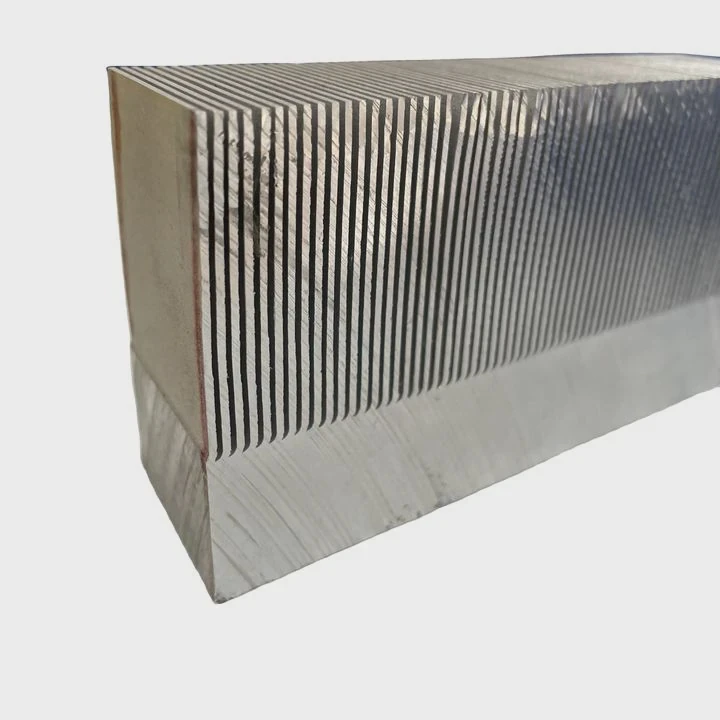
Here’s a typical documentation set for a vapor chamber shipment:
Basic Documents
| Document | Purpose |
|---|---|
| Commercial invoice | Declares value, country, product type |
| Packing list | Matches packaging with goods and invoice |
| Bill of lading | Shipping contract between carrier and exporter |
| HTS/HS code declaration | Used for calculating duties and classification |
| Country of origin marking | Required by law — may be on box or product |
Optional or Conditional Documents
| Document | Required When |
|---|---|
| Certificate of origin | Needed for tariff reduction or buyer request |
| Test reports | Only for buyer or regulated sectors |
| Material composition sheet | Only when content affects classification or control |
| Compliance declarations | For RoHS, REACH, conflict minerals (if applicable) |
Pro tips for smooth vapor chamber customs clearance
To avoid delays, here are a few proven practices:
- Use clear product descriptions. “Vapor chamber for heat spreader application” is better than just “metal part.”
- Match documentation to physical markings. If the chamber says “Made in China,” make sure invoice and packing say the same.
- Pre-classify your HS code. Use prior customs rulings or check with your broker to avoid misclassification.
- Bundle documents as a shipment file. Prepare all docs in PDF format, ideally submitted before arrival.
- Respond to customs queries quickly. If documentation is incomplete, every day lost increases demurrage and storage costs.
Conclusion
Customs clearance for vapor chambers is straightforward when you have the basics covered: invoice, packing list, HS code, bill of lading, and country of origin. Certificates of origin and composition reports are not required unless you seek tariff benefits or your customer demands extra proof. Don’t overcomplicate it — but prepare clean, consistent documents to keep your shipments moving smoothly.
TAGS
Latest Articles

Volume discount levels for heat sink orders?
Buyers often ask when heat sink prices start to drop with volume. Many worry they’re overpaying for small orders. This guide explains how B2B volume pricing works for thermal components. Heat sink
21 Dec,2025
Heat sink long-term supply contract options?
Many buyers want stable pricing and reliable delivery for heat sinks. But without a clear contract, risks grow over time. This article explores how to secure better long-term supply deals. Long-term
21 Dec,2025
Tooling cost for new heat sink profiles?
Many engineers struggle to understand why tooling for custom heat sinks costs so much. They worry about budgeting and production timelines. This article breaks down the cost drivers behind tooling.
21 Dec,2025
Heat sink custom sample process steps?
Sometimes, starting a custom heat sink project feels overwhelming—too many steps, too many unknowns, and too many risks. You want a sample, but not endless delays. The process for requesting and
20 Dec,2025
Standard B2B terms for heat sink payments?
When buyers and sellers in B2B heat sink markets talk about payment, many don’t fully understand what’s standard. This can lead to delayed orders, miscommunication, and even lost business
20 Dec,2025
Heat sink pricing factors for large orders?
Heat sinks are vital for many systems. When prices rise, projects stall and budgets break. This problem can hit teams hard without warning. Large order heat sink pricing depends on many factors. You
20 Dec,2025Related Articles
- Import duty for Vapor Chamber in Germany?
- Vapor Chamber packaging moisture tests?
- Vapor Chamber carton palletizing guide
- Vapor Chamber freight forwarder requirements
- Vapor Chamber road transport limitations
- Does Vapor Chamber require REACH testing?
- Is Vapor Chamber suitable for mass production?
- How clean should Vapor Chamber surfaces be?
- Reliable bonding method for Vapor Chamber joints?
- Can Vapor Chamber be combined with heat sinks?
- Vapor Chamber for thermal cycling environments?
- Required energy evaluation for Vapor Chamber?
Author
Dr. Emily Chen
Chief AI Researcher
Leading expert in thermal dynamics and AI optimization with over 15 years of experience in data center efficiency research.
Categories
Latest Products






Recommend Categories
- Liquid cooling plate Manufacturer
- Industrial Heat Sink Manufacturer
- Standard Heat Sink Manufacturer
- Aluminum Heat Sink Manufacturer
- Copper Heat Sink Manufacturer
- Anodized Heatsink Manufacturer
- Stamping heat sink Manufacturer
- Die Casting Heatsink Manufacturer
- Soldering heat sink Manufacturer
- CNC Parts Manufacturer
Latest Products
- Wholesale Aluminum Radiator
- Water Cooling Plate Kit
- Water Cooling Heat Sink
- Water Cooling Heat Sink Kit
- Stainless Steel Water Distributor
- Server Water Cooling Plate Kit
- Server Liquid Cooling System
- Server Aluminum Cooling Kit
- S19 Full Cover Cooling Plate
- S19 Cooling Plate Kit
- S19 Aluminum Cooling Plate
Contact Expert
Have questions about this article? Reach out to our experts directly.