Reliable bonding method for Vapor Chamber joints?
Many vapor chambers leak or fail early. That causes big heat problems. A proper bonding method can stop leaks and make joints last.
Reliable joints come from strong metallurgical bonds, such as brazing, soldering or laser welding. These methods ensure high strength and vacuum integrity for vapor chambers.
Read on to learn which method works best and why some options may cause failures.
Which bonding methods provide reliable joints in Vapor Chambers?
Many choices exist when you join vapor chamber parts. Some fail fast and cause leaks. Choosing the right one matters a lot.
Brazing, soldering, and laser welding give reliable joints if done right. Each method has its own trade‑offs in strength, heat input, and cost.
Common bonding methods
| Method | Description | Key benefit |
|---|---|---|
| Brazing | Use a filler metal (like silver or bronze alloy) melted between parts at high temp. | Strong joint, good thermal link. |
| Soldering | Use low‑melting filler (like tin, tin‑silver). Lower temp than brazing. | Less heat risk, easier to apply. |
| Laser welding | Use a laser beam to melt base metals and fuse them. | Very precise, minimal filler, strong joint. |
Brazing gives a full metallurgical bond with filler alloy. The filler fills gaps and makes a solid interface. That helps spread heat well across the joint. It also gives some tolerance for small gaps or surface roughness. For many vapor chambers, this robustness makes brazing a common choice.
Soldering works if parts have tight fit and clean surfaces. It needs less heat than brazing. That lowers risk of warping or damaging heat‑sensitive parts. But solder joints often have lower melting point and lower mechanical strength than brazed or welded joints. That limits their use in high‑demand vapor chambers.
Laser welding melts the base metals directly or with minimal filler. That gives a very clean joint. The heat‑affected zone is narrow. That means less distortion and minimal effect on surrounding material. Laser welding suits tight, precise seams and complex shapes. It also avoids extra solder or brazing material that might change thermal performance.
Sometimes hybrid methods combine soldering or brazing plus welding on critical seams. That increases strength while allowing flexible assembly steps.
In many high‑end vapor chambers, manufacturers use brazing or laser welding. They pick based on geometry, required strength, and manufacturing cost.
Is soldering or laser welding preferred for vapor chamber seams?
Choosing between soldering and laser welding feels tricky. People worry about heat, cost, and reliability.
Laser welding is usually preferred when seam precision, strength, and vacuum tightness matter most. Soldering stays useful for simple, low‑stress joints or when cost/machinery limits exist.
Why laser welding is often preferred
Precision and seam control
Laser welding uses a focused beam. That melts only a small area. The rest of the structure stays cool. That keeps dimensions accurate. For vapor chambers, that matters. Seals must be tight and internal paths precise. Laser welding gives that control.
High joint strength
When the base metals fuse, joint strength is near base‑metal strength. That helps the chamber resist pressure changes and mechanical stress. It also reduces risk of joint failure under thermal cycling.
Better vacuum sealing
Laser welded seams usually have fewer included voids or filler imperfections. That reduces paths for gas leaks. For vacuum and long life, that is key.
Low distortion
Because heat is localized, distortion is minimal. That makes further assembly easier. That also lowers rework and scrap rates.
When soldering is still used
Soldering stays useful when the joint is simple and stress is low. It requires less expensive equipment than lasers. For small batch or low‑cost vapor chambers, soldering can meet basic needs. If thermal load or mechanical stress is limited, a soldered seam works.
But solder joints melt at lower temperature than brazed or welded joints. That limits their upper operating temperature. Solder also can creep or soften if heat cycles repeatedly. That reduces long‑term reliability.
Summary
Laser welding leads when performance, precision, and vacuum integrity matter. Soldering remains as a lower‑cost fallback when demands are modest. The choice depends on requirements: strength, heat, volume, cost.
Does bonding method influence vacuum integrity and lifespan?
Weak bonding or poor seams cause leaks. Leaks ruin vacuum. Vacuum loss kills vapor chamber performance and lifespan. So bonding method matters a lot.
Yes. A strong metallurgical bond—via brazing or laser welding—greatly improves vacuum integrity and extends vapor chamber life. Poor methods lead to leaks, outgassing, and failure.
Vapor chambers rely on a sealed vacuum inside. The vacuum lets vapor travel, condense, and return. If a seam leaks, the internal pressure rises. That breaks the phase‑change cycle. Heat transfer drops sharply. Also a leak lets air or moisture enter. Moisture worsens corrosion and degrades performance over time.
How bonding affects vacuum tightness
A joint must be free of voids, cracks, or channels. Filler metal or welding must fill the gap fully. That leaves no path for gas. Methods that cause micro‑cracks or porosity risk leak over time.
Metal‑to‑metal welding reduces filler and avoids weak interfaces. That tends to yield fewer defects. If welding or brazing is controlled, seams remain dense and leak‑free. In contrast, solder joints often have lower density and may form tiny voids or impurities. These can grow into leaks under thermal cycles.
Temperature cycles stress joints. Vapor chambers heat up and cool down repeatedly. That causes expansion and contraction. Joints shift and strain. Strong bonds resist that. Weak bonds—like poorly soldered seams or adhesive joints—fail after many cycles. That shortens lifespan.
Outgassing from filler materials or trapped flux can also affect vacuum. If filler isn’t pure or flux residues remain, gas can slowly enter the cavity. That raises pressure and degrades performance. Good brazing or laser welding in clean conditions reduces outgassing risk. That helps maintain vacuum for years.
Lifespan effects
Solid welded or brazed vapor chambers can operate for thousands of thermal cycles. The vacuum stays stable. Heat transfer stays high. That matches reliability demands in electronics cooling, aerospace, or industrial equipment.
If solder or poor sealing is used, performance degrades fast. Vacuum leaks or degradation reduce heat transfer. That can lead to overheating or failure. That defines lifetime as far shorter.
Also repair or re‑sealing a failed chamber is hard and expensive. Better to invest in strong bonding upfront than deal with failures later.
Are adhesives ever used for vapor chamber structural joins?
Glue sounds easy. It avoids heat and big equipment. Some think adhesive bonding could work for vapor chamber seams. But it is risky.
Adhesives are very rarely used for structural or vacuum‑seal joints in vapor chambers. They fail to meet long‑term vacuum tightness, thermal cycling, and heat transfer needs.
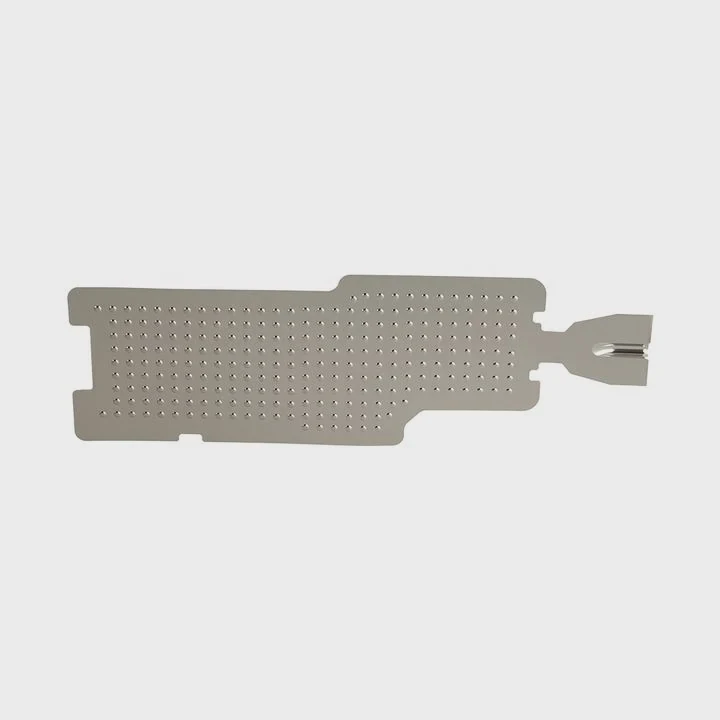
Why adhesives seem attractive
Adhesives require no high heat. They allow joining without complex tooling. They also let joining dissimilar materials or pre‑assembled submodules. For some simple covers or non‑critical parts, adhesive looks convenient. But that convenience hides big trade‑offs.
Major drawbacks of adhesive bonding
Poor vacuum performance
Most adhesives trap small voids or air bubbles when applied. Those voids lead to slow leaks. Even if seam appears sealed at start, vacuum slowly degrades. Once air leaks in, vapor chamber stops working.
Weak mechanical strength
Adhesives remain much weaker than metal bonds. Under mechanical stress, vibration, or thermal cycles, adhesive joint can crack or delaminate. That breaks vacuum or thermal contact.
Thermal expansion mismatch
Materials expand and contract at different rates when heated. Adhesive may stretch or shrink differently. That puts shear stress on the bond. Over cycles, bond weakens. That again may cause leaks or structural failure.
Poor thermal conductivity
Adhesive layers introduce thermal resistance. That reduces heat transfer efficiency. For vapor chambers, that defeats their main purpose — to quickly move heat. A metal‑to‑metal joint avoids that resistance. An adhesive joint adds a thermal bottleneck.
Aging, outgassing, contamination
Adhesives can degrade over time. They may release gases inside sealed cavity (outgassing). That breaks vacuum slowly. They also may absorb moisture or chemicals. That affects seal integrity and performance.
When adhesives might be used (very limited)
In practice, adhesives only see use for non‑critical parts: cosmetic covers, outer structural braces, or insulation attachments. They are not used for core seams that hold vacuum or form the vapor path.
Some research shows glue-like epoxies designed for vacuum and high temperature. But they still lag behind metal bonds in reliability. For high‑performance vapor chambers these adhesives remain unsuitable.
Conclusion
Strong metallurgical bonds like brazing or laser welding give the most reliable vapor chamber joints. These methods ensure vacuum tightness, thermal performance, and long life. Soldering can work for simple cases, but adhesives almost never deliver needed strength or sealing. Choosing proper bonding saves failures and extends work life.
TAGS
Latest Articles

Volume discount levels for heat sink orders?
Buyers often ask when heat sink prices start to drop with volume. Many worry they’re overpaying for small orders. This guide explains how B2B volume pricing works for thermal components. Heat sink
21 Dec,2025
Heat sink long-term supply contract options?
Many buyers want stable pricing and reliable delivery for heat sinks. But without a clear contract, risks grow over time. This article explores how to secure better long-term supply deals. Long-term
21 Dec,2025
Tooling cost for new heat sink profiles?
Many engineers struggle to understand why tooling for custom heat sinks costs so much. They worry about budgeting and production timelines. This article breaks down the cost drivers behind tooling.
21 Dec,2025
Heat sink custom sample process steps?
Sometimes, starting a custom heat sink project feels overwhelming—too many steps, too many unknowns, and too many risks. You want a sample, but not endless delays. The process for requesting and
20 Dec,2025
Standard B2B terms for heat sink payments?
When buyers and sellers in B2B heat sink markets talk about payment, many don’t fully understand what’s standard. This can lead to delayed orders, miscommunication, and even lost business
20 Dec,2025
Heat sink pricing factors for large orders?
Heat sinks are vital for many systems. When prices rise, projects stall and budgets break. This problem can hit teams hard without warning. Large order heat sink pricing depends on many factors. You
20 Dec,2025Related Articles
- How clean should Vapor Chamber surfaces be?
- Is Vapor Chamber suitable for mass production?
- Vapor Chamber documentation required for customs
- Import duty for Vapor Chamber in Germany?
- Vapor Chamber packaging moisture tests?
- Vapor Chamber carton palletizing guide
- Can Vapor Chamber be combined with heat sinks?
- Vapor Chamber for thermal cycling environments?
- Required energy evaluation for Vapor Chamber?
- Cost saving ideas for Vapor Chamber production?
- Vapor Chamber functional testing standards?
- Estimated lifespan of Vapor Chamber in industry?
Author
Dr. Emily Chen
Chief AI Researcher
Leading expert in thermal dynamics and AI optimization with over 15 years of experience in data center efficiency research.
Categories
Latest Products






Recommend Categories
- Liquid cooling plate Manufacturer
- Industrial Heat Sink Manufacturer
- Standard Heat Sink Manufacturer
- Aluminum Heat Sink Manufacturer
- Copper Heat Sink Manufacturer
- Anodized Heatsink Manufacturer
- Stamping heat sink Manufacturer
- Die Casting Heatsink Manufacturer
- Soldering heat sink Manufacturer
- CNC Parts Manufacturer
Latest Products
- Wholesale Aluminum Radiator
- Water Cooling Plate Kit
- Water Cooling Heat Sink
- Water Cooling Heat Sink Kit
- Stainless Steel Water Distributor
- Server Water Cooling Plate Kit
- Server Liquid Cooling System
- Server Aluminum Cooling Kit
- S19 Full Cover Cooling Plate
- S19 Cooling Plate Kit
- S19 Aluminum Cooling Plate
Contact Expert
Have questions about this article? Reach out to our experts directly.