Vapor Chamber efficiency in heat exchanger systems?
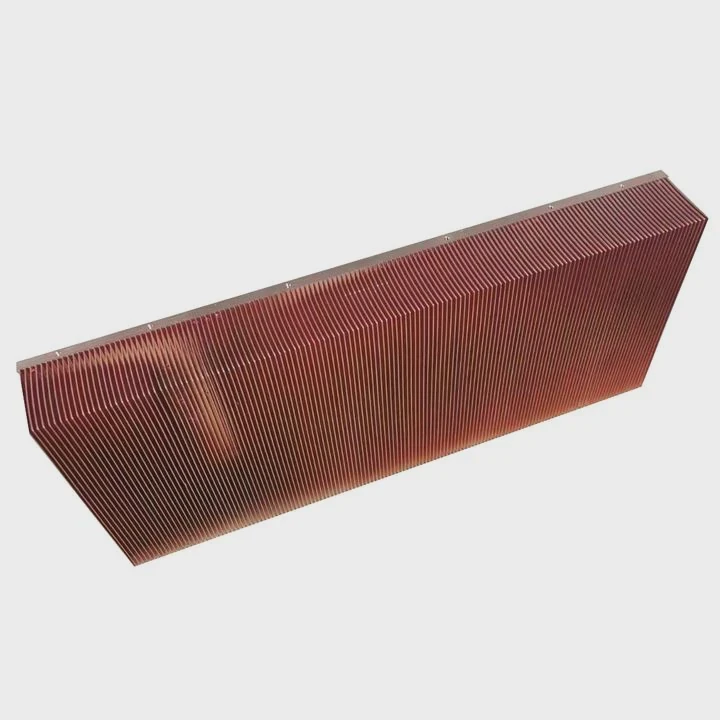
Modern thermal systems face rising demands. Many cooling setups struggle when heat sources get small but powerful.
Using a vapor chamber in a heat exchanger dramatically improves heat spread, reduces thermal resistance, and allows compact, high‑power cooling — often impossible with plain metal blocks.
This article explains how vapor chambers boost efficiency, how to measure gains, real‑world use cases, and when integration complexity can limit the benefit.
How does a Vapor Chamber improve efficiency in heat exchangers?
Some cooling designs rely on solid metal bases or simple heat‑pipes. These methods limit how evenly heat can flow. Vapor chambers remove those limits.
A vapor chamber transfers heat using evaporation and condensation inside a sealed flat chamber. This spreads heat laterally across a large area. The result: hotspots flatten out, fins or cold plates are fully utilized, and overall heat removal becomes more efficient.
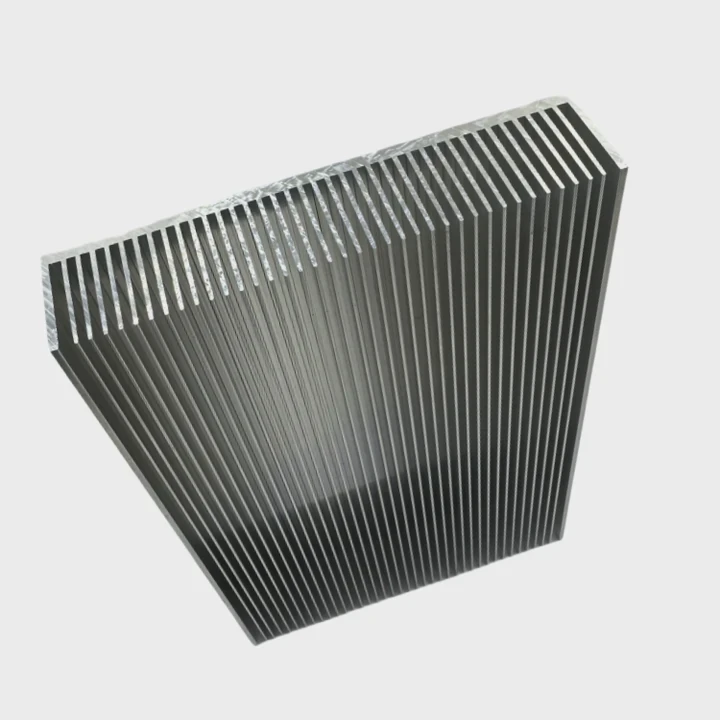
Why vapor chambers boost efficiency
- Two‑dimensional heat spreading: Traditional heat‑pipes or solid bases move heat along lines or through conduction. A vapor chamber spreads heat like a sheet. Heat from a small emitter spreads almost instantly across the whole base.
- Very high effective thermal conductivity: Because of internal evaporation and condensation, a vapor chamber behaves like a highly conductive material. Thermal spreading resistance — often the bottleneck — drops substantially.
- Reduced thermal gradients: The base surface sees uniform temperature. That lowers thermal stress and avoids hot spots. Downstream sinks (fins, liquid plates) receive evenly distributed heat flux.
- Compactness and high heat flux handling: For high‑power, small‑space designs (e.g. telecom racks, high‑power electronics), vapor chambers enable compact form factors with high heat dissipation — impossible with bulky fin stacks.
- Better sink utilization: Fins or cold plates can operate close to their capacity because vapor chamber delivers heat uniformly. This improves airflow or coolant efficiency and reduces required sink size or fan power.
In short: vapor chambers act as “thermal equalizers.” They convert concentrated heat into evenly distributed flux, making downstream exchangers far more effective.
What metrics measure efficiency gain with Vapor Chambers?
To show real improvement, engineers use several thermal metrics. These metrics help compare systems with and without vapor chambers.
Critical metrics include thermal resistance (R_th), spreading resistance, temperature uniformity, maximum heat flux (Qₘₐₓ), and system‑level heat sink performance.
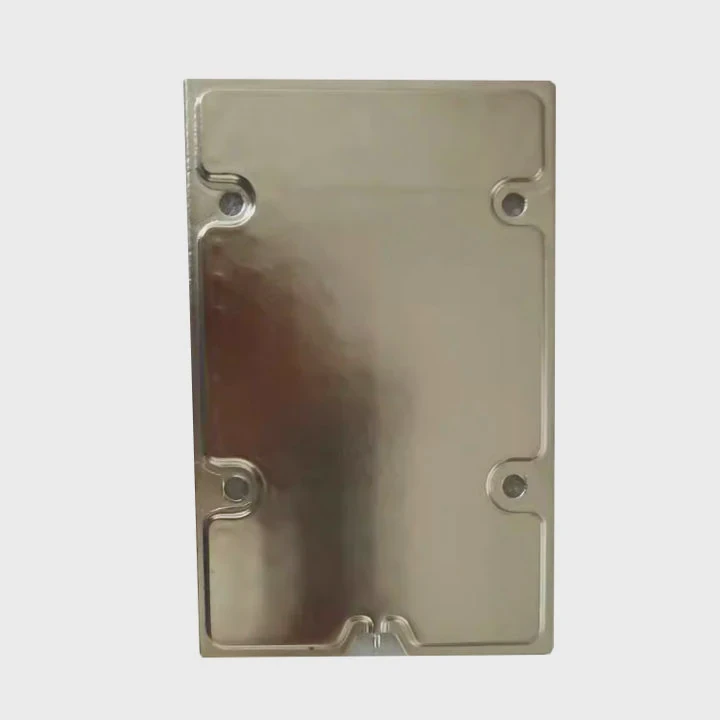
Key performance indicators
| Metric | What it shows |
|---|---|
| Thermal resistance (R_th) | How much temperature difference exists per watt of heat. Lower means better heat transfer. Vapor chambers often cut base‑to‑sink R_th by 30–70%. |
| Spreading resistance | Represents how easily heat moves laterally in the base. Lower spreading resistance means fins or cold plate get uniform heat. |
| Base temperature uniformity (ΔT across base) | Lower gradient means fewer hot spots, better sink performance, and higher reliability. |
| Maximum heat flux (Qₘₐₓ) | The highest power per area the system can handle before failure or dry‑out. Vapor chambers raise this limit significantly compared to solid bases. |
| System‑level sink performance (with fins or coolant) | Measures final ability to dump heat. Vapor chamber + sink combos often outperform solid‑base combos even with same sink size. |
In thermal design reviews, engineers often compare a baseline heat sink (solid base) to a vapor‑chamber version. Gains in R_th reduction, flux handling, and temperature uniformity prove the value of the chamber.
Are there case studies of Vapor Chambers in exchanger systems?
Yes. Both academic studies and industrial implementations show vapor chambers deliver clear benefits — especially in high‑power, compact systems.
Examples show vapor chambers enable high heat dissipation, compact size, and stable thermal performance under serious loads.
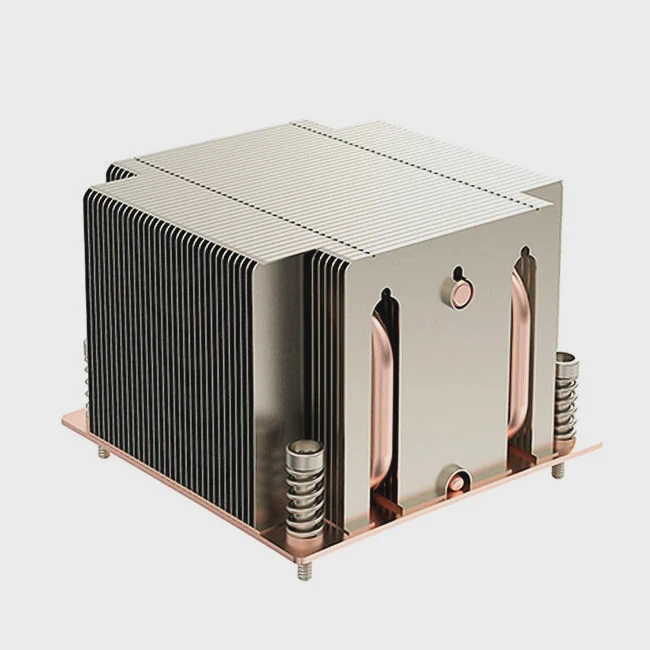
Notable examples and findings
- In electronics cooling for high‑power CPUs or GPUs, vapor chambers allow thin notebooks or compact servers to dissipate 100–200 W without hot spots. Older designs with solid metal bases needed thick fin stacks or excessive fan power; vapor chamber designs cut size and noise.
- In compact liquid‑cooled heat‑exchanger blocks (e.g. battery packs or power modules), using a vapor chamber under the fluid plate helped spread heat evenly. That reduced coolant temperature rise and improved overall heat removal.
- Industrial heat sink tests showed that adding a vapor chamber under a fin stack improved base‑to‑air thermal resistance by 40–60% compared to the same fin stack with solid base. That allowed use of fewer fins or lower airflow for same thermal load.
- Reliability tests with vapor‑chamber cold plates under cyclical thermal loads confirmed stable thermal performance over hundreds of cycles. The uniform heat spread prevented stress concentration and reduced failure rates compared to solid‑base plates.
These cases demonstrate actual gains — not just theory. Vapor chambers deliver consistent spread, allow compact design, and improve sink efficiency in real systems.
Does integration complexity reduce the efficiency benefit?
Vapor chambers bring strong advantages, but only when integrated correctly. Design mistakes, poor mating surfaces, or improper installation can erode the benefits — sometimes dramatically.
Integration challenges such as poor contact surfaces, interface resistance, mismatched sink design, or bad assembly can cut the efficiency gain or even nullify it.
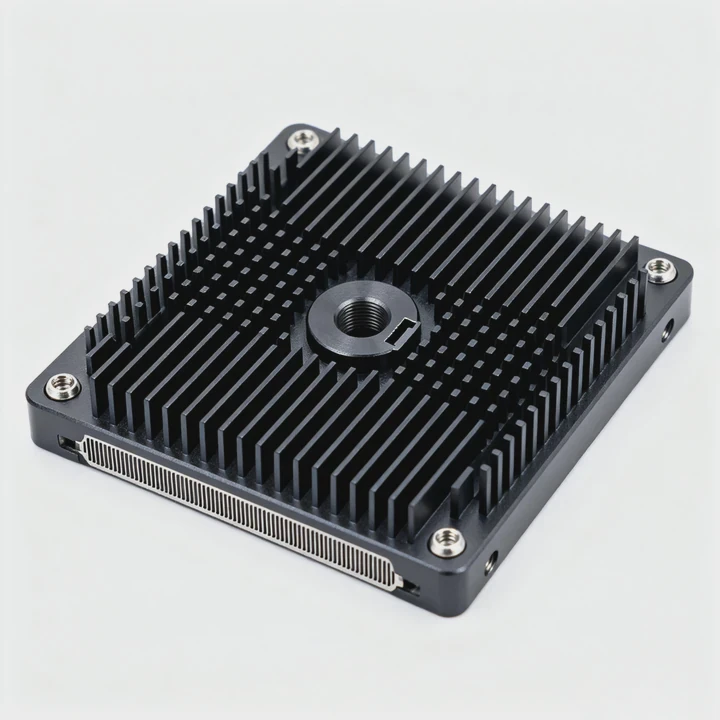
What can go wrong
- Poor base-to-sink contact: If the head of the heat source or sink base isn’t flat or seats unevenly, contact resistance rises. Heat spreading from vapor chamber becomes less effective.
- Interface material issues: Using low‑conductivity thermal interface material (TIM), or applying uneven pressure or uneven application, reduces heat transfer efficiency from chamber to sink.
- Sink mismatch: If fins, coolant passage, or airflow are not designed for uniform flux, parts of the sink under‑perform. That wastes the chamber’s spread capability.
- Assembly strain or warping: Mounting bolts or clamps can warp the chamber base or cold plate. That degrades flatness and contact uniformity.
- Cost and manufacturing complexity: Vapour chambers need precise manufacturing, leak testing, and controlled assembly. If shortcut, internal defects or poor sealing can lead to failure. This increases cost and reduces yield.
- Maintenance or service issues: In some systems, after service or disassembly, re‑mounting may change contact conditions. That can degrade long‑term performance compared to original specs.
Because of these factors, using a vapor chamber should involve careful system‑level design. Thermal interface design, surface flatness, mounting method, sink layout, and maintenance plan all matter.
Best practices to preserve efficiency gain
- Machine the chamber base flat to tight tolerances. Surface finish should allow good contact.
- Define and apply proper mounting pressure or spring load to keep uniform contact.
- Use suitable thermal interface materials — avoid over‑compressing or uneven application.
- Match sink design to uniform heat flux — fins, coolant channels, airflow must be balanced for full base area.
- Include leak and performance tests after assembly to confirm real‑world behavior before shipping.
When these practices are followed, vapor chambers consistently deliver on their performance potential. When skipped, gains can be lost or even reversed.
Conclusion
Vapor chambers deliver tangible and often large improvements when used in heat exchanger systems. They reduce thermal resistance, spread heat evenly, raise maximum flux, and enable compact, high‑power cooling. Metrics like R_th, flux handling, and temperature uniformity clearly show the benefits. Real use cases — from electronics to power modules — confirm these gains. However, proper integration matters. Without good mating, interface design, and assembly practices, the benefits shrink. When designed and assembled carefully, vapor chamber‑based exchangers give superior performance and compact form factor that many systems need.
TAGS
Latest Articles

Volume discount levels for heat sink orders?
Buyers often ask when heat sink prices start to drop with volume. Many worry they’re overpaying for small orders. This guide explains how B2B volume pricing works for thermal components. Heat sink
21 Dec,2025
Heat sink long-term supply contract options?
Many buyers want stable pricing and reliable delivery for heat sinks. But without a clear contract, risks grow over time. This article explores how to secure better long-term supply deals. Long-term
21 Dec,2025
Tooling cost for new heat sink profiles?
Many engineers struggle to understand why tooling for custom heat sinks costs so much. They worry about budgeting and production timelines. This article breaks down the cost drivers behind tooling.
21 Dec,2025
Heat sink custom sample process steps?
Sometimes, starting a custom heat sink project feels overwhelming—too many steps, too many unknowns, and too many risks. You want a sample, but not endless delays. The process for requesting and
20 Dec,2025
Standard B2B terms for heat sink payments?
When buyers and sellers in B2B heat sink markets talk about payment, many don’t fully understand what’s standard. This can lead to delayed orders, miscommunication, and even lost business
20 Dec,2025
Heat sink pricing factors for large orders?
Heat sinks are vital for many systems. When prices rise, projects stall and budgets break. This problem can hit teams hard without warning. Large order heat sink pricing depends on many factors. You
20 Dec,2025Related Articles
- Vapor Chamber inspection standards ISO?
- Vapor Chamber RoHS compliance check?
- Vapor Chamber CNC machining capability limits?
- Vapor Chamber vacuum testing procedure?
- Does Vapor Chamber comply with REACH?
- Standard packaging for Vapor Chamber shipping?
- Industrial Vapor Chamber for power electronics?
- Safety regulations for Vapor Chamber materials?
- Vapor Chamber working temperature range?
- Vapor Chamber pressure resistance rating?
- Vapor Chamber design guidelines for heat transfer?
- Vapor Chamber sample production process?
Author
Dr. Emily Chen
Chief AI Researcher
Leading expert in thermal dynamics and AI optimization with over 15 years of experience in data center efficiency research.
Categories
Latest Products






Recommend Categories
- Liquid cooling plate Manufacturer
- Industrial Heat Sink Manufacturer
- Standard Heat Sink Manufacturer
- Aluminum Heat Sink Manufacturer
- Copper Heat Sink Manufacturer
- Anodized Heatsink Manufacturer
- Stamping heat sink Manufacturer
- Die Casting Heatsink Manufacturer
- Soldering heat sink Manufacturer
- CNC Parts Manufacturer
Latest Products
- Wholesale Aluminum Radiator
- Water Cooling Plate Kit
- Water Cooling Heat Sink
- Water Cooling Heat Sink Kit
- Stainless Steel Water Distributor
- Server Water Cooling Plate Kit
- Server Liquid Cooling System
- Server Aluminum Cooling Kit
- S19 Full Cover Cooling Plate
- S19 Cooling Plate Kit
- S19 Aluminum Cooling Plate
Contact Expert
Have questions about this article? Reach out to our experts directly.