Vapor Chamber pressure resistance rating?
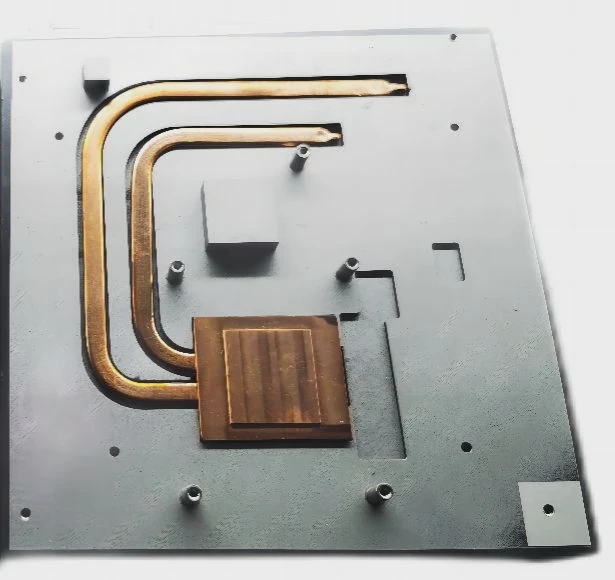
Many designers worry whether a vapor chamber can handle internal or external pressure. That makes them hesitate before using vapor chambers in critical systems. This article clears up common doubts about pressure limits and safety.
Vapor chambers usually carry a nominal internal pressure rating around 2–5 bar above atmosphere, depending on fill and sealing. This rating defines a safe working pressure under which the chamber holds integrity without leak or deformation.
This article walks through how pressure ratings arise, how tests verify strength, and whether real‑world use can exceed nominal pressure safely.
What pressure resistance ratings apply to Vapor Chambers?
Many people ask whether vapor chambers have defined pressure resistance specs. They expect values like “working pressure: X bar” or “burst pressure: Y bar”.
Most vapor chambers are rated by a safe working pressure and a burst (or max allowable) pressure, often given in bar or psi. These specs come from manufacturer design data and initial pressure tests.
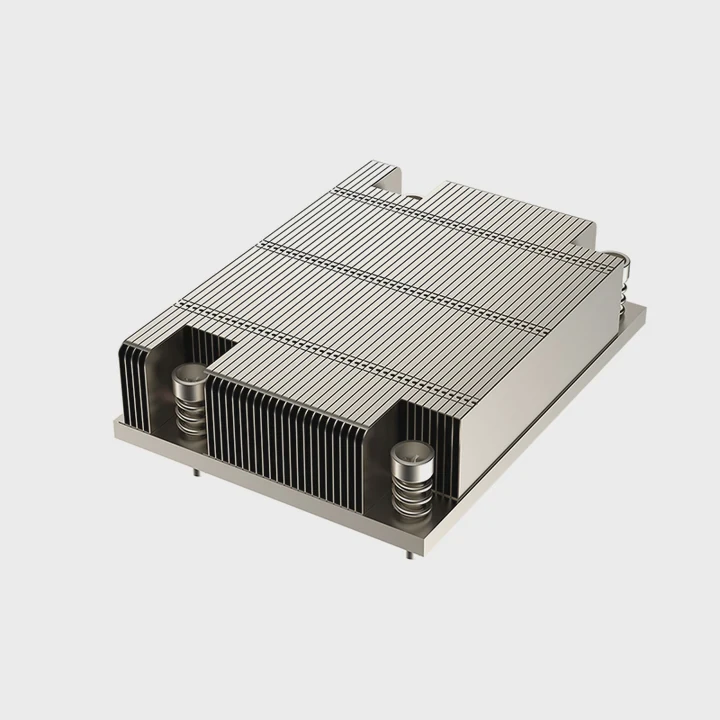
Dive deeper reveals how these ratings are defined and why they matter for thermal module design.
Pressure rating types
Manufacturers use at least two main pressure metrics for vapor chambers:
| Rating name | Meaning | Typical unit |
|---|---|---|
| Safe Working Pressure | Max continuous internal pressure (over atm) | bar gauge / psi |
| Burst (Max) Pressure | Pressure at which chamber fails or leaks | bar gauge / psi |
Some vendors also list vacuum tolerance (negative pressure rating), especially if the chamber is evacuated during production.
Why these ratings exist
Vapor chambers contain a small amount of liquid and internal wick structure. The sealed walls must resist:
- Internal positive pressure (from liquid vapor and overfill),
- External/environmental pressure (e.g. altitude, shipping),
- Vacuum or partial vacuum (if chamber sees negative pressure events).
Designing a chamber without clear pressure ratings leaves uncertainty on reliability. Thus rating gives clarity for:
- Thermal module designers selecting a chamber,
- OEMs needing proof of strength under abuse,
- Compliance engineers verifying safety under environmental changes.
How manufacturers derive the ratings
Producers begin with mechanical design: wall thickness, joint type (brazed, welded), materials (aluminum alloys, stainless steel). Then they model internal stress and thermal expansion.
After that they build prototypes and test them under pressure. They first apply low levels, inspect for leaks. Then increase to a safety margin (e.g. 1.5× working pressure). Then sometimes test to burst pressure to ensure margin.
The result is a specification sheet. It shows working and burst pressure. Customers rely on these numbers when integrating vapor chambers into their systems.
Designers must always check actual spec sheet. Never assume every vapor chamber has same rating.
How are pressure tests conducted for Vapor Chambers?
People often ask how to test whether a vapor chamber can really hold pressure without leak or failure.
Pressure tests involve filling or sealing the chamber then applying incremental pressure (or vacuum) while checking for deformation or leaks. The tests often use air or inert gas and sometimes liquid dye for leak detection.
Now we examine common test procedures and what to watch out for under real conditions.
Typical test steps
- Evacuation or filling – The chamber is sealed with its working fluid or inert gas. Some tests start with a slight vacuum to simulate vapor creation conditions.
- Pressurization steps – Pressure is raised gradually, often in 0.5 bar increments. Inspectors monitor for leaks or visible bulge/deformation.
- Leak detection – Methods: soap bubble spray, helium mass spectrometry, dye-penetrant under pressure, ultrasonic sensors.
- Burst testing (optional) – For safety margin, some units are pushed past working pressure until failure. Document burst pressure.
- Vacuum test (optional) – Reverse test to check if chamber integrity holds under negative pressure, such as high altitude or vacuum conditions.
Key test metrics and acceptance criteria
| Test Metric | Acceptance Condition |
|---|---|
| No visible leaks | No bubble formation or dye escape at working pressure |
| No plastic deformation | Walls remain within elastic deformation limits |
| Burst pressure ≥ spec | Fail only above burst spec with margin |
| Repeated cycle hold | Survives multiple pressurization cycles without leak |
Manufacturers often also perform thermal cycle testing under pressure. They heat the chamber (to simulate operation), then cool, sometimes under pressure. This tests welds, brazes, solder joints under stress and thermal expansion.
Why inert gas or air?
Using dry air or nitrogen reduces corrosion or chemical reactions. Liquid testing can risk fluid contamination or unexpected behavior if the working fluid evaporates.
Often tests use nitrogen at room temperature. The chamber is stabilized, pressure applied slowly, then held for defined period (e.g. 30 minutes). Inspectors record any pressure drop.
Then they may hold the pressure for longer (hours) to check slow leaks. After that they decompress slowly to check for structural relaxation or deformation.
Limits of testing
These tests approximate real-world conditions, but real systems may see thermal stress, vibrations, or mechanical shocks. Tests do not always replicate these combined stresses.
Therefore, engineers must consider safety margins beyond just pressure spec. For example, derate working pressure by 20–30% if chamber undergoes vibration or temperature swings.
Can a Vapor Chamber sustain internal over-pressure safely?
Designers often wonder whether vapor chambers can handle pressure beyond their rated specification without failure. This matters if system faults cause unexpected pressure spikes.
Vapor chambers may hold short bursts above nominal pressure if built with strong joints and thick walls; but regular use above rating increases risk of leak, deformation, or structural failure. Safety margin matters.
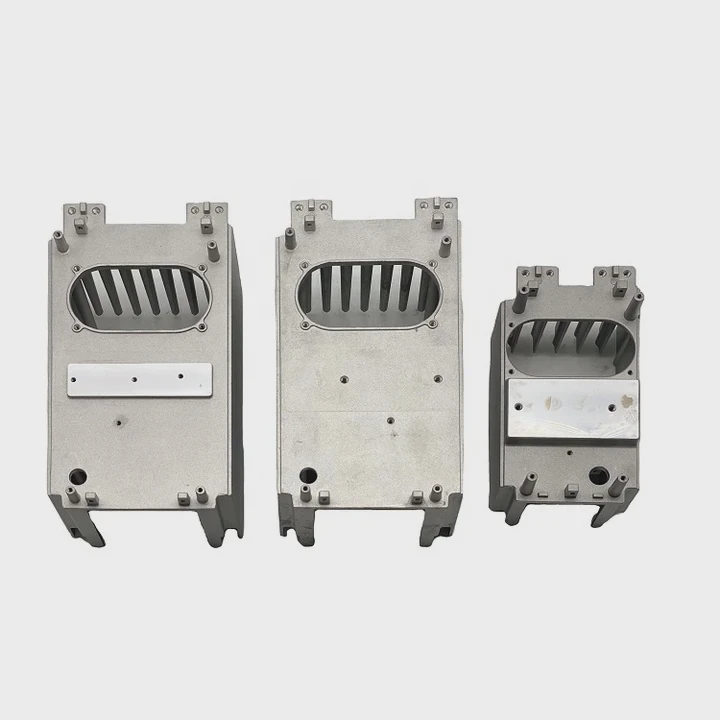
Below we explore factors that influence over‑pressure tolerance and when over‑pressure is safely manageable or dangerous.
Factors that affect over‑pressure tolerance
- Material strength: Chambers made from stronger alloys or thicker walls resist over‑pressure better.
- Joint quality: High-quality welds or brazes endure more stress than weak solder or adhesive joints.
- Internal fill ratio: Overfilling a chamber increases vapor volume under heat. That raises internal pressure beyond spec.
- Temperature changes: Heat increases vapor pressure; cooling shrinks volume. Thermal stress adds to pressure stress.
- Cycle fatigue: Repeated pressure cycles can weaken welds or joints over time.
Safe over‑pressure usage vs risk
Safe over‑pressure handling happens when a short, controlled pressure spike occurs — for example during manufacturing leak-check, or system startup. If pressure stays below burst rating and for short period, chamber likely survives.
Risky over‑pressure use means repeated or sustained over‑pressure beyond safe working limit. That can cause permanent deformation, weld crack, slow leak, or sudden rupture.
I have seen cases where a vapor chamber over‑pressurized during thermal runaway or overheating. In some cases, the seam started to leak after a few cycles. In other cases, the deformation was visible and the chamber lost vacuum/vapor function. That caused thermal performance drop or complete failure.
Thus designing for worst-case scenarios is critical. Engineers must plan for unexpected over‑pressure. Use margin. Use safety valves or structural reinforcements when possible.
Best practices to handle over‑pressure risk
- Always maintain fill volume within recommended range.
- Use high-quality welding or brazing for joints.
- Include burst or pressure relief devices if system might exceed normal vapor pressure.
- Perform periodic inspections, especially after thermal or mechanical stress cycles.
- Derate working pressure for safety margin.
Are there industry benchmarks for Vapor Chamber pressure tolerance?
Many engineers look for published “industry standards” or typical benchmarks. They wonder what typical safe pressure or burst pressure values are for vapor chambers in laptops, servers, or industrial modules.
There are no universal standards; but many vapor chambers used in electronics show typical working pressure of 2–5 bar and burst pressure around 8–12 bar under test conditions. Actual benchmarks vary by material, size, and manufacturer.
Here we compare common field benchmarks and guidance to help set realistic specs or evaluate suppliers.
Comparison of typical application domains
| Application type | Typical working pressure | Typical burst pressure | Notes |
|---|---|---|---|
| Consumer laptops / phones | 2–3 bar | ~6–8 bar | Thin walls; light welding or brazing |
| Server cooling modules | 3–4 bar | ~8–10 bar | Larger chambers; heavier gasket/joint |
| Industrial / automotive | 4–5 bar | ~10–12 bar | Robust walls; strong brazing or welding |
Benchmarks above reflect what many suppliers use for warranty or spec sheets. They give design teams a ballpark before selecting a particular supplier or chamber size.
Why no universal industry standard
- Vapor chambers differ widely in size, shape, fill ratio, wall thickness, and sealing method.
- Manufacturing processes vary: some use laser welding, others use brazing or solder. That affects strength.
- Operating conditions differ: some see only mild temperature swings; others see cycles or harsh vibration.
- Different industries have different risk tolerance. A consumer laptop may accept small leak; a server rack or automotive module may demand near-zero leak over thousands of hours.
How to set benchmarks for your project
When evaluating or specifying vapor chamber pressure rating for a project, consider:
- End use environment — ambient pressure, temperature swings, vibration, shock.
- Safety margin — set working pressure below 70–80% of burst pressure. That gives buffer.
- Testing regimen — ask supplier for cycle‑test data (pressure + temperature + vibration).
- Inspection plans — provide periodic leak or structural check, especially if device undergoes stress.
Example benchmark table for internal evaluation
| Risk level | Design working pressure target | Burst margin target |
|---|---|---|
| Standard electronics | 2.5 bar | ≥ 6 bar |
| Industrial equipment | 3.5 bar | ≥ 9 bar |
| High‑reliability gear | 4.5 bar | ≥ 12 bar |
Use these values only as a starting point. Always adjust based on actual chamber design and operating conditions.
Conclusion
Vapor chamber pressure ratings usually involve a safe working pressure and a burst pressure. Pressure tests use gas or vacuum to verify these limits under controlled conditions. Vapor chambers can tolerate short over‑pressure if built and used properly, but repeated or prolonged over‑pressure is risky. Because no universal standard exists, designers should treat published benchmarks as rough guidance. Always insist on quality welding, adequate safety margins, and real test data before integration.
TAGS
Latest Articles

Volume discount levels for heat sink orders?
Buyers often ask when heat sink prices start to drop with volume. Many worry they’re overpaying for small orders. This guide explains how B2B volume pricing works for thermal components. Heat sink
21 Dec,2025
Heat sink long-term supply contract options?
Many buyers want stable pricing and reliable delivery for heat sinks. But without a clear contract, risks grow over time. This article explores how to secure better long-term supply deals. Long-term
21 Dec,2025
Tooling cost for new heat sink profiles?
Many engineers struggle to understand why tooling for custom heat sinks costs so much. They worry about budgeting and production timelines. This article breaks down the cost drivers behind tooling.
21 Dec,2025
Heat sink custom sample process steps?
Sometimes, starting a custom heat sink project feels overwhelming—too many steps, too many unknowns, and too many risks. You want a sample, but not endless delays. The process for requesting and
20 Dec,2025
Standard B2B terms for heat sink payments?
When buyers and sellers in B2B heat sink markets talk about payment, many don’t fully understand what’s standard. This can lead to delayed orders, miscommunication, and even lost business
20 Dec,2025
Heat sink pricing factors for large orders?
Heat sinks are vital for many systems. When prices rise, projects stall and budgets break. This problem can hit teams hard without warning. Large order heat sink pricing depends on many factors. You
20 Dec,2025Related Articles
- Vapor Chamber working temperature range?
- Safety regulations for Vapor Chamber materials?
- Industrial Vapor Chamber for power electronics?
- Vapor Chamber efficiency in heat exchanger systems?
- Vapor Chamber inspection standards ISO?
- Vapor Chamber RoHS compliance check?
- Vapor Chamber design guidelines for heat transfer?
- Vapor Chamber sample production process?
- Vapor Chamber usage in automotive industry?
- Does Vapor Chamber suit gaming laptops cooling?
- Lead time for custom Vapor Chamber parts?
- Vapor Chamber application in LED lighting?
Author
Dr. Emily Chen
Chief AI Researcher
Leading expert in thermal dynamics and AI optimization with over 15 years of experience in data center efficiency research.
Categories
Latest Products
Recommend Categories
- Liquid cooling plate Manufacturer
- Industrial Heat Sink Manufacturer
- Standard Heat Sink Manufacturer
- Aluminum Heat Sink Manufacturer
- Copper Heat Sink Manufacturer
- Anodized Heatsink Manufacturer
- Stamping heat sink Manufacturer
- Die Casting Heatsink Manufacturer
- Soldering heat sink Manufacturer
- CNC Parts Manufacturer
Latest Products
- Wholesale Aluminum Radiator
- Water Cooling Plate Kit
- Water Cooling Heat Sink
- Water Cooling Heat Sink Kit
- Stainless Steel Water Distributor
- Server Water Cooling Plate Kit
- Server Liquid Cooling System
- Server Aluminum Cooling Kit
- S19 Full Cover Cooling Plate
- S19 Cooling Plate Kit
- S19 Aluminum Cooling Plate
Contact Expert
Have questions about this article? Reach out to our experts directly.