Vapor Chamber design guidelines for heat transfer?
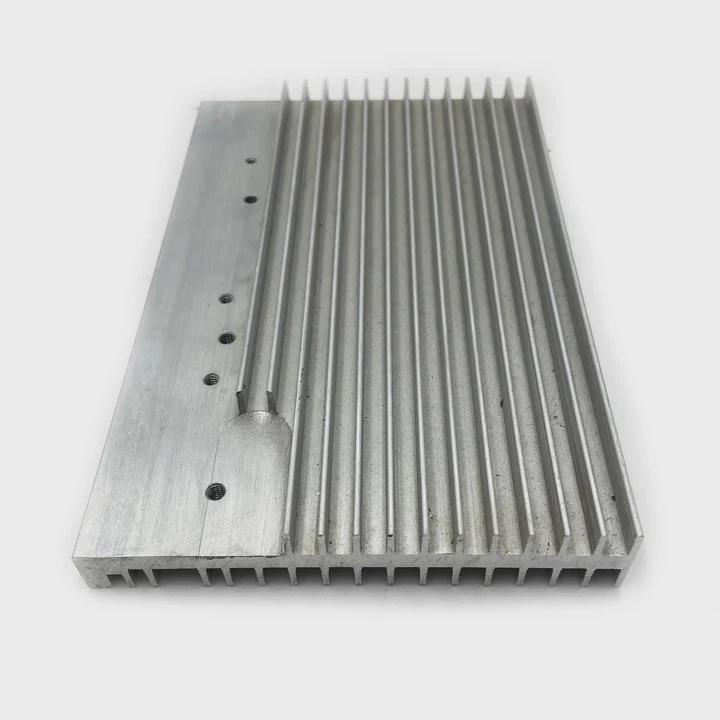
Heat moves fast when you use a vapor chamber. But many designs waste that speed. In this article I show clear rules. These rules help you get strong heat transfer from a vapor chamber.
Good vapor chamber design improves heat flow. The rules give better thermal spread and stability.
If you design with care you avoid heat spots and get smooth cooling. Now I show key ideas step by step.
What design guidelines enhance Vapor Chamber heat transfer?
I see many vapor chambers fail because they ignore basic principles. Bad wick structure or wrong fluid can kill performance. I show simple rules that improve heat performance every time.
Design guidelines like good wick layout, correct fluid fill level, plate thickness and tight seal improve heat transfer efficiency.
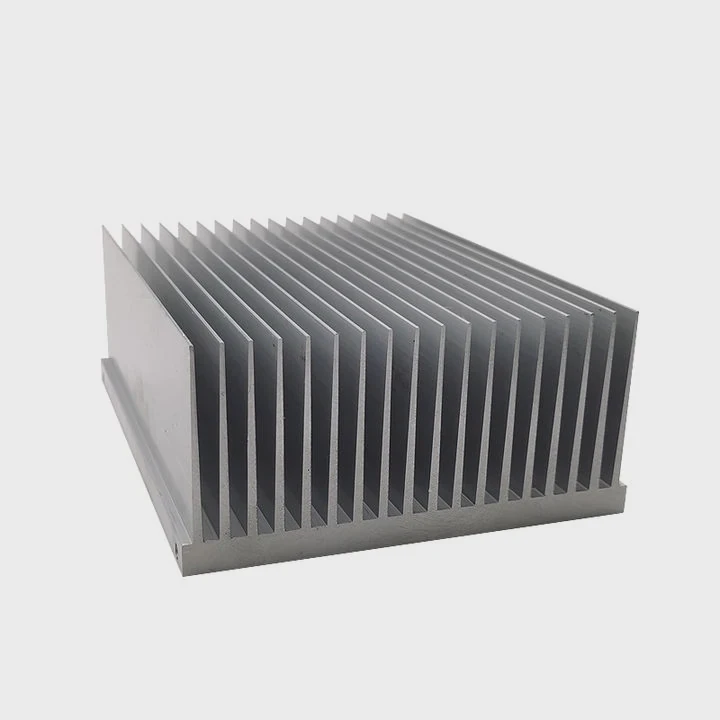 Vapor chambers move heat by using liquid evaporation and vapor flow inside a sealed cavity. To get good performance, design must follow some core guidelines.
Key design rules
- Use a wick structure that gives uniform fluid return and supports capillary flow. Bad or uneven wick reduces heat spread.
- Keep cavity thickness minimal but enough for vapor flow. Too thin stops vapor motion. Too thick delays return of liquid.
- Fill correct amount of fluid. Underfill or overfill hurts performance. Underfill means dry spots. Overfill blocks vapor path.
- Use high thermal conductivity materials for walls and internal plates. This ensures fast heat conduction before vapor or after condensation.
- Seal the chamber well without leaks. A leak kills vacuum and stops evaporation.
These guidelines matter because vapor chamber works by phase change. Vapor moves heat fast. But only if liquid returns smoothly and vapor moves freely.
I often begin design by picking a good wick material, setting cavity gap around 2–4 mm, and filling fluid to about 30 %–50 % of internal volume. This gives a good balance. Then I check wall thickness: usually thin walls add less resistance.
Then I test under heat load. I check temperature uniformity across surface. If hot spots exist I adjust wick or fluid amount.
That process shows these rules are not suggestions but essentials.
Why these guidelines matter
If wick pores are too small or compressed unevenly, fluid may not return evenly. Some parts dry out. Then vapor flow stops there. Heat builds up.
If cavity gap is too narrow, vapor cannot flow. If gap is too thick, liquid pooling or flooding occurs. Both reduce performance.
If fluid fill is wrong, dry zones or flooding happens. Dry zones act like air gaps. Air reduces conduction. Flood zones block vapor.
If wall or plate material is low conductivity, heat transfer is slower before evaporation. That slows whole process.
Sealing is vital. Vapor needs low pressure. If air leaks in, evaporation slows or stops.
Following these rules ensures the vapor chamber works as intended.
How do wick, plate thickness and fluid type affect design?
Too many designers treat wick, plate and fluid as afterthoughts. They pick whatever seems easy. That hurts performance. I explain how each part matters. Then you can pick wisely.
Wick pore size, plate thickness and fluid type each strongly affect heat transfer and overall performance of a vapor chamber.
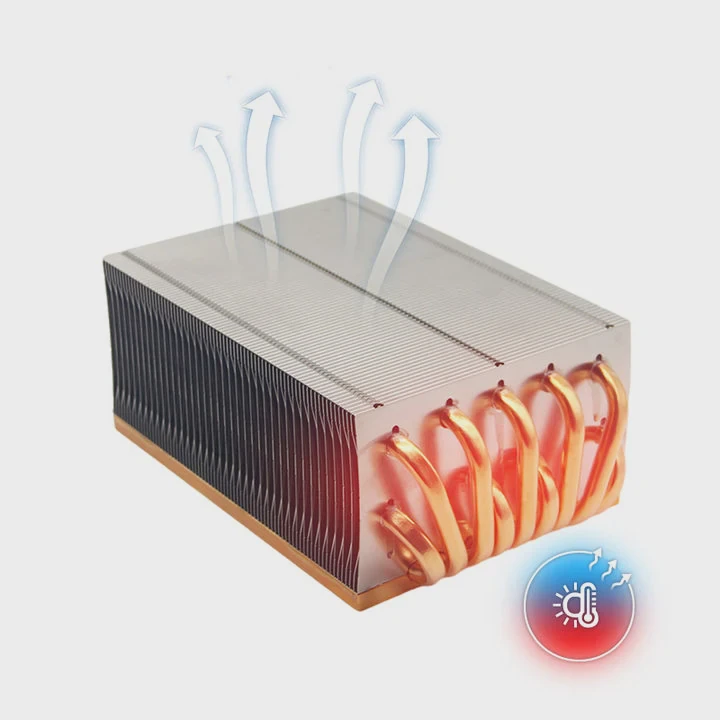
Wick structure and pore design
Wick is like a sponge. It moves liquid back to the heat source by capillary action. Good wick design affects how fast liquid returns and how evenly it spreads.
If wick pores are too small, liquid moves slowly. If pores are too big, capillary force is weak. A balanced pore size is best. For example, sintered metal wick with uniform pore size often works well. Mesh wicks are simpler but less reliable for high heat flux.
If wick thickness is small, return path may be narrow. That can starve some zones of fluid. If wick is thick, you may lose internal volume for vapor flow. That reduces vapor flow and lowers transfer.
I often choose 0.5–1.0 mm thick sintered wick with pore size around 20–50 microns for most electronics cooling. This gives good balance of capillary force and flow path.
Plate thickness and wall conductivity
Wall or plate thickness influences how heat reaches the vapor region. Thin plates let heat move quickly from heat source to fluid. Thick plates add resistance.
But plate must be thick enough to keep structure and seal under pressure. Structural strength matters especially if chamber is large or experience mechanical stress.
I select aluminum or copper plates based on application. For compact electronics, copper gives high conductivity but heavier. Aluminum is lighter but less conductive. Plate thickness around 0.6–1.0 mm often works for aluminum. For copper I may use 0.5–0.8 mm.
Fluid type and fill level
Fluid choice affects boiling temperature, vapor pressure, and thermal performance under different temperatures. Common fluids include water, methanol, acetone, or special refrigerants. For electronics around room temperature to 100 °C, water is good. For lower temps or subambient, methanol or acetone may help.
Fluid must be compatible with wick and internal materials. Some fluids corrode metals or damage wick. I always check chemical compatibility.
Fill level matters as well. Too little fluid leaves dry zones. Too much fluid floods vapor region. I aim for about 30–50 % fill by volume, but exact value needs testing for cavity size and heat load.
Summary table of effects
| Component | What affects performance | Typical good design choices |
|---|---|---|
| Wick | pore size, thickness, uniformity, capillary flow path | 20–50 µm pores, 0.5–1.0 mm thick sintered wick |
| Plate / wall | thickness, conductivity, structural strength | Al 0.6–1.0 mm or Cu 0.5–0.8 mm thick |
| Fluid + fill | boiling point, vapor pressure, fluid volume fraction | Water (for 20–100 °C), 30–50% fill by volume |
That table helps pick good parameters.
I often run tests with different fill ratios and wick types. Then I check temperature drop between heat source and surface. I also watch for dry-out or flooding under worst heat load.
I learned that wick without uniform pore size often causes uneven cooling. I also learned that heavy, thick plates slow initial conduction and raise surface temperature.
I also saw fluid choice matters. In a cold operating environment methanol helped more than water. But under high humidity, methanol sometimes caused internal corrosion. That showed fluid compatibility matters as much as thermal properties.
Good wick, plate and fluid design yield better heat transfer, stable performance, and reliability under different conditions.
Are there standard modelling practices for Vapor Chamber design?
Many designers guess parameters. That leads to weak designs. Modeling helps. I describe common practices and tools. Then you can use them to guide real design.
Standard modeling uses thermal networks, vapor flow simulation, and capillary flow analysis to predict vapor chamber behavior under load.
Why modeling is useful
Modeling helps see inside the chamber where you cannot look. It lets you predict heat spread, fluid return, vapor flow paths, and possible dry or flooded areas. That saves time and cost.
Typical modelling approaches
Thermal resistance network models
You treat the chamber as layers: heat source → wall conduction → wick conduction → evaporation → vapor flow → condensation → wall conduction → sink. Then you add resistances. You can compute total thermal resistance. This gives rough prediction of temperature drop. You can vary wick thermal conductivity, wall thickness, fluid latent heat, etc.
These models are fast and simple. They work for early design. They help choose rough cavity thickness, wick type, and fluid. But they cannot show localized dry zones or vapor flow blockage.
Computational Fluid Dynamics (CFD) and multiphase models
For detailed design, many use CFD software that supports multiphase flow and phase change. These models simulate vapor flow, vapor pressure, condensation, capillary return, and fluid distribution. They help find weak spots, hot zones, or flooding.
CFD lets you change geometry, wick structure, fluid volume, and heat load. You can then see where vapor weakens or liquid pools. This method gives best insight before building prototype.
Capillary and wick flow modeling
You can model liquid return in wick by capillary pressure balance and permeability equations. You compute if capillary pressure is enough to lift liquid against gravity or to overcome vapor pressure gradients. You use Darcy’s law and Young–Laplace equation often.
This helps especially when chamber orientation changes or when chamber is large. You need good return path to avoid dry zones.
Combined modeling workflow
- Build a thermal resistance network model to get base geometry — cavity gap, plate thickness, wick type, fluid volume.
- Use capillary and wick flow calculations to check liquid return reliability.
- Use CFD multiphase simulation under expected heat load and orientation.
- Adjust design based on simulation: wick pore, thickness, fill, cavity size.
- Build prototype and test real heat load and orientation.
This workflow reduces risk. It shows possible problems early. It saves time and resources.
Example of thermal network model output (simplified)
Suppose heat load is 50 W over 20 x 20 mm area. Using wall conduction R = 0.2 K/W, wick conduction R = 0.1 K/W, evaporation/condensation plus vapor flow total R = 0.05 K/W, total thermal resistance is ~0.35 K/W. Then temperature rise is ~17.5 K.
If I change wick to lower conductivity or older fluid, resistance grows. Temperature rise may go over 30 K. That is often too high.
So modeling lets me predict before prototype.
How to select dimensions and materials for optimal heat performance?
Designing a vapor chamber is like solving a puzzle. Each dimension and material choice interacts. I explain how to select chamber size, plate thickness, cavity gap, wick and wall material for best heat transfer.
Optimal dimensions and materials depend on heat load, size constraints, expected orientation and environment. Good choices give low thermal resistance and stable operation.

Steps to select dimensions and materials
1. Define heat load and heat sink area
You must know how much heat you need to move and over what area. A high heat flux but small area needs strong wick and fluid motion. A larger area spreads heat but needs careful vapor flow design.
2. Choose wall or plate material
Select material based on conductivity, weight, corrosion resistance, cost, and mechanical needs. Common materials: aluminum and copper. Table below shows typical values.
| Material | Thermal conductivity (typical) | Weight | Notes |
|---|---|---|---|
| Copper | ~ 400 W/m·K | Heavy | High conduction, heavy |
| Aluminum | ~ 200 W/m·K | Light | Lighter, slower conduction |
| Stainless | ~ 15–25 W/m·K | Heavy | Often avoided |
If weight matters (like in portable electronics), aluminum is good. If conduction and size matter (server, high power), copper works better.
3. Set plate/wall thickness
Wall must be thick enough for structural strength and seal. For small devices 0.5–1.0 mm works. For large span or mechanical stress use thicker walls, but note that thicker wall adds conduction resistance.
If wall is too thin, chamber may warp or leak under pressure. If wall is too thick, heat conduction slows and chamber heats up.
4. Decide internal cavity gap and wick thickness
Cavity gap must allow vapor flow and condensation. For many electronic cooling cases, 2–4 mm works. For high heat flux, thicker gap gives more vapor flow space. But thicker gap needs more fluid and good wick return.
Wick thickness must allow liquid return but not block vapor flow. I find 0.5–1.0 mm wick good for moderate heat loads.
5. Pick wick material and pore structure
Wick must have enough capillary force. Sintered metal wick or fine mesh wick work. Wicks that contact entire bottom surface give uniform return. If design has hot spots, use higher permeability wick there.
6. Choose fluid and fill volume
Fluid must suit temperature range and compatibility. Water is widely used for 20–100 °C. Use alcohol or refrigerant for lower or higher extremes. Fill level usually 30–50% of internal volume, after accounting for wick volume.
If environment changes orientation, consider wick permeability and fill volume carefully.
Example selection process
Assume a heat sink for a server module with 120 W heat over 40 x 40 mm area.
- Heat load high → choose copper wall for fast conduction.
- Weight less critical → copper accepted.
- Wall thickness 0.8 mm to keep structure stable.
- Expect moderate chamber size → cavity gap 3 mm.
- Use sintered copper wick, 0.8 mm thick, pore size ~30 µm.
- Choose water as fluid since server runs near room temperature.
- Fill fluid to ~40% volume.
This gives fast heat conduction, strong fluid return, good vapor flow, and stable structure.
Then test temperature rise and uniformity. If surface is uneven, adjust wick or add vapor flow channels.
Common mistakes and how to avoid them
- Choosing too thin or soft wick: fluid return weak → dry spots.
- Overfilling fluid: vapor blocked → slower heat spread.
- Thick walls without need: added conduction resistance.
- Using low‑conductivity material: heat buildup before evaporation.
- Ignoring fluid compatibility: corrosion or wick damage long‑term.
Instead follow the steps above, verify with modeling or prototype, then adjust.
Conclusion
Good vapor chamber design needs careful choice of wick, material, fluid, and dimensions. Follow clear rules for structure, fluid fill, material choice, and thickness. Then use modeling or testing. Good design gives strong, stable heat transfer and avoids common failures.
TAGS
Latest Articles

Volume discount levels for heat sink orders?
Buyers often ask when heat sink prices start to drop with volume. Many worry they’re overpaying for small orders. This guide explains how B2B volume pricing works for thermal components. Heat sink
21 Dec,2025
Heat sink long-term supply contract options?
Many buyers want stable pricing and reliable delivery for heat sinks. But without a clear contract, risks grow over time. This article explores how to secure better long-term supply deals. Long-term
21 Dec,2025
Tooling cost for new heat sink profiles?
Many engineers struggle to understand why tooling for custom heat sinks costs so much. They worry about budgeting and production timelines. This article breaks down the cost drivers behind tooling.
21 Dec,2025
Heat sink custom sample process steps?
Sometimes, starting a custom heat sink project feels overwhelming—too many steps, too many unknowns, and too many risks. You want a sample, but not endless delays. The process for requesting and
20 Dec,2025
Standard B2B terms for heat sink payments?
When buyers and sellers in B2B heat sink markets talk about payment, many don’t fully understand what’s standard. This can lead to delayed orders, miscommunication, and even lost business
20 Dec,2025
Heat sink pricing factors for large orders?
Heat sinks are vital for many systems. When prices rise, projects stall and budgets break. This problem can hit teams hard without warning. Large order heat sink pricing depends on many factors. You
20 Dec,2025Related Articles
- Vapor Chamber pressure resistance rating?
- Vapor Chamber working temperature range?
- Safety regulations for Vapor Chamber materials?
- Industrial Vapor Chamber for power electronics?
- Vapor Chamber efficiency in heat exchanger systems?
- Vapor Chamber inspection standards ISO?
- Vapor Chamber sample production process?
- Vapor Chamber usage in automotive industry?
- Does Vapor Chamber suit gaming laptops cooling?
- Lead time for custom Vapor Chamber parts?
- Vapor Chamber application in LED lighting?
- Best Vapor Chamber solution for medical devices?
Author
Dr. Emily Chen
Chief AI Researcher
Leading expert in thermal dynamics and AI optimization with over 15 years of experience in data center efficiency research.
Categories
Latest Products






Recommend Categories
- Liquid cooling plate Manufacturer
- Industrial Heat Sink Manufacturer
- Standard Heat Sink Manufacturer
- Aluminum Heat Sink Manufacturer
- Copper Heat Sink Manufacturer
- Anodized Heatsink Manufacturer
- Stamping heat sink Manufacturer
- Die Casting Heatsink Manufacturer
- Soldering heat sink Manufacturer
- CNC Parts Manufacturer
Latest Products
- Wholesale Aluminum Radiator
- Water Cooling Plate Kit
- Water Cooling Heat Sink
- Water Cooling Heat Sink Kit
- Stainless Steel Water Distributor
- Server Water Cooling Plate Kit
- Server Liquid Cooling System
- Server Aluminum Cooling Kit
- S19 Full Cover Cooling Plate
- S19 Cooling Plate Kit
- S19 Aluminum Cooling Plate
Contact Expert
Have questions about this article? Reach out to our experts directly.