Vapor Chamber inspection standards ISO?
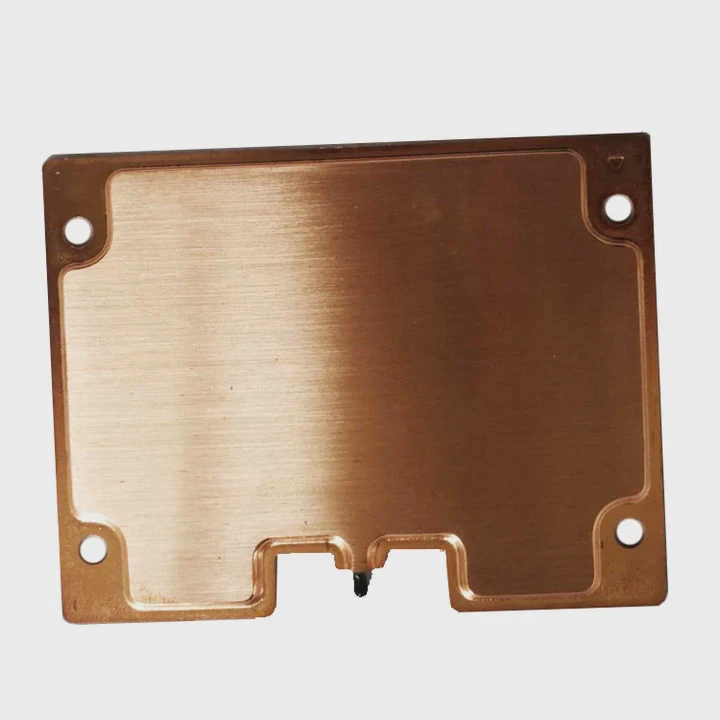
Precision in inspection is often the invisible force behind reliable vapor chambers. But without clear ISO standards, quality claims may fall apart.
ISO standards such as ISO 2768, ISO/IEC 17025, and GPS-based tolerancing ensure vapor chamber inspection is consistent, traceable, and globally accepted.
Here’s how to align vapor chamber inspection with ISO frameworks — from geometry to lab testing and traceability.
Which ISO standards apply to Vapor Chamber inspection?
Many believe ISO only applies to big systems or full assemblies. But for vapor chambers, ISO gives a framework to check flatness, sealing, and material integrity.
ISO 2768, GPS-based tolerancing, and ISO/IEC 17025 are the most relevant standards that apply to vapor chamber inspection.
Key ISO standards that apply:
| ISO Standard | Scope | Relevance |
|---|---|---|
| ISO 2768 | General tolerances for linear/angular dimensions | Controls basic size and shape |
| ISO GPS (Geometrical Product Specification) | Geometric tolerancing, flatness, surface finish | Ensures fit and interface precision |
| ISO/IEC 17025 | Laboratory competence and calibration | Ensures reliable lab-based leak or material tests |
| ISO 1302 | Surface texture and roughness standards | Verifies proper thermal contact surfaces |
These standards help guide both incoming inspection and final QC. When drawings lack detailed tolerances, ISO 2768 defines defaults. GPS helps with roundness, flatness, and parallelism. ISO 1302 handles finish roughness — vital for thermal contact.
For lab testing (e.g. leak or vacuum verification), ISO/IEC 17025 ensures the lab is competent and their results are defensible.
Is ISO 17025 relevant for Vapor Chamber testing labs?
Many overlook the importance of who performs the testing. A test without certified methods or calibrated equipment can be misleading.
Yes, ISO/IEC 17025 is critical for labs doing leak, material, or vacuum testing on vapor chambers. It ensures accuracy, traceability, and global acceptance of test results.
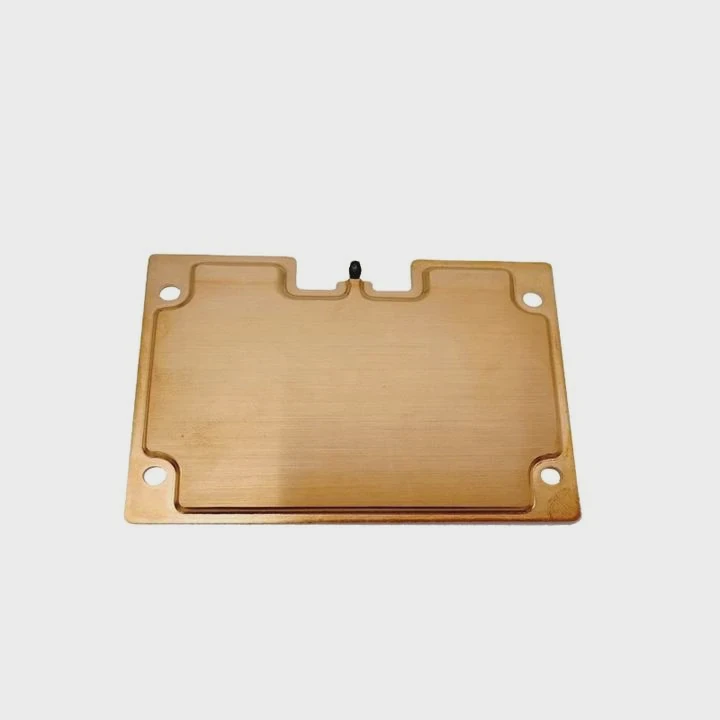
Why ISO/IEC 17025 matters:
- Validates that the lab uses calibrated equipment
- Confirms trained personnel operate the tests
- Ensures traceability to national or international standards
- Makes results auditable and acceptable in regulatory filings or customer requirements
- Required in many sectors like medical, aerospace, and defense
For vapor chambers, testing may include:
- Leak rate testing (helium or pressure decay)
- Thermal resistance under load
- Material composition (e.g. RoHS, REACH checks)
If these are done in-house, adopting ISO 17025 practices boosts credibility. If outsourced, always choose a 17025-accredited lab.
Do dimensional and surface-finish standards apply to Vapor Chambers?
A vapor chamber can pass thermal tests but still fail in application due to poor contact. That’s why geometry and surface finish matter.
Yes, ISO standards for flatness, parallelism, and surface roughness are essential for defining and verifying vapor chamber quality.
Typical applications of dimensional ISO standards:
- Flatness (ISO 1101, part of GPS): Ensures uniform thermal contact with CPUs, cold plates
- Parallelism (ISO 1101): Especially for double-sided vapor chambers
- Linear/Angular tolerances (ISO 2768): Controls general size, edge fit
- Surface finish (ISO 1302): Defines roughness in microns for contact zones
Sample surface finish callouts:
| Feature | Roughness (Ra) |
|---|---|
| Baseplate surface (CPU contact) | 0.8–1.6 µm |
| Non-contact surfaces | 3.2 µm or more |
| Machined pockets or faces | ≤ 2.5 µm if sealed |
By using ISO callouts in drawings, QC teams get clarity, and inspection tools (CMMs, profilometers) can be programmed accurately.
How to implement ISO traceability in Vapor Chamber QC?
Inspection without documentation is a risk. True ISO-compliant systems connect every measurement to drawings, equipment, and people.
Implementing ISO traceability for vapor chambers means linking measurements, materials, tools, and inspectors to each product unit or batch.
Steps to establish ISO-based traceability:
- Drawings follow ISO standards: Use ISO 2768 or GPS callouts for every dimension, flatness, or finish feature.
- Use calibrated tools: Link each inspection tool (CMM, caliper, profilometer) to its calibration record and schedule.
- Record test results per batch/lot: Each vapor chamber batch gets a unique ID; all results for flatness, leak, surface finish, etc. are tied to this ID.
- Maintain a traceability database: Store batch numbers, test results, drawing revision, operator ID, inspection time, and equipment used.
- Generate quality certificates: For each shipment, include summary sheet with ISO-linked dimensions, test data, and equipment traceability.
Sample QC traceability table:
| Batch No. | Drawing Rev | Leak Test | Flatness (µm) | Roughness (Ra) | Inspector | Date |
|---|---|---|---|---|---|---|
| VC-20251201 | Rev C | Pass | 22.3 | 1.2 | TECH-03 | Dec 3, 2025 |
Traceability not only satisfies ISO audits but also improves failure analysis and customer confidence.
Conclusion
Vapor chamber inspection benefits greatly from ISO frameworks. Standards like ISO 2768, GPS tolerancing, ISO 1302, and ISO/IEC 17025 provide a solid base for measuring geometry, finish, and thermal integrity. When used together with good documentation and calibrated tools, these standards make quality control measurable, repeatable, and globally trusted.
TAGS
Latest Articles

Volume discount levels for heat sink orders?
Buyers often ask when heat sink prices start to drop with volume. Many worry they’re overpaying for small orders. This guide explains how B2B volume pricing works for thermal components. Heat sink
21 Dec,2025
Heat sink long-term supply contract options?
Many buyers want stable pricing and reliable delivery for heat sinks. But without a clear contract, risks grow over time. This article explores how to secure better long-term supply deals. Long-term
21 Dec,2025
Tooling cost for new heat sink profiles?
Many engineers struggle to understand why tooling for custom heat sinks costs so much. They worry about budgeting and production timelines. This article breaks down the cost drivers behind tooling.
21 Dec,2025
Heat sink custom sample process steps?
Sometimes, starting a custom heat sink project feels overwhelming—too many steps, too many unknowns, and too many risks. You want a sample, but not endless delays. The process for requesting and
20 Dec,2025
Standard B2B terms for heat sink payments?
When buyers and sellers in B2B heat sink markets talk about payment, many don’t fully understand what’s standard. This can lead to delayed orders, miscommunication, and even lost business
20 Dec,2025
Heat sink pricing factors for large orders?
Heat sinks are vital for many systems. When prices rise, projects stall and budgets break. This problem can hit teams hard without warning. Large order heat sink pricing depends on many factors. You
20 Dec,2025Related Articles
- Vapor Chamber RoHS compliance check?
- Vapor Chamber CNC machining capability limits?
- Vapor Chamber vacuum testing procedure?
- Does Vapor Chamber comply with REACH?
- Standard packaging for Vapor Chamber shipping?
- Vapor Chamber CE certificate requirements?
- Vapor Chamber efficiency in heat exchanger systems?
- Industrial Vapor Chamber for power electronics?
- Safety regulations for Vapor Chamber materials?
- Vapor Chamber working temperature range?
- Vapor Chamber pressure resistance rating?
- Vapor Chamber design guidelines for heat transfer?
Author
Dr. Emily Chen
Chief AI Researcher
Leading expert in thermal dynamics and AI optimization with over 15 years of experience in data center efficiency research.
Categories
Latest Products






Recommend Categories
- Liquid cooling plate Manufacturer
- Industrial Heat Sink Manufacturer
- Standard Heat Sink Manufacturer
- Aluminum Heat Sink Manufacturer
- Copper Heat Sink Manufacturer
- Anodized Heatsink Manufacturer
- Stamping heat sink Manufacturer
- Die Casting Heatsink Manufacturer
- Soldering heat sink Manufacturer
- CNC Parts Manufacturer
Latest Products
- Wholesale Aluminum Radiator
- Water Cooling Plate Kit
- Water Cooling Heat Sink
- Water Cooling Heat Sink Kit
- Stainless Steel Water Distributor
- Server Water Cooling Plate Kit
- Server Liquid Cooling System
- Server Aluminum Cooling Kit
- S19 Full Cover Cooling Plate
- S19 Cooling Plate Kit
- S19 Aluminum Cooling Plate
Contact Expert
Have questions about this article? Reach out to our experts directly.