Vapor Chamber integration in cooling modules?
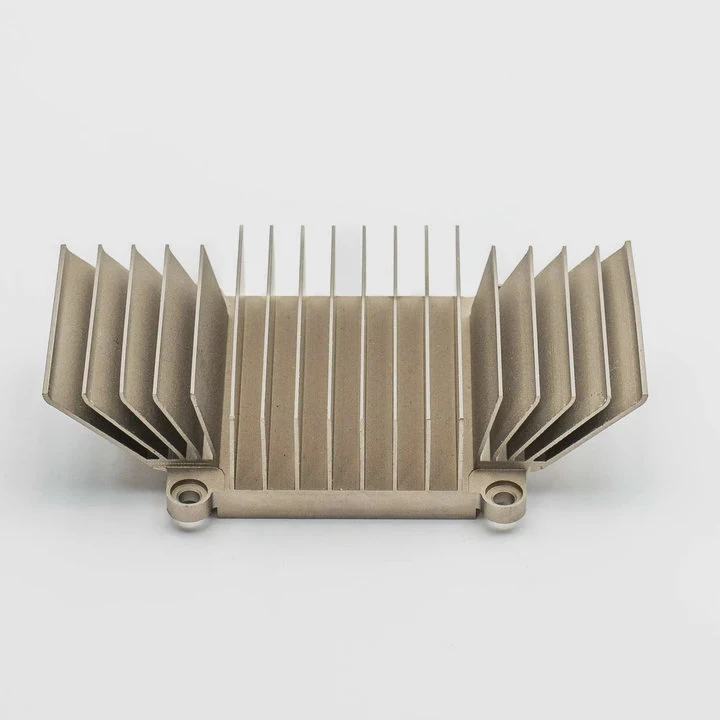
Facing poor module performance or bulky thermal stacks? Integrating a vapor chamber correctly unlocks better thermal efficiency and slimmer designs.
Integrating a vapor chamber into a thermal module involves careful layout of the chamber itself, the thermal interface materials, module layers, and the combination of fins or cold plates to create efficient heat spreading and rejection.
The rest of the article explains how this integration works, what common questions arise, and how to approach module design to make the most of a vapor chamber.
How are Vapor Chambers integrated into thermal modules?
Mounting a vapor chamber is not simply placing a plate—it involves bonding, alignment and module structure.
Typically, a vapor chamber is bonded or clamped onto a cold plate or module base, then aligned with the heat source and complemented by fins or liquid channels to form the full cooling module.
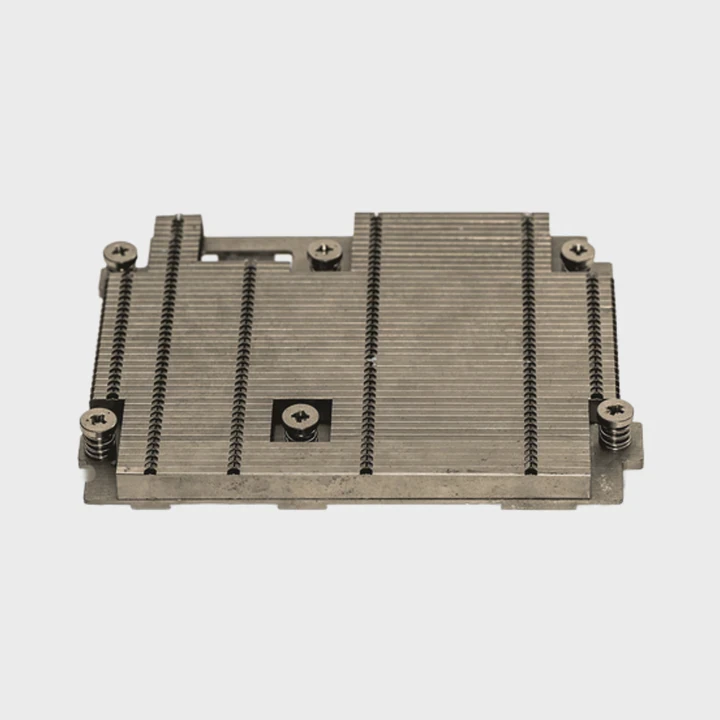
The integration process
When designing a module with a vapor chamber, it starts with selecting the right chamber size and layout for the heat source. Next, the chamber is attached to the base or cold plate via solder, braze, adhesive, or mechanical clamp. The module then includes fins, liquid paths or air paths to reject the heat.
Multiple layers may be involved: the vapor chamber spreads heat, the base conducts it to fins, the fins move it to ambient or coolant. If the chamber is mounted poorly—say not flat, or bonded weakly—spreading is compromised and module performance drops.
Mounting pressure and tolerances matter: a vapor chamber may have a limit on how much clamping force it can tolerate without collapsing the vapor gap. Also, the footprint of the chamber relative to the heat source is important: if the chamber is too small, heat will not spread effectively, and if too large it may raise cost or packaging volume.
The sequence of assembly matters: you bond the chamber, then install the heat source, then finalize module structure. If the mounting screws or cold plate installation compress the chamber unevenly, deformation or warpage may occur.
Quality assurance includes flatness checks, bond integrity inspection, thermal performance verification of the module as a whole. Data shows modules with properly integrated vapor chambers offer lower temperature rise for the same power.
In short, integration is a system design exercise rather than simply “drop in a chamber”.
Do modules include TIM with Vapor Chambers?
Many designers wonder whether adding a vapor chamber removes the need for thermal interface material (TIM).
Yes — modules often include TIM between the heat source and vapor chamber and/or between vapor chamber and module base, although direct bonding without TIM is used when thermal budget is extremely tight.
Why TIM is still used
Even with a perfectly machined vapor chamber, micro‑gaps remain between the chamber and heat source or between the chamber and cold plate. A thin TIM layer improves conduction by filling those gaps. If you rely on perfect contact alone, real‑world mounting misalignment or surface deviation might degrade performance.
When the chamber is bonded directly (solder or braze) to either the heat source or the module base, you may skip or minimise TIM thickness. But that demands high‑precision surfaces, strong bond, and clean assembly. In mechanical clamp attachment, TIM is practically mandatory to offset surface irregularities and to protect the chamber surfaces.
Table of scenarios
| Interface | Attachment method | TIM usage | Notes |
|---|---|---|---|
| Heat source → Vapor chamber | Solder/Braze | Optional or minimal | High cost, high performance |
| Heat source → Vapor chamber | Clamp | Yes | Cost-effective, performance has margin |
| Vapor chamber → Module base | Solder/Braze | Minimal or none | Eliminates one interface layer |
| Vapor chamber → Module base | Clamp/adhesive | Yes | Flexibility, easier manufacturing |
Best practice
- Define TIM type and thickness in the module spec.
- Ensure the vapor chamber surface is flat and clean before TIM application.
- Specify mounting force and uniformity to maintain contact.
- Test the full module under power to measure thermal drop across the chamber and interface.
In summary, including TIM is common and often necessary, but module design may choose direct bonding when ultra‑low thermal resistance is required.
Are multi‑layer modules using embedded Vapor Chambers?
Modern cooling modules often stack multiple thermal layers, and the vapor chamber may be embedded inside.
Yes — in multi‑layer modules, vapor chambers can be embedded between base plates or cold plates, forming a layered thermal path for high‑density or compact applications.
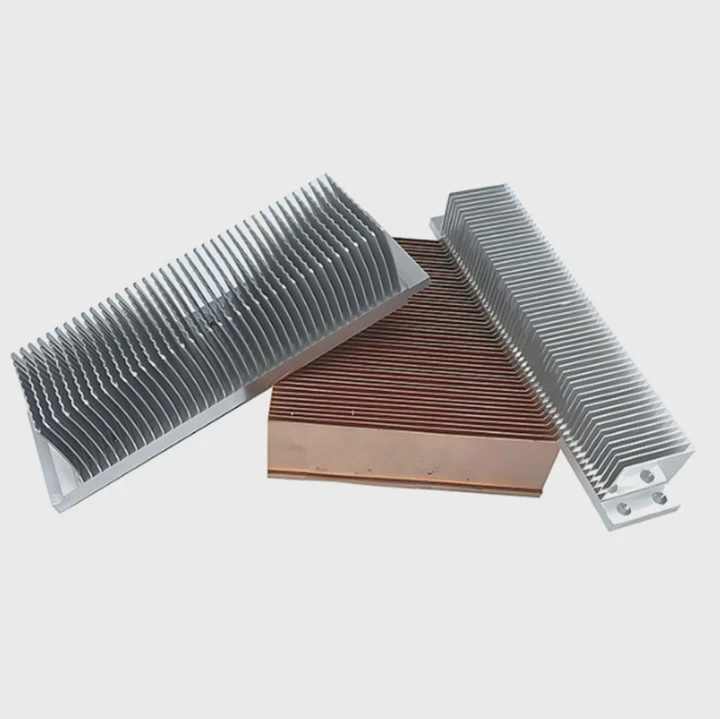
Embedded chamber configurations
One common design: the vapor chamber is sandwiched between two metal plates. The bottom plate interfaces with the heat source, the top plate connects to fins or coolant loops. This allows the chamber to spread heat before it enters either fin stack or coolant pathways.
Another approach: a stacked fin module where the vapor chamber is integrated within the fin stack and an upper cold plate. This keeps overall module height low while achieving high heat flux removal.
Double‑sided cooling modules sometimes place vapor chambers on both sides of the module, increasing heat removal capability in tight spaces.
Benefits and constraints
Embedding a chamber improves heat spreading early in the path, which lowers hotspot temperatures and improves module margin. It also supports compact form factors because the chamber can spread heat in‑plane before it exits through fins or liquid loops. But embedding adds complexity: bonding multiple plates, managing differential thermal expansion, ensuring structural integrity under load, and verifying thermal interface across more layers.
Design additions
- Ensure bonded surfaces and internal posts in the chamber do not conflict with other layers.
- Manage module height: each added layer increases thickness and weight.
- Include mechanical supports to handle clamping, vibration, and shock loads.
- Perform full module thermal simulation, including chamber, layers and fins/liquid path to validate performance.
In essence, embedded vapor chambers are a sophisticated integration path for high‑end cooling modules but require careful engineering.
Can modules combine fins and Vapor Chambers?
Combining a vapor chamber with fin stacks or cold plates is standard and effective.
Yes — cooling modules frequently couple a vapor chamber with fin arrays or cold plates. The chamber spreads heat, and the fin/cold plate structure rejects it to air or coolant.
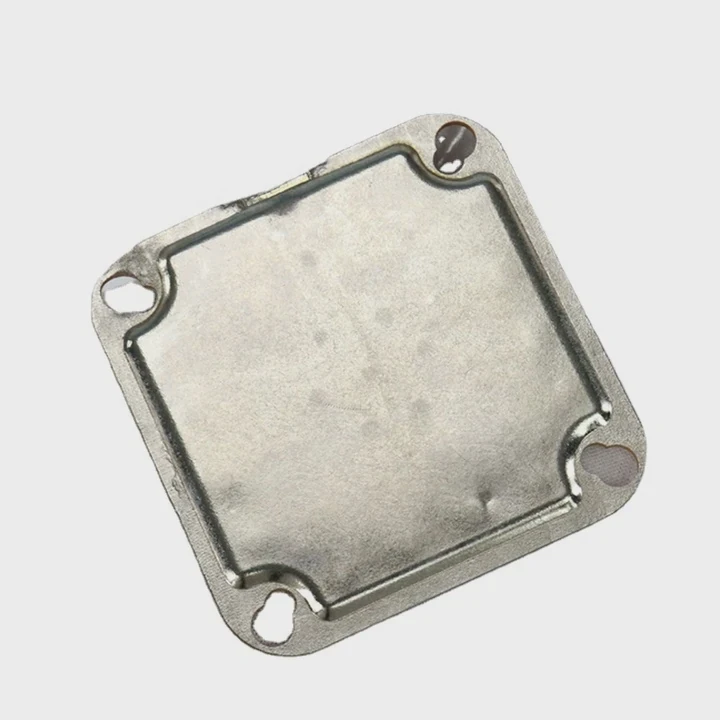
How the combination works
The heat source contacts one side of the vapor chamber. The chamber spreads the heat laterally and transfers it to the module base or cold plate. From there, fins or coolant pathways remove the heat to ambient. The chamber handles spreading; the fins or cold plate handle rejection.
This separation allows each element to be optimised: the chamber for low thermal resistance and spreading; the fins or cold plate for high surface area and heat dissipation.
Design checklist
| Module Component | Role | Design Focus |
|---|---|---|
| Vapor Chamber | Spread heat | Thickness, flatness, bonding |
| Fin Stack (air cooled) | Reject heat to ambient air | Fin density, airflow, pressure drop |
| Cold Plate (liquid cooled) | Reject heat to coolant | Channel design, flow rate, interface |
| Bonding/interface materials | Connect elements | Solder, TIM, adhesive reliability |
Implementation considerations
- Bond the vapor chamber to the fin base or cold plate when high performance is required.
- Choose fin geometry appropriate to air flow available; if flow is limited, chamber helps reduce thermal resistance to allow fewer fins.
- For liquid cooled modules, ensure the chamber interfaces well with the cold plate and coolant loop, and consider shared mounting.
- Support the module mechanically to avoid stresses that may warp the chamber or reduce contact.
Combining vapor chambers with fins or cold plates is the modern standard for high‑performance modules.
Conclusion
Integrating a vapor chamber into a cooling module is a system‑level design challenge. It requires correct selection of chamber size, bonding or clamping strategy, appropriate use of TIM, layered or embedded arrangements where needed, and combination with fins or cold plates. With careful design and execution you can achieve compact, highly efficient thermal modules that meet today’s power‑density demands.
TAGS
Latest Articles

Volume discount levels for heat sink orders?
Buyers often ask when heat sink prices start to drop with volume. Many worry they’re overpaying for small orders. This guide explains how B2B volume pricing works for thermal components. Heat sink
21 Dec,2025
Heat sink long-term supply contract options?
Many buyers want stable pricing and reliable delivery for heat sinks. But without a clear contract, risks grow over time. This article explores how to secure better long-term supply deals. Long-term
21 Dec,2025
Tooling cost for new heat sink profiles?
Many engineers struggle to understand why tooling for custom heat sinks costs so much. They worry about budgeting and production timelines. This article breaks down the cost drivers behind tooling.
21 Dec,2025
Heat sink custom sample process steps?
Sometimes, starting a custom heat sink project feels overwhelming—too many steps, too many unknowns, and too many risks. You want a sample, but not endless delays. The process for requesting and
20 Dec,2025
Standard B2B terms for heat sink payments?
When buyers and sellers in B2B heat sink markets talk about payment, many don’t fully understand what’s standard. This can lead to delayed orders, miscommunication, and even lost business
20 Dec,2025
Heat sink pricing factors for large orders?
Heat sinks are vital for many systems. When prices rise, projects stall and budgets break. This problem can hit teams hard without warning. Large order heat sink pricing depends on many factors. You
20 Dec,2025Related Articles
- Vapor Chamber brazing temperature requirements?
- Vapor Chamber size limitations in manufacturing?
- Vapor Chamber life cycle testing process?
- Vapor Chamber maximum heat flux capacity?
- Vapor Chamber surface flatness tolerance?
- Vapor Chamber for defense industry electronics?
- Which industry uses Vapor Chamber mostly?
- Vapor Chamber roughness standards for contact surfaces?
- Vapor Chamber best filling liquids?
- Vapor Chamber sealing method recommendations?
- How to bond Vapor Chamber to heatsink?
- Can Vapor Chamber be powder coated?
Author
Dr. Emily Chen
Chief AI Researcher
Leading expert in thermal dynamics and AI optimization with over 15 years of experience in data center efficiency research.
Categories
Latest Products






Recommend Categories
- Liquid cooling plate Manufacturer
- Industrial Heat Sink Manufacturer
- Standard Heat Sink Manufacturer
- Aluminum Heat Sink Manufacturer
- Copper Heat Sink Manufacturer
- Anodized Heatsink Manufacturer
- Stamping heat sink Manufacturer
- Die Casting Heatsink Manufacturer
- Soldering heat sink Manufacturer
- CNC Parts Manufacturer
Latest Products
- Wholesale Aluminum Radiator
- Water Cooling Plate Kit
- Water Cooling Heat Sink
- Water Cooling Heat Sink Kit
- Stainless Steel Water Distributor
- Server Water Cooling Plate Kit
- Server Liquid Cooling System
- Server Aluminum Cooling Kit
- S19 Full Cover Cooling Plate
- S19 Cooling Plate Kit
- S19 Aluminum Cooling Plate
Contact Expert
Have questions about this article? Reach out to our experts directly.