Vapor Chamber maximum heat flux capacity?
Designing for extreme power density? You need to know how much heat a vapor chamber can handle—before it fails.
Yes, vapor chambers can manage heat flux up to 300 W/cm² with advanced wick structures, though actual capacity depends on thickness, fluid, and layout.
Let’s break down the real-world limits and what factors raise or lower those thresholds.
What is the max heat flux Vapor Chambers can handle?
Vapor chambers can dissipate much higher heat flux than solid metals, but there’s still a cap. That cap is determined by the wick’s ability to move liquid back to the heat source and the vapor’s ability to flow freely.
Typical vapor chambers handle 50–250 W/cm², with high-end designs reaching 300 W/cm² or more under controlled conditions.
General Heat Flux Ranges
| Vapor Chamber Type | Max Heat Flux (W/cm²) |
|---|---|
| Standard sintered copper | 50–150 |
| Advanced copper composite | 150–250 |
| 3D micro-pillar wick | 250–300+ |
| Dual-layer or looped wick | Up to 350 |
Performance varies based on:
- Fluid type (water, methanol, ammonia)
- Wick type and porosity
- Chamber thickness (thicker units may support higher flux)
- Operating orientation
In practice, the average working flux is designed to be 30–50% lower than the absolute peak, to ensure long-term reliability.
How does wick structure affect heat flux limits?
The wick structure is the most critical factor in vapor chamber performance. It returns condensed liquid to the evaporator zone. If it’s too slow or inconsistent, heat flux capacity crashes.
Wick structure determines capillary force, fluid return rate, and dry-out resistance, which all directly affect heat flux tolerance.
Wick Structure Types and Heat Performance
| Wick Type | Description | Max Heat Flux |
|---|---|---|
| Sintered metal powder | Uniform, high capillary flow | 150–250 W/cm² |
| Grooved channels | Easy to make, but lower capillary lift | 80–120 W/cm² |
| Screen mesh | Low-cost, medium performance | 50–100 W/cm² |
| Composite (mesh + sinter) | Balanced flow and return | 180–300 W/cm² |
| Micro-pillar or lattice | Very high return speed | 250–350 W/cm² |
Wick Design Factors That Affect Heat Flux
- Porosity: Higher porosity improves fluid volume but may lower capillary lift
- Thickness: Thick wick = more fluid, but can slow vapor flow
- Connectivity: Uniform capillary paths prevent local dry-out
- Orientation dependence: Some wicks fail when used vertically
A well-designed wick prevents dry-out at the evaporator and avoids vapor blockage—two common causes of thermal runaway in high-flux chambers.
Are test reports available for max capacity validation?
Yes, serious vapor chamber suppliers provide thermal performance validation reports. These include heat flux test results, dry-out limits, and thermal resistance curves at various loads.
Yes, test reports with validated heat flux capacity and thermal resistance data are typically available upon request for each design.
What’s in a Thermal Test Report?
| Test Item | Purpose |
|---|---|
| Thermal resistance (°C/W) | Measures spreading efficiency |
| Max power (W) | Peak load before performance drops |
| Heat flux (W/cm²) | Confirms surface power handling |
| Evaporator temp rise | Identifies dry-out onset |
| Orientation testing | Verifies wick function when tilted |
How to Read the Report
Most reports show a power input ramp test. As input increases, surface temperature is plotted. A sudden slope change or temp spike means the wick dried out.
Thermal chambers and heat input platforms are used for accurate measurement. Some tests are run in ambient air, others inside sealed modules to simulate use conditions.
These documents help:
- Compare products
- Validate simulation models
- Qualify components for critical systems
Always ask your supplier for:
Sample test data
Lab equipment used
Repeatability range
Does surface area change heat flux tolerance?
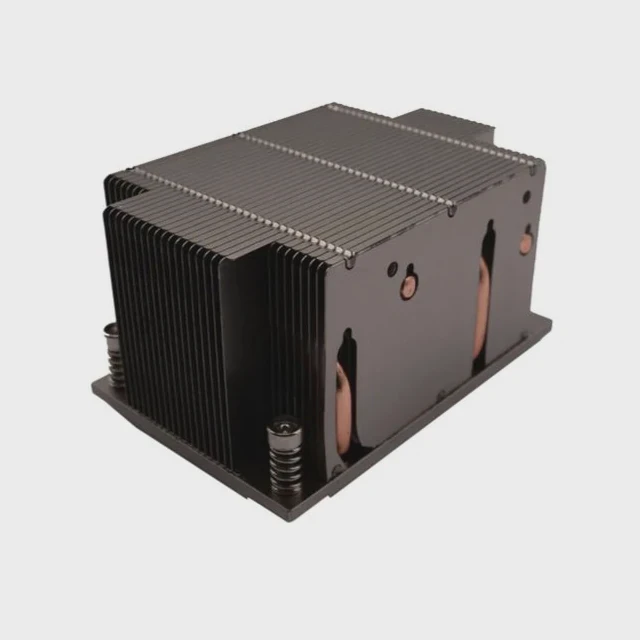
Yes. Heat flux is calculated as power per unit area. If your chamber area is large, even a high total wattage results in a modest heat flux. Small-area designs are where vapor chambers are pushed to their limits.
Yes, smaller vapor chambers face higher heat flux density, which requires better wick design and fluid control to avoid dry-out.
Surface Area vs Heat Flux: Key Points
| Factor | Impact on Heat Flux Handling |
|---|---|
| Larger evaporator area | Lower flux per cm², easier to cool |
| Smaller chamber | Higher flux density, harder to manage |
| Localized hot spots | Risk of burn-out if wick is uneven |
| Multi-source input | Increases total power but spreads load |
For example:
- A 5W heat source on a 1 cm² evaporator = 5 W/cm²
- A 20W load on 0.5 cm² = 40 W/cm²
So:
- A chamber with 40 W total on 10 cm² = 4 W/cm² (low)
- A chamber with 40 W total on 1 cm² = 40 W/cm² (high)
In tight electronics, LED chips, or laser modules, space limits force high flux into tiny zones. These cases demand fine-tuned wick geometry and advanced fluid behavior control.
Conclusion
Vapor chambers can handle extreme heat flux—up to 300 W/cm² or more—but only with proper wick design, testing, and layout. Performance depends on fluid flow, structure, and heat zone size. Always verify with test data before finalizing your design, especially for high-density or compact modules.
TAGS
Latest Articles

Volume discount levels for heat sink orders?
Buyers often ask when heat sink prices start to drop with volume. Many worry they’re overpaying for small orders. This guide explains how B2B volume pricing works for thermal components. Heat sink
21 Dec,2025
Heat sink long-term supply contract options?
Many buyers want stable pricing and reliable delivery for heat sinks. But without a clear contract, risks grow over time. This article explores how to secure better long-term supply deals. Long-term
21 Dec,2025
Tooling cost for new heat sink profiles?
Many engineers struggle to understand why tooling for custom heat sinks costs so much. They worry about budgeting and production timelines. This article breaks down the cost drivers behind tooling.
21 Dec,2025
Heat sink custom sample process steps?
Sometimes, starting a custom heat sink project feels overwhelming—too many steps, too many unknowns, and too many risks. You want a sample, but not endless delays. The process for requesting and
20 Dec,2025
Standard B2B terms for heat sink payments?
When buyers and sellers in B2B heat sink markets talk about payment, many don’t fully understand what’s standard. This can lead to delayed orders, miscommunication, and even lost business
20 Dec,2025
Heat sink pricing factors for large orders?
Heat sinks are vital for many systems. When prices rise, projects stall and budgets break. This problem can hit teams hard without warning. Large order heat sink pricing depends on many factors. You
20 Dec,2025Related Articles
- Vapor Chamber surface flatness tolerance?
- Vapor Chamber for defense industry electronics?
- Standard Vapor Chamber copper purity requirements?
- Does Vapor Chamber support rapid prototyping?
- Vapor Chamber impact resistance specifications?
- Can Vapor Chamber work in subzero temperatures?
- Vapor Chamber life cycle testing process?
- Vapor Chamber size limitations in manufacturing?
- Vapor Chamber brazing temperature requirements?
- Vapor Chamber integration in cooling modules?
- Which industry uses Vapor Chamber mostly?
- Vapor Chamber roughness standards for contact surfaces?
Author
Dr. Emily Chen
Chief AI Researcher
Leading expert in thermal dynamics and AI optimization with over 15 years of experience in data center efficiency research.
Categories
Latest Products






Recommend Categories
- Liquid cooling plate Manufacturer
- Industrial Heat Sink Manufacturer
- Standard Heat Sink Manufacturer
- Aluminum Heat Sink Manufacturer
- Copper Heat Sink Manufacturer
- Anodized Heatsink Manufacturer
- Stamping heat sink Manufacturer
- Die Casting Heatsink Manufacturer
- Soldering heat sink Manufacturer
- CNC Parts Manufacturer
Latest Products
- Wholesale Aluminum Radiator
- Water Cooling Plate Kit
- Water Cooling Heat Sink
- Water Cooling Heat Sink Kit
- Stainless Steel Water Distributor
- Server Water Cooling Plate Kit
- Server Liquid Cooling System
- Server Aluminum Cooling Kit
- S19 Full Cover Cooling Plate
- S19 Cooling Plate Kit
- S19 Aluminum Cooling Plate
Contact Expert
Have questions about this article? Reach out to our experts directly.