Vapor Chamber roughness standards for contact surfaces?
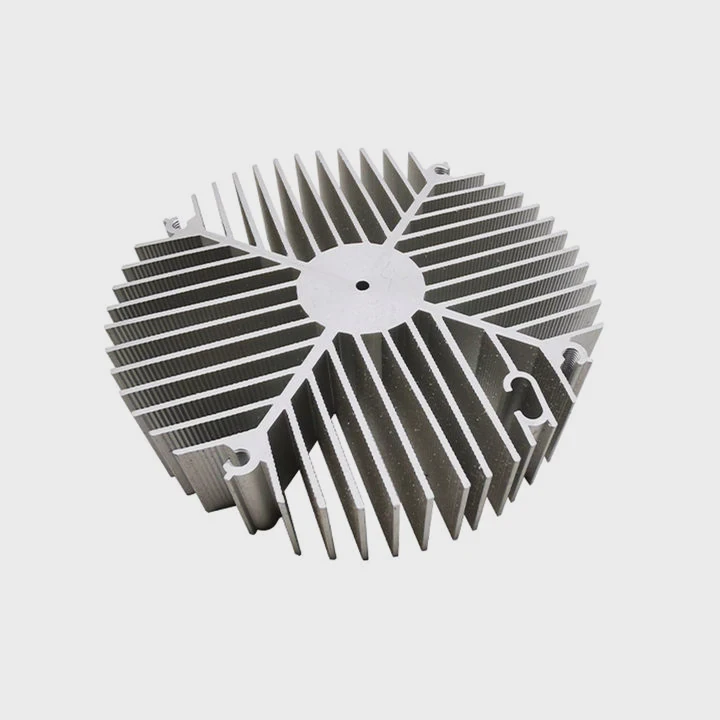
In the world of thermal management, the roughness of contact surfaces often hides in plain sight. Without proper control of surface finish, a high‑performance vapor chamber can underperform or fail.
Yes, the roughness must fall within a narrow window to ensure low interface resistance and stable contact.
In the paragraphs below I will explain the key standards for contact surface roughness on vapor chambers, how those surfaces are measured, how roughness affects thermal interface resistance, and whether lapped surfaces consistently improve performance. My goal is to give you clear guidelines you can apply when specifying or evaluating a vapor chamber system.
What is the required roughness for contact surfaces?
Rough contact surfaces look harmless but act like thermal insulators. Even a tiny ridge or scratch can introduce unexpected resistance and performance drops.
The required roughness for vapor chamber contact surfaces is typically Ra 0.2–0.8 µm to ensure efficient thermal contact without costly overprocessing.
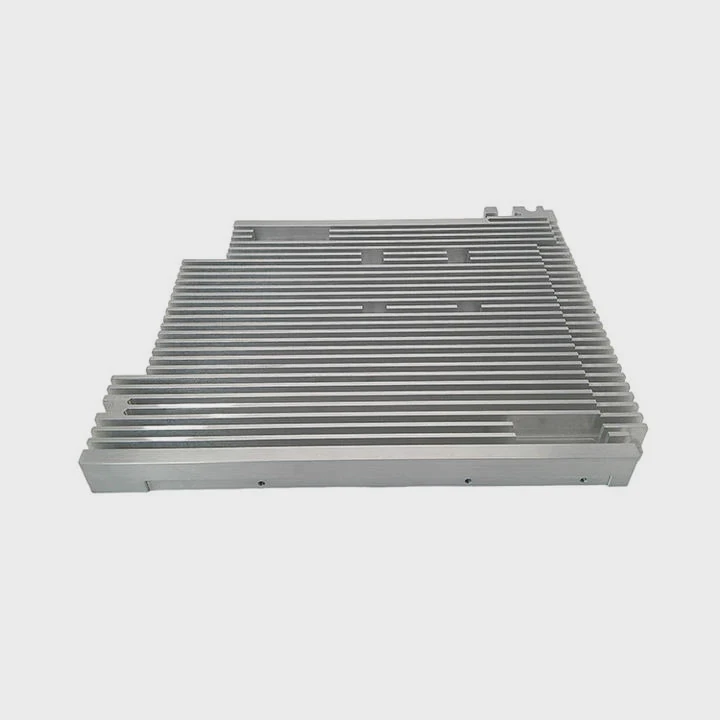
For most vapor chambers used in electronics cooling, the critical mating surface must strike a balance between smoothness and manufacturability. A surface that is too rough forms micro-air gaps; too smooth, and it may trap contaminants or cost too much to produce.
| Surface finish parameter | Recommended range |
|---|---|
| Ra (µm) | 0.2–0.8 |
| Rz (µm) | 1.0–4.0 |
| Flatness (µm) | ≤ 20 (per 100mm²) |
Many manufacturers aim for around Ra 0.4–0.5 µm as a practical standard. This level reduces thermal interface resistance while being achievable with grinding or fine milling.
In actual applications, the target finish can vary depending on the TIM used, the contact pressure, and how flat the mating part is. For example, with a graphite pad as TIM, a Ra of 0.6–0.7 µm may be acceptable. But if using direct metal contact, smoother surfaces are necessary.
When creating the specification, always define:
- The Ra target and allowed tolerance
- The measurement method (profilometer, location, direction)
- Any post-processing cleaning or protection needed
This ensures everyone, from supplier to end-user, shares the same understanding of what “smooth enough” means in thermal design.
How is surface roughness measured in production?
It’s one thing to define Ra 0.4 µm on a drawing — but how do factories ensure they consistently deliver this spec on every unit?
Surface roughness is typically measured using stylus profilometers, sampled at key locations under controlled cleaning and orientation rules.
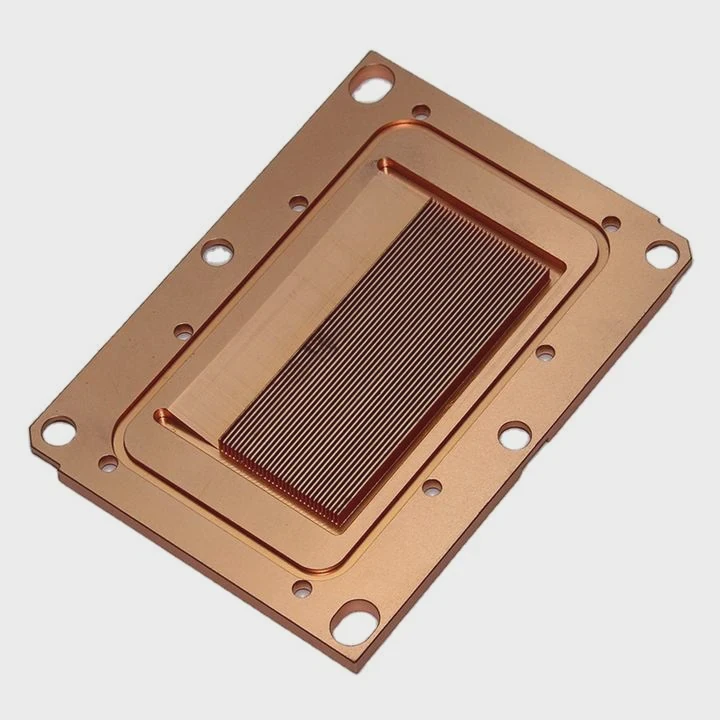
In manufacturing, the most common method is the stylus profilometer. A diamond tip traces across the metal surface, capturing height changes and computing Ra, Rz, and other values.
Common Measurement Practices
| Parameter | Value |
|---|---|
| Tool type | Stylus profilometer |
| Trace length | 4–8 mm |
| Sample locations | Center + 2 corners |
| Sampling frequency | 100% for prototypes, 10% for production |
| Cleaning method | Alcohol wipe + air dry |
Some manufacturers use non-contact optical profilometers, especially for ultra-flat parts or where surface coatings might be disturbed. However, for most aluminum or copper vapor chambers, stylus methods are accurate enough and faster.
Measurement always follows finishing steps like grinding or CNC milling. The part must be cleaned of oil, chips, or oxidation. Otherwise, even a small particle can throw off readings.
In advanced lines, surface quality data feeds back into process control. For example, if Ra values begin trending toward 0.8 µm over multiple lots, the system flags tool wear or coolant issues. This helps reduce scrap and ensure thermal specs stay consistent.
In high-volume production, it’s also common to set pass/fail limits using Go/No-Go gauges or visual templates in addition to metrology tools. This streamlines QC without losing oversight.
By measuring roughness at consistent points, using the same direction and speed, and recording data over time, manufacturers can deliver tight tolerances batch after batch.
Does roughness affect thermal interface resistance?
You can’t see it, but surface roughness creates hidden thermal bottlenecks that can derail your whole design.
Yes, higher roughness increases thermal interface resistance by reducing real contact area and increasing air gaps.
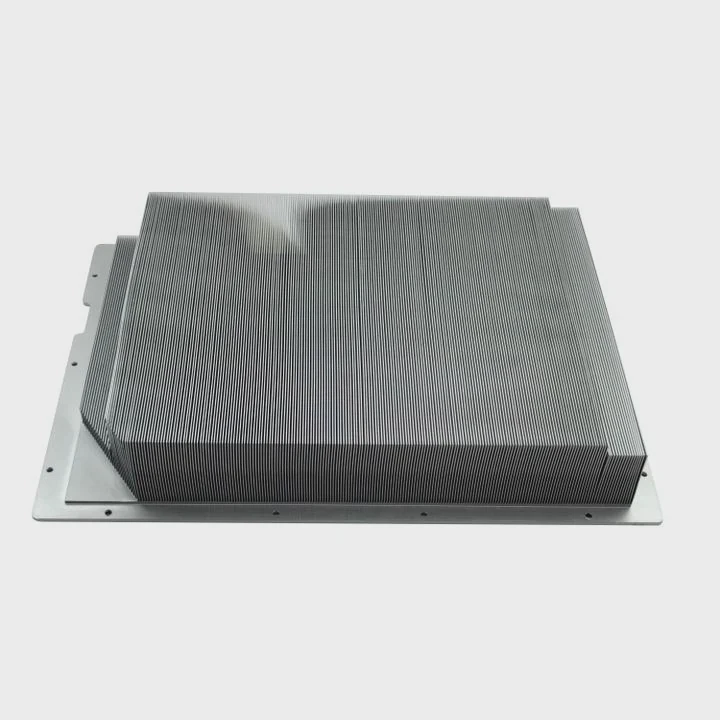
When two solid surfaces touch, only their peaks make contact. The valleys between them trap air, which has much lower thermal conductivity. As a result, even though the surfaces “look” flat, heat faces barriers on its path.
How Surface Finish Impacts TIR
| Roughness (Ra µm) | Interface Resistance (K·cm²/W)* |
|---|---|
| 0.8 | ~0.12 |
| 0.5 | ~0.09 |
| 0.3 | ~0.07 |
| 0.2 | ~0.065 |
*Test conditions: copper-to-copper, 2MPa clamp pressure, no TIM
This means that by reducing Ra from 0.8 to 0.3 µm, you can cut interface resistance nearly in half. For systems pushing 100W or more through small contact zones, that’s a real advantage.
Other Factors at Play
Surface finish isn’t the only thing that matters:
- Flatness: A smooth surface can still perform poorly if it’s not flat.
- Contact pressure: Higher pressure reduces gaps.
- TIM quality: Some TIMs fill micro-valleys better than others.
- Surface cleanliness: Dirt, oxidation, or residues add resistance.
In our thermal labs, we’ve seen that some systems fail validation not because the vapor chamber was too small — but because the contact finish was out of spec. A 0.15 K/W increase at the interface can shift a system from passing to failing its thermal budget.
Always verify not just material and size, but surface finish and how the chamber mates with the heat source. That’s where hidden losses live.
Are lapped surfaces better for performance?
When performance margins are razor-thin, teams often ask: should we go beyond grinding and fully lap the surface?
Lapped surfaces can lower interface resistance further, but the gains are often marginal unless contact pressure is low or no TIM is used.
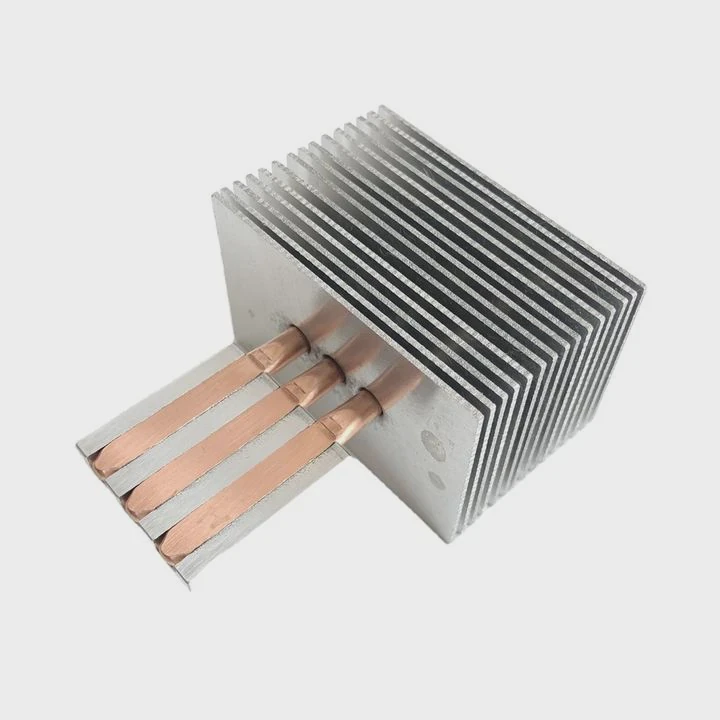
Lapping creates extremely smooth, flat finishes — often below Ra 0.1 µm and planarity within 1 µm. That sounds ideal. But what do you really gain?
Comparing Finishes
| Surface Type | Ra (µm) | Interface Resistance (K·cm²/W) |
|---|---|---|
| Milled + ground | 0.5 | ~0.09 |
| Lapped | 0.12 | ~0.085 |
In many tests, moving from a good ground finish (Ra 0.4–0.5) to a lapped finish (Ra 0.1–0.2) yields only a small drop — maybe 5–10%. Unless your system is extremely sensitive, that’s often not worth the cost.
Lapping also adds time and process steps. If your volumes are high, this can double lead time or increase cost by 30–40%.
When Lapping Makes Sense
- No TIM used (bare copper-to-copper contact)
- Very low contact pressure (under 0.5MPa)
- Ultra-flat mating surfaces (like laser or RF devices)
- Critical power density (above 10 W/cm²)
But in most consumer or industrial products, a well-ground Ra 0.4 µm surface with good pressure and TIM performs almost identically. The thermal bottleneck often moves elsewhere — to the heat sink or ambient side.
If you do choose lapping, make sure to validate both flatness and roughness. A shiny part isn’t always a flat one.
Conclusion
Surface roughness on vapor chamber contact areas directly affects thermal performance. Set realistic Ra targets (like 0.4–0.5 µm), confirm them with profilometer checks, and only consider lapping when your system truly needs every bit of resistance shaved down. A controlled finish equals consistent cooling.
TAGS
Latest Articles

Volume discount levels for heat sink orders?
Buyers often ask when heat sink prices start to drop with volume. Many worry they’re overpaying for small orders. This guide explains how B2B volume pricing works for thermal components. Heat sink
21 Dec,2025
Heat sink long-term supply contract options?
Many buyers want stable pricing and reliable delivery for heat sinks. But without a clear contract, risks grow over time. This article explores how to secure better long-term supply deals. Long-term
21 Dec,2025
Tooling cost for new heat sink profiles?
Many engineers struggle to understand why tooling for custom heat sinks costs so much. They worry about budgeting and production timelines. This article breaks down the cost drivers behind tooling.
21 Dec,2025
Heat sink custom sample process steps?
Sometimes, starting a custom heat sink project feels overwhelming—too many steps, too many unknowns, and too many risks. You want a sample, but not endless delays. The process for requesting and
20 Dec,2025
Standard B2B terms for heat sink payments?
When buyers and sellers in B2B heat sink markets talk about payment, many don’t fully understand what’s standard. This can lead to delayed orders, miscommunication, and even lost business
20 Dec,2025
Heat sink pricing factors for large orders?
Heat sinks are vital for many systems. When prices rise, projects stall and budgets break. This problem can hit teams hard without warning. Large order heat sink pricing depends on many factors. You
20 Dec,2025Related Articles
- Which industry uses Vapor Chamber mostly?
- Vapor Chamber integration in cooling modules?
- Vapor Chamber brazing temperature requirements?
- Vapor Chamber size limitations in manufacturing?
- Vapor Chamber life cycle testing process?
- Vapor Chamber maximum heat flux capacity?
- Vapor Chamber best filling liquids?
- Vapor Chamber sealing method recommendations?
- How to bond Vapor Chamber to heatsink?
- Can Vapor Chamber be powder coated?
- Does Vapor Chamber need thermal insulation?
- Noise impact of Vapor Chamber operation?
Author
Dr. Emily Chen
Chief AI Researcher
Leading expert in thermal dynamics and AI optimization with over 15 years of experience in data center efficiency research.
Categories
Latest Products






Recommend Categories
- Liquid cooling plate Manufacturer
- Industrial Heat Sink Manufacturer
- Standard Heat Sink Manufacturer
- Aluminum Heat Sink Manufacturer
- Copper Heat Sink Manufacturer
- Anodized Heatsink Manufacturer
- Stamping heat sink Manufacturer
- Die Casting Heatsink Manufacturer
- Soldering heat sink Manufacturer
- CNC Parts Manufacturer
Latest Products
- Wholesale Aluminum Radiator
- Water Cooling Plate Kit
- Water Cooling Heat Sink
- Water Cooling Heat Sink Kit
- Stainless Steel Water Distributor
- Server Water Cooling Plate Kit
- Server Liquid Cooling System
- Server Aluminum Cooling Kit
- S19 Full Cover Cooling Plate
- S19 Cooling Plate Kit
- S19 Aluminum Cooling Plate
Contact Expert
Have questions about this article? Reach out to our experts directly.