Vapor Chamber best filling liquids?
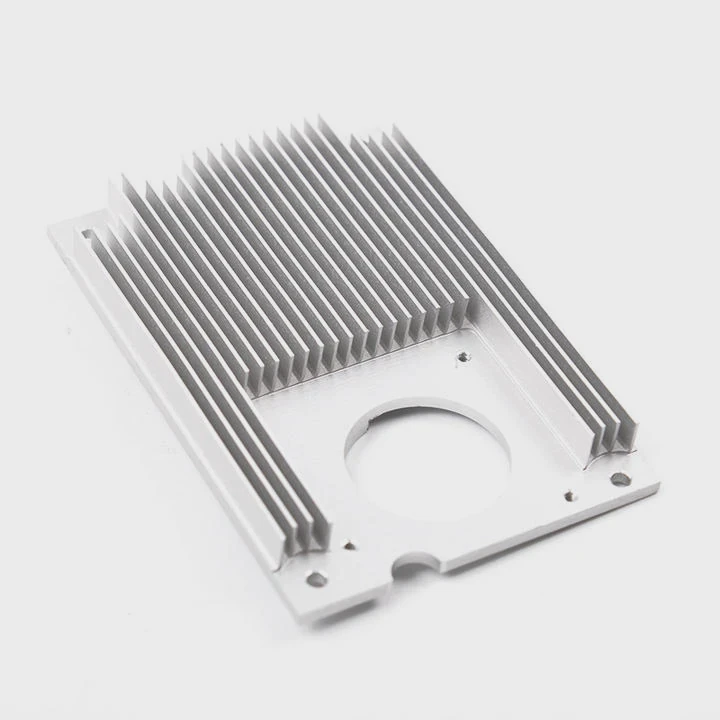
We face big trouble when a vapor chamber under‑performs and overheats—what if the wrong fluid is to blame?
Yes, choosing the correct working fluid for a vapor chamber is vital. The right fluid reduces thermal resistance, supports phase‑change, and aligns with the device’s temperature/geometry constraints.
Now let’s explore key questions step by step: what liquids are best, how they affect performance, what special fluids exist, and how application conditions drive the choice.
What liquids are best for filling Vapor Chambers?
Imagine your vapor chamber stuck with a fluid that boils too late or freezes too early—suddenly the cooling fails.
For many electronics cooling vapor chambers, de‑ionized water is the default best choice because of its favourable latent heat, surface tension, and compatibility with common wick/envelope materials.
When selecting a liquid for a vapor chamber, several fluid properties matter: boiling point (saturation temperature), latent heat of vaporisation, vapour pressure at operating temperature, surface tension (which affects capillary return), compatibility with wick/envelope materials (corrosion, wettability), viscosity of liquid phase, vapour density and viscosity, and how the fluid behaves under cyclic heating/cooling.
Key fluid properties and implications
| Property | Why it matters |
|---|---|
| Saturation temperature at working pressure | If too high, fluid may not boil; if too low, risk of dry‑out or low heat flux handling |
| Latent heat | Higher latent heat means more heat removal for phase change, lowering thermal resistance |
| Surface tension & wick‑liquid interaction | Capillary return must be sufficient to carry condensed fluid back to the evaporator |
| Vapour and liquid viscosity | Higher viscosity increases pressure drops, limits transport and increases thermal resistance |
| Material compatibility (corrosion, wetting) | Fluid must not damage wick/envelope or degrade performance over lifetime |
In practice many vapor chambers for electronics use de‑ionised water in a copper enclosure with a sintered copper wick. One source notes: “At this temperature range (50‑100°C) water is the best working fluid” for electronics applications.
Another study explains:
“The behaviour of a vapor chamber is strongly coupled to the thermophysical properties of the working fluid … A working fluid is sought … that provides the minimal thermal resistance while ensuring a capillary limit is not reached.”
Therefore choosing water aligns well with many moderate‑temperature electronics applications because it offers a strong phase change effect, compatible boiling/condensation behaviour, established wick design practice, and good thermal properties.
Practical guidelines
- If your vapor chamber is operating in ambient to ~100 °C range, water is often the best filling fluid.
- Ensure the liquid is de‑ionised / purified to minimise non‑condensable gases and contamination.
- Make sure the wick and envelope materials (e.g., copper, nickel‑plated copper) are highly compatible with the fluid.
- Verify that the vacuum evacuation and fill process is controlled to avoid residual air or unwanted gases.
When water may not be the best
- If the operating temperatures are very low or very high such that water’s boiling/condensation behaviour is not optimal.
- If the envelope or wick materials are incompatible.
- If orientation or gravity return constraints require a different fluid.
How does working fluid affect performance?
When the fluid choice is wrong, you might see increased thermal resistance, dry‑out, or capillary failure—and the cooling system fails quietly.
The working fluid affects a vapor chamber’s thermal resistance, maximum heat load (capillary limit), orientation sensitivity, and stability—because fluid properties govern evaporation, condensation, and fluid return cycles.
Let’s break down how fluid choice impacts performance of a vapor chamber in more detail.
Evaporation and condensation efficiency
The fluid must boil effectively at the evaporator surface when heat is applied. If the latent heat is high, the phase‑change cycle can remove more energy. If the saturation pressure is mismatched, condensation may fail or become inefficient.
Capillary return and fluid transport
After condensation, the liquid must return via the wick. Capillary pressure in the wick must overcome pressure drop in liquid and vapour transport paths.
“The current work explores working fluid selection … the choice of working fluid cannot be based on a single figure of merit containing only fluid properties.”
Thermal resistance and geometry
In ultra‑thin vapor chambers, the vapour core’s saturation temperature gradient dominates the thermal resistance. Even with perfect wick and geometry, fluid limits remain.
“At small thicknesses, the thermal resistance of vapor chambers becomes governed by the saturation temperature gradient in the vapor core, which is dependent on the thermophysical properties of the working fluid.”
Operational limits
| Limit | What it means |
|---|---|
| Capillary limit | Wick cannot return enough liquid; dry‑out risk |
| Boiling limit | Low evaporation reduces heat transport |
| Orientation limit | Fluid may not return well in off‑axis or inverted use |
A fill ratio study described how different fill levels change thermal resistance based on heat load.
Summary
- Good latent heat and proper boiling point lower thermal resistance
- Capillary return must be reliable to avoid dry‑out
- Fluid must match geometry and temperature profile
- Long-term reliability depends on fluid stability and material interaction
Are non-water fluids used in special designs?
Yes — when the temperature, environment, or materials push water beyond its comfort zone, engineers turn to alternate fluids.
Non‑water fluids (e.g., alcohols, ammonia, dielectric fluorocarbons) are used when operating temperatures, envelope/compatibility constraints, insulation or electronics safety require them—but they often bring trade‑offs in performance, cost or complexity.
Let’s examine scenarios where non‑water fluids are used.
When to use alternate fluids
- Low or high temperature extremes
- Dielectric requirements
- Incompatible materials
- Special orientation or space environments
Fluids like ammonia and methanol are used in lower temperature settings. Dielectric fluorocarbons are ideal for electronics where fluid contact might occur.
Trade-offs
| Trade-off | Effect |
|---|---|
| Lower latent heat | Higher thermal resistance |
| More expensive | Higher BOM cost |
| Handling difficulty | Special fill/evacuation systems |
| Design complexity | Requires custom wick/fluid setup |
Example Fluids
- Methanol: low-temp use
- Ammonia: aerospace
- Fluorinert: dielectric safety
- Ethanol: in some prototypes
To switch fluids, manufacturers must test compatibility, seal quality, and long-term stability. Design cost increases but may be necessary.
Is fluid type chosen by application conditions?
Absolutely—choosing the fluid is not arbitrary; it must match the application’s heat load, temperature profile, geometry, orientation, and material constraints.
Yes, the fluid type is selected based on application conditions including operating temperature range, heat flux, orientation/gravity, material compatibility, required lifetime and cost/trade‑offs.
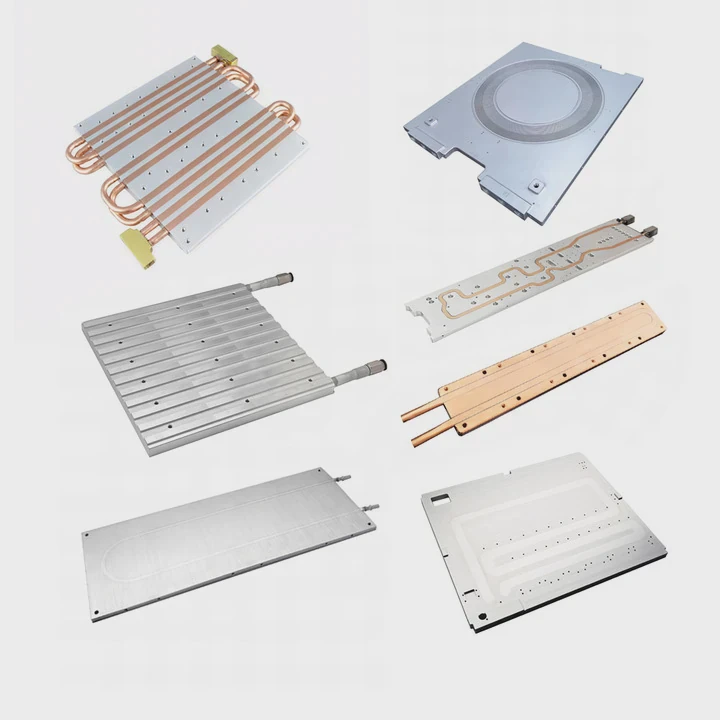
Let’s unpack how different application conditions influence fluid choice.
Key factors
- Operating temperature
- Heat flux
- Geometry and orientation
- Material compatibility
- Electrical/safety constraints
Example: A laptop’s vapor chamber (under 100°C, thin profile) favors water. A high-power radar device (‑40°C to +85°C, dielectric needed) may use a fluorocarbon.
Design process
- Define thermal load and geometry
- List temperature range
- Determine material/compatibility
- Model capillary flow
- Choose fluid with matching properties
Summary
The fluid choice follows the application’s physical and thermal demands. Standard electronics use water. Special conditions need deeper analysis and sometimes expensive, custom fluids.
Conclusion
Choosing the right working fluid for a vapor chamber is a core design decision—it affects thermal resistance, maximum heat handling, orientation sensitivity, reliability and manufacturability. For most electronics cooling vapor chambers, de‑ionised water in a compatible copper wick/envelope is the best starting point. For advanced or extreme applications, alternate fluids may be justified but bring trade‑offs. Always match the fluid to the full set of application conditions—temperature range, heat load, geometry, orientation, material compatibility and lifetime.
TAGS
Latest Articles

Volume discount levels for heat sink orders?
Buyers often ask when heat sink prices start to drop with volume. Many worry they’re overpaying for small orders. This guide explains how B2B volume pricing works for thermal components. Heat sink
21 Dec,2025
Heat sink long-term supply contract options?
Many buyers want stable pricing and reliable delivery for heat sinks. But without a clear contract, risks grow over time. This article explores how to secure better long-term supply deals. Long-term
21 Dec,2025
Tooling cost for new heat sink profiles?
Many engineers struggle to understand why tooling for custom heat sinks costs so much. They worry about budgeting and production timelines. This article breaks down the cost drivers behind tooling.
21 Dec,2025
Heat sink custom sample process steps?
Sometimes, starting a custom heat sink project feels overwhelming—too many steps, too many unknowns, and too many risks. You want a sample, but not endless delays. The process for requesting and
20 Dec,2025
Standard B2B terms for heat sink payments?
When buyers and sellers in B2B heat sink markets talk about payment, many don’t fully understand what’s standard. This can lead to delayed orders, miscommunication, and even lost business
20 Dec,2025
Heat sink pricing factors for large orders?
Heat sinks are vital for many systems. When prices rise, projects stall and budgets break. This problem can hit teams hard without warning. Large order heat sink pricing depends on many factors. You
20 Dec,2025Related Articles
- Vapor Chamber roughness standards for contact surfaces?
- Which industry uses Vapor Chamber mostly?
- Vapor Chamber integration in cooling modules?
- Vapor Chamber brazing temperature requirements?
- Vapor Chamber size limitations in manufacturing?
- Vapor Chamber life cycle testing process?
- Vapor Chamber sealing method recommendations?
- How to bond Vapor Chamber to heatsink?
- Can Vapor Chamber be powder coated?
- Does Vapor Chamber need thermal insulation?
- Noise impact of Vapor Chamber operation?
- Vapor Chamber machining cost breakdown?
Author
Dr. Emily Chen
Chief AI Researcher
Leading expert in thermal dynamics and AI optimization with over 15 years of experience in data center efficiency research.
Categories
Latest Products






Recommend Categories
- Liquid cooling plate Manufacturer
- Industrial Heat Sink Manufacturer
- Standard Heat Sink Manufacturer
- Aluminum Heat Sink Manufacturer
- Copper Heat Sink Manufacturer
- Anodized Heatsink Manufacturer
- Stamping heat sink Manufacturer
- Die Casting Heatsink Manufacturer
- Soldering heat sink Manufacturer
- CNC Parts Manufacturer
Latest Products
- Wholesale Aluminum Radiator
- Water Cooling Plate Kit
- Water Cooling Heat Sink
- Water Cooling Heat Sink Kit
- Stainless Steel Water Distributor
- Server Water Cooling Plate Kit
- Server Liquid Cooling System
- Server Aluminum Cooling Kit
- S19 Full Cover Cooling Plate
- S19 Cooling Plate Kit
- S19 Aluminum Cooling Plate
Contact Expert
Have questions about this article? Reach out to our experts directly.