Vapor Chamber technical drawing requirements?
Facing late quotes, ambiguous drawing data and rework due to missing details? Incomplete drawings cause delays and cost.
Technical drawings for vapor chambers must clearly define geometry, materials, welds/seals, internal features (wick, posts), tolerances, any GD&T, and digital 3D files to enable quoting, manufacture and quality control.
Let’s unpack this topic by asking four key questions and diving into what each drawing must include, how detailed tolerancing should be, whether 3D files are needed, and what formats work best.
What must be included in Vapor Chamber drawings?
When a drawing lacks detail, manufacturers ask a lot of additional questions and projects stall.
A proper vapor‑chamber drawing must include all planar dimensions (length, width, thickness), location and size of features (pedestals, mounting holes), material specification, internal structure (wick/post layout), seal/weld methods, vacuum fill info, flatness/parallelism, and assembly instructions.
In my experience working with thermal management components, I’ve seen many “almost ready” drawings that still caused confusion because they omitted key items. For a vapor chamber, a sealed two‑phase device, the drawing must go beyond just outer dimensions. It should cover:
Essential drawing contents
- Overall geometry: outer length, width, height (or thickness) of the vapor chamber
- Mounting/Interface features: location, size and tolerance of mounting holes, pedestals, bosses, contact surfaces
- Internal features: wick or mesh region, support posts, fill port location, pressure rating
- Sealing and material specification: copper plates, wick, water fill, welding or bonding method
- Tolerance and flatness: critical for thermal interfaces; flatness under 0.1 mm is typical
- Surface finish: especially for thermal contact areas
- Bill of materials and part numbers
- Special notes: vacuum pressure, fill method, pressure capacity
- Drawing number and revision history
- Key dimensions flagged for inspection
Without full definition, suppliers may assume defaults that lead to cost or quality issues. Proper drawings cut ambiguity and delays.
Tips for drawing preparation
- Include multiple views and sectional drawings
- Use call‑outs for hidden features
- Involve the supplier early to clarify features
- Always include a full dimension and tolerance chart
A “good” vapor chamber drawing removes uncertainty and speeds up quoting and production.
Do drawings need GD&T for Vapor Chamber design?
Tolerancing by generic plus/minus is often used, but sometimes you need precision features, especially where alignment or flatness affects performance.
Yes — using geometric dimensioning & tolerancing (GD&T) is recommended when the vapor chamber has critical features (flatness of interface, bore positions, datum surfaces, posts) to control assembly, alignment and thermal performance; but GD&T should be applied only where function demands it.
GD&T lets you precisely define form, orientation, location, and profile. It’s useful when:
When GD&T is beneficial
- Flatness of the evaporator interface
- Parallelism between top and bottom faces
- Position of mounting holes
- Orientation of fill ports or pedestals
When standard tolerances are enough
If the vapor chamber is free-standing or not aligned to tight hardware, simple ± tolerances are fine. Too much GD&T adds cost and complexity.
How to use GD&T wisely
- Apply to functional features only
- Choose proper datums
- Avoid over-dimensioning
- Verify manufacturer’s ability to inspect
- Include symbols and tolerance tables
Use GD&T where alignment, assembly, or thermal interface requires precision. Skip it for non-critical areas. Apply it with intent.
Are 3D files mandatory for quoting Vapor Chambers?
Often drawing PDFs are provided alone, but quoting manufacturers may ask for 3D CAD models to reduce ambiguity and speed quoting.
While not strictly mandatory, providing 3D CAD files (e.g., STEP, IGES) along with 2D drawings significantly speeds quoting and reduces assumptions, especially for complex vapor chamber geometry or tight packaging environments.
3D files help explain geometry, especially for internal parts. For vapor chambers, they are useful because:
Benefits of 3D models
- Clarify complex shapes and internal structure
- Speed up quoting
- Reduce questions from suppliers
- Help check fit and clearance in system assemblies
- Aid CAM and tooling preparation
When 3D is needed
- Custom shapes
- Complex internal posts or pedestals
- Tight packaging constraints
- Multiple height levels or zones
When 2D might be enough
- Simple rectangular shape
- Fully defined drawing with all dimensions
- Known standard chamber type
Best practice
Even when not required, always include STEP or IGES with RFQ. It reduces back-and-forth and ensures all geometry is understood.
For custom vapor chambers, especially for OEM clients, make 3D models part of your standard RFQ checklist.
What format is preferred for Vapor Chamber blueprints?
Different manufacturers support different file formats — mismatches cause delays or errors in data translation.
Preferred blueprint formats for vapor chamber manufacturing include a combination of 2D drawing (PDF or DWG/DXF with full call‑outs) plus a neutral 3D CAD file (STEP AP203/214 or IGES), and when tolerance or manufacturing data is needed, a native CAD file or 3D PDF may also help.
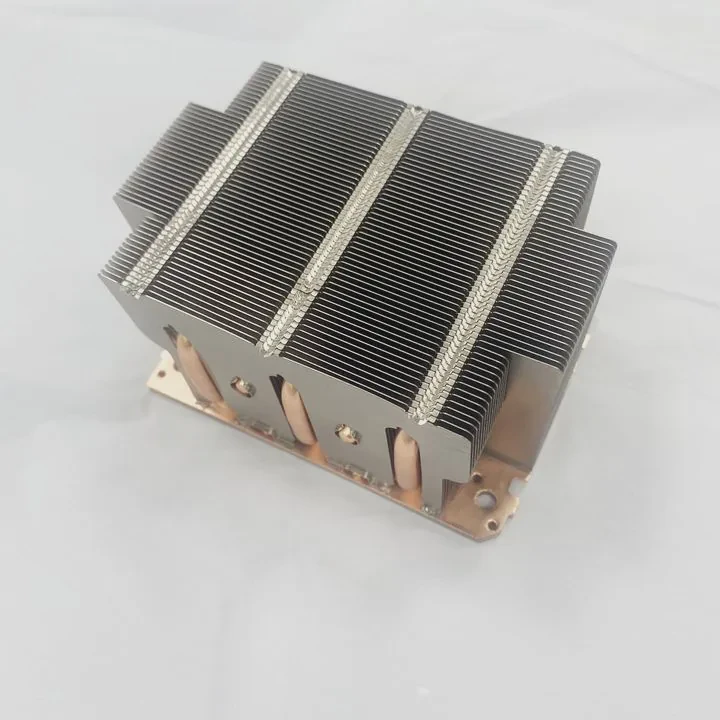
Here’s what works best for most suppliers:
Recommended formats
- 2D drawings: PDF (for viewing), DWG/DXF (for editable CAD)
- 3D models: STEP or IGES (for compatibility)
- Native CAD: SolidWorks (.SLDPRT), Creo (.PRT), optional
- 3D PDF: helpful for visualization or non-CAD users
Always include units, version, and internal features clearly marked.
Format recommendation table
| Format Type | Preferred Extension(s) | Purpose |
|---|---|---|
| 2D Drawing | .PDF, .DWG, .DXF | Dimensioning, call‑outs, tolerancing |
| 3D Model (Neutral) | .STEP, .STP, .IGES | Geometry import for tooling/manufacture |
| Native CAD | .SLDPRT/.SLDASM, .PRT/.ASM | Full design data, optional |
| 3D PDF | .PDF (with PRC) | Review or presentation |
Set your standard: ask customers to provide PDF + DWG + STEP. That ensures clarity, faster quoting, and fewer errors.
Conclusion
In designing and quoting vapor chambers, a well‑prepared technical drawing is your communication bridge to manufacturing. Include detailed geometry, internal features, materials and processes; use GD&T where required; supply 3D CAD models to streamline quoting; and choose standard file formats (PDF/DWG for drawings, STEP/IGES for 3D). With these elements in place you minimise ambiguity, accelerate quoting and improve manufacturability.
TAGS
Latest Articles

Volume discount levels for heat sink orders?
Buyers often ask when heat sink prices start to drop with volume. Many worry they’re overpaying for small orders. This guide explains how B2B volume pricing works for thermal components. Heat sink
21 Dec,2025
Heat sink long-term supply contract options?
Many buyers want stable pricing and reliable delivery for heat sinks. But without a clear contract, risks grow over time. This article explores how to secure better long-term supply deals. Long-term
21 Dec,2025
Tooling cost for new heat sink profiles?
Many engineers struggle to understand why tooling for custom heat sinks costs so much. They worry about budgeting and production timelines. This article breaks down the cost drivers behind tooling.
21 Dec,2025
Heat sink custom sample process steps?
Sometimes, starting a custom heat sink project feels overwhelming—too many steps, too many unknowns, and too many risks. You want a sample, but not endless delays. The process for requesting and
20 Dec,2025
Standard B2B terms for heat sink payments?
When buyers and sellers in B2B heat sink markets talk about payment, many don’t fully understand what’s standard. This can lead to delayed orders, miscommunication, and even lost business
20 Dec,2025
Heat sink pricing factors for large orders?
Heat sinks are vital for many systems. When prices rise, projects stall and budgets break. This problem can hit teams hard without warning. Large order heat sink pricing depends on many factors. You
20 Dec,2025Related Articles
- Collaborative development for Vapor Chamber projects?
- How to recycle Vapor Chamber materials?
- Vapor Chamber market growth forecast?
- Vapor Chamber export compliance checklist?
- Vapor Chamber for consumer electronics?
- How efficient is Vapor Chamber cooling?
- Vapor Chamber for industrial heat dissipation solutions?
- Does Vapor Chamber support high frequency chips?
- Vapor Chamber application in automotive battery cooling?
- Recommended Vapor Chamber assembly process?
- How to optimize Vapor Chamber thermal performance?
- Vapor Chamber design parameters for heavy machinery?
Author
Dr. Emily Chen
Chief AI Researcher
Leading expert in thermal dynamics and AI optimization with over 15 years of experience in data center efficiency research.
Categories
Latest Products






Recommend Categories
- Liquid cooling plate Manufacturer
- Industrial Heat Sink Manufacturer
- Standard Heat Sink Manufacturer
- Aluminum Heat Sink Manufacturer
- Copper Heat Sink Manufacturer
- Anodized Heatsink Manufacturer
- Stamping heat sink Manufacturer
- Die Casting Heatsink Manufacturer
- Soldering heat sink Manufacturer
- CNC Parts Manufacturer
Latest Products
- Wholesale Aluminum Radiator
- Water Cooling Plate Kit
- Water Cooling Heat Sink
- Water Cooling Heat Sink Kit
- Stainless Steel Water Distributor
- Server Water Cooling Plate Kit
- Server Liquid Cooling System
- Server Aluminum Cooling Kit
- S19 Full Cover Cooling Plate
- S19 Cooling Plate Kit
- S19 Aluminum Cooling Plate
Contact Expert
Have questions about this article? Reach out to our experts directly.