How to optimize Vapor Chamber thermal performance?
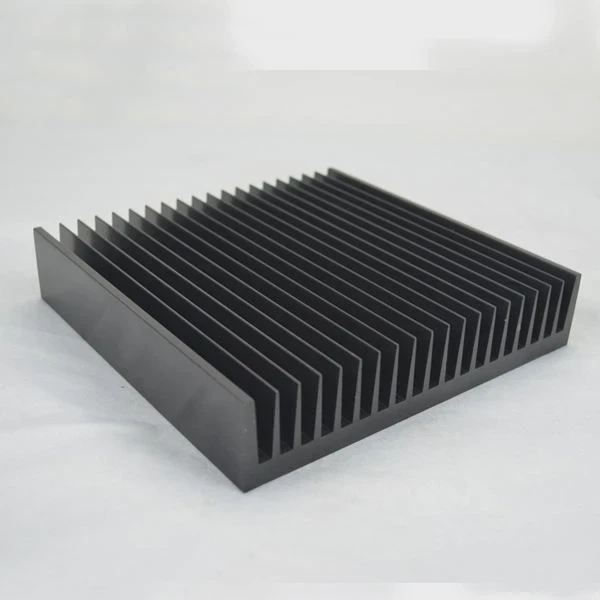
In high‑performance cooling systems the thermal path often limits performance, raising risk and cost. Optimizing a vapor chamber means tailoring design tweaks, wick structure, simulation usage and working fluid choice so that thermal resistance is minimized and power capacity maximized.
Let’s dig into specific questions: design tweaks, wick structure, simulation tools, and fluid type.
What design tweaks improve Vapor Chamber efficiency?
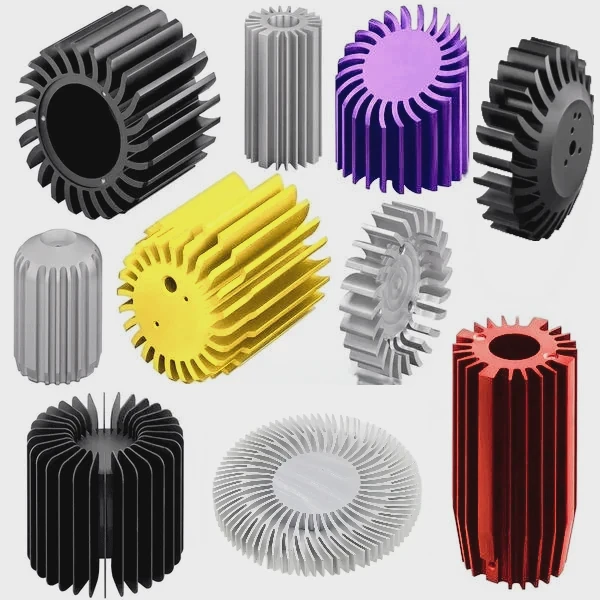
Sub‑optimal design means wasted spreader area, uneven temperature, or early dry‑out—high risk for high‑density thermal loads. Design tweaks such as reducing plate thickness, increasing vapor space, minimizing path lengths, optimizing filling ratio, and improving interface bonding can significantly reduce thermal resistance of a vapor chamber.
Good design begins by mapping the thermal path: from heat source → evaporation zone → vapour transport → condensation zone → liquid return → heat sink/spreader. Each link must be optimised.
Key design tweak areas
Plate geometry & thickness
A thinner envelope reduces conduction distance and mass; but too thin may reduce structural rigidity or limit wick pocket volume.
Larger spread area: giving the vapor chamber a larger footprint spreads heat over more fins or ambient area, reducing local flux.
Filling ratio & internal vapour space
The amount of working fluid (liquid + vapour volume) affects performance. A too‑low filling ratio may lead to dry‑out; too high may reduce vapour volume and increase conduction path in liquid, raising thermal resistance.
The vapour‑core height influences vapour velocity and pressure drop; a higher cavity may permit less flow restriction but also may reduce capillary return efficiency.
Interface bonding and heat source attachment
The thermal interface between the heat source and the vapor chamber matters. Good bonding reduces contact thermal resistance.
Surface flatness, contact material, TIM (thermal interface material) selection all matter.
Spread and exchanger integration
The chamber should feed its heat into a fin array, cold plate or heat‑sink designed to match its spreading capacity—otherwise the chamber will spread heat but the downstream system becomes the bottleneck.
Ensure that the vapor chamber’s output interface (condensation zone) is well coupled to the ambient cooler so the full benefit is realised.
Thermal path minimisation and flow coupling
Shorter vapour and liquid return paths reduce pressure drops and capillary losses.
Using branching or hierarchical wick structures helps maintain fluid circulation and reduces internal resistance.
Material selection
Shell material (e.g., aluminium vs copper) impacts thermal conductivity and manufacturability; internal wick material choices also matter for capillary performance and durability.
For example, copper material supports higher conductivity but is heavier and sometimes costlier.
Environmental and reliability constraints
The chamber must survive thermal cycling, vibration, and mounting stresses without warpage or leakage. Ensuring manufacturable geometry and structure pays off.
Reliability testing (thermal cycling, leak test, warpage) should be built into design tweaks.
Summary
By systematically addressing these design areas, one can achieve lower thermal resistance, more uniform temperature across the chamber, higher heat flux capacity, and better integration into the larger cooling system.
Does wick structure affect thermal conductivity?
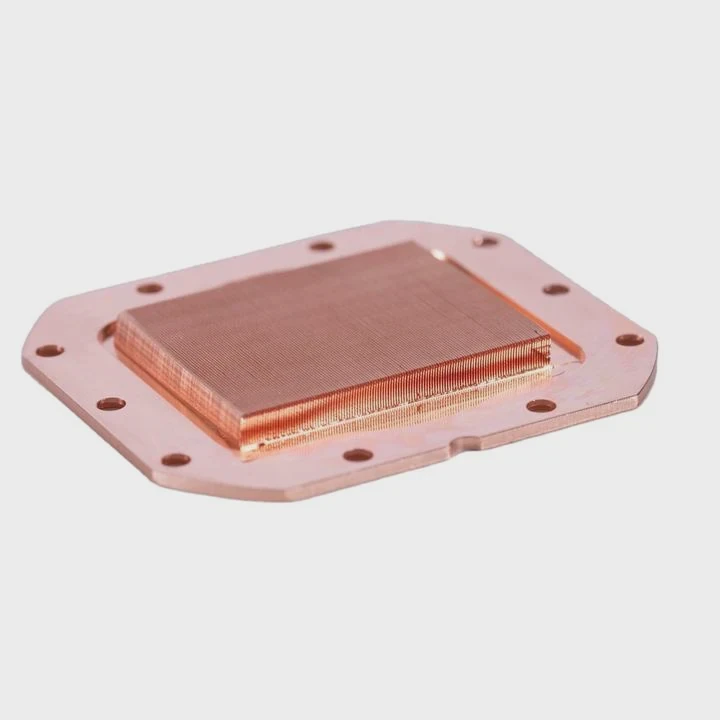
If the wick is ill‑designed the vapor chamber may fail to return liquid properly or may have hotspots, limiting spread and reducing life. Yes—the wick structure is a critical factor for internal capillary return, vapour/liquid flow resistance and thereby the effective thermal conductivity and performance of the vapor chamber.
Why wick structure matters
- The wick provides the capillary force to return liquid from the condenser to the evaporator. If capillary pressure is insufficient, the chamber may dry out or operate at higher temperature.
- The wick’s permeability, pore size, thickness, thermal conductivity, and structure all impact how liquid and vapour flow inside the chamber. A high capillary pressure but low permeability can hamper fluid circulation under high load.
- In many reviews of vapor chambers, the wick is cited as the dominant influence on performance.
Types of wick structures and trade‑offs
| Wick type | Capillary performance | Permeability / flow resistance | Typical use case |
|---|---|---|---|
| Sintered copper powder | High capillary suction (small pores) | Lower permeability (higher flow resistance) | Orientation‑agnostic applications |
| Copper mesh (screen) | Moderate capillary force | High permeability (lower flow drop) | Ultra‑thin profile systems |
| Grooved / composite wick | Balanced capillary + flow performance | Balanced | Irregular heat sources or high flux designs |
| Gradient / biporous wick | Tailored capillary + low flow resistance | Optimised for both | Advanced high‑flux/challenging thermal management |
Design considerations specific to wick
- Pore size vs capillary pressure: Smaller pores increase capillary pressure but reduce permeability. Must optimise for the expected evaporation flux and orientation.
- Thickness and continuity: The wick must support uniform liquid distribution and avoid stagnation zones. Larger area chambers especially benefit from wick designs that minimise flow path length.
- Thermal conductivity of wick material: Ideally the wick must conduct the liquid back without introducing significant thermal resistance—a low‑conductivity wick layer may become a bottleneck.
- Manufacturing and consistency: For industrial applications, process repeatability (porosity, pore size distribution, bonding) affects performance consistency.
- Orientation and gravity independence: Some wick designs (sintered or mesh) support gravity‑independent operation; important in compact or variable mounting orientation systems.
Impact on thermal performance
- A well‑designed wick can cut thermal resistance and support higher heat flux without onset of dry‑out or failure.
- Temperature uniformity and spreading are improved when wick structures are optimised to reduce local dry‑out and maintain good fluid circulation.
Recommendation
When designing or specifying a vapor chamber, ask for details of the wick: pore size, mesh or sintered, thickness, orientation flexibility, fluid return length. Ensure the supplier presents test data or models showing capillary limit threshold, dry‑out margin and heat flux capacity.
Can simulation tools optimize Vapor Chamber layout?
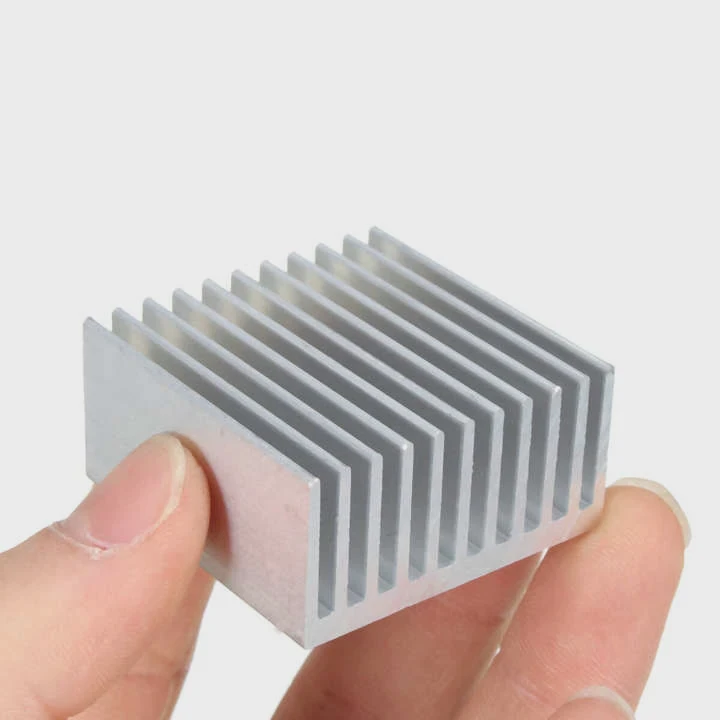
Guessing design tweaks without validating will often lead to sub‑optimal results or repeated prototypes. Yes—simulation tools such as CFD (Computational Fluid Dynamics), thermal network modelling, wick capillary flow simulation and structural/thermal coupling help optimise vapor chamber layout, reduce iterations and validate design under realistic conditions.
How simulation aids design
- Thermal network / resistance‑based models: Early in a project, one can build simplified models (e.g., evaporation, vapour transport, condensation, liquid return) to estimate thermal resistance, identify bottlenecks and trade‑offs.
- CFD / multiphase modelling: More detailed simulation handles vapour flow, droplet condensation, wick capillary return, wick saturation, transient behaviour.
- Structural & thermal coupling: For large area vapor chambers (e.g., in HVAC or industrial systems), warpage, mounting stress, shell deformation can degrade performance. Simulation can include mechanical deformation plus thermal path analysis.
- Sensitivity and optimisation studies: By varying design parameters (wick thickness, pore size, cavity height, filling ratio, vapour gap dimensions), one can perform sensitivity analysis, identify most critical parameters and optimise for cost vs performance.
- Integration modelling: Simulation can include the downstream heat exchanger, ambient conditions, airflow, and the thermal spreading plate so the VC is optimised in system context rather than as stand‑alone.
Best practices for simulation in VC design
- Define clear boundary conditions: heat load distribution, ambient/fin side conditions, mounting constraints, orientation.
- Validate the model: run prototype tests and compare to simulation to calibrate.
- Use parametric studies: change one parameter at a time (e.g., vapour gap height, wick thickness) to understand impact on thermal resistance.
- Include worst‑case scenarios: high ambient temperatures, low airflow, high heat flux, orientation variation, start‑up conditions.
- Store simulation data and results in shared repository so client and supplier both refer to same baseline.
Summary
Simulation is not optional for high‑performance vapor chambers. It enables faster design cycles, reduces cost of physical prototyping, and helps ensure performance targets are met before manufacturing ramp.
Is fluid type key to thermal performance?
Choosing a working fluid without considering all other design parameters may lead to non‑optimum performance or premature failure. Yes—the choice of working fluid (its thermophysical properties, compatibility with wick and shell materials, saturation pressure/temperature, latent heat) is a key factor in determining the thermal performance, operating range and reliability of a vapor chamber.
What fluid properties matter
- Latent heat of vaporisation: Higher latent heat means more heat transported per mass of fluid vaporised—this lowers mass flow and potentially reduces vapour velocity/pressure drop.
- Vapour and liquid density/viscosity: These affect flow resistance, surface tension, film thickness in evaporation/condensation, and thus the effective thermal resistance.
- Surface tension & wettability: Influence capillary return in wick structure. A fluid with good wettability for the wick material improves liquid return.
- Saturation pressure vs temperature: For thin chambers or high flux, the fluid must operate within acceptable pressure and temperature ranges without exceeding capillary limit, or introducing non‑condensable gases issues.
- Compatibility and corrosion: The fluid must be compatible with wick and shell, stable under cycling, and free of contaminants that might degrade performance over life.
- Filling ratio: The fluid amount and vapour volume interplay influences chamber behaviour—studies show an optimal filling ratio exists as a function of heat flux.
Practical observations
- Fluid selection cannot be based solely on a single merit figure; geometry, power load and fluid properties must all be considered.
- Some modern vapor chambers use advanced fluids or nano‑enhanced fluids in wick or vapour zones, though reliability & cost trade‑offs remain.
Design recommendation
- Early in specification, list candidate fluids, evaluate thermophysical parameters vs expected heat load, geometry and orientation.
- Select fluid compatible with manufacturing, reliability, lifetime environment (e.g., high ambient, thermal cycling).
- Confirm the wick/working fluid combination supports the target capillary limit (i.e., the maximum heat load before failure) and vapour pressure drop is manageable.
- Prototype and test: measure temperature difference, uniformity, dry‑out threshold, evaporation/condensation behaviour for the chosen fluid.
Summary
The working fluid is a “system” component of vapor chamber design. While geometry, wick and bonding are all vital, the fluid underpins the thermodynamic cycle. Ignoring its role risks sub‑par performance or reliability issues.
Conclusion
Optimising the thermal performance of a vapor chamber demands a holistic approach: tweak the geometry and interfaces, engineer the wick structure for capillary and flow, employ simulation tools to guide design and refine performance, and make a deliberate fluid choice that aligns with the system’s heat load, orientation and lifecycle. With all these aligned, you deliver high‑flux, low‑resistance, reliable thermal spreaders.
TAGS
Latest Articles

Volume discount levels for heat sink orders?
Buyers often ask when heat sink prices start to drop with volume. Many worry they’re overpaying for small orders. This guide explains how B2B volume pricing works for thermal components. Heat sink
21 Dec,2025
Heat sink long-term supply contract options?
Many buyers want stable pricing and reliable delivery for heat sinks. But without a clear contract, risks grow over time. This article explores how to secure better long-term supply deals. Long-term
21 Dec,2025
Tooling cost for new heat sink profiles?
Many engineers struggle to understand why tooling for custom heat sinks costs so much. They worry about budgeting and production timelines. This article breaks down the cost drivers behind tooling.
21 Dec,2025
Heat sink custom sample process steps?
Sometimes, starting a custom heat sink project feels overwhelming—too many steps, too many unknowns, and too many risks. You want a sample, but not endless delays. The process for requesting and
20 Dec,2025
Standard B2B terms for heat sink payments?
When buyers and sellers in B2B heat sink markets talk about payment, many don’t fully understand what’s standard. This can lead to delayed orders, miscommunication, and even lost business
20 Dec,2025
Heat sink pricing factors for large orders?
Heat sinks are vital for many systems. When prices rise, projects stall and budgets break. This problem can hit teams hard without warning. Large order heat sink pricing depends on many factors. You
20 Dec,2025Related Articles
- Recommended Vapor Chamber assembly process?
- Vapor Chamber application in automotive battery cooling?
- Does Vapor Chamber support high frequency chips?
- Vapor Chamber for industrial heat dissipation solutions?
- Vapor Chamber technical drawing requirements?
- Collaborative development for Vapor Chamber projects?
- Vapor Chamber design parameters for heavy machinery?
- Vapor Chamber for high power LED modules?
- Vapor Chamber quality assurance checklist?
- Vapor Chamber heat resistance under overload?
- Vapor Chamber usage in telecom base stations?
- Can Vapor Chamber replace heat pipes?
Author
Dr. Emily Chen
Chief AI Researcher
Leading expert in thermal dynamics and AI optimization with over 15 years of experience in data center efficiency research.
Categories
Latest Products






Recommend Categories
- Liquid cooling plate Manufacturer
- Industrial Heat Sink Manufacturer
- Standard Heat Sink Manufacturer
- Aluminum Heat Sink Manufacturer
- Copper Heat Sink Manufacturer
- Anodized Heatsink Manufacturer
- Stamping heat sink Manufacturer
- Die Casting Heatsink Manufacturer
- Soldering heat sink Manufacturer
- CNC Parts Manufacturer
Latest Products
- Wholesale Aluminum Radiator
- Water Cooling Plate Kit
- Water Cooling Heat Sink
- Water Cooling Heat Sink Kit
- Stainless Steel Water Distributor
- Server Water Cooling Plate Kit
- Server Liquid Cooling System
- Server Aluminum Cooling Kit
- S19 Full Cover Cooling Plate
- S19 Cooling Plate Kit
- S19 Aluminum Cooling Plate
Contact Expert
Have questions about this article? Reach out to our experts directly.