What is VC liquid cooling?
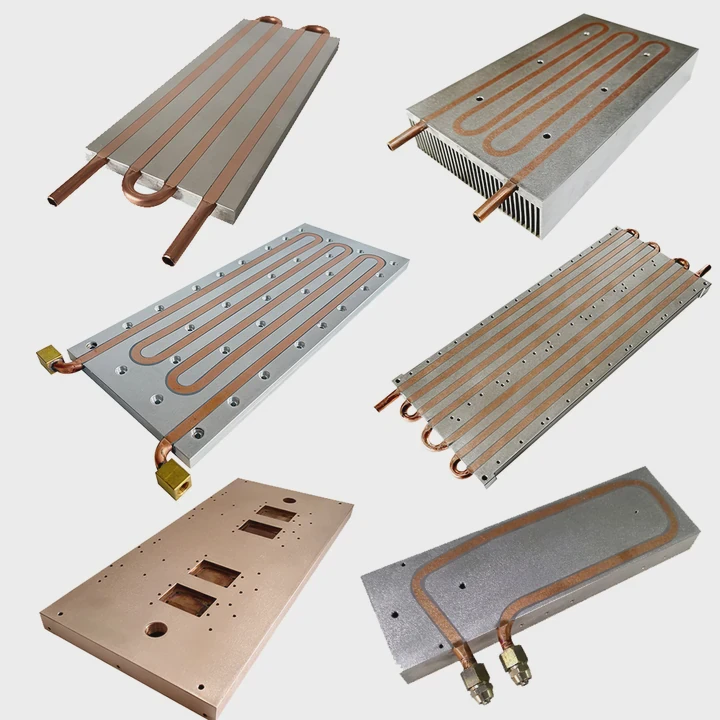
VC liquid cooling is becoming the new standard for managing heat in electronics. When traditional cooling systems fail to meet compact or high-power demands, vapor chambers step in to save the day.
VC liquid cooling, or Vapor Chamber cooling, is a flat heat spreader that uses phase-change technology to transfer heat evenly and efficiently across surfaces. It is often made from copper or aluminum and filled with a small amount of working fluid, which evaporates and condenses to move heat away from the source.
This method has been proven reliable in devices where space is limited but performance is critical, such as smartphones, laptops, and high-end servers.
How does VC (Vapor Chamber) liquid cooling work?
When we think of “liquid cooling,” most of us imagine pumps, pipes, and radiators. VC cooling works differently. It uses a sealed, flat chamber that moves heat using natural phase change instead of active fluid circulation.
A vapor chamber works by using a small amount of liquid that evaporates when heated, travels as vapor, and condenses back into liquid, spreading heat quickly and evenly.
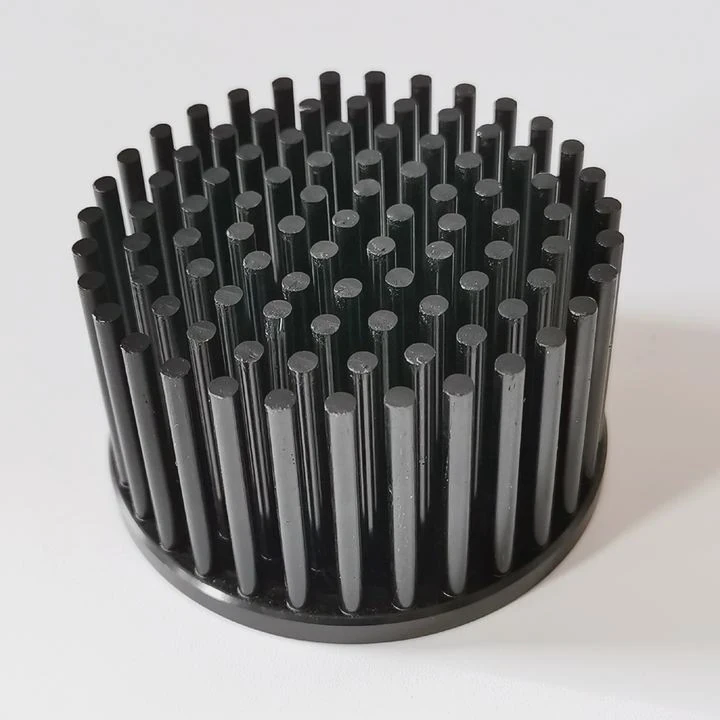
Step-by-step process
- Heat absorption: The heat source (like a CPU or power module) warms the liquid inside the wick structure.
- Evaporation: The liquid turns into vapor and spreads rapidly inside the chamber.
- Condensation: The vapor reaches cooler parts of the chamber and turns back into liquid.
- Return path: The condensed liquid returns to the heat source through capillary action in the wick.
This continuous cycle happens almost instantly, without any mechanical parts. The process keeps components cool even under uneven or high thermal loads.
Key components of a vapor chamber
| Component | Function | Description |
|---|---|---|
| Chamber shell | Structure | Usually made from copper or aluminum |
| Wick structure | Capillary return | Porous layer that helps liquid return to heat source |
| Working fluid | Heat carrier | Often water, acetone, or methanol depending on temperature range |
| Internal vacuum | Pressure control | Lowers boiling point for faster phase change |
In my experience designing systems for high-power electronics, vapor chambers show consistent temperature uniformity even when one corner is hotter. This even distribution prevents local overheating and improves component reliability.
What are the benefits of VC liquid cooling in electronics?
The thermal challenge in modern electronics is not only about cooling power. It’s about maintaining uniform temperature, ensuring reliability, and fitting into thinner designs.
VC liquid cooling improves heat spreading efficiency, allows thinner and lighter designs, and increases device reliability under high power or limited space conditions.
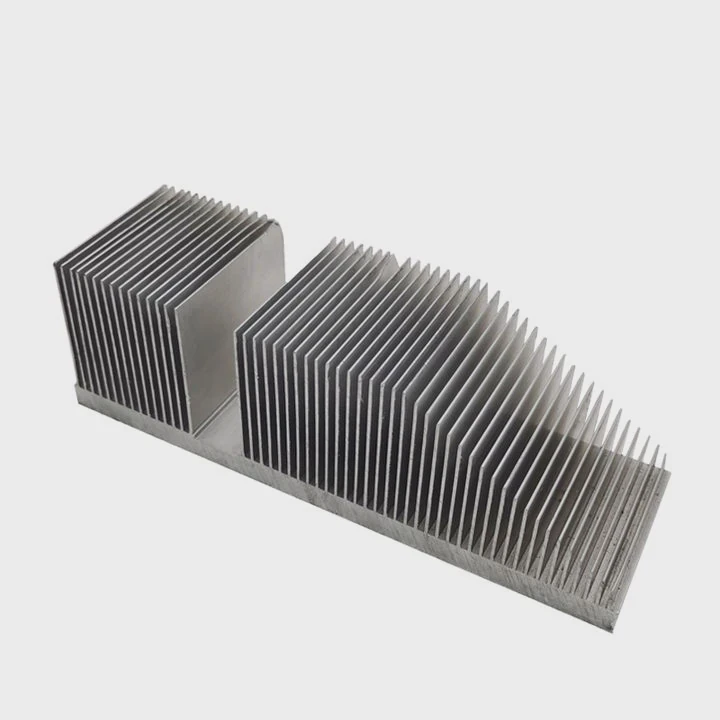
Main advantages
1. High thermal conductivity
Vapor chambers can reach effective thermal conductivity of 2000–5000 W/m·K, much higher than copper’s 400 W/m·K. This means they move heat extremely fast.
2. Uniform surface temperature
They eliminate hotspots. This helps sensitive components, like GPU dies or power MOSFETs, operate within safe limits.
3. Lightweight and compact design
Because VC cooling replaces heavy heat pipes or thick copper blocks, devices can be made thinner and lighter.
4. Passive operation
No pumps or fans are needed inside the chamber. That means zero noise and no moving parts to wear out.
5. Orientation independence
The capillary wick structure allows the vapor chamber to function in any direction—even upside down.
6. Longer component life
Lower and more stable operating temperatures extend the lifespan of electronic parts.
Comparative overview
| Feature | Vapor Chamber Cooling | Traditional Heat Pipe | Liquid Cooling Loop |
|---|---|---|---|
| Heat transfer rate | Very high | Moderate | Very high |
| Structure | Flat | Tubular | Complex |
| Maintenance | None | None | Requires pump and fluid |
| Noise level | Silent | Silent | Low |
| Thickness | Thin | Thicker | Bulky |
| Cost | Moderate | Low | High |
From my work with clients in aerospace and power electronics, I’ve noticed that the uniformity of VC cooling often outperforms multi-pipe assemblies. This can reduce the need for multiple heat spreaders or fans.
When is VC liquid cooling used over traditional liquid cooling?
Traditional liquid cooling uses pumps, hoses, and radiators. It is common in servers or gaming PCs where space is less of an issue. But when the device is compact or when vibration and reliability matter, VC cooling is the better option.
VC liquid cooling is preferred when devices need compact design, silent operation, and high reliability without active components.
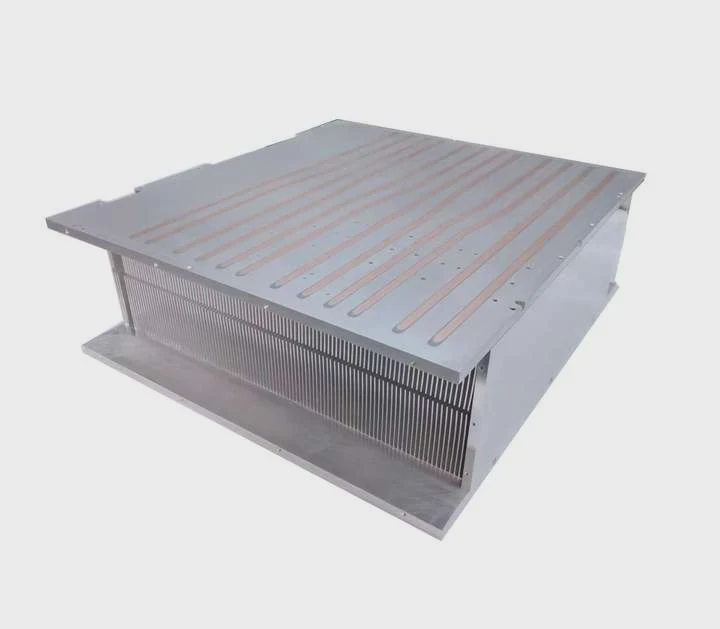
Ideal application conditions
- Thin and compact devices: smartphones, tablets, and ultrabooks.
- High heat density: CPUs, GPUs, IGBTs, or laser modules.
- Vibration-sensitive systems: aerospace, military, or rail electronics.
- Long-term maintenance-free operation: industrial and medical equipment.
Comparison in use cases
| Scenario | VC Cooling | Traditional Liquid Cooling |
|---|---|---|
| Smartphone thermal control | ✅ Yes | ❌ No (too bulky) |
| Data center server CPUs | ⚙️ Partial use | ✅ Yes |
| Aerospace electronics | ✅ Yes | ❌ No (vibration risk) |
| EV battery cooling | ⚙️ Partial use | ✅ Yes |
| LED modules | ✅ Yes | ❌ No |
Practical example
In one of our past projects, we designed a vapor chamber module for a 5G base station amplifier. The device required stable operation at 65°C ambient. A liquid cooling loop was too large and expensive, while a standard heat pipe array could not keep the temperature uniform. The VC module solved both problems by spreading heat evenly and reducing peak temperature by 18°C.
Why engineers choose VC cooling
- It works passively, meaning higher reliability in harsh environments.
- It offers excellent performance in horizontal or vertical orientation.
- It scales easily across product sizes.
- It can be combined with heat sinks, fans, or even hybrid liquid systems.
In short, when space and stability matter more than raw cooling power, vapor chambers provide the best tradeoff.
What are the future trends in VC liquid cooling technology?
As power density keeps increasing, the next evolution of VC technology is already taking shape. Manufacturers and research teams are focusing on materials, fluids, and hybrid system integration.
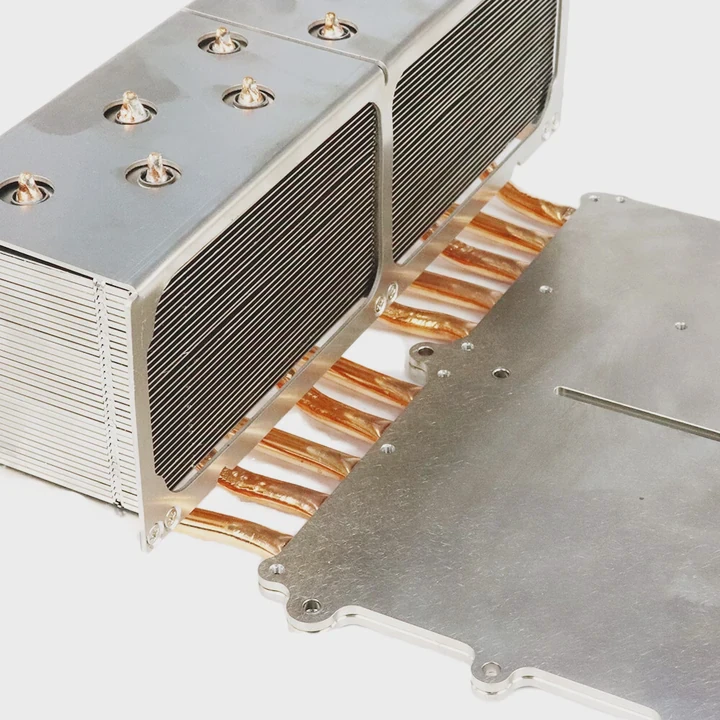
The future of VC liquid cooling lies in new materials, improved manufacturing precision, and hybrid thermal management systems that combine phase-change and active cooling.
Key development directions
1. Material innovation
Future vapor chambers are moving toward aluminum or composite structures to reduce cost and weight. Aluminum VCs are already popular in EV and industrial devices. Some high-end systems use graphene coatings to enhance capillary flow and prevent corrosion.
2. Advanced wick structures
Researchers are experimenting with 3D printed micro-porous wicks and fiber-based capillary layers to increase heat transport speed. This allows thinner chambers without performance loss.
3. Hybrid cooling systems
Next-generation products may integrate VCs with active liquid cooling loops, especially in AI servers or EV inverters. These hybrids combine even heat spreading of VC with the large heat capacity of liquid systems.
4. Phase change fluid optimization
New working fluids are being developed for wider temperature ranges, including non-toxic and dielectric liquids for high-voltage environments like power electronics.
5. Scalable manufacturing
Automation and laser welding will make vapor chambers more consistent and cost-effective, which will help expand their use in mass production.
Future applications
| Industry | Potential Use | Benefit |
|---|---|---|
| Electric Vehicles | Power modules and batteries | Uniform heat distribution |
| Data Centers | CPUs, GPUs, AI accelerators | Compact and efficient cooling |
| Aerospace | Avionics and control modules | Lightweight, reliable thermal solution |
| Medical Equipment | Laser and imaging devices | Silent and vibration-free operation |
| Renewable Energy | Power inverters and storage systems | Maintenance-free thermal control |
Sustainability and recyclability
Modern designs also aim for environmentally friendly materials. Copper recovery and fluid recycling are being considered in large-scale manufacturing. Since VCs have no moving parts, their long lifespan reduces electronic waste.
The next frontier: integration and intelligence
The next step could be smart vapor chambers embedded with temperature sensors and AI control algorithms. These systems might dynamically adjust thermal paths or communicate real-time performance data for predictive maintenance.
Final thought
Vapor chamber technology continues to evolve beyond being just a cooling solution. It is becoming a core enabler for compact, powerful, and sustainable electronics. As industries push for higher efficiency, the vapor chamber’s role will only grow.
Conclusion
VC liquid cooling uses phase-change heat transfer to deliver silent, compact, and reliable thermal performance. It spreads heat evenly, supports thinner designs, and extends the lifespan of modern electronics.
TAGS
Latest Articles

Volume discount levels for heat sink orders?
Buyers often ask when heat sink prices start to drop with volume. Many worry they’re overpaying for small orders. This guide explains how B2B volume pricing works for thermal components. Heat sink
21 Dec,2025
Heat sink long-term supply contract options?
Many buyers want stable pricing and reliable delivery for heat sinks. But without a clear contract, risks grow over time. This article explores how to secure better long-term supply deals. Long-term
21 Dec,2025
Tooling cost for new heat sink profiles?
Many engineers struggle to understand why tooling for custom heat sinks costs so much. They worry about budgeting and production timelines. This article breaks down the cost drivers behind tooling.
21 Dec,2025
Heat sink custom sample process steps?
Sometimes, starting a custom heat sink project feels overwhelming—too many steps, too many unknowns, and too many risks. You want a sample, but not endless delays. The process for requesting and
20 Dec,2025
Standard B2B terms for heat sink payments?
When buyers and sellers in B2B heat sink markets talk about payment, many don’t fully understand what’s standard. This can lead to delayed orders, miscommunication, and even lost business
20 Dec,2025
Heat sink pricing factors for large orders?
Heat sinks are vital for many systems. When prices rise, projects stall and budgets break. This problem can hit teams hard without warning. Large order heat sink pricing depends on many factors. You
20 Dec,2025Related Articles
- What’s the Difference Between Air Cooled and Liquid Cooled?
- When to replace liquid cooling?
- Which phone has liquid cooling system?
- Why is a Liquid Cooled System Pressurized?
- Why is a liquid cooled system pressurised?
- Why is glass considered a super cooled liquid?
- What is the difference between liquid cooled and air cooled?
- What is super cooled liquid?
- What is liquid cooling system in mobile?
- What is Liquid Cooling Data Center?
- What is liquid cooling CPU?
- What is inside liquid cooling?
Author
Dr. Emily Chen
Chief AI Researcher
Leading expert in thermal dynamics and AI optimization with over 15 years of experience in data center efficiency research.
Categories
Latest Products






Recommend Categories
- Liquid cooling plate Manufacturer
- Industrial Heat Sink Manufacturer
- Standard Heat Sink Manufacturer
- Aluminum Heat Sink Manufacturer
- Copper Heat Sink Manufacturer
- Anodized Heatsink Manufacturer
- Stamping heat sink Manufacturer
- Die Casting Heatsink Manufacturer
- Soldering heat sink Manufacturer
- CNC Parts Manufacturer
Latest Products
- Wholesale Aluminum Radiator
- Water Cooling Plate Kit
- Water Cooling Heat Sink
- Water Cooling Heat Sink Kit
- Stainless Steel Water Distributor
- Server Water Cooling Plate Kit
- Server Liquid Cooling System
- Server Aluminum Cooling Kit
- S19 Full Cover Cooling Plate
- S19 Cooling Plate Kit
- S19 Aluminum Cooling Plate
Contact Expert
Have questions about this article? Reach out to our experts directly.