What is liquid cooling made of?
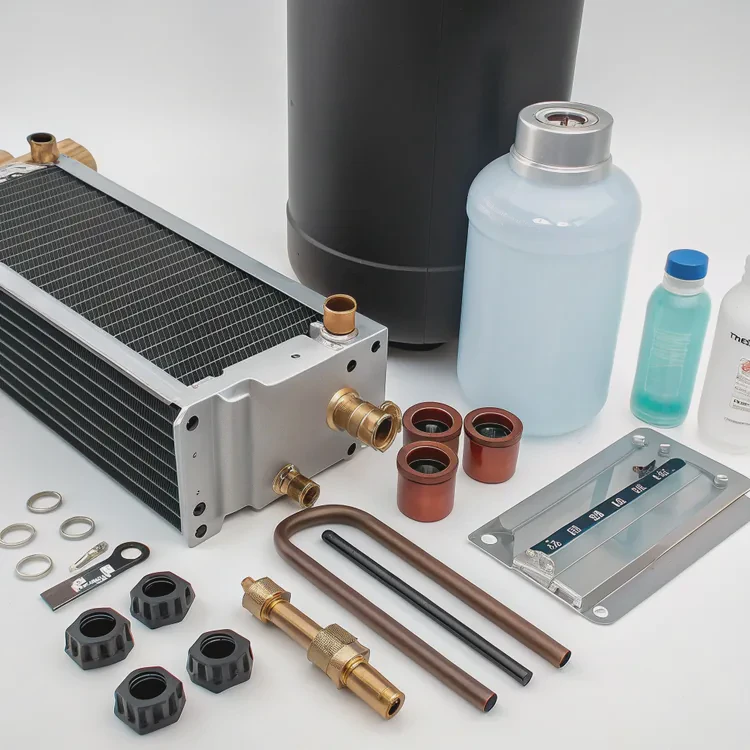
Liquid cooling systems are built from a combination of metals, polymers, and specialized fluids designed to move heat efficiently and safely. Each material serves a specific function — from conducting heat away from components to protecting against corrosion and leaks.
A liquid cooling system is made of heat-conductive metals like copper or aluminum, flexible tubing materials such as PVC or silicone, corrosion-resistant fittings, and engineered coolants that transfer and dissipate heat.
These materials work together to maintain stable temperatures in high-performance electronics, vehicles, and industrial equipment where air cooling alone cannot keep up.
What are the key components of a liquid cooler?
Every liquid cooling system, whether for a computer, engine, or industrial process, shares the same basic design: a closed loop that absorbs heat, transfers it to a radiator or exchanger, and releases it into the air or another medium.
The key components of a liquid cooler include the cold plate (or water block), pump, radiator, reservoir, tubing, fittings, and coolant.
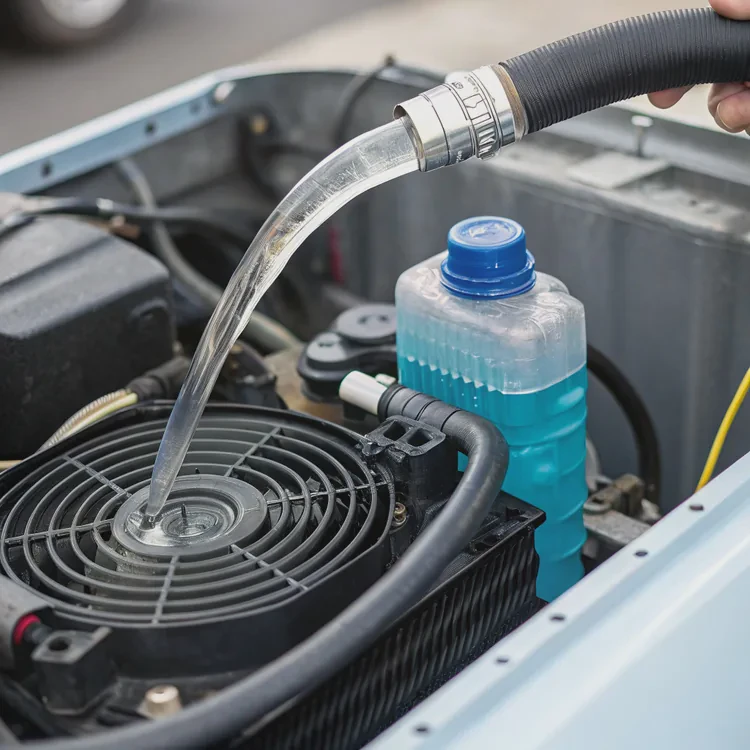
Primary Components Overview
| Component | Function | Typical Material | Notes |
|---|---|---|---|
| Cold Plate / Water Block | Absorbs heat from CPU, GPU, or power module | Copper or nickel-plated copper | High thermal conductivity and corrosion resistance |
| Pump | Circulates coolant through the system | Polymer housing with ceramic or metal bearings | Must handle continuous operation without cavitation |
| Radiator / Heat Exchanger | Dissipates heat into air or external environment | Aluminum or copper fins | Determines cooling capacity |
| Reservoir | Stores and balances coolant volume | Acrylic, PETG, or aluminum | Helps bleed air and simplify filling |
| Tubing / Pipes | Connects all components | PVC, silicone, PTFE, or metal | Flexibility or rigidity depends on design |
| Fittings | Seals tubing connections | Brass, stainless steel, or nickel | Threaded for pressure resistance |
| Coolant | Transfers and carries heat | Water-glycol mix or dielectric fluid | Contains corrosion inhibitors and biocides |
Each component must withstand heat, pressure, and long-term fluid exposure without degrading. This is why material selection is so important in liquid cooling design.
How the Components Work Together
- The water block sits directly on the heat source. Its metal base conducts heat from the component into the coolant.
- The pump drives the coolant through the loop, maintaining flow and preventing hotspots.
- The radiator removes heat from the coolant through finned surfaces and fan-assisted airflow.
- The tubing connects all parts, forming a sealed circulation path.
- The reservoir helps maintain coolant volume and allows trapped air to escape.
- Coolant continuously cycles through, transferring thermal energy out of the system.
This coordinated process keeps critical components cool and stable under continuous load.
Why are specific materials used in cooling?
Choosing the right material is the difference between an efficient, reliable system and one that corrodes, leaks, or loses performance over time.
Specific materials are used in liquid cooling because of their thermal conductivity, corrosion resistance, mechanical strength, and chemical compatibility with coolants.
1. Metals: Heat Conductors
Metals handle the transfer of heat from the source (e.g., CPU, motor, or inverter) to the fluid.
- Copper: Excellent heat conductivity (~400 W/m·K). Commonly used in CPU blocks and heat exchangers.
- Aluminum: Lightweight and less expensive (~200 W/m·K). Used in radiators and automotive systems.
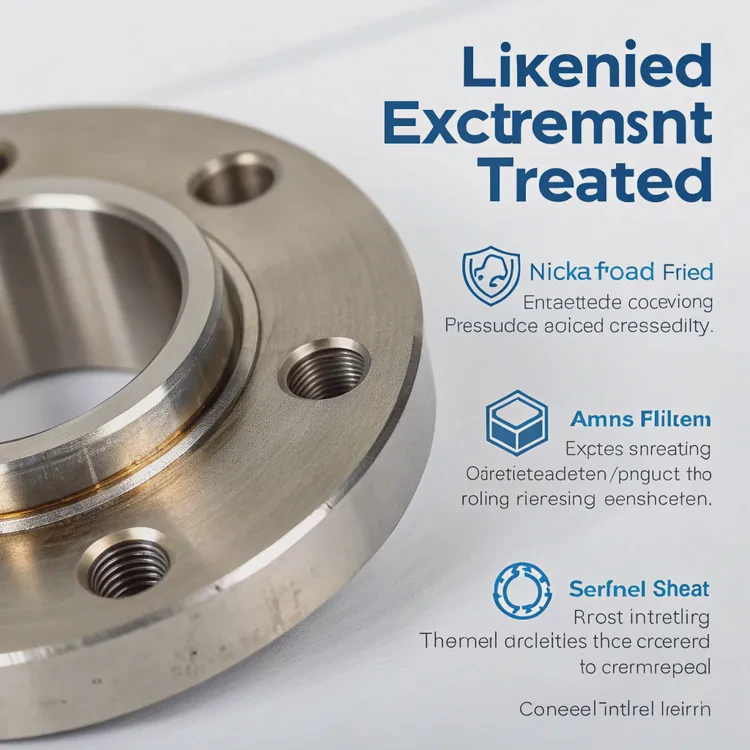
- Nickel-Plated Copper: Combines conductivity with corrosion protection. The nickel coating prevents oxidation when coolant circulates for years.
- Stainless Steel: Used in industrial cooling where durability and pressure resistance are critical.
2. Polymers: Flexibility and Insulation
Polymers form the tubing, pump housings, and reservoirs. They’re non-conductive and resistant to vibration.
- PVC (Polyvinyl Chloride): Affordable and flexible, ideal for basic systems.
- Silicone: Soft, heat-resistant, and durable in high-temperature environments.
- PTFE (Teflon): Excellent chemical resistance, used in systems with aggressive or special fluids.
- Acrylic / PETG: Transparent, rigid materials used for aesthetic reservoirs and hardline tubes.
3. Fittings and Seals: Strength and Leak Protection
- Brass and Nickel Fittings: Corrosion-resistant and strong under pressure.
- Rubber or Silicone O-Rings: Maintain tight seals between fittings and tubing.
4. Coolant: The Working Fluid
Coolant must have high heat capacity and low viscosity while resisting corrosion, algae, and evaporation.
Typical coolant types:
- Distilled water + additive (glycol): Most common, cost-effective, and efficient.
- Premixed coolants: Contain anti-corrosion and anti-fungal additives.
- Dielectric fluids: Used where electrical insulation is required (e.g., server immersion cooling).
- Nanofluids: Experimental coolants enhanced with nanoparticles for improved conductivity.
5. Coatings and Additives
Many components are coated or treated to extend lifespan. Nickel plating, anodizing, and chemical passivation prevent corrosion and improve thermal stability.
Key Performance Comparison
| Material | Thermal Conductivity (W/m·K) | Corrosion Resistance | Cost Level | Typical Application |
|---|---|---|---|---|
| Copper | 400 | Moderate | $$$ | CPU/GPU block base |
| Aluminum | 205 | Moderate | $$ | Radiators, automotive |
| Nickel | 90 (coating) | Excellent | $$$ | Protective layer |
| Stainless Steel | 15 | Excellent | $$$ | Industrial piping |
| Silicone | 0.2 | Excellent | $ | Flexible tubing |
| PTFE | 0.25 | Excellent | $$$ | Chemical systems |
By combining metals for heat conduction and polymers for insulation, designers achieve the ideal balance between performance, safety, and flexibility.
How to select safe and durable cooling materials?
Safety and durability depend on chemical stability, mechanical strength, and compatibility between metals and coolant.
To select safe and durable materials for liquid cooling, ensure all parts share compatible metals, are resistant to corrosion and leaks, and use coolant that won’t react chemically with system components.
1. Avoid Mixed Metals
Mixing copper and aluminum in the same loop causes galvanic corrosion — a chemical reaction that slowly eats away at metals when exposed to liquid. Always match radiators, blocks, and fittings with the same base metal.
Example:
- Copper block → copper radiator → brass fittings
- Aluminum block → aluminum radiator → nickel fittings
2. Choose Corrosion-Protected Components
Select parts with protective finishes such as:
- Nickel plating (for copper parts)
- Anodizing (for aluminum surfaces)
- Passivation (for stainless steel)
These treatments extend component life and maintain coolant clarity.
3. Use Proper Coolant Additives
Coolant additives prevent corrosion, microbial growth, and foaming. Look for:
- Inhibitors: Protect metals (e.g., ethylene glycol or propylene glycol).
- Biocides: Stop algae or bacteria buildup.
- pH stabilizers: Maintain chemical balance (pH 7–9 is ideal).
4. Ensure Tubing Compatibility
Choose tubing that fits snugly with fittings and resists high temperatures and pressure. For PCs, 10/13mm or 12/16mm tubing is standard. For industrial systems, reinforced hoses may be required.
5. Verify Temperature and Pressure Ratings
Each component should exceed the maximum system load:
- Tubing temperature rating: at least +70°C
- Pump pressure rating: 1.5 bar or higher
- Radiator fin solder points: high-temperature brazing (>600°C)
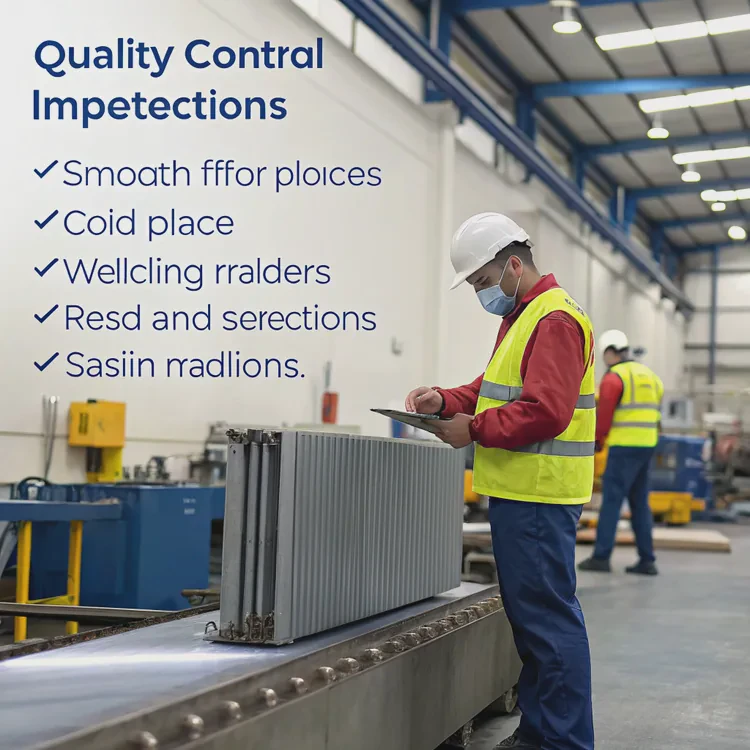
6. Inspect Manufacturing Quality
Look for:
- Smooth internal surfaces in cold plates for optimal flow.
- Clean welds on radiators.
- Properly sealed pump housings.
Avoid low-quality, unbranded parts that can corrode or leak prematurely.
7. Regular Maintenance
Even the best materials degrade if neglected. Flush and refill coolant every 12–18 months, inspect for discoloration, and replace seals or O-rings as needed.
Example Checklist for Material Safety
| Safety Factor | What to Check | Why It Matters |
|---|---|---|
| Metal Compatibility | Copper + Copper or Aluminum + Aluminum | Prevents corrosion |
| Coating Quality | Nickel plating, anodizing | Increases longevity |
| Coolant Composition | Includes inhibitors and biocides | Reduces chemical wear |
| Tubing Fit | Tight seal, correct diameter | Prevents leaks |
| Operating Temperature | Within rated range | Avoids warping or cracks |
Choosing materials systematically ensures a reliable and long-lasting cooling system.
What material innovations improve thermal transfer?
Modern cooling technology continues to evolve. Engineers and material scientists are constantly developing better metals, coatings, and fluids to push efficiency even further.
Recent material innovations improving thermal transfer include advanced copper composites, vapor chambers, graphene-infused coatings, nanofluids, and 3D-printed microchannel structures.
1. Microchannel Cold Plates
Traditional blocks have flat channels; modern designs use microchannels — fine, laser-cut grooves that increase surface area and improve heat absorption.
- Made from copper, stainless steel, or aluminum.
- Provide up to 40% higher efficiency than flat-plate designs.
2. Graphene and Carbon-Based Coatings
Graphene, known for its exceptional conductivity (~5,000 W/m·K), is being applied as a thin coating on copper blocks and radiators. It reduces oxidation and improves thermal transfer between metal and coolant.
3. Composite Heat Exchangers
New alloys blend copper and aluminum using diffusion bonding, achieving high conductivity without the galvanic reaction. These hybrid radiators are lightweight and corrosion-resistant.
4. Additive Manufacturing (3D Printing)
3D printing allows custom geometries inside heat exchangers that were previously impossible to machine.
- Lattice and porous structures enhance turbulence and heat exchange efficiency.
- Used in aerospace and high-end industrial cooling systems.
5. Nanofluid Coolants
Researchers are experimenting with nanoparticle-enhanced coolants that improve heat transfer by up to 20–30%.
Particles like aluminum oxide (Al₂O₃), copper oxide (CuO), or carbon nanotubes are suspended in the fluid, boosting conductivity while maintaining flow stability.
6. Phase-Change Cooling Integration
Some advanced designs use phase-change materials (PCM) that absorb large amounts of heat during melting and release it when solidifying. These are being integrated into hybrid liquid systems to handle thermal peaks.
7. Dielectric Fluids for Electronics
As electronics become denser, dielectric fluids like 3M Novec or Fluorinert allow direct immersion cooling — eliminating traditional blocks and radiators entirely.
They are non-conductive, non-flammable, and reusable, making them ideal for data centers and supercomputers.
8. Surface Treatments and Nanotexturing
By texturing surfaces at the nanoscale, engineers increase the wettability of metals, allowing coolant to spread evenly and improve heat exchange efficiency.
9. Environmentally Friendly Fluids
Biodegradable, glycol-free fluids are replacing older chemical coolants. These new solutions reduce toxicity and environmental impact while maintaining thermal performance.
10. Smart Materials for Dynamic Cooling
Future systems may use materials that change conductivity with temperature — thermochromic or shape-memory alloys that automatically regulate flow or heat absorption.
Example: Innovation Comparison
| Technology | Key Material | Efficiency Gain | Common Application |
|---|---|---|---|
| Microchannel Blocks | Copper | +40% | CPUs, EV inverters |
| Graphene Coatings | Carbon | +20% | Radiators, cold plates |
| Nanofluids | Al₂O₃ / CuO | +25% | HPC, medical lasers |
| 3D-Printed Exchangers | Aluminum Alloy | +30% | Aerospace, robotics |
| Dielectric Fluids | Fluorocarbon | +50% (direct immersion) | Servers, AI systems |
The Future of Cooling Materials
The next wave of cooling systems will likely use hybrid materials — combining metals, ceramics, and carbon-based structures for unmatched conductivity and durability.
At the same time, sustainable coolants will replace petroleum-based mixtures, making advanced thermal management both high-performing and environmentally responsible.
Conclusion
Liquid cooling systems are built from carefully selected metals, polymers, and engineered fluids that balance heat transfer, durability, and corrosion resistance. Materials like copper, aluminum, silicone, and glycol-based coolants work in harmony to maintain efficiency and longevity.
With new innovations such as graphene coatings, microchannel blocks, and nanofluid coolants, liquid cooling technology is becoming more efficient, eco-friendly, and adaptable — setting new standards for performance in computing, automotive, and industrial applications alike.
TAGS
Latest Articles

Volume discount levels for heat sink orders?
Buyers often ask when heat sink prices start to drop with volume. Many worry they’re overpaying for small orders. This guide explains how B2B volume pricing works for thermal components. Heat sink
21 Dec,2025
Heat sink long-term supply contract options?
Many buyers want stable pricing and reliable delivery for heat sinks. But without a clear contract, risks grow over time. This article explores how to secure better long-term supply deals. Long-term
21 Dec,2025
Tooling cost for new heat sink profiles?
Many engineers struggle to understand why tooling for custom heat sinks costs so much. They worry about budgeting and production timelines. This article breaks down the cost drivers behind tooling.
21 Dec,2025
Heat sink custom sample process steps?
Sometimes, starting a custom heat sink project feels overwhelming—too many steps, too many unknowns, and too many risks. You want a sample, but not endless delays. The process for requesting and
20 Dec,2025
Standard B2B terms for heat sink payments?
When buyers and sellers in B2B heat sink markets talk about payment, many don’t fully understand what’s standard. This can lead to delayed orders, miscommunication, and even lost business
20 Dec,2025
Heat sink pricing factors for large orders?
Heat sinks are vital for many systems. When prices rise, projects stall and budgets break. This problem can hit teams hard without warning. Large order heat sink pricing depends on many factors. You
20 Dec,2025Related Articles
- Is a liquid cooling system worth it?
- How to check if liquid cooling is working?
- How to make a liquid cooling system?
- What is a liquid cooling system?
- How does liquid cooling work in PCs?
- Which is better, air cooled or liquid cooled engine?
- How often to change liquid cooling?
- How to mount a liquid CPU cooler?
- What is the best liquid CPU cooler?
- Which is better, air cooled or liquid cooled?
- Does liquid cooling need maintenance?
- What liquid is used in liquid cooling?
Author
Dr. Emily Chen
Chief AI Researcher
Leading expert in thermal dynamics and AI optimization with over 15 years of experience in data center efficiency research.
Categories
Latest Products






Recommend Categories
- Liquid cooling plate Manufacturer
- Industrial Heat Sink Manufacturer
- Standard Heat Sink Manufacturer
- Aluminum Heat Sink Manufacturer
- Copper Heat Sink Manufacturer
- Anodized Heatsink Manufacturer
- Stamping heat sink Manufacturer
- Die Casting Heatsink Manufacturer
- Soldering heat sink Manufacturer
- CNC Parts Manufacturer
Latest Products
- Wholesale Aluminum Radiator
- Water Cooling Plate Kit
- Water Cooling Heat Sink
- Water Cooling Heat Sink Kit
- Stainless Steel Water Distributor
- Server Water Cooling Plate Kit
- Server Liquid Cooling System
- Server Aluminum Cooling Kit
- S19 Full Cover Cooling Plate
- S19 Cooling Plate Kit
- S19 Aluminum Cooling Plate
Contact Expert
Have questions about this article? Reach out to our experts directly.