Is a liquid cooling system worth it?
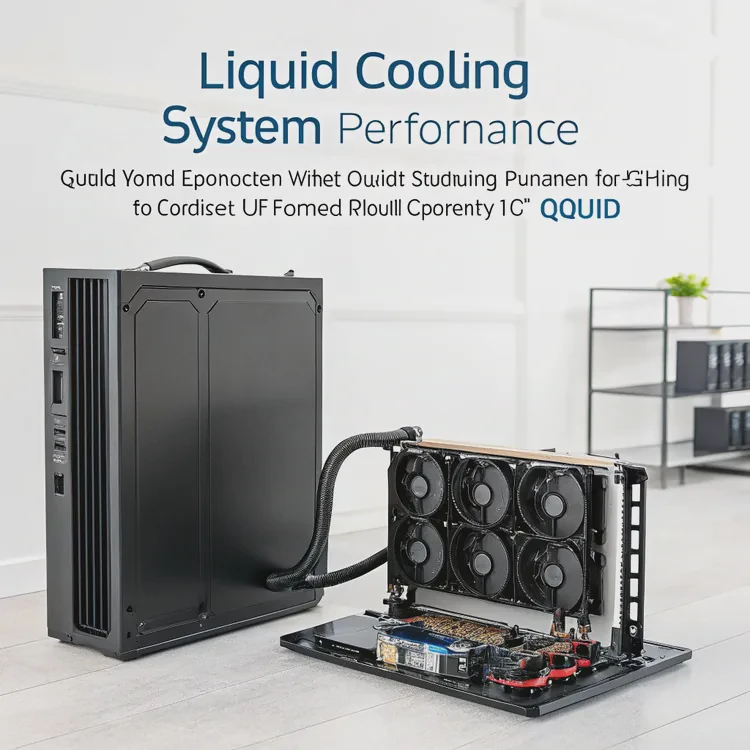
Liquid cooling often gets attention for its sleek look and quiet performance — but beyond aesthetics, it offers significant functional benefits. Whether you’re building a gaming PC, a workstation, or an industrial setup, deciding if liquid cooling is “worth it” depends on how you define value.
A liquid cooling system is worth it when consistent performance, temperature stability, and quiet operation are top priorities. It costs more upfront than air cooling but delivers greater efficiency, longevity, and control under heavy workloads.
In high-demand environments — from high-performance PCs to electric vehicles and data centers — the long-term gains in efficiency and component reliability often outweigh the initial investment.
How does liquid cooling improve efficiency?
The main advantage of liquid cooling lies in physics: liquids can absorb and transport heat far more efficiently than air.
Liquid cooling improves efficiency by using a fluid medium with higher thermal capacity to absorb heat directly from components and transfer it to a radiator for faster dissipation.
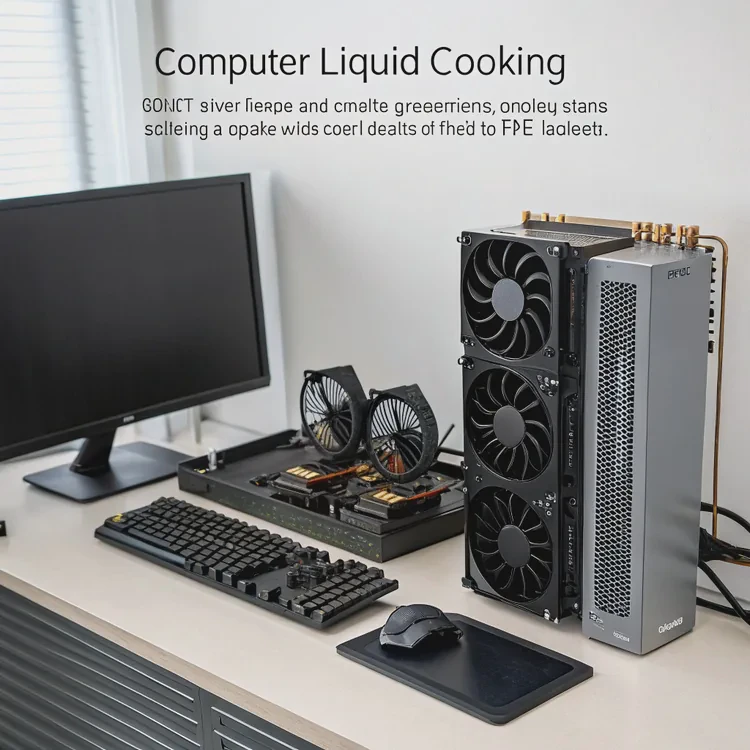
This process keeps component temperatures low and stable, reducing power loss, improving performance, and increasing lifespan.
1. Higher Heat Transfer Capacity
Water (or coolant) can carry heat roughly 25 times more efficiently than air. This means that even with smaller temperature differences, liquid systems remove heat faster.
In electronics, this allows processors, GPUs, and power modules to operate closer to their peak performance without throttling.
2. Reduced Thermal Resistance
In air-cooled setups, heat must travel through several layers — metal fins, air gaps, and moving air. In liquid cooling, the coolant makes direct contact with the heat source via a cold plate, minimizing resistance and allowing more efficient heat flow.
3. Stable Operating Temperatures
Liquid systems maintain temperature fluctuations within ±5°C, compared to ±20°C for air cooling. This stability is crucial for applications like data servers or laboratory instruments where precision matters.
4. Lower Noise Levels
Fans in air-cooled systems must spin faster to remove large amounts of heat, increasing noise. In liquid cooling, larger radiators and slower fans achieve the same or better results with minimal noise — ideal for quiet workspaces or recording studios.
5. Energy Efficiency in Large-Scale Systems
Data centers using liquid cooling have shown 20–40% energy savings by reducing reliance on air conditioning and improving heat recovery.
The same principle applies to high-end desktop PCs: a cooler processor draws less power due to reduced leakage currents, improving overall efficiency.
Comparative Overview: Cooling Efficiency
| Factor | Air Cooling | Liquid Cooling |
|---|---|---|
| Thermal Conductivity | Low | High |
| Temperature Stability | Variable | Constant |
| Noise Level | High | Low |
| Efficiency Over Time | Degrades with dust | Remains consistent |
| Ideal Application | Moderate workloads | Heavy and sustained loads |
In short, liquid cooling is not just about lower temperatures — it’s about keeping systems efficient, quiet, and reliable under any condition.
What cost-to-performance ratio does it offer?
Every technology has a point where its cost matches its benefit. For liquid cooling, that balance depends on the system’s purpose, expected lifespan, and workload intensity.
Liquid cooling provides a higher upfront cost but offers long-term value through stable performance, reduced maintenance, and extended component life.
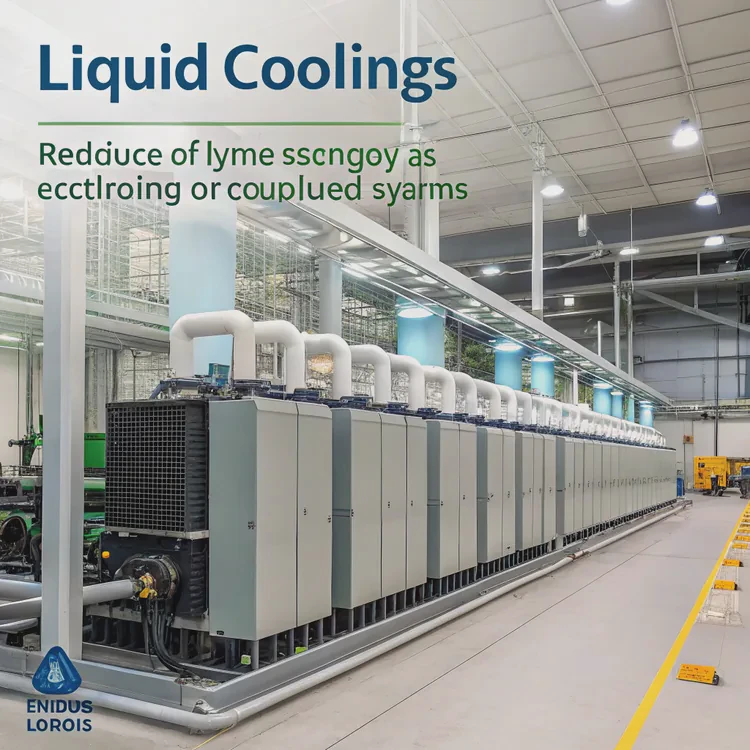
1. Initial Investment
A basic air cooler may cost \(50–\)100, while an AIO liquid cooler starts at \(150, and custom loops can range from \)300 to over $1,000.
However, this cost includes better materials, longer warranties, and greater versatility.
2. Performance Gain
The real performance boost comes not just from raw cooling numbers but from sustained boost clocks and system stability:
- CPUs and GPUs maintain their highest boost frequencies for longer.
- Overclocking potential increases safely.
- Less heat reduces the risk of thermal throttling and component aging.
On average:
- Air-cooled CPUs may lose up to 10–15% performance after prolonged heat buildup.
- Liquid-cooled systems retain 95–100% of rated performance even under full load.
3. Energy and Maintenance Savings
Because liquid cooling allows slower fans and optimized temperature control, energy consumption drops over time.
Industrial systems with liquid cooling show measurable reductions in electricity use — offsetting the initial cost within 2–3 years.
4. Extended Lifespan and Lower Replacement Costs
Consistent temperatures reduce wear on capacitors, seals, and bearings. Many users report 2–3 years longer lifespan for GPUs and CPUs in well-maintained liquid-cooled builds compared to air-cooled ones.
5. Value Over Time
When viewed across several years of use, the cost-to-performance ratio becomes favorable.
| System Type | Initial Cost | Cooling Efficiency | Lifespan | Noise | Value Rating |
|---|---|---|---|---|---|
| Basic Air Cooler | $60 | Moderate | 3 years | Loud | ★★☆☆☆ |
| AIO Liquid Cooler | $180 | High | 4–5 years | Quiet | ★★★★☆ |
| Custom Loop | $500+ | Very High | 5–7 years | Ultra Quiet | ★★★★★ |
While air coolers win on short-term cost, liquid systems deliver better performance per dollar over time, especially for power users, professionals, and gamers.
How to decide if you need liquid cooling?
Not every system needs liquid cooling — but for certain workloads, it’s almost essential.
You need liquid cooling if your components run near thermal limits, your environment is hot, or you require low-noise performance and long-term reliability.
Here’s how to decide logically.
1. Evaluate Your Workload
Ask: How hard does my system work?
- Light use (office, browsing): Air cooling is enough.
- Gaming / creative work: AIO cooling keeps performance steady.
- Heavy compute or rendering: Custom liquid cooling provides stability and longevity.
2. Check Component Power Draw
The higher the power draw, the more heat generated.
- CPUs over 125W TDP and GPUs above 300W strongly benefit from liquid cooling.
- Multi-GPU or workstation setups almost require it.
3. Consider Noise and Environment
If your PC runs in a quiet space (like a recording room or office), liquid cooling drastically reduces fan noise.
In hot or poorly ventilated rooms, liquid systems outperform air coolers by moving heat away more efficiently.
4. Space and Aesthetic Factors
Liquid cooling offers flexibility in radiator placement, which helps in compact cases or custom enclosures. It also adds a professional, clean appearance — often preferred in show builds or workstations.
5. Budget and Maintenance Willingness
If you enjoy hands-on customization and maintenance, a custom loop offers unmatched control.
If you prefer simplicity, an AIO (All-In-One) cooler provides much of the same benefit without regular upkeep.
Quick Guide: Is Liquid Cooling Right for You?
| Situation | Cooling Recommendation |
|---|---|
| Office or light PC use | Air cooling |
| Gaming or content creation | AIO liquid cooling |
| Overclocking, multi-GPU setup | Custom liquid cooling |
| Silent or aesthetic build | Liquid cooling |
| Industrial or continuous operation | Liquid cooling |
6. Future Upgrade Plans
If you plan to upgrade your CPU or GPU frequently, a modular liquid cooling system can adapt without replacing everything — saving long-term costs.
In short, choose liquid cooling if you need high sustained performance, quiet operation, and long-term reliability. Otherwise, air cooling remains an affordable, low-maintenance option.
How will pricing trends affect adoption?
Liquid cooling has become more affordable and accessible over the past decade — and that trend is continuing.
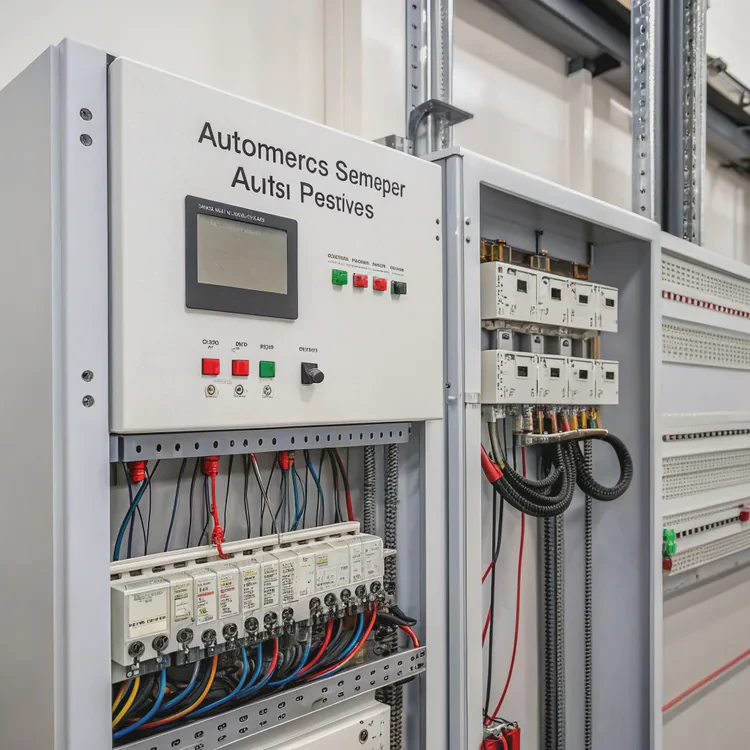
Falling component prices, better modular design, and industry demand are making liquid cooling mainstream, especially in gaming, data centers, and electric vehicles.
1. Declining Component Costs
As manufacturing scales up, parts like radiators, pumps, and fittings have become cheaper. Entry-level AIO coolers that once cost \(200 are now available for under \)100 without quality loss.
2. Simplified Manufacturing
Improved production techniques — CNC machining, die casting, and automated brazing — have reduced labor costs and improved consistency, further lowering prices.
3. Broader Market Adoption
The technology is expanding beyond gaming PCs. Industries such as:
- Electric vehicles (EVs) use liquid systems to cool batteries and motors.
- Telecom and data centers use immersion and direct-to-chip cooling for energy efficiency.
This broad demand drives innovation and economies of scale.
4. Integration of Smart Control Systems
The inclusion of AI fan curves, digital temperature sensors, and auto-purge systems means less maintenance and higher reliability — attracting more users who were once hesitant about complexity.
5. Eco-Friendly and Energy Efficiency Trends
Sustainability pressures are accelerating adoption. Data centers are switching to liquid cooling to cut power usage, meet carbon targets, and recycle waste heat for building heating.
6. Emerging Pricing Patterns
| Year | Average Entry-Level AIO Price | Custom Loop Average | Market Trend |
|---|---|---|---|
| 2015 | $200 | $700 | Enthusiast-only |
| 2020 | $130 | $500 | Mainstream adoption |
| 2025 (est.) | $90 | $350 | Mass market normalization |
As technology improves and production scales, expect prices to continue dropping while quality and efficiency increase.
7. Adoption Forecast
Analysts expect the global liquid cooling market to grow over 20% annually, driven by AI computing and renewable energy systems.
This growth will normalize liquid cooling as a standard option rather than a premium feature.
8. Accessibility for DIY Users
More manufacturers now offer complete starter kits with pumps, tubing, and coolant — removing compatibility barriers.
This democratization of tools means even first-time builders can assemble safe, reliable loops at a lower cost.
9. Long-Term Impact
As pricing drops, liquid cooling will likely replace air cooling in high-performance systems. Even laptops and compact desktops are now integrating miniature liquid loops with vapor chambers for efficiency.
10. Economic Perspective
Like many technologies, early adopters pay more, but as scaling improves, costs drop sharply while performance remains high.
By 2030, liquid cooling could be standard equipment in both consumer and professional hardware.
Conclusion
A liquid cooling system is worth it for users who value sustained performance, quiet operation, and long-term hardware protection. It improves efficiency through superior heat transfer and stable temperature control, offering a strong cost-to-performance return over time.
As manufacturing costs decline and smart control systems simplify setup, liquid cooling is transitioning from a luxury to a necessity — shaping the next generation of high-performance computing, automotive, and energy systems worldwide.
TAGS
Latest Articles

Volume discount levels for heat sink orders?
Buyers often ask when heat sink prices start to drop with volume. Many worry they’re overpaying for small orders. This guide explains how B2B volume pricing works for thermal components. Heat sink
21 Dec,2025
Heat sink long-term supply contract options?
Many buyers want stable pricing and reliable delivery for heat sinks. But without a clear contract, risks grow over time. This article explores how to secure better long-term supply deals. Long-term
21 Dec,2025
Tooling cost for new heat sink profiles?
Many engineers struggle to understand why tooling for custom heat sinks costs so much. They worry about budgeting and production timelines. This article breaks down the cost drivers behind tooling.
21 Dec,2025
Heat sink custom sample process steps?
Sometimes, starting a custom heat sink project feels overwhelming—too many steps, too many unknowns, and too many risks. You want a sample, but not endless delays. The process for requesting and
20 Dec,2025
Standard B2B terms for heat sink payments?
When buyers and sellers in B2B heat sink markets talk about payment, many don’t fully understand what’s standard. This can lead to delayed orders, miscommunication, and even lost business
20 Dec,2025
Heat sink pricing factors for large orders?
Heat sinks are vital for many systems. When prices rise, projects stall and budgets break. This problem can hit teams hard without warning. Large order heat sink pricing depends on many factors. You
20 Dec,2025Related Articles
- How to check if liquid cooling is working?
- How to make a liquid cooling system?
- What is a liquid cooling system?
- How does liquid cooling work in PCs?
- Which is better, air cooled or liquid cooled engine?
- Does a 4090 need liquid cooling?
- What is liquid cooling made of?
- How often to change liquid cooling?
- How to mount a liquid CPU cooler?
- What is the best liquid CPU cooler?
- Which is better, air cooled or liquid cooled?
- Does liquid cooling need maintenance?
Author
Dr. Emily Chen
Chief AI Researcher
Leading expert in thermal dynamics and AI optimization with over 15 years of experience in data center efficiency research.
Categories
Latest Products






Recommend Categories
- Liquid cooling plate Manufacturer
- Industrial Heat Sink Manufacturer
- Standard Heat Sink Manufacturer
- Aluminum Heat Sink Manufacturer
- Copper Heat Sink Manufacturer
- Anodized Heatsink Manufacturer
- Stamping heat sink Manufacturer
- Die Casting Heatsink Manufacturer
- Soldering heat sink Manufacturer
- CNC Parts Manufacturer
Latest Products
- Wholesale Aluminum Radiator
- Water Cooling Plate Kit
- Water Cooling Heat Sink
- Water Cooling Heat Sink Kit
- Stainless Steel Water Distributor
- Server Water Cooling Plate Kit
- Server Liquid Cooling System
- Server Aluminum Cooling Kit
- S19 Full Cover Cooling Plate
- S19 Cooling Plate Kit
- S19 Aluminum Cooling Plate
Contact Expert
Have questions about this article? Reach out to our experts directly.