Why does a liquid cool down when it evaporates?
When you step out of a pool on a windy day, you feel cold even though the sun is shining. The water on your skin starts to evaporate, and somehow, it makes you chill. That simple feeling hides a beautiful scientific truth about energy transfer and molecular motion.
A liquid cools down when it evaporates because the fastest-moving molecules escape from its surface, taking heat energy with them and lowering the average kinetic energy of the remaining molecules.
This is a core idea in thermodynamics and explains why evaporation plays such a big role in both natural processes and engineered systems.
Evaporation cooling is not just a natural curiosity. It’s a powerful mechanism that engineers use in everything from climate control systems to space technology.
What is the science of evaporation?
We often think of evaporation as “liquid turning into vapor.” But at the molecular level, it’s much more dynamic. Molecules in a liquid move constantly, bumping into each other with varying speeds.
Evaporation happens when high-energy molecules at the surface of a liquid escape into the air, leaving behind slower molecules that lower the overall temperature of the liquid.
At any temperature, some molecules in a liquid have enough energy to break free from the surface tension holding them in. These escaping molecules become gas. As more molecules leave, the remaining ones have less average energy, and so the liquid cools.
Factors that affect evaporation rate
| Factor | Description |
|---|---|
| Temperature | Higher temperatures increase molecular motion and evaporation rate |
| Surface Area | Larger exposed area allows more molecules to escape |
| Air Flow | Moving air removes vapor, allowing faster evaporation |
| Humidity | Higher humidity slows down evaporation |
| Pressure | Lower pressure encourages molecules to escape |
Evaporation is an endothermic process, which means it absorbs energy from its surroundings. That’s why sweat helps cool our bodies—the evaporation of water absorbs body heat and releases it into the air.
The hidden balance
When evaporation happens, a balance forms between molecules leaving and returning. At a constant temperature, this balance defines vapor pressure, a key concept in thermodynamics. The higher the vapor pressure of a liquid, the easier it evaporates.
This explains why alcohol evaporates faster than water—its molecules need less energy to break free. Engineers and scientists use this understanding to design materials and processes that optimize cooling and drying efficiency.
How does energy loss cause cooling?
When we talk about temperature, we’re really describing the average kinetic energy of molecules. Faster molecules mean higher temperature; slower ones mean lower temperature.
During evaporation, the fastest molecules leave the liquid, taking their kinetic energy with them, which lowers the average energy of the remaining molecules and cools the liquid.
This process doesn’t require any external cooling system—it’s self-regulating and powered by molecular motion alone.
Step-by-step explanation
- Molecules move at random speeds. Some move faster than others.
- Surface molecules escape. The ones with enough energy break the surface tension and enter the air.
- Energy leaves with them. Escaping molecules carry away kinetic energy.
- Average energy decreases. The remaining molecules are slower, and the liquid temperature drops.
Example in daily life
When we sweat, water molecules on our skin absorb heat from our body to gain enough energy to evaporate. This energy transfer removes heat from the body, producing a cooling effect. That’s why fans enhance cooling—they increase air movement, which accelerates evaporation.
Energy and temperature relationship
| Concept | Description |
|---|---|
| Kinetic Energy | The motion energy of particles |
| Temperature | Average kinetic energy of molecules |
| Evaporation | Process where high-energy molecules escape |
| Cooling | Result of decreased average kinetic energy |
This principle is also why evaporative cooling devices—such as cooling towers and air humidifiers—can lower temperature without compressors or refrigerants. The energy loss at the molecular level becomes a macroscopic cooling effect.
How is this process used in technology?
The science of evaporation has moved far beyond natural observation. Engineers and scientists use it to design efficient, eco-friendly cooling systems in various industries.
Evaporative cooling technology uses the phase change of liquids to absorb heat energy, creating a cooling effect that can be harnessed for temperature control and heat dissipation.
Key industrial and technological applications
- Cooling towers
Used in power plants and factories, these systems cool water by letting a small portion evaporate, carrying away heat.
- Evaporative air coolers
Also known as swamp coolers, they use water evaporation to cool air in dry climates.
- Heat pipes and vapor chambers
These devices use liquid-to-vapor phase change to move heat efficiently from hot areas to cooler regions.
- Spacecraft thermal control
Spacecraft use sublimation (a form of phase change) to control internal temperatures in vacuum environments.
- Food and agriculture
Evaporative cooling keeps fruits and vegetables fresh during transport and storage.
Engineering principles behind the applications
| Technology | Working Principle | Efficiency Factors |
|---|---|---|
| Cooling Towers | Partial water evaporation removes heat | Airflow, humidity |
| Heat Pipes | Evaporation and condensation loop | Fluid type, surface design |
| Air Coolers | Evaporative phase change cools incoming air | Water quality, flow rate |
| Thermal Modules | Phase-change materials stabilize temperature | Material selection |
Why it matters today
As industries push for energy-efficient and eco-friendly solutions, evaporation-based cooling has become a key strategy. Unlike traditional refrigeration, it doesn’t rely on harmful refrigerants or heavy compressors. Instead, it uses natural thermodynamics to manage heat sustainably.
For example, in data centers, advanced evaporative systems now reduce energy consumption by up to 30%. In battery thermal management, engineers combine evaporation and condensation processes to maintain ideal operating temperatures.
Evaporative cooling thus bridges the gap between physics and practical engineering—using nature’s own mechanisms to solve modern thermal challenges.
What are the physics research trends?
The science behind evaporation might seem simple, but researchers continue to uncover new layers of complexity. Modern studies explore nanoscale effects, fluid dynamics, and advanced materials to enhance performance.
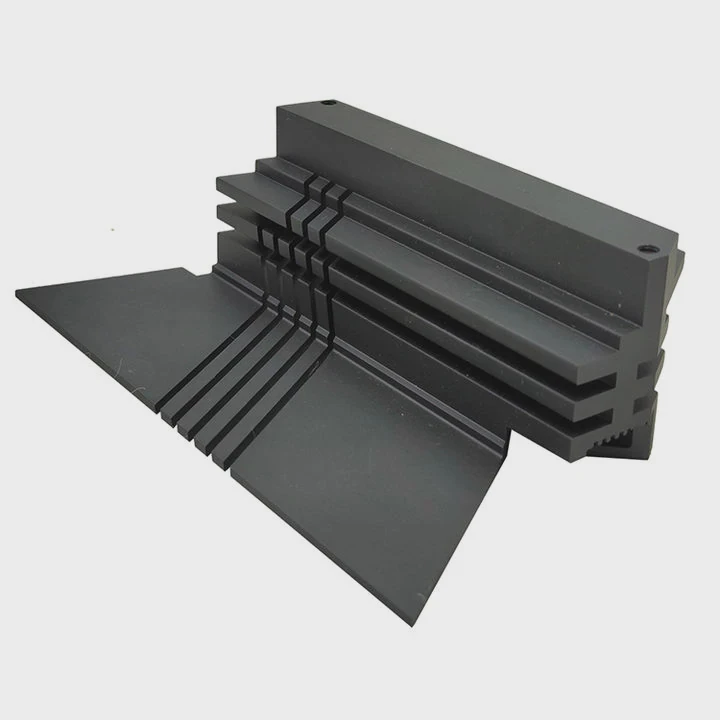
Recent physics research focuses on understanding molecular behavior during evaporation, developing nanostructured surfaces, and creating smart materials that control phase change at micro and nano scales.
Key research directions
1. Nanoscale evaporation dynamics
Scientists use molecular simulations to study how liquids behave near solid interfaces. They examine how surface roughness, chemical coating, and electric fields influence evaporation speed.
2. Superhydrophobic and hydrophilic surfaces
By controlling surface properties, researchers can accelerate or delay evaporation. Hydrophobic coatings repel water, while hydrophilic ones promote spreading and faster phase change. These insights lead to better cooling systems and self-cleaning materials.
3. Nanofluid and hybrid systems
Adding nanoparticles to fluids can change their thermal conductivity and evaporation rate. These nanofluids are being tested in cooling modules, solar collectors, and high-power electronics.
4. Bio-inspired evaporation models
Nature often provides inspiration. Researchers mimic leaf transpiration and animal sweat mechanisms to create efficient micro-evaporative structures. These bio-mimetic designs could lead to self-regulating cooling systems without moving parts.
5. Energy harvesting from evaporation
Some physicists are exploring ways to convert the latent heat of evaporation into usable energy. This could create self-powered cooling or energy-recycling systems for remote environments.
Summary of research areas
| Research Area | Focus | Potential Application |
|---|---|---|
| Nanoscale Dynamics | Molecular motion and interaction | Thermal microdevices |
| Surface Engineering | Coating and texture control | Smart cooling materials |
| Nanofluids | Enhanced thermal conductivity | EVs, electronics |
| Bio-inspired Systems | Natural evaporation imitation | Green technology |
| Energy Harvesting | Evaporation-driven power | Sustainable systems |
The future outlook
Evaporation is not only a cooling method—it’s a frontier of energy science. With the rise of microelectronics and renewable energy systems, researchers are now integrating evaporative physics with AI modeling and quantum-scale simulations to predict fluid behavior more accurately.
I believe the next big step will come from adaptive cooling systems, where materials automatically adjust their evaporation rates based on temperature or humidity. These “smart” systems could revolutionize not only industrial heat management but also wearable electronics, biomedical devices, and aerospace applications.
Conclusion
Evaporation is nature’s own cooling system—a perfect blend of simplicity and power. From the surface of a glass of water to the circuits of modern electronics, it shows how energy exchange at the smallest scale shapes the world around us. As research continues, the science of evaporation will keep inspiring new technologies that cool, sustain, and transform our future.
TAGS
Latest Articles

Volume discount levels for heat sink orders?
Buyers often ask when heat sink prices start to drop with volume. Many worry they’re overpaying for small orders. This guide explains how B2B volume pricing works for thermal components. Heat sink
21 Dec,2025
Heat sink long-term supply contract options?
Many buyers want stable pricing and reliable delivery for heat sinks. But without a clear contract, risks grow over time. This article explores how to secure better long-term supply deals. Long-term
21 Dec,2025
Tooling cost for new heat sink profiles?
Many engineers struggle to understand why tooling for custom heat sinks costs so much. They worry about budgeting and production timelines. This article breaks down the cost drivers behind tooling.
21 Dec,2025
Heat sink custom sample process steps?
Sometimes, starting a custom heat sink project feels overwhelming—too many steps, too many unknowns, and too many risks. You want a sample, but not endless delays. The process for requesting and
20 Dec,2025
Standard B2B terms for heat sink payments?
When buyers and sellers in B2B heat sink markets talk about payment, many don’t fully understand what’s standard. This can lead to delayed orders, miscommunication, and even lost business
20 Dec,2025
Heat sink pricing factors for large orders?
Heat sinks are vital for many systems. When prices rise, projects stall and budgets break. This problem can hit teams hard without warning. Large order heat sink pricing depends on many factors. You
20 Dec,2025Related Articles
- How to transition from air to liquid cooling?
- How to check if liquid cooling pump is working?
- Why is liquid cooling bad?
- How to liquid cool a PS3?
- How to set up a liquid cooling CPU?
- What Is the Best Liquid Cooling System?
- Does RTX 3090 need liquid cooling?
- What Is a Liquid Cooling System for a Computer?
- Is the Royal Enfield Super Meteor 650 Liquid Cooled?
- What is Liquid Cooling System in Mobile Devices?
- Are Liquid-Cooled Computers Better?
- What is Mobile Liquid Cooling?
Author
Dr. Emily Chen
Chief AI Researcher
Leading expert in thermal dynamics and AI optimization with over 15 years of experience in data center efficiency research.
Categories
Latest Products
Recommend Categories
- Liquid cooling plate Manufacturer
- Industrial Heat Sink Manufacturer
- Standard Heat Sink Manufacturer
- Aluminum Heat Sink Manufacturer
- Copper Heat Sink Manufacturer
- Anodized Heatsink Manufacturer
- Stamping heat sink Manufacturer
- Die Casting Heatsink Manufacturer
- Soldering heat sink Manufacturer
- CNC Parts Manufacturer
Latest Products
- Wholesale Aluminum Radiator
- Water Cooling Plate Kit
- Water Cooling Heat Sink
- Water Cooling Heat Sink Kit
- Stainless Steel Water Distributor
- Server Water Cooling Plate Kit
- Server Liquid Cooling System
- Server Aluminum Cooling Kit
- S19 Full Cover Cooling Plate
- S19 Cooling Plate Kit
- S19 Aluminum Cooling Plate
Contact Expert
Have questions about this article? Reach out to our experts directly.