how to remove cpu heatsink for p5n-d?
Removing the heatsink from an ASUS P5N-D board looks simple, but the latch style, bracket layout, and old thermal paste can make the process harder than expected.
You remove the CPU heatsink on a P5N-D by unlocking its latch type, releasing the correct screws or push-pins, loosening dried paste with gentle rotation, and lifting the cooler evenly to avoid socket strain.
I have dealt with many older boards where the cooler refused to move because of old paste or unique mounts. A careful method makes removal safe.
Why latch types differ by board?
Heatsink mounts vary across boards because manufacturers use different socket standards, bracket shapes, and retention mechanisms that match the platform design.
Latch types differ by board because each socket generation and cooler style uses its own mounting method, pressure pattern, and hole spacing to keep the heatsink secure under load.
Why manufacturers design unique latches
The socket shape, cooler size, and pressure requirements change across platforms. Each board must match these rules to prevent uneven contact or physical damage.
Common latch styles
| Latch Style | Typical Use |
|---|---|
| Push-pin | Older Intel coolers |
| Metal bracket | OEM coolers |
| Screw mount | Aftermarket towers |
A deeper look at latch behavior
The P5N-D uses Intel’s LGA775 socket, which supports many coolers from different years. Some coolers rely on push-pins, where plastic pins expand under the board. Others use metal brackets that clamp onto special hooks. Aftermarket coolers use screw-based backplates because they need stronger mounting pressure.
Push-pins were common on stock Intel coolers. They remove easily but wear out over time. When these pins become fragile, they loosen or break. Metal brackets need lever force to release the hooks. This force must be steady to avoid bending the board. Screw mounts apply even pressure and release by loosening four screws, often in diagonal order.
Heat generation also influenced design. Older coolers required less pressure. Modern tower coolers use screws to maintain proper tension on the CPU surface. Boards like the P5N-D often host aftermarket coolers, meaning latch differences appear across setups.
Understanding latch style helps prevent damage. Using the wrong method risks breaking plastic pins, bending metal clips, or stressing the socket.
Which screws release the cooler?
Coolers on older Intel platforms use either push-pins or screw brackets. Knowing which screws matter avoids removing the wrong parts.
The screws that release the cooler are the four screws that hold its bracket or backplate. These screws sit around the CPU socket and connect the heatsink frame to the motherboard holes.
Why correct screws matter
Coolers with backplates use dedicated mounting screws. Removing the wrong screws risks stripping threads or detaching the heatsink frame incorrectly.
Screw identification table
| Screw Type | Purpose |
|---|---|
| Long bracket screws | Hold cooler frame |
| Short heatsink screws | Attach fan or shroud |
| Case screws nearby | Not part of cooler |
A deeper look at screw removal
Many aftermarket coolers use four corner screws that secure the mounting brackets. These screws pass through the motherboard into a metal backplate. Loosening them frees the cooler from the board. They should be loosened in a cross pattern to relieve tension evenly.
Some coolers include extra screws that hold the fan or shroud. These screws do not remove the cooler. They only release the fan. The heatsink remains attached if these stay untouched. Distinguishing between these screws prevents unnecessary work.
With push-pin coolers, no screws are used. Instead, plastic pins must be rotated or lifted. If a cooler on the P5N-D uses these pins, pressing the tops inward or turning them counterclockwise releases the pins. The cooler lifts once all four pins unlock.
Coolers with metal clip brackets usually have a latch arm. This arm applies pressure to the heatsink. Releasing the latch reduces pressure so the cooler lifts. These latch arms sometimes hide small screws that stabilize the frame. Removing those screws before opening the latch reduces strain.
Checking which screws attach to the backplate prevents mistakes. Only screws tied to the mount release the cooler from the board.
Can dried paste resist removal?
Old thermal paste often becomes stiff. This stiffness can bond the heatsink to the CPU surface, making removal difficult.
Dried paste can resist removal because it hardens over time and forms a tight seal between the CPU and heatsink. Breaking this seal requires gentle twisting, not forceful pulling.
Why old paste makes removal harder
Heat cycles dry paste layers. As paste becomes rigid, it acts like glue. Pulling straight upward risks lifting the CPU out of the socket.
Paste behavior levels
| Paste Condition | Removal Difficulty |
|---|---|
| Fresh | Low |
| Slightly dried | Medium |
| Fully hardened | High |
A deeper look at dried paste problems
Thermal paste ages with heat. As the CPU runs, the paste cycles between warm and cool states. Over months or years, this process dries the paste until it becomes thick and cured. Hardened paste acts like adhesive. When the heatsink moves, the paste resists separation.
On older sockets like LGA775, the CPU locks into the socket with a lever. If dried paste bonds too strongly, lifting the cooler straight upward may pull the CPU out of its socket. This can bend pins or damage contacts. Twisting gently side to side breaks the dried layer safely.
Warm paste loosens more easily. Running the system for a few minutes before removal can help soften hardened layers. Once warm, gentle movement frees the bond. Avoid strong twisting because it may strain mounting brackets.
Cleaning old paste after removal takes longer because the paste crumbles into small flakes. A soft cloth with isopropyl alcohol removes debris without scratching the chip or heatsink base.
Understanding how dried paste behaves helps users remove coolers without damaging the CPU or board.
Should heatsink be lifted evenly?
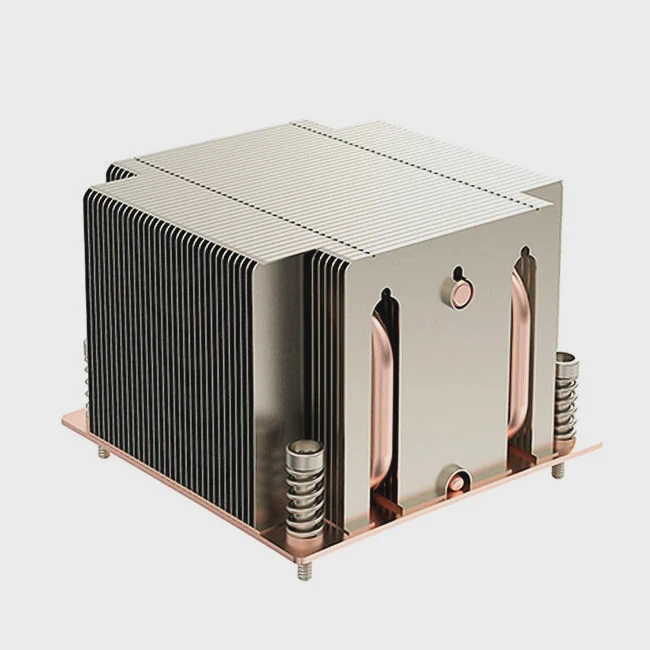
Even lifting prevents pressure on one side of the CPU or socket. Uneven lifting stresses the board and may snap old clips.
The heatsink should be lifted evenly because uneven force can tilt the cooler, damage the socket area, or strain the mounting holes when the paste bond breaks.
Why even lifting protects components
Even lifting keeps the heatsink aligned with the board. It reduces flex and prevents sudden release that may damage the CPU or bracket.
Even lifting guidelines
| Action | Benefit |
|---|---|
| Gentle rotation | Breaks paste bond |
| Lift both sides | Balanced removal |
| Avoid jerking | Prevents damage |
A deeper look at even removal method
The P5N-D is an older board with aging plastic parts. When force applies unevenly, clips or push-pins might snap. Lifting evenly avoids shock on one corner. After releasing the latch or screws, rotating the cooler gently breaks the paste bond. This rotation prevents sudden upward force.
Once the bond breaks, lifting both sides gradually keeps the cooler level. This reduces strain on socket edges. If one side lifts too high, the other side pulls the board upward or drags along the CPU surface. This can shift delicate parts or scratch the heat spreader.
For heavy tower coolers, weight distribution matters. Holding the cooler firmly with both hands helps control movement. Slow, steady lifting ensures no tension bends the bracket or PCB.
Even lifting also protects the backplate if one exists. Uneven force can shift the backplate and damage the insulation layer. Balanced removal keeps the mount intact.
By lifting evenly, the cooler detaches smoothly without stressing the board or CPU.
Conclusion
Removing a heatsink from a P5N-D requires understanding latch types, identifying real mounting screws, softening dried paste, and lifting the cooler evenly. Careful steps protect the board, socket, and CPU while ensuring safe removal.
TAGS
Latest Articles

Volume discount levels for heat sink orders?
Buyers often ask when heat sink prices start to drop with volume. Many worry they’re overpaying for small orders. This guide explains how B2B volume pricing works for thermal components. Heat sink
21 Dec,2025
Heat sink long-term supply contract options?
Many buyers want stable pricing and reliable delivery for heat sinks. But without a clear contract, risks grow over time. This article explores how to secure better long-term supply deals. Long-term
21 Dec,2025
Tooling cost for new heat sink profiles?
Many engineers struggle to understand why tooling for custom heat sinks costs so much. They worry about budgeting and production timelines. This article breaks down the cost drivers behind tooling.
21 Dec,2025
Heat sink custom sample process steps?
Sometimes, starting a custom heat sink project feels overwhelming—too many steps, too many unknowns, and too many risks. You want a sample, but not endless delays. The process for requesting and
20 Dec,2025
Standard B2B terms for heat sink payments?
When buyers and sellers in B2B heat sink markets talk about payment, many don’t fully understand what’s standard. This can lead to delayed orders, miscommunication, and even lost business
20 Dec,2025
Heat sink pricing factors for large orders?
Heat sinks are vital for many systems. When prices rise, projects stall and budgets break. This problem can hit teams hard without warning. Large order heat sink pricing depends on many factors. You
20 Dec,2025Related Articles
- is heatsink necessary?
- how to add holes for heatsinks pcb?
- do you need heatsink on m 2?
- how to put heatsink on raspberry pi?
- what does a cpu heatsink do?
- what does a motherboard heatsink do?
- will an older cpu heatsink fit on a 6700k?
- what type of heatsink does asus use laptop?
- how to remove gpu heatsink screws?
- do you need a ssd heatsink if motherboard has one?
- how to remove xbox one heatsink?
- does a heatsink need to be plugged in?
Author
Dr. Emily Chen
Chief AI Researcher
Leading expert in thermal dynamics and AI optimization with over 15 years of experience in data center efficiency research.
Categories
Latest Products
M.2 Heatpipe Heatsink With Dual Fans For Pc Case
19 Mar,2026
Heavy-Duty Aluminum Heat Sink Custom
19 Mar,2026
Oem Skived Fin Heatsink Aluminum Radiator For Plants
19 Mar,2026
Water Cooled Cnc Aluminum Heat Sink For Medical
19 Mar,2026
High Density 6000 Series Aluminum Heat Sink Profile
19 Mar,2026
High-Density Extruded Aluminum & Bonded-Fin Heat Sink Profile
19 Mar,2026
Recommend Categories
- Liquid cooling plate Manufacturer
- Industrial Heat Sink Manufacturer
- Standard Heat Sink Manufacturer
- Aluminum Heat Sink Manufacturer
- Copper Heat Sink Manufacturer
- Anodized Heatsink Manufacturer
- Stamping heat sink Manufacturer
- Die Casting Heatsink Manufacturer
- Soldering heat sink Manufacturer
- CNC Parts Manufacturer
Latest Products
- M.2 Heatpipe Heatsink With Dual Fans For Pc Case
- Heavy-Duty Aluminum Heat Sink Custom
- Oem Skived Fin Heatsink Aluminum Radiator For Plants
- Water Cooled Cnc Aluminum Heat Sink For Medical
- High Density 6000 Series Aluminum Heat Sink Profile
- High-Density Extruded Aluminum & Bonded-Fin Heat Sink Profile
- Dongguan Cnc Aluminum Heat Sink For Led & Brass Parts
- Wholesale Cnc Aluminum Heat Sink - Custom Extruded
- Led Cnc Round Heat Sink With Screw Holes
- Copper Pin-Fin Heat-Sink Large-Area For Photoled Cooling
- Telecom Heatsink Zipper Fin Wcopper Tubes Oem
Contact Expert
Have questions about this article? Reach out to our experts directly.