Is liquid cooling expensive?
When companies look for better heat management, liquid cooling often seems costly at first sight. The idea of pumps, tubes, and coolants sounds like an expensive system compared to simple fans. But is it really that expensive?
Liquid cooling can be more expensive upfront than air cooling, but it offers higher thermal efficiency, lower operating costs, and longer component life, which often reduce total cost in the long term.
Many business owners and engineers hesitate to adopt it because of the initial investment. However, the total ownership cost usually tells a different story once we consider performance, maintenance, and energy savings.
What affects the cost of liquid cooling?
Every cooling system has unique cost factors that define its final price tag. The cost of liquid cooling is influenced by the system design, coolant material, manufacturing process, and scale of application.
The cost of liquid cooling depends mainly on material selection, system complexity, manufacturing technology, and production scale.
1. Material and Design Complexity
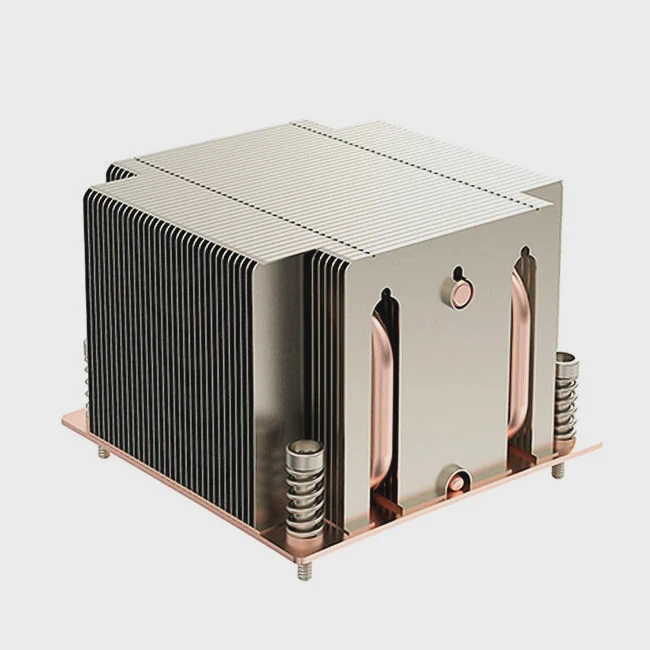
The choice of material has a direct effect on the cost. For example, copper offers excellent thermal conductivity but increases price, while aluminum provides a balance between cost and performance. Complex internal channels or fine machining for microchannels also increase production cost.
| Material | Conductivity (W/m·K) | Typical Use | Cost Impact |
|---|---|---|---|
| Copper | 385 | High-performance cooling plates | High |
| Aluminum | 235 | Standard cooling structures | Medium |
| Stainless Steel | 15 | Structural enclosures | Low-to-Medium |
2. Manufacturing Technology
Processes like vacuum brazing, diffusion bonding, or friction stir welding are precise but not cheap. They improve quality and reliability, especially for high-demand sectors like aerospace or electric vehicles. Yet, they also raise production costs due to specialized equipment and skilled labor.
3. Scale and Customization
Mass production can reduce cost significantly. A one-off prototype system may cost several times more per unit compared to a batch of thousands. For companies in B2B industries, this scaling factor is often critical in decision-making.
4. Operating and Maintenance Costs
Liquid cooling can reduce long-term maintenance. It lowers fan noise, prevents dust accumulation, and reduces failure rates. Even though the system has more components, it often requires less cleaning and fewer replacements over time.
In short, when I evaluate cost, I look beyond just purchase price. I consider durability, energy efficiency, and scalability — all of which make liquid cooling economically sound in many applications.
What are the advantages of higher investment?
When someone decides to invest more in a cooling system, they are not only buying equipment; they are buying performance, reliability, and future capacity.
A higher investment in liquid cooling brings better thermal control, longer component life, higher system efficiency, and better ROI through lower energy costs and reduced downtime.
Better Heat Transfer Efficiency
Liquid cooling can transfer heat up to 100 times more effectively than air cooling. This means stable performance even under heavy load. For data centers, electric vehicles, and semiconductor manufacturing, this stability translates into fewer failures and longer service life.
Increased Component Longevity
Overheating reduces the lifespan of chips, batteries, and power modules. Stable temperature control helps prevent thermal fatigue and reduces wear on sensitive electronic parts. It’s an invisible saving that becomes clear after years of operation.
Energy and Noise Reduction
Fans consume energy and generate noise. By improving thermal transfer efficiency, liquid cooling systems reduce fan usage, cutting energy bills and creating a quieter environment — a key factor in clean labs, control rooms, or hospitals.
Reliability and ROI
Here is a simplified view of how investment level connects to reliability and ROI:
| Investment Level | Reliability | Energy Savings | ROI Timeline |
|---|---|---|---|
| Low | Moderate | Minimal | Long-term (5–7 years) |
| Medium | High | Noticeable | Mid-term (3–5 years) |
| High | Very High | Significant | Short-term (2–3 years) |
In my own experience, clients who initially hesitated often found that a slightly higher investment in liquid cooling resulted in fewer maintenance calls, higher uptime, and reduced warranty claims.
How to manage your cooling budget?
Managing a cooling budget is not just about cutting cost; it is about allocating cost smartly. The key is to balance between initial setup, operating cost, and expected lifespan.
You can manage your liquid cooling budget by balancing initial investment with lifecycle costs, optimizing design early, and prioritizing systems that reduce energy and maintenance expenses.
Step 1: Define the Thermal Demand Clearly
Before budgeting, I always define the exact thermal target — how much heat needs to be dissipated, under what conditions, and for how long. Oversized systems waste money, while undersized ones risk failure.
Step 2: Prioritize Design Optimization
Early-stage design optimization can save thousands later. For instance, integrating the cooling channel directly into an aluminum structure avoids the need for extra plates or brackets. This “design-for-thermal” approach reduces materials, assembly, and leak risks.
Step 3: Compare Lifecycle Costs
A low-cost system might seem attractive at first but often consumes more energy or requires more frequent maintenance. I usually create a simple comparison like this:
| Cost Element | Air Cooling | Liquid Cooling |
|---|---|---|
| Initial Cost | Low | High |
| Energy Efficiency | Low | Very High |
| Maintenance | Frequent | Low |
| Lifetime | Short | Long |
| Total Cost Over 5 Years | High | Moderate |
Step 4: Plan for Scalability
Many clients forget to consider future thermal needs. Designing with modular cooling blocks or scalable manifolds allows easy expansion without redesigning the entire system. It helps control future costs when systems upgrade or expand.
Step 5: Monitor and Maintain Efficiently
Budget management continues after installation. By monitoring coolant flow rate, temperature, and pressure, I can prevent leaks or failures early. Regular maintenance keeps efficiency high and extends lifespan — saving cost in the long run.
Good budgeting is not about spending less; it is about spending wisely. I have seen companies save over 20% on total cost simply by optimizing thermal design and material choices during the early planning stage.
What are the economic trends in cooling systems?
The cooling industry has been evolving fast, especially with the rise of AI computing, electric mobility, and renewable energy. These new technologies demand precise and efficient heat management.
The economic trend in cooling systems is moving toward high-efficiency liquid solutions, modular design, and sustainable materials to reduce cost and carbon footprint.
The Rise of High-Density Cooling
Data centers now handle massive workloads, pushing energy densities far beyond what air cooling can handle. Liquid cooling, particularly direct-to-chip systems, has become the preferred solution because of its ability to handle high heat flux with compact structures.
Cost Shift from CapEx to OpEx
A notable shift is happening in how companies view cost. Instead of focusing only on upfront CapEx (capital expenditure), many are optimizing OpEx (operational expenditure). Liquid cooling helps reduce energy consumption by 20–40%, which directly lowers OpEx and improves sustainability scores.
Sustainability and Material Innovation
Environmental regulations push manufacturers to use recyclable coolants and lightweight materials. Aluminum and hybrid composites are increasingly replacing copper, offering both performance and sustainability. These changes not only reduce environmental impact but also improve shipping and manufacturing efficiency.
Modular and Scalable Systems
Future cooling designs emphasize modularity. This allows companies to adapt systems to different power levels or device types without full redesign. It improves flexibility, reduces downtime, and keeps cost predictable when production lines or device models change.
Integration with Smart Monitoring
AI-based temperature monitoring and smart sensors are transforming maintenance into a predictive model. Instead of reacting to overheating, companies can now prevent it. This proactive control reduces risk and improves overall ROI.
Global Market Growth
Market research shows that the liquid cooling industry is expected to grow at a CAGR above 20% in the next five years. The growth comes from sectors like EV batteries, 5G infrastructure, and semiconductor fabrication, where high heat density demands reliable solutions.
Real-World Observation
In my daily work, I see more clients transitioning to hybrid cooling — combining liquid and air systems. This approach uses liquid for hotspots and air for general dissipation. It provides cost balance and flexibility, especially for large-scale equipment.
The economic logic is clear: as energy becomes more expensive and performance requirements rise, efficient thermal management becomes a business advantage, not just a technical necessity.
Conclusion
Liquid cooling is not cheap at first glance, but it pays back through efficiency, reliability, and longevity. By understanding cost factors, investing smartly, and following industry trends, companies can turn a cooling system into a long-term financial advantage.
TAGS
Latest Articles

Volume discount levels for heat sink orders?
Buyers often ask when heat sink prices start to drop with volume. Many worry they’re overpaying for small orders. This guide explains how B2B volume pricing works for thermal components. Heat sink
21 Dec,2025
Heat sink long-term supply contract options?
Many buyers want stable pricing and reliable delivery for heat sinks. But without a clear contract, risks grow over time. This article explores how to secure better long-term supply deals. Long-term
21 Dec,2025
Tooling cost for new heat sink profiles?
Many engineers struggle to understand why tooling for custom heat sinks costs so much. They worry about budgeting and production timelines. This article breaks down the cost drivers behind tooling.
21 Dec,2025
Heat sink custom sample process steps?
Sometimes, starting a custom heat sink project feels overwhelming—too many steps, too many unknowns, and too many risks. You want a sample, but not endless delays. The process for requesting and
20 Dec,2025
Standard B2B terms for heat sink payments?
When buyers and sellers in B2B heat sink markets talk about payment, many don’t fully understand what’s standard. This can lead to delayed orders, miscommunication, and even lost business
20 Dec,2025
Heat sink pricing factors for large orders?
Heat sinks are vital for many systems. When prices rise, projects stall and budgets break. This problem can hit teams hard without warning. Large order heat sink pricing depends on many factors. You
20 Dec,2025Related Articles
- Is liquid cooling better than fans?
- Is liquid cooler better?
- How long does a liquid CPU cooler last?
- How to cool a liquid quickly?
- Is liquid cooling easy to install?
- How to add liquid cooling to GPU?
- Does liquid cooling use water?
- How to know if your liquid cooling is working?
- How is coolant circulated in a liquid-cooled eTorque system?
- Is BMW i3 battery liquid cooled?
- How to install Corsair liquid CPU cooler?
- What is a liquid-cooled generator?
Author
Dr. Emily Chen
Chief AI Researcher
Leading expert in thermal dynamics and AI optimization with over 15 years of experience in data center efficiency research.
Categories
Latest Products






Recommend Categories
- Liquid cooling plate Manufacturer
- Industrial Heat Sink Manufacturer
- Standard Heat Sink Manufacturer
- Aluminum Heat Sink Manufacturer
- Copper Heat Sink Manufacturer
- Anodized Heatsink Manufacturer
- Stamping heat sink Manufacturer
- Die Casting Heatsink Manufacturer
- Soldering heat sink Manufacturer
- CNC Parts Manufacturer
Latest Products
- Wholesale Aluminum Radiator
- Water Cooling Plate Kit
- Water Cooling Heat Sink
- Water Cooling Heat Sink Kit
- Stainless Steel Water Distributor
- Server Water Cooling Plate Kit
- Server Liquid Cooling System
- Server Aluminum Cooling Kit
- S19 Full Cover Cooling Plate
- S19 Cooling Plate Kit
- S19 Aluminum Cooling Plate
Contact Expert
Have questions about this article? Reach out to our experts directly.