What is liquid cool technology?
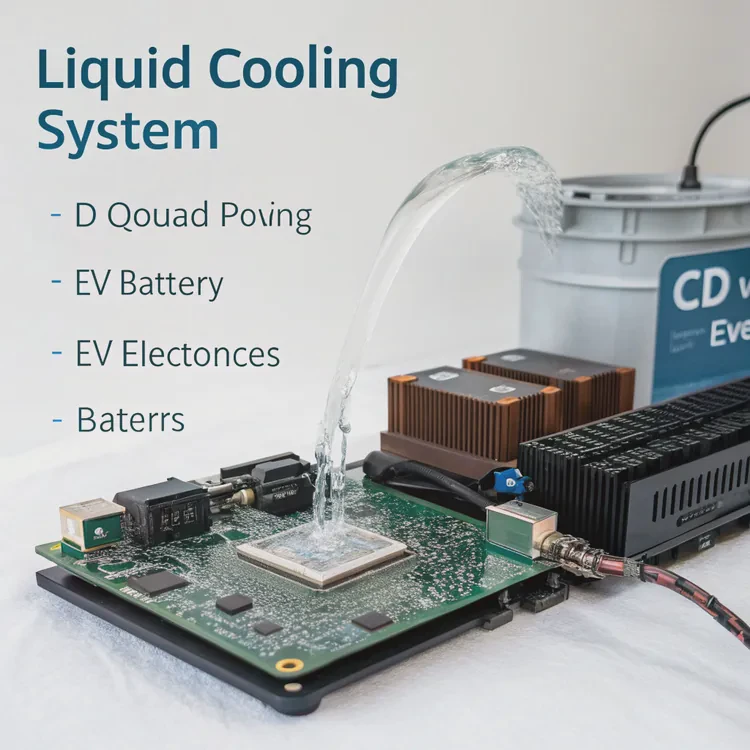
The first time I saw liquid flowing through a clear tube inside a computer, I thought it was something futuristic — like watching science fiction in real life. But liquid cooling isn’t just for high-end PCs anymore. It’s quietly becoming the preferred way to keep modern devices — from servers to smartphones — efficient and reliable.
Liquid cool technology uses thermally conductive fluids to absorb, transport, and dissipate heat from electronic components more effectively than air cooling systems.
In this article, I’ll explain how liquid cooling works, why it’s so powerful, where it’s being used today, and what innovations are shaping the future of this fast-growing thermal technology.
How does liquid cool technology work?
The idea behind liquid cooling is simple: use liquid as the medium to remove heat faster than air can. Since liquids have much higher heat capacity and conductivity, they can carry heat away from components more efficiently and evenly.
Liquid cooling works by circulating coolant through a closed loop, where the liquid absorbs heat from a hot component and transfers it to a radiator or heat exchanger to be released into the air or another medium.
The working process
- Heat absorption: The coolant passes through a metal block attached to the heat source (like a CPU, GPU, or power module). Heat is transferred from the surface to the liquid.
- Circulation: A pump moves the heated coolant through tubes toward a heat exchanger or radiator.
- Heat release: The coolant flows through thin fins or plates where air (via fans) or another coolant medium extracts the heat.
- Recirculation: The cooled liquid then returns to the component, ready to absorb heat again.
This loop repeats continuously, maintaining stable operating temperatures even during heavy workloads or extreme environmental conditions.
Key components in liquid cooling systems
| Component | Function |
|---|---|
| Cold Plate / Water Block | Transfers heat from the device to the coolant. |
| Coolant | Liquid medium that absorbs and carries heat. |
| Pump | Circulates coolant through the loop. |
| Radiator / Heat Exchanger | Releases heat into the air or secondary cooling medium. |
| Reservoir (optional) | Stores coolant and helps remove trapped air. |
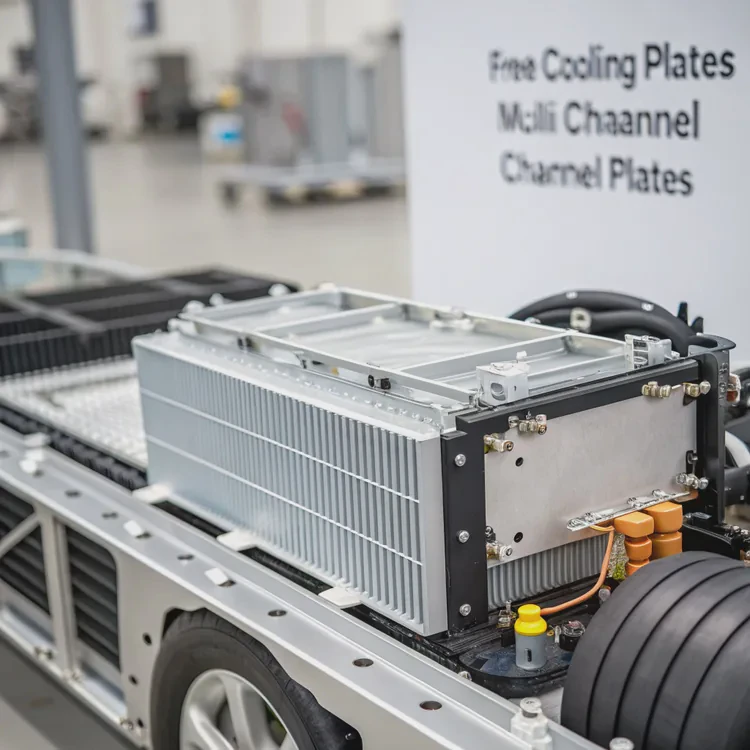
In industrial systems or electric vehicles, the principle is the same, but the setup may include multi-channel cooling plates or direct liquid immersion for maximum heat removal.
Common coolants
- Water-Glycol Mixtures: Standard for PCs and vehicles, balancing conductivity and corrosion resistance.
- Dielectric Fluids: Used in servers and electronics because they are non-conductive.
- Refrigerants: Used in advanced phase-change systems for extremely low temperatures.
- Nano-fluids: New materials that improve thermal performance with suspended nanoparticles.
What are its major advantages?
I’ve tested air-cooled and liquid-cooled systems side by side, from computers to industrial equipment. The results are always clear — liquid cooling delivers better performance, lower noise, and longer component life.
Liquid cooling offers superior heat transfer, quieter operation, improved efficiency, compact design flexibility, and enhanced reliability compared to traditional air cooling methods.
1. Higher heat transfer efficiency
Water and other coolants can carry heat far more effectively than air. Liquid cooling removes heat faster and keeps temperatures stable even under heavy load.
In electronics, this can improve performance consistency and prevent throttling or overheating.
| Cooling Type | Thermal Conductivity | Heat Capacity | Efficiency |
|---|---|---|---|
| Air | ~0.025 W/m·K | Low | Moderate |
| Water | ~0.6 W/m·K | High | Excellent |
| Nanofluid | Up to 0.9 W/m·K | High | Superior |
2. Reduced noise
Liquid systems often rely on fewer, slower-spinning fans, which means quieter operation. This makes them ideal for offices, data centers, or homes where noise reduction is important.
3. Compact design
Because liquid can move heat away from components efficiently, it allows smaller and more flexible layouts. This is critical in laptops, EVs, and compact electronics where airflow is limited.
4. Better thermal balance
Liquid cooling distributes heat evenly across all cooled components. This prevents hotspots and maintains consistent performance — especially important in high-density systems like GPUs, servers, or EV battery packs.
5. Improved energy efficiency
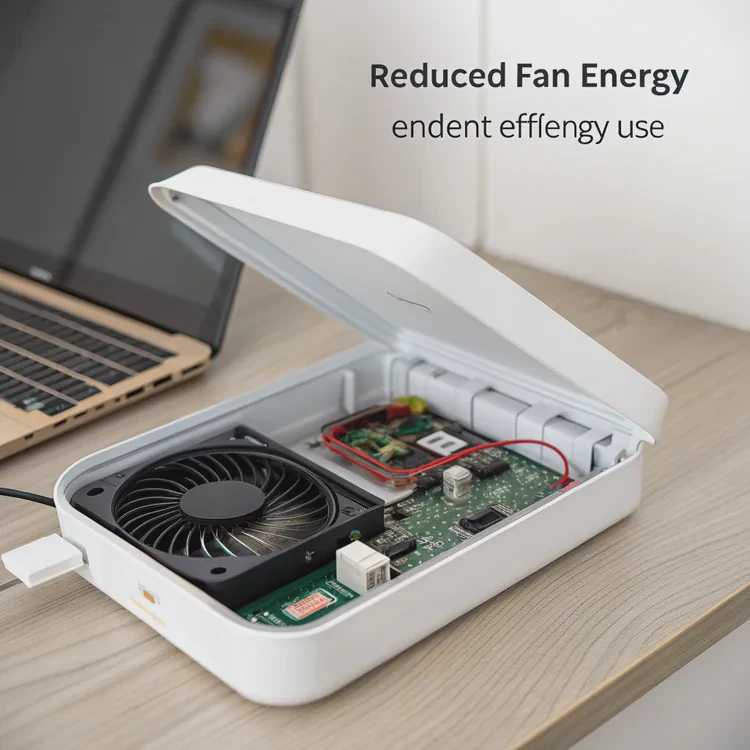
With better heat removal, systems can run cooler and require less fan power. This reduces total energy consumption and extends the life of internal components.
6. Longer lifespan and reliability
Consistent temperature management prevents thermal stress, oxidation, and component degradation. In electric vehicles and servers, this translates into higher uptime and lower maintenance costs.
7. Scalable performance
Liquid cooling can easily scale for large systems — from small consumer devices to industrial machinery — by increasing pump capacity or radiator surface area.
Summary of advantages
| Benefit | Description | Typical Impact |
|---|---|---|
| High Efficiency | Removes more heat per unit time | Improves stability |
| Low Noise | Fewer or slower fans | Quieter operation |
| Compact Design | Flexible layout | Fits tight spaces |
| Even Cooling | Prevents hotspots | Extends lifespan |
| Scalable | Supports larger systems | Adaptable to future needs |
In essence, liquid cooling is not just more effective — it’s smarter, quieter, and more adaptable than air.
Where is it applied in modern devices?
Liquid cooling is no longer limited to gaming PCs or servers. It’s now used everywhere heat poses a problem — from smartphones to electric vehicles. As electronics grow more powerful, controlling heat has become a key part of design.
Liquid cooling is widely used in computers, data centers, electric vehicles, aerospace systems, medical devices, and even mobile phones to maintain performance and safety.
1. Personal computers and gaming systems
- CPUs and GPUs: The most common use case. Liquid coolers help high-end processors maintain top performance under gaming or rendering workloads.
- Custom loops and AIOs: Enthusiasts build loops that cool multiple components, while AIO (All-in-One) coolers offer maintenance-free solutions.
2. Data centers and servers
- Direct-to-chip liquid cooling: Cold plates mounted directly on CPUs and GPUs circulate coolant to remove heat efficiently.
- Immersion cooling: Entire server boards are submerged in dielectric fluids, providing silent and high-capacity cooling for massive workloads.
This approach can reduce energy use in data centers by up to 40% compared to traditional air systems.
3. Electric vehicles (EVs)
- Battery cooling: Liquid cooling keeps EV batteries within an optimal temperature range for performance and longevity.
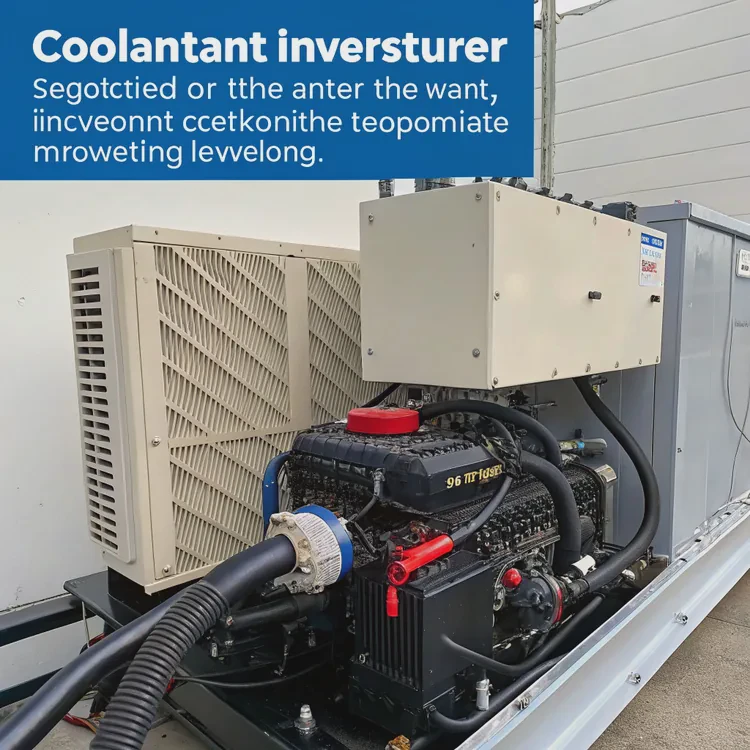
- Motor and inverter cooling: Coolant also regulates temperature in motors, power electronics, and charging systems.
Popular EVs like Tesla, Porsche Taycan, and Nissan Ariya use liquid-cooled battery modules to handle rapid charging and prevent thermal runaway.
4. Aerospace and defense systems
Aircraft and satellites use liquid loops to manage temperature in dense electronic packages and sensors where air circulation is limited.
5. Medical and industrial equipment
MRI machines, laser systems, and precision instruments rely on liquid cooling to stabilize temperature-sensitive components and maintain calibration accuracy.
6. Smartphones and portable devices
High-performance smartphones now integrate vapor chambers or micro liquid cooling channels to prevent overheating during gaming or 5G communication.
For example, flagship phones from brands like Samsung, Xiaomi, and ASUS ROG include compact liquid cooling systems.
Application overview
| Sector | Example Use | Purpose |
|---|---|---|
| Computers | CPUs, GPUs | Stable performance |
| Data Centers | Server chips | Efficiency & density |
| Electric Vehicles | Batteries, inverters | Safety & longevity |
| Aerospace | Sensors, avionics | Precision & reliability |
| Medical Devices | Imaging systems | Temperature control |
| Mobile Devices | Smartphones | Prevent overheating |
Liquid cooling’s versatility comes from its scalability — the same physics apply whether cooling a chip or an entire vehicle.
What innovations define its future?
Liquid cooling is evolving rapidly as devices become smaller, denser, and more powerful. From AI-driven cooling systems to nanofluid materials, the next wave of innovation is already here.
The future of liquid cooling is driven by smart control systems, advanced materials, eco-friendly coolants, and hybrid designs that combine multiple heat management techniques.
1. Smart and adaptive cooling
Next-generation systems use AI-based sensors and control algorithms to predict and adjust cooling needs dynamically. This improves energy efficiency and extends component life.
2. Nanofluid coolants
Scientists are developing nano-enhanced liquids with suspended metal or ceramic particles that boost thermal conductivity by up to 30%. These fluids promise faster heat transfer with minimal environmental impact.
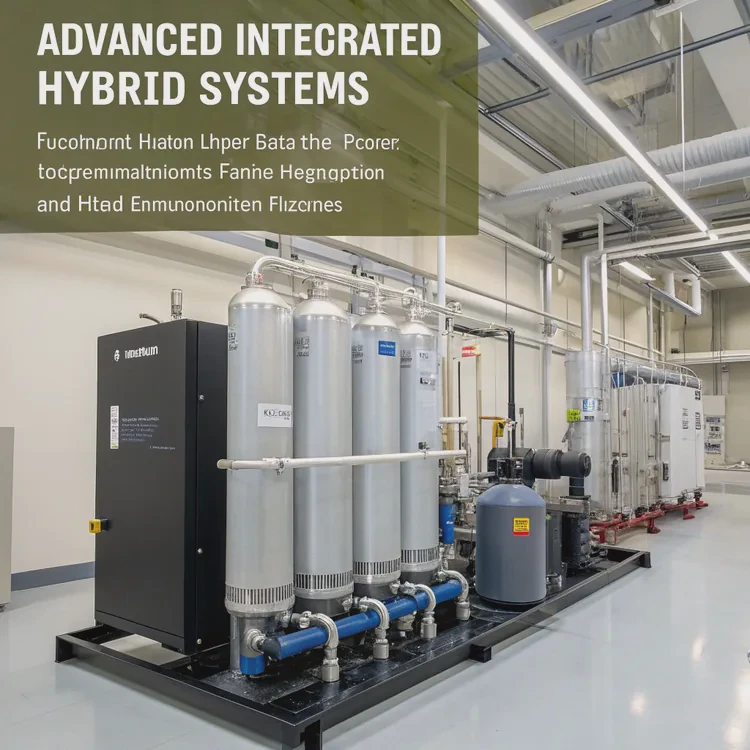
3. Integrated hybrid systems
Future designs will merge liquid, vapor, and phase-change cooling into one system. For example, CPUs or EV modules may use liquid cooling for base loads and vapor chambers for peak heat bursts.
4. Compact and modular architectures
Manufacturers are creating modular cooling units that fit into small spaces — ideal for compact PCs, mobile devices, and robotics. These plug-and-play modules simplify installation and maintenance.
5. Eco-friendly and dielectric fluids
As sustainability becomes essential, developers are replacing traditional glycol coolants with non-toxic, biodegradable alternatives and dielectric fluids safe for immersion cooling.
6. Additive manufacturing and 3D cooling plates
3D printing enables the creation of custom micro-channel cooling plates, optimizing flow and minimizing pressure drops. This makes cooling more efficient and tailored to specific components.
7. Cross-industry integration
The same liquid cooling principles are now shared across industries — from data centers to EVs — enabling standardization, better supply chains, and rapid innovation.
Future trend summary
| Innovation | Description | Expected Benefit |
|---|---|---|
| AI Adaptive Cooling | Real-time predictive control | Energy savings, stability |
| Nanofluids | Enhanced thermal conductivity | 30% faster heat transfer |
| Hybrid Systems | Combines liquid and vapor | Broader temperature control |
| Eco Coolants | Non-toxic and biodegradable | Sustainable operation |
| 3D Microchannels | Optimized cooling flow | Compact and efficient |
Looking forward
In the near future, we’ll see smart, self-regulating liquid cooling systems that require no manual tuning, using nanomaterials and AI to optimize heat management automatically. From quantum computers to EVs, liquid cooling will be the foundation of next-generation thermal design.
Conclusion
Liquid cool technology uses the power of fluid dynamics to keep modern electronics efficient, stable, and safe. It’s already essential in industries from computing to transportation — and its potential is only growing.
As innovations like nanofluids, AI control, and hybrid systems emerge, liquid cooling will continue to evolve beyond performance — becoming the key enabler for smarter, greener, and more powerful devices across every industry.
TAGS
Latest Articles

Volume discount levels for heat sink orders?
Buyers often ask when heat sink prices start to drop with volume. Many worry they’re overpaying for small orders. This guide explains how B2B volume pricing works for thermal components. Heat sink
21 Dec,2025
Heat sink long-term supply contract options?
Many buyers want stable pricing and reliable delivery for heat sinks. But without a clear contract, risks grow over time. This article explores how to secure better long-term supply deals. Long-term
21 Dec,2025
Tooling cost for new heat sink profiles?
Many engineers struggle to understand why tooling for custom heat sinks costs so much. They worry about budgeting and production timelines. This article breaks down the cost drivers behind tooling.
21 Dec,2025
Heat sink custom sample process steps?
Sometimes, starting a custom heat sink project feels overwhelming—too many steps, too many unknowns, and too many risks. You want a sample, but not endless delays. The process for requesting and
20 Dec,2025
Standard B2B terms for heat sink payments?
When buyers and sellers in B2B heat sink markets talk about payment, many don’t fully understand what’s standard. This can lead to delayed orders, miscommunication, and even lost business
20 Dec,2025
Heat sink pricing factors for large orders?
Heat sinks are vital for many systems. When prices rise, projects stall and budgets break. This problem can hit teams hard without warning. Large order heat sink pricing depends on many factors. You
20 Dec,2025Related Articles
- Is CPU liquid cooling worth it?
- How liquid CPU cooler works?
- Does the Ryzen 7 7800X3D need liquid cooling?
- Which EVs have liquid cooled batteries?
- Where to put liquid cooling radiator?
- How to change water cooling liquid?
- How Good Is Liquid Cooling?
- Does Liquid Cooling Run Out?
- Does 7800X3D need liquid cooling?
- Is liquid cooling necessary?
- How to flush liquid cooling system?
- Is liquid cooling louder than air?
Author
Dr. Emily Chen
Chief AI Researcher
Leading expert in thermal dynamics and AI optimization with over 15 years of experience in data center efficiency research.
Categories
Latest Products






Recommend Categories
- Liquid cooling plate Manufacturer
- Industrial Heat Sink Manufacturer
- Standard Heat Sink Manufacturer
- Aluminum Heat Sink Manufacturer
- Copper Heat Sink Manufacturer
- Anodized Heatsink Manufacturer
- Stamping heat sink Manufacturer
- Die Casting Heatsink Manufacturer
- Soldering heat sink Manufacturer
- CNC Parts Manufacturer
Latest Products
- Wholesale Aluminum Radiator
- Water Cooling Plate Kit
- Water Cooling Heat Sink
- Water Cooling Heat Sink Kit
- Stainless Steel Water Distributor
- Server Water Cooling Plate Kit
- Server Liquid Cooling System
- Server Aluminum Cooling Kit
- S19 Full Cover Cooling Plate
- S19 Cooling Plate Kit
- S19 Aluminum Cooling Plate
Contact Expert
Have questions about this article? Reach out to our experts directly.