How Good Is Liquid Cooling?
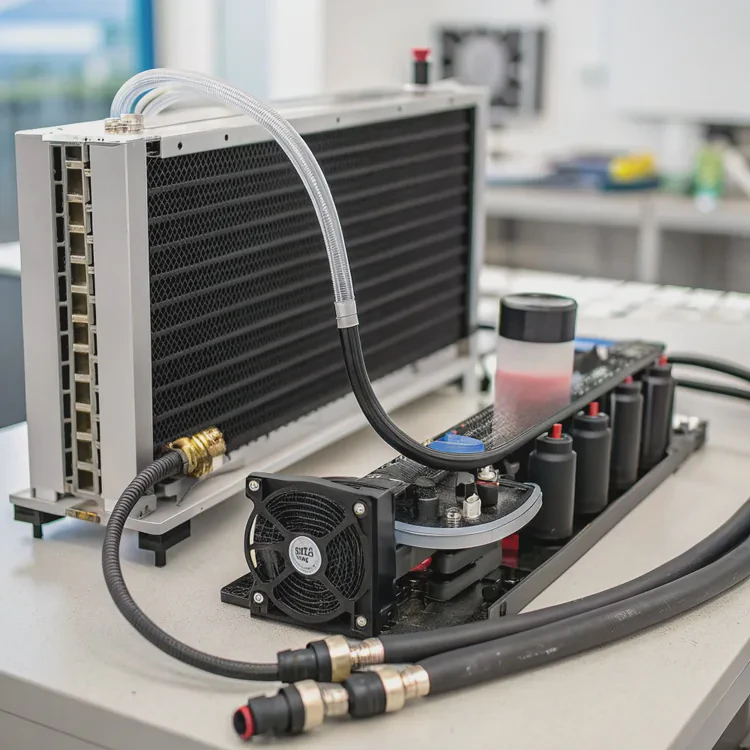
When electronics heat up, performance drops. Fans can only do so much, and overheating can kill systems. That’s where liquid cooling steps in.
Liquid cooling is a thermal management method that transfers heat more efficiently than air cooling, keeping systems stable and longer-lasting.
It’s not just about cooling. It’s about efficiency, reliability, and silence. In this article, I’ll walk through what liquid cooling is, its benefits, how to evaluate its performance, and the new trends shaping the future of cooling.
What Is Liquid Cooling?
When heat builds up in a system, it needs to be removed fast. Traditional fans move air, but air doesn’t carry heat very well. That’s where liquid cooling becomes a smarter choice.
Liquid cooling uses a circulating fluid to absorb and transfer heat away from components like CPUs, batteries, or power modules, offering faster and more stable heat removal than air.
How It Works
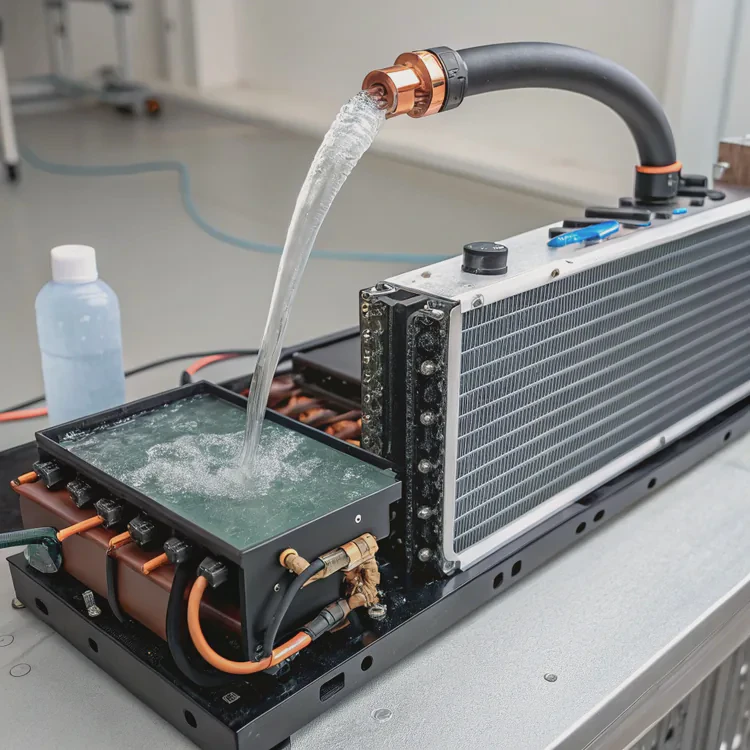
Liquid cooling systems typically include:
- A cold plate attached to the heat source
- A pump that drives coolant through the system
- Tubes to transport the liquid
- A radiator or heat exchanger that releases heat into the air
The coolant flows through these components, absorbs heat, and releases it away from the sensitive area. The process repeats in a closed loop, keeping the temperature stable.
Types of Liquid Cooling Systems
| Type | Description | Common Use |
|---|---|---|
| Direct liquid cooling (DLC) | Coolant runs directly through channels near the heat source | Servers, power electronics |
| Cold plate cooling | Uses metal plates with microchannels for efficient heat transfer | EV batteries, semiconductors |
| Immersion cooling | Entire system submerged in dielectric liquid | Data centers, HPC systems |
Liquid cooling is ideal for environments where high thermal loads or compact designs make air cooling insufficient.
What Are the Benefits of Liquid Cooling?
High-performance systems today generate enormous heat. Air cooling often struggles to keep up, especially in dense, high-power applications.
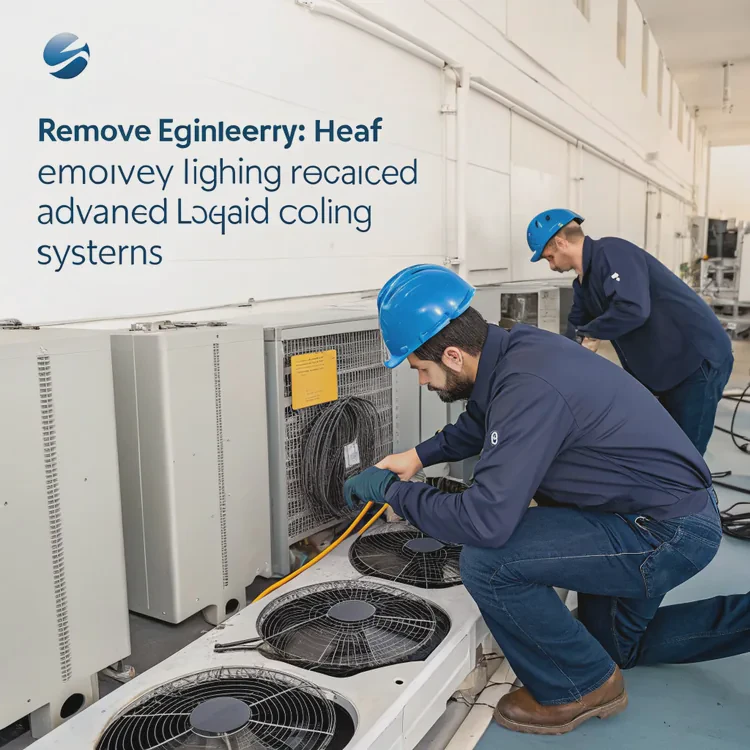
Liquid cooling provides higher thermal conductivity, lower noise, and better stability for compact and high-performance designs.
Key Advantages
Superior Heat Transfer Efficiency
Liquids have much higher heat capacity than air. This means they can absorb more heat before rising in temperature.Compact Design Compatibility
As devices get smaller, there’s less space for airflow. Liquid cooling allows engineers to remove heat efficiently even in tight spaces.Noise Reduction
Liquid systems often need fewer fans, resulting in quieter operation.Improved System Lifespan
By keeping temperature fluctuations low, it reduces stress on components.
Example Comparison
| Parameter | Air Cooling | Liquid Cooling |
|---|---|---|
| Heat Transfer Coefficient | 50–100 W/m²·K | 500–10,000 W/m²·K |
| Noise Level | Moderate to High | Low |
| Space Requirement | Large | Compact |
| Maintenance | Low | Medium |
| Efficiency at High Power | Limited | Excellent |
Liquid cooling is not just for gaming PCs or servers. It’s also transforming EVs, medical devices, and telecom systems where reliability is non-negotiable.
How to Evaluate the Performance of Liquid Cooling?
Performance isn’t just about how “cool” a system feels. It’s about quantifiable efficiency.
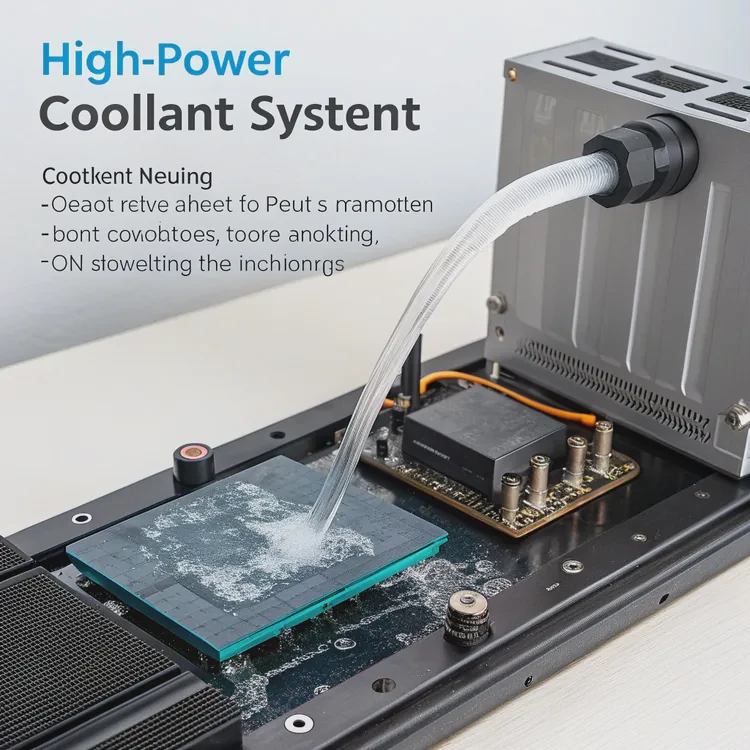
The performance of a liquid cooling system is evaluated by thermal resistance, coolant flow rate, temperature uniformity, and system reliability.
Key Performance Indicators (KPIs)
1. Thermal Resistance (Rθ)
This measures how well the system transfers heat from the component to the ambient environment.
Lower resistance means better cooling.
2. Temperature Uniformity
Consistent temperature across the surface prevents local overheating. This is critical for high-power electronics.
3. Coolant Flow Rate
Proper flow ensures effective heat absorption. Too slow, and heat accumulates. Too fast, and pressure drops increase.
4. Power Density Capability
As electronics evolve, systems handle higher power per unit area. Cooling must match that demand.
5. Reliability and Leak Prevention
Every joint, fitting, and seal must withstand long-term operation. Reliability testing often includes vibration, shock, and aging simulations.
Practical Testing Approach
In my experience, real-world testing is essential. I once evaluated two cooling modules for a power converter. On paper, both looked similar. But when tested under 1000W load, one showed 5°C higher average temperature. The cause? Poor internal flow channel design. This example reminded me that design geometry matters as much as material.
What Are the Latest Trends in Cooling Efficiency?
Technology evolves fast, and so does cooling. Modern systems face higher power density and stricter environmental standards.
The latest cooling trends focus on hybrid cooling, microchannel cold plates, phase change materials, and AI-based thermal control.
Trend 1: Hybrid Cooling
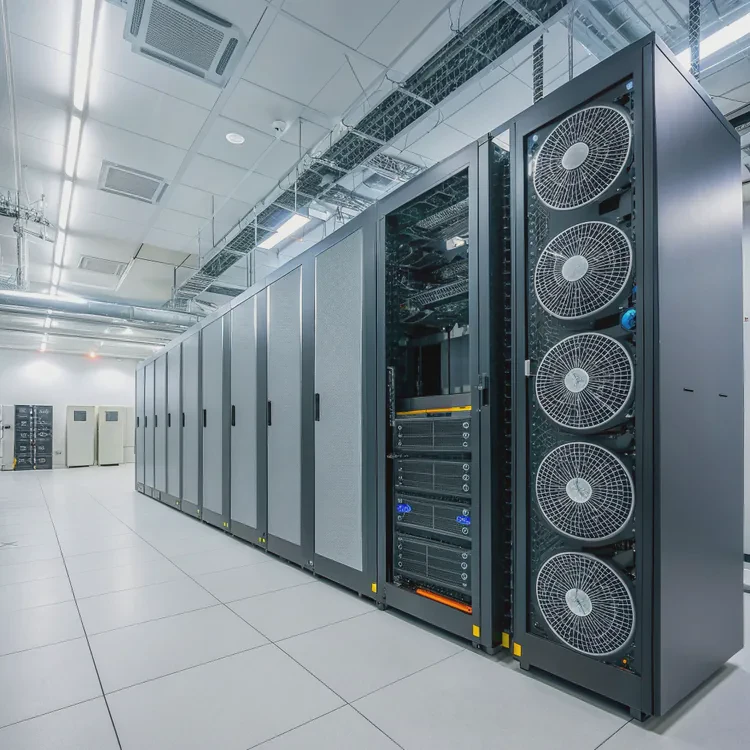
Combining air and liquid cooling improves flexibility. For example, data centers now use liquid cooling for CPUs while keeping fans for general airflow.
Trend 2: Microchannel Cold Plates
Microchannels increase surface area for heat transfer. They are lightweight, compact, and deliver superior cooling for EV batteries and chips.
Trend 3: Phase Change Cooling
Some systems integrate phase change materials (PCM) that absorb heat during melting and release it during solidification. This helps buffer thermal peaks.
Trend 4: Smart Cooling with AI
AI monitors temperature and predicts heat buildup. It adjusts pump speed or flow rate dynamically for optimal efficiency.
Trend 5: Sustainable Coolants
Environmental safety is now a major concern. Engineers are developing biodegradable and non-flammable coolants with high dielectric strength.
Why These Trends Matter
In high-tech fields like electric vehicles, 5G infrastructure, and aerospace electronics, cooling efficiency directly affects safety and performance. The move toward modular, intelligent, and eco-friendly systems marks a new phase in thermal design.
Each innovation aims at the same goal — achieving more cooling with less energy.
Conclusion
Liquid cooling isn’t just good — it’s the future of high-performance thermal management. It delivers unmatched efficiency, stability, and design flexibility, supporting the next generation of compact and powerful systems.
TAGS
Latest Articles

Volume discount levels for heat sink orders?
Buyers often ask when heat sink prices start to drop with volume. Many worry they’re overpaying for small orders. This guide explains how B2B volume pricing works for thermal components. Heat sink
21 Dec,2025
Heat sink long-term supply contract options?
Many buyers want stable pricing and reliable delivery for heat sinks. But without a clear contract, risks grow over time. This article explores how to secure better long-term supply deals. Long-term
21 Dec,2025
Tooling cost for new heat sink profiles?
Many engineers struggle to understand why tooling for custom heat sinks costs so much. They worry about budgeting and production timelines. This article breaks down the cost drivers behind tooling.
21 Dec,2025
Heat sink custom sample process steps?
Sometimes, starting a custom heat sink project feels overwhelming—too many steps, too many unknowns, and too many risks. You want a sample, but not endless delays. The process for requesting and
20 Dec,2025
Standard B2B terms for heat sink payments?
When buyers and sellers in B2B heat sink markets talk about payment, many don’t fully understand what’s standard. This can lead to delayed orders, miscommunication, and even lost business
20 Dec,2025
Heat sink pricing factors for large orders?
Heat sinks are vital for many systems. When prices rise, projects stall and budgets break. This problem can hit teams hard without warning. Large order heat sink pricing depends on many factors. You
20 Dec,2025Related Articles
- What is liquid cool technology?
- Is CPU liquid cooling worth it?
- How liquid CPU cooler works?
- Does the Ryzen 7 7800X3D need liquid cooling?
- Which EVs have liquid cooled batteries?
- Where to put liquid cooling radiator?
- Does Liquid Cooling Run Out?
- Does 7800X3D need liquid cooling?
- Is liquid cooling necessary?
- How to flush liquid cooling system?
- Is liquid cooling louder than air?
- How to test a liquid cooling system?
Author
Dr. Emily Chen
Chief AI Researcher
Leading expert in thermal dynamics and AI optimization with over 15 years of experience in data center efficiency research.
Categories
Latest Products






Recommend Categories
- Liquid cooling plate Manufacturer
- Industrial Heat Sink Manufacturer
- Standard Heat Sink Manufacturer
- Aluminum Heat Sink Manufacturer
- Copper Heat Sink Manufacturer
- Anodized Heatsink Manufacturer
- Stamping heat sink Manufacturer
- Die Casting Heatsink Manufacturer
- Soldering heat sink Manufacturer
- CNC Parts Manufacturer
Latest Products
- Wholesale Aluminum Radiator
- Water Cooling Plate Kit
- Water Cooling Heat Sink
- Water Cooling Heat Sink Kit
- Stainless Steel Water Distributor
- Server Water Cooling Plate Kit
- Server Liquid Cooling System
- Server Aluminum Cooling Kit
- S19 Full Cover Cooling Plate
- S19 Cooling Plate Kit
- S19 Aluminum Cooling Plate
Contact Expert
Have questions about this article? Reach out to our experts directly.