Required tolerance for machined heat sink?
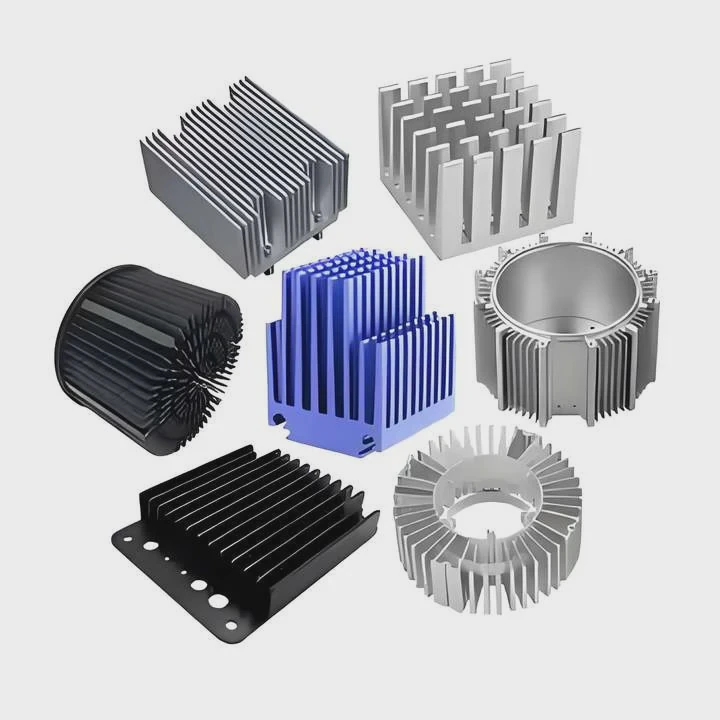
When manufacturing a heat sink, small errors in dimensions can ruin cooling and fit.
If tolerances are too loose, parts may wobble or gaps form.
Good tolerances ensure reliable thermal contact and assembly stability.
The required tolerance for a machined heat sink is the dimensional accuracy range under which it still performs thermally and mechanically as intended.
That tolerance depends on heat sink geometry, thermal path sensitivity, mating parts fit, and assembly method.
To pick the right tolerance, one must balance thermal performance, assembly ease, manufacturing cost, and reliability.
Below, I explore typical tolerance standards, their impact on thermal efficiency, cost implications, and tools that help hold tight tolerances.
What are standard tolerances in CNC heat sink production?
When a raw aluminum block becomes a precision heat sink, machining precision matters.
Too rough and fins warp or surfaces are uneven.
So manufacturers adopt certain tolerance standards to guide production and inspection.
Standard CNC heat sink production tolerances typically range between ±0.1 mm to ±0.02 mm depending on part feature and requirement.
Dimensions like overall length/width may use ±0.1 mm, while fin thickness, base flatness or mounting holes often demand ±0.05 mm or tighter.
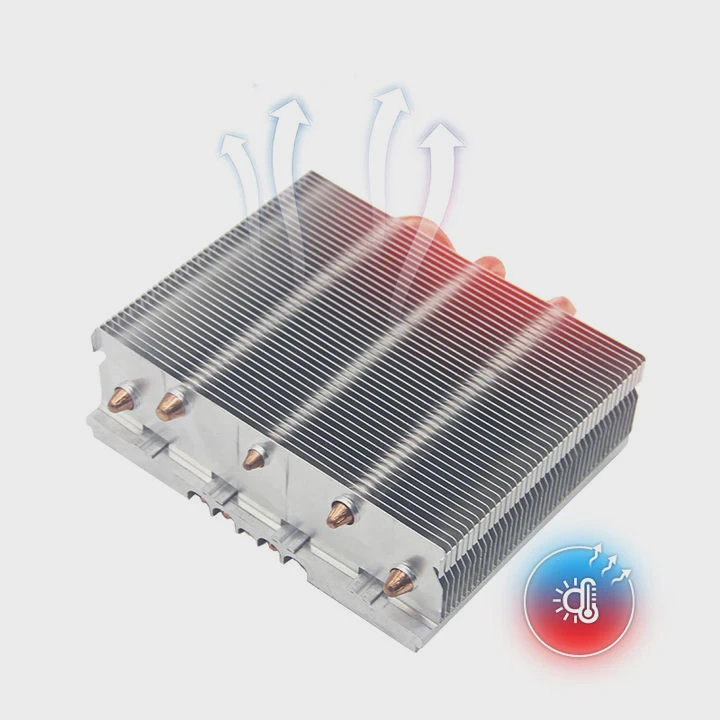
Common tolerance classes and when they apply
Many shops follow common tolerance classes. For example:
| Feature type | Typical tolerance | Use case |
|---|---|---|
| Overall block dimensions | ±0.1 mm | Large outer size where clearance exists |
| Mounting hole positions | ±0.05 mm | Ensuring bolt alignment |
| Fin thickness / spacing | ±0.05 mm to ±0.02 mm | Critical for air flow uniformity |
| Base flatness (surface) | Flat within 0.05 mm | Ensures good contact with device base |
| Critical interface surfaces | ±0.02 mm | For precise mating and thermal contact |
In some advanced or high‑precision applications, shops push tolerances further toward ±0.01 mm, though that raises costs.
Why different features get different tolerances
Not all parts of a heat sink impact performance or assembly equally.
Large external dimensions can vary slightly without harming cooling or fit.
Mounting holes need better precision so screws and brackets align.
Fins and base surfaces often impact air flow or thermal contact — small deviation can influence performance.
As a designer or buyer, one should specify tolerances for each feature.
Relying on a blanket “machined part” spec may lead to problems down the line.
Proper drawings or CAD drawings with tolerance annotations help ensure the correct precision is applied where it matters most.
In sum, standard tolerances provide a base.
But design needs and thermal sensitivity should drive tolerance spec for each heat sink dimension or feature.
How do tolerances affect thermal efficiency?
If machined tolerances are loose or inconsistent, a heat sink’s thermal performance may suffer.
Warped bases, uneven fins, or misaligned holes can reduce contact quality, airflow, or mounting stability.
Tight, controlled tolerances help maintain optimal thermal paths and stable air flow — which improves overall heat transfer efficiency.
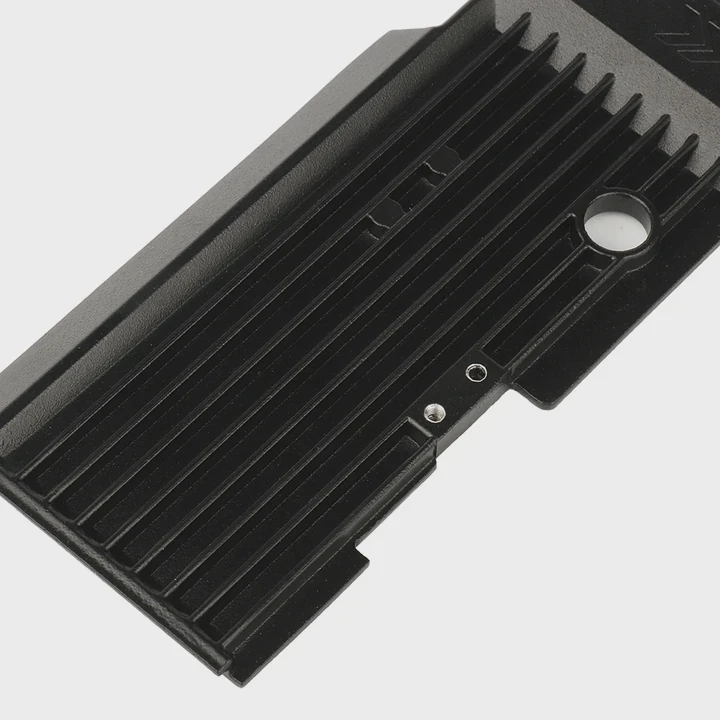
Impact of base flatness and surface finish
If the base of the heat sink is not flat within tight tolerance, the contact with the heat source may be uneven.
That leads to poor conduction and higher thermal resistance.
Even a small gap of 0.1 mm may block heat conduction significantly if a thermal pad or paste cannot fill it completely.
Good base flatness (e.g. within 0.02–0.05 mm) ensures even contact pressure, uniform heat conduction, and consistent thermal performance across the entire base.
How fin accuracy affects airflow and convection
Fins form the main path for heat to dissipate into air.
If fin thickness or spacing deviates beyond spec, airflow may not flow evenly.
Sometimes fins may be too close — blocking airflow — or too thin/wobbly — bending or vibrating under airflow.
That reduces the effective surface area for heat exchange.
Uniform fin geometry under tight tolerance ensures predictable airflow, better convection, and stable thermal performance over time.
Mounting holes and alignment matter
If mounting holes are misaligned, the heat sink may sit uneven or stress the board or components.
That may warp the base or create uneven pressure — both bad for thermal contact.
Tight hole position tolerance ensures stable assembly and consistent pressure distribution.
How tolerance relates to long‑term reliability
Loose tolerances may allow movement under vibration, heat cycles or mechanical stress.
Over time, this may cause micro‑gaps, contact loss, thermal paste degradation, or solder fatigue.
That hurts long term thermal efficiency and reliability.
Summary: Tightness helps where thermal path and airflow matter
Where conduction path, airflow, or mechanical stability affects cooling, tight tolerances matter a lot.
Where only rough size matters (e.g. external profile clearance), looser tolerances suffice.
Therefore designers should tailor tolerance spec based on which features impact thermal performance most.
Can tight tolerances increase production costs?
Tighter machining tolerances often mean higher cost.
Precision tools, slower cutting, careful inspection, rework — all raise cost.
Sometimes cost rises more than linearly when tolerance tightens.
Yes. Tighter tolerances often increase material waste, machining time, setup and inspection effort — thereby raising production cost.
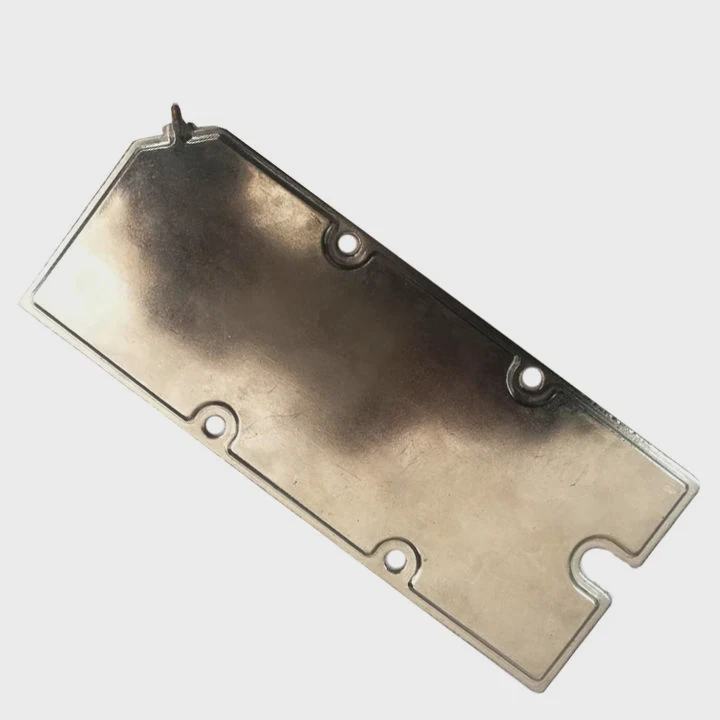
Cost‑tolerance tradeoff explained
Every time a shop reduces tolerance margin, they must improve control.
That may require slower feed rates, finer cutting tools, more passes, or additional finishing like grinding or polishing.
Each step adds time and labor.
Also more parts may get rejected — raising scrap rate.
Here is a rough comparison:
| Tolerance level | Machining cost factor* | Scrap or rework risk |
|---|---|---|
| ±0.1 mm | 1× (baseline) | Low |
| ±0.05 mm | ~1.3× | Medium |
| ±0.02 mm | ~1.8× | Higher |
| ±0.01 mm | ~2.5× or more | Highest |
* Cost factor relative to baseline ±0.1 mm tolerance.
Numbers vary by shop, material, part complexity.
When tolerance tightens, inspection becomes more demanding.
Shops may need coordinate measuring machines (CMM), more time for measurement, data logging, and possibly rework.
That further increases cost and production lead time.
When tighter tolerance is worth the cost
If heat sink is for high‑performance systems — like high power electronics, servers, or aerospace devices — the improved thermal performance and reliability may justify added cost.
If parts will go through thermal cycles, vibration, or tight assembly spaces — stricter tolerances may save cost later in failure, rework, or downtime.
When looser tolerance is acceptable
For low‑power devices or cooling tasks where heat sink just offers minimal passive cooling — looser tolerance may suffice.
If the assembly has thermal pads that fill small gaps, or tolerance is not critical for airflow, tolerances may be relaxed.
That lowers cost and simplifies production.
In practice, one must weigh cost vs performance vs reliability.
Often mid‑range tolerance (e.g. ±0.05 mm) offers acceptable balance for many heat sink products.
What tools ensure consistent machining accuracy?
Consistent machining requires the right tools and process controls.
Good CNC machines, precise fixturing, and proper inspection tools make tight tolerances feasible.
Precision CNC mills, stable fixturing, coordinate measuring machines (CMM), and surface‑flatness measurement tools help ensure machining accuracy for heat sinks.
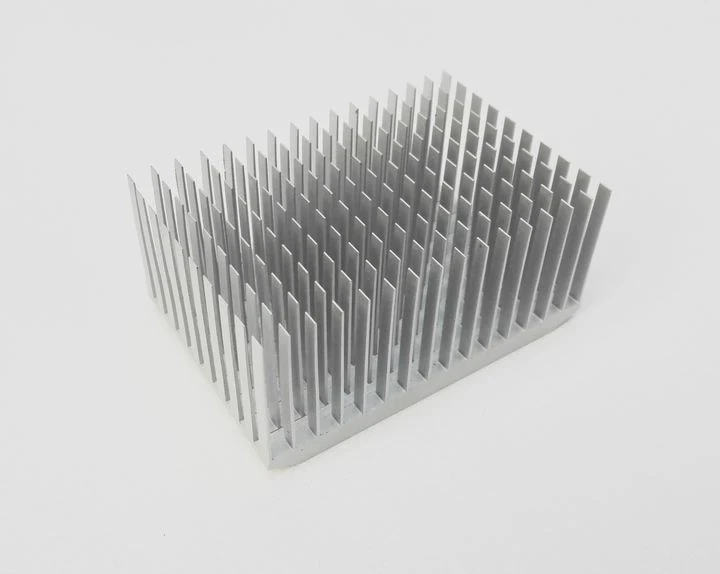
Essential machining and measurement tools
- CNC milling machines with rigid frames and fine step resolution give consistent cuts.
- Precision fixtures and jigs hold stock material firmly to avoid vibration or movement.
- Cutting tools and tool holders that maintain sharpness and alignment reduce chatter or deflection.
- Temperature‑controlled environment helps, because materials expand or contract with heat or cold.
For post‑machining inspection and validation:
- Coordinate Measuring Machine (CMM): measures dimensions, hole locations, flatness accurately.
- Surface plate + feeler gauges or dial indicator: checks base flatness and straightness.
- Optical or laser scanning tools: inspect fin straightness, spacing, and surface finish.
Process control and repeatability
To maintain tight tolerances across batches, shops must also implement process control.
That means tracking tool wear, calibration, machine zeroes, and consistent clamping force.
Without that, even good machines may drift.
Example workflow for tight‑tolerance heat sink:
- Calibrate CNC machine and tool offsets before production start.
- Use fixture to clamp raw block in same orientation every time.
- Rough cut to leave small margin.
- Finish‑machining with fine passes.
- De‑stress/anneal if needed (especially in alloys) to relieve internal stress.
- Clean, deburr, and finalize surface.
- Inspect critical dimensions with CMM and flatness with surface plate.
- Log inspection data for traceability.
Why measurement is just as important as machining
Even highest precision CNC cannot guarantee output accuracy if measurement is poor.
Bad data leads to faulty parts cleared as good.
Good inspection ensures every part meets spec before assembly or shipping.
In summary, tight tolerances demand not just good machines but good tools, stable fixtures, controlled environment, and rigorous inspection.
Only then can production deliver consistent, high‑quality heat sinks that meet thermal, mechanical, and geometric requirements.
Conclusion
Precision in machining heat sinks matters greatly for thermal performance, assembly reliability, and long‑term operation.
Standard tolerances give a baseline, but tight control — especially at fins, base and mounting surfaces — often yields better cooling efficiency.
Tighter tolerances add cost and complexity, but proper tools and process control make consistency possible.
TAGS
Latest Articles

Volume discount levels for heat sink orders?
Buyers often ask when heat sink prices start to drop with volume. Many worry they’re overpaying for small orders. This guide explains how B2B volume pricing works for thermal components. Heat sink
21 Dec,2025
Heat sink long-term supply contract options?
Many buyers want stable pricing and reliable delivery for heat sinks. But without a clear contract, risks grow over time. This article explores how to secure better long-term supply deals. Long-term
21 Dec,2025
Tooling cost for new heat sink profiles?
Many engineers struggle to understand why tooling for custom heat sinks costs so much. They worry about budgeting and production timelines. This article breaks down the cost drivers behind tooling.
21 Dec,2025
Heat sink custom sample process steps?
Sometimes, starting a custom heat sink project feels overwhelming—too many steps, too many unknowns, and too many risks. You want a sample, but not endless delays. The process for requesting and
20 Dec,2025
Standard B2B terms for heat sink payments?
When buyers and sellers in B2B heat sink markets talk about payment, many don’t fully understand what’s standard. This can lead to delayed orders, miscommunication, and even lost business
20 Dec,2025
Heat sink pricing factors for large orders?
Heat sinks are vital for many systems. When prices rise, projects stall and budgets break. This problem can hit teams hard without warning. Large order heat sink pricing depends on many factors. You
20 Dec,2025Related Articles
- What alloy is best for heat sink extrusion?
- Heat sink maximum operating temperature rating?
- How to verify Vapor Chamber quality certifications?
- Minimum order quantity for Vapor Chamber?
- Vapor Chamber heat resistance test report?
- Vapor Chamber for data center cooling needs?
- Minimum flatness needed for heat sink bases?
- Can heat sink support heavy thermal loads?
- Strongest material option for heat sink design?
- Heat sink airflow needs for cooling systems?
- Best geometry for compact heat sink?
- Heat sink options for automotive electronics?
Author
Dr. Emily Chen
Chief AI Researcher
Leading expert in thermal dynamics and AI optimization with over 15 years of experience in data center efficiency research.
Categories
Latest Products






Recommend Categories
- Liquid cooling plate Manufacturer
- Industrial Heat Sink Manufacturer
- Standard Heat Sink Manufacturer
- Aluminum Heat Sink Manufacturer
- Copper Heat Sink Manufacturer
- Anodized Heatsink Manufacturer
- Stamping heat sink Manufacturer
- Die Casting Heatsink Manufacturer
- Soldering heat sink Manufacturer
- CNC Parts Manufacturer
Latest Products
- Wholesale Aluminum Radiator
- Water Cooling Plate Kit
- Water Cooling Heat Sink
- Water Cooling Heat Sink Kit
- Stainless Steel Water Distributor
- Server Water Cooling Plate Kit
- Server Liquid Cooling System
- Server Aluminum Cooling Kit
- S19 Full Cover Cooling Plate
- S19 Cooling Plate Kit
- S19 Aluminum Cooling Plate
Contact Expert
Have questions about this article? Reach out to our experts directly.