What alloy is best for heat sink extrusion?
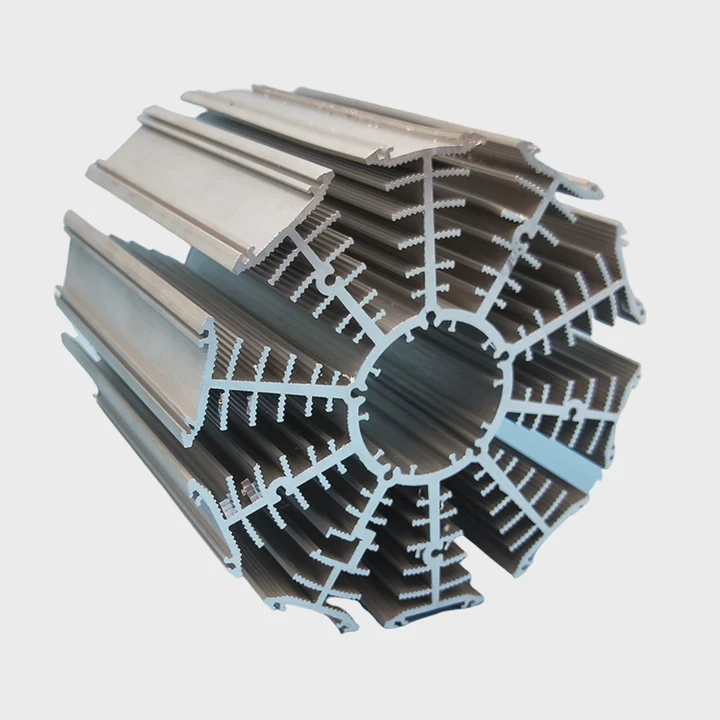
When a heat sink fails in production, the wrong material often hides behind the scenes. Such failure wastes money, time, and reputation fast. Choosing the right extrusion alloy fixes that problem early.
For most aluminum‑based heat sinks, a mid‑strength alloy like 6063 or 6061 gives the best blend of thermal conductivity, mechanical strength, extrusion ease, and cost.
Let’s dive into how alloy choice matters and why some types perform far better than others.
How does alloy composition impact heat conductivity?
When designers pick the alloy, tiny chemical changes matter a lot. Some mixes carry heat much better than others.
Alloy composition affects how well heat moves through the sink. Elements like silicon, magnesium, and copper alter conductivity and hardness — impacting thermal performance directly.
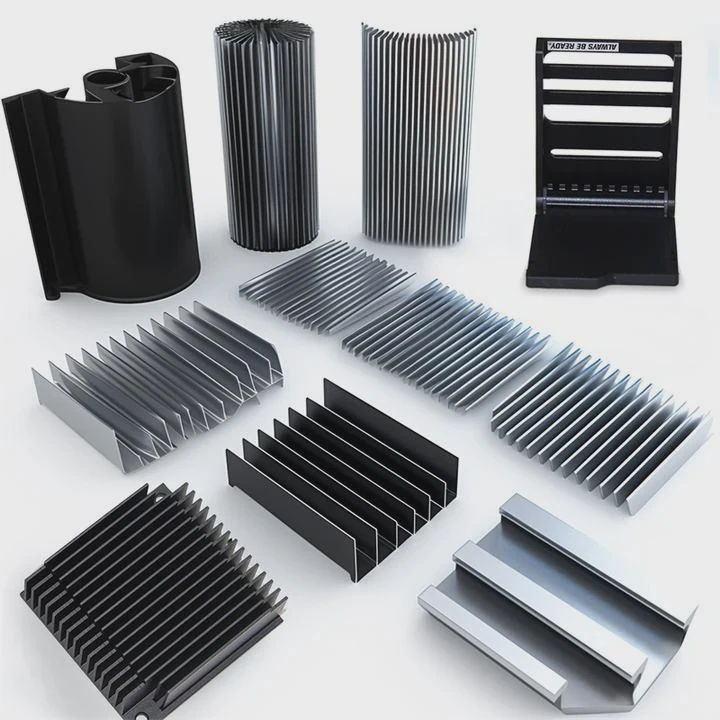
Why composition matters
Alloy means aluminum plus small amounts of other metals. These extra metals change how atoms pack inside the metal. Heat moves mostly through the lattice of atoms. If the lattice is disturbed by foreign atoms or phases, heat flow slows.
For example, pure aluminum carries heat very well. But pure aluminum is soft and easy to deform. To strengthen the metal, engineers add silicon, magnesium, or copper. These additions make the metal harder and easier to extrude into fins and shapes. But they also reduce thermal conductivity a bit.
Some alloys add silicon and magnesium: these improve strength while keeping conductivity reasonable. Others add copper: that increases strength more, but reduces conductivity more too.
Here is a rough comparison for common extrusion alloys:
| Alloy | Approx. Thermal Conductivity (W/m·K) | Mechanical Strength | Uses in Heat Sinks |
|---|---|---|---|
| 1050 / 1100 (almost pure) | ~230–240 | Low | Very heat‑conductive but too soft for tall fins |
| 6063 | ~200–210 | Medium | Balanced for extruded fins with good heat flow |
| 6061 | ~190–200 | Medium–High | Stronger frames or heavy‑duty sinks |
| 6082 | ~195–205 | High | Robust structure when strength is critical |
| 2024‑T (Al‑Cu) | ~160–170 | High | Rare for sinks — lower conductivity hurts thermal spread |
Conductivity values drop as alloying increases. Strong alloys often lose some conduction ability. So composition is always a trade‑off between conductivity and strength.
In practice, heat sink designers rarely choose pure aluminum because it bends easily. They often want fins to stay straight and mountings to hold shape. So they accept slight conductivity loss for mechanical stability.
When designing a sink, I consider how thick or thin the fins are, how tall the structure is, and how fast the device must shed heat. If the fins are dense and tall, small drops in conductivity add up. In those cases, an alloy with closer-to‑pure aluminum works better. If structural strength matters more — for example in rugged or automotive environments — then stronger alloys are worth the trade‑off.
Thus, alloy composition gives a base for how well the sink will carry heat. Then design, extrusion process, and finishing play their parts too.
Which alloys balance cost and performance best?
Everyone wants strong sinks without high cost. The best alloys give good conduction, enough strength, and stay affordable.
Alloys such as 6063 and 6061 usually strike the best balance between cost, thermal performance, extrusion ease, and structural strength.

Why 6063 and 6061 stand out
6063 — the workhorse
The 6063 alloy is common because it extrudes easily into complex shapes and thin fins. Its thermal conductivity remains high enough for most heat sink jobs. It keeps heat spread and transfer efficient while allowing delicate fins. It costs little more than pure‑Al stock, which makes it a good use of budget.
6061 — for stronger needs
6061 adds more strength than 6063. It resists bending and stress better. If the heat sink must support mechanical load or handle rough mounting or transport, 6061 is a safe bet. Its conductivity is a bit lower than 6063 but still acceptable.
Here is a cost-vs-performance view:
| Alloy | Relative Material Cost | Extrusion Ease | Fins Handling | Structural Strength | Thermal Performance |
|---|---|---|---|---|---|
| 1050 / 1100 | Low | Very easy | Poor | Low | Excellent |
| 6063 | Low–Medium | Easy | Good | Medium | Very good |
| 6061 | Medium | Moderate | Good | High | Good |
| 6082 | Medium | Moderate | Good | High | Good |
*Cost is approximate relative to pure aluminum; actual price varies by region.
From experience, 6063 is ideal for regular consumer or industrial heat sinks. 6061 is better when more strength or machine screws and mounting points are needed. 1050 and 1100 have too little strength for rugged use. Stronger alloys like 6082 give extra strength, but they cost a bit more for modest gains.
Therefore, when budgets and production volume matter, 6063 and 6061 stand out. They allow good heat flow, stable structure, and easy extrusion.
Are recycled alloys suitable for extrusion?
Using recycled aluminum seems good for cost and sustainability. But recycled metal brings its own risks when used for precision heat sinks.
Recycled aluminum can work — but only if recycled material is remelted, refined, and certified carefully. Impurities or inconsistent composition can harm thermal conductivity and extrusion quality.
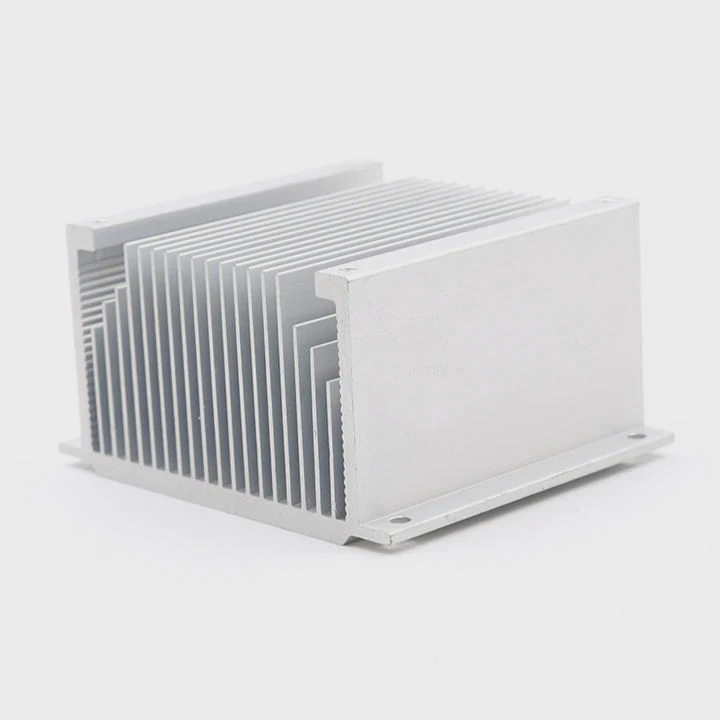
What recycled means in practice
Recycled aluminum usually comes as scraps or swarf from manufacturing. This metal is melted down and re‑cast into ingots. Then these ingots are extruded into profiles. In this process, metal may pick up impurities: iron, silicon, or oxide particles. If impurities accumulate, they disturb the atomic lattice. That reduces thermal conductivity and weakens the metal.
If the recycling process adds alloying without control, the final mix may vary between batches. For a heat sink, that unpredictability is dangerous. A batch with slightly more iron or manganese might have reduced conductivity. Another batch might extrude poorly, warp, or bend under stress.
What to watch when using recycled alloys
- Certification: The recycled material must match alloy specs (like 6063 or 6061) for composition.
- Clean melting and casting: Furnace and mold must remove oxide and keep the metal pure.
- Consistent extrusion behavior: Recycled ingots should extrude like virgin alloy. If extrusion yields burrs or inconsistent grain, reject them.
In some cases, recycled 6063 works fine for consumer-grade sinks. But for high‑performance sinks (dense fins, high power applications), recycled alloys may cause lower conductivity or inconsistent quality.
Therefore, recycled alloys are an option but carry risk. Unless the source is reliable and process under control, using new alloy stock is safer for critical heat sink production.
Can alloy selection affect extrusion precision?
Heat sink extrusion demands fine geometry. Alloy choice interacts directly with extrusion performance under heat and pressure.
Yes. Alloy choice changes how metal flows in the die, how clean the edges and fins come out, and whether the extrusion holds tight tolerances and shape under cooling.
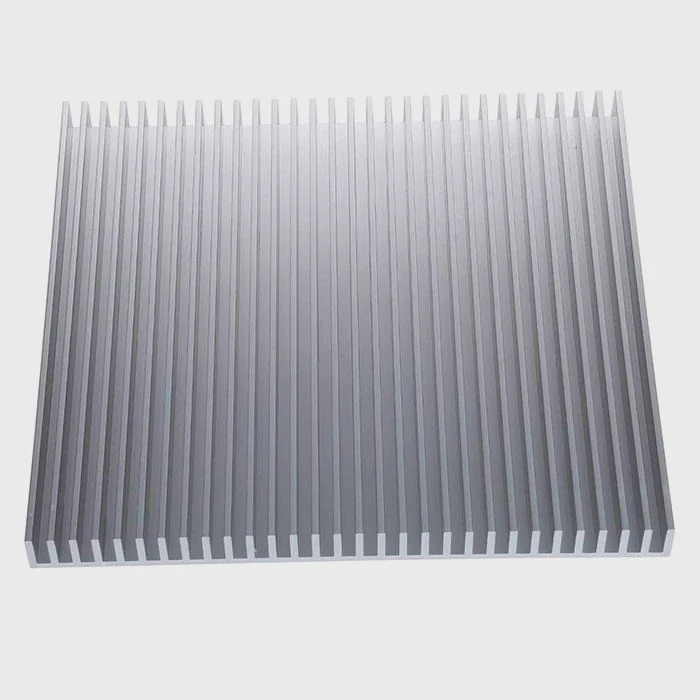
How alloy affects extrusion behavior
Flow and die fill
Some alloys — like 6063 — flow smoothly under pressure. That helps fill fine fins, narrow channels, or complex profiles. If alloy is too hard or less ductile (like a strong copper‑rich alloy), it may not flow as well. That causes gaps, incomplete fin formation, or uneven thickness.
Stress, warping, and surface finish
After extrusion, metal cools and shrinks. Alloys with different alloying may shrink unevenly. That leads to warping. Some alloys also have grain structures that show lines or rough surfaces after extrusion. That complicates finishing or anodizing.
Here is a comparison of extrusion‑relevant traits:
| Alloy | Ductility (flow) | Dimensional Precision | Fin Thickness Control | Surface Quality Post‑Extrusion |
|---|---|---|---|---|
| 1050 / 1100 | Very high | Moderate | Variable | Very smooth |
| 6063 | High | Good | Reliable | Smooth |
| 6061 | Medium–High | Good | Good | Smooth to moderate |
| Hard Al‑Cu alloys | Lower | Lower | Poorer in thin fins | Rougher, risk of cracking |
When extruding a dense fin stack, these traits matter. If fins are thin and close, the alloy must flow and cool evenly. 6063 gives good control here. If structure needs strength (for large frames or chassis), 6061 holds shape better than pure aluminum.
Manufacturing yield and defect rate
If alloy extrudes poorly or warps during cooling, more parts get scrapped. That raises cost. So a reliable alloy helps yield.
In past projects, I saw soldered heat sink fins shift slightly after extrusion when using a harder alloy. That required rework or rejection. Switched to 6063 and the fins came out straight every time. That cut rework cost and improved throughput.
Therefore, alloy selection affects how well the sink shape forms, how many defects occur, and how consistent the extrusion is batch to batch.
Conclusion
Choosing the best alloy for heat sink extrusion depends on needs. Alloys like 6063 and 6061 offer the best mix of heat conduction, strength, extrusion ease, and cost. Recycled alloys can work but carry risk. Alloy choice also determines how precise and reliable the extrusion will be.
TAGS
Latest Articles

Volume discount levels for heat sink orders?
Buyers often ask when heat sink prices start to drop with volume. Many worry they’re overpaying for small orders. This guide explains how B2B volume pricing works for thermal components. Heat sink
21 Dec,2025
Heat sink long-term supply contract options?
Many buyers want stable pricing and reliable delivery for heat sinks. But without a clear contract, risks grow over time. This article explores how to secure better long-term supply deals. Long-term
21 Dec,2025
Tooling cost for new heat sink profiles?
Many engineers struggle to understand why tooling for custom heat sinks costs so much. They worry about budgeting and production timelines. This article breaks down the cost drivers behind tooling.
21 Dec,2025
Heat sink custom sample process steps?
Sometimes, starting a custom heat sink project feels overwhelming—too many steps, too many unknowns, and too many risks. You want a sample, but not endless delays. The process for requesting and
20 Dec,2025
Standard B2B terms for heat sink payments?
When buyers and sellers in B2B heat sink markets talk about payment, many don’t fully understand what’s standard. This can lead to delayed orders, miscommunication, and even lost business
20 Dec,2025
Heat sink pricing factors for large orders?
Heat sinks are vital for many systems. When prices rise, projects stall and budgets break. This problem can hit teams hard without warning. Large order heat sink pricing depends on many factors. You
20 Dec,2025Related Articles
- Heat sink maximum operating temperature rating?
- How to verify Vapor Chamber quality certifications?
- Minimum order quantity for Vapor Chamber?
- Vapor Chamber heat resistance test report?
- Vapor Chamber for data center cooling needs?
- Vapor Chamber use in 5G communication equipment?
- Required tolerance for machined heat sink?
- Minimum flatness needed for heat sink bases?
- Can heat sink support heavy thermal loads?
- Strongest material option for heat sink design?
- Heat sink airflow needs for cooling systems?
- Best geometry for compact heat sink?
Author
Dr. Emily Chen
Chief AI Researcher
Leading expert in thermal dynamics and AI optimization with over 15 years of experience in data center efficiency research.
Categories
Latest Products
Recommend Categories
- Liquid cooling plate Manufacturer
- Industrial Heat Sink Manufacturer
- Standard Heat Sink Manufacturer
- Aluminum Heat Sink Manufacturer
- Copper Heat Sink Manufacturer
- Anodized Heatsink Manufacturer
- Stamping heat sink Manufacturer
- Die Casting Heatsink Manufacturer
- Soldering heat sink Manufacturer
- CNC Parts Manufacturer
Latest Products
- Wholesale Aluminum Radiator
- Water Cooling Plate Kit
- Water Cooling Heat Sink
- Water Cooling Heat Sink Kit
- Stainless Steel Water Distributor
- Server Water Cooling Plate Kit
- Server Liquid Cooling System
- Server Aluminum Cooling Kit
- S19 Full Cover Cooling Plate
- S19 Cooling Plate Kit
- S19 Aluminum Cooling Plate
Contact Expert
Have questions about this article? Reach out to our experts directly.