Heat sink airflow needs for cooling systems?
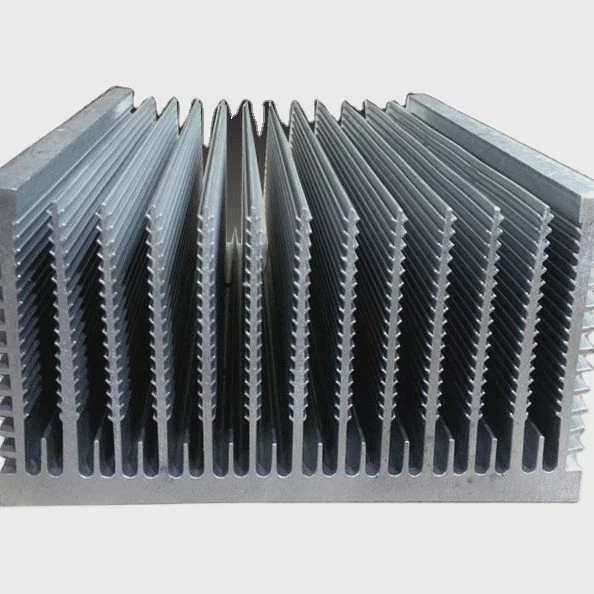
Most cooling failures start with poor airflow. If air does not move through the heat sink, excess heat builds fast.
Proper airflow must match the heat load and the fin geometry. As a rough rule, supplying about 0.5–1.0 CFM (cubic‑feet per minute) per watt of dissipated heat will often keep temperatures in safe range.
Keep reading — I show how fan layout, ducting, and measurement tools affect real cooling performance.
What is the minimum airflow for efficient cooling?
A heat sink with too little air flow might as well be a block of metal sitting idle. Lack of air kills cooling.
There is no fixed “minimum airflow.” But many cooling designs aim for roughly 0.5–1.0 CFM per watt, or more — whichever ensures at least 0.5 m/s air velocity across fin surfaces.
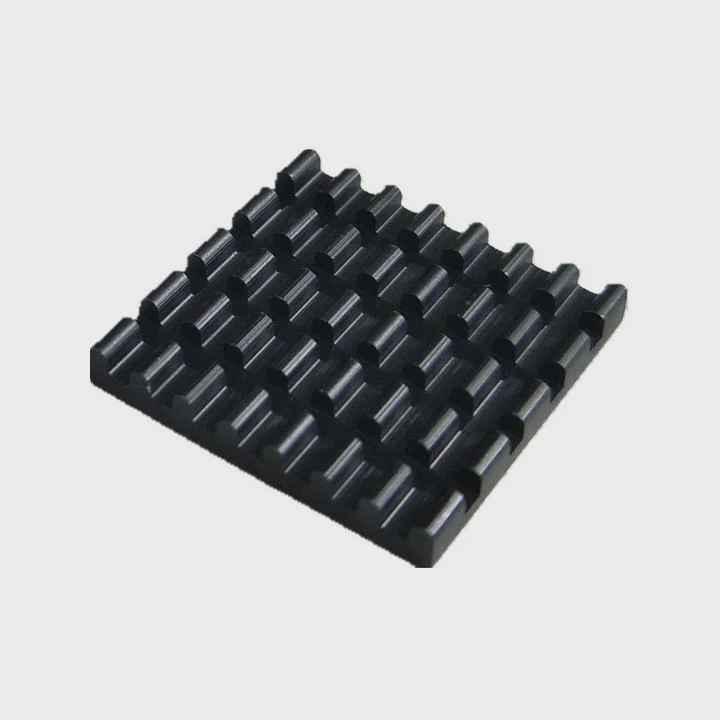
Why airflow matters along with heat load
Every heat sink removes heat from a component by transferring it to fins, then to passing air. If the passing air moves slowly or is too little, the fins heat up. Then the temperature difference between fins and air drops. That reduces heat flow.
Heat dissipation by convection depends on several factors:
- Heat load (watts) from the device
- Surface area of fins
- Air velocity through fins
- Ambient air temperature
When heat is high but air is slow or scant, fins get hot, air warms quickly, and efficiency drops. That forces fins to run at high temperatures. That shortens component life or causes thermal throttling.
Sample airflow needs for different heat loads
| Heat load (W) | Suggested airflow (CFM) | Approx. fin‑air velocity |
|---|---|---|
| 50 W | 25–50 CFM | ~0.5–1.2 m/s |
| 100 W | 50–100 CFM | ~0.8–1.5 m/s |
| 200 W | 100–200 CFM | ~1.0–2.0 m/s |
These numbers assume a reasonably dense fin array and an open air path through the fins. If fins are thin, closely spaced, or partially blocked, you need more airflow to push through.
Other factors that raise required airflow
- Fin density and thickness: More fins mean more surface area but also more resistance to air. Air must push harder.
- Ambient temperature: Hotter air carries less heat away, so more flow is needed to dump the same heat.
- Heat sink size and shape: Tall fins, narrow channels, bends or blockages all increase airflow resistance.
- Mounting constraints: If flow path is partially blocked by cables, frames or casings, flow drops sharply.
Because of this, specifying only wattage is not enough. A designer must consider geometry, fin layout, and airflow path.
How do fan configurations impact airflow paths?
Many designs use fans. But where you put fans, and how many, changes airflow direction and strength a lot. Poor fan layout can kill cooling even if fans are strong.
Fan configuration changes how air moves. A “push–pull” setup often produces stronger, more uniform air flow through fins than a single fan alone.
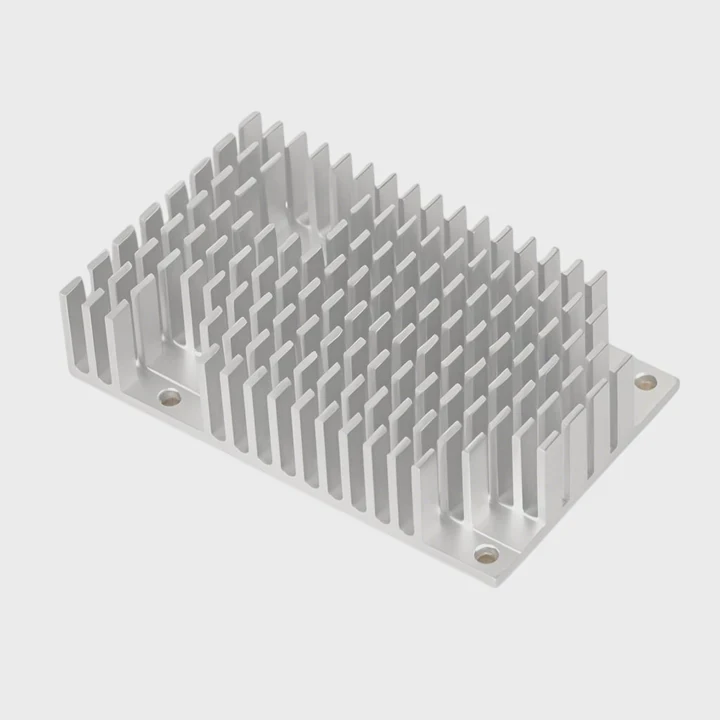
Common fan arrangements and their effects
- Push only: A fan pushes air into the fins. This works if intake is clear and air can exit easily. But pressure drops inside fins can reduce flow.
- Pull only: A fan draws air through the fins out of the system. It can clear hot air, but intake may draw in hot air from surrounding hardware.
- Push–Pull: One fan pushes fresh air in, another draws air out. This usually gives steady flow through fins even under resistance.
- Dual fans in series or counter‑rotating: Used when fins are dense or flow resistance is high. It boosts static pressure and flow.
Fan behavior interacts with heat sink geometry. Dense fins or stacked modules need higher static pressure fans. Sparse fins work even with low pressure, high volume fans.
Fan placement matters
- Fans placed close to the fin base force air directly into fins. That reduces dead zones and stagnation.
- Fans placed too far or at an angle cause uneven flow: some fins get strong flow, others get little. That leads to hot spots.
- Spacing between fans or between fan and fin base affects pressure build‑up. If too tight, flow chokes. If too loose, flow leaks around fins instead of through them.
Drawbacks of bad configurations
- Low static pressure fans with dense fins → almost no flow.
- Intake fan without exhaust → hot air recirculates.
- Fans blowing parallel to fins instead of through → minimal fin cooling.
- Mismatch of fan flow and resistance → wasted energy, noise, poor cooling.
For best airflow, fan configuration must match fin density, flow resistance, and housing geometry.
Can ducting improve airflow through heat sinks?
Air flowing everywhere is wasted air. When air bypasses fins or leaks around parts, cooling suffers. Proper ducts can fix that.
Ducting can greatly improve airflow direction and speed through the fins. A short, well‑sealed duct guiding air directly through the heat sink often boosts cooling significantly.
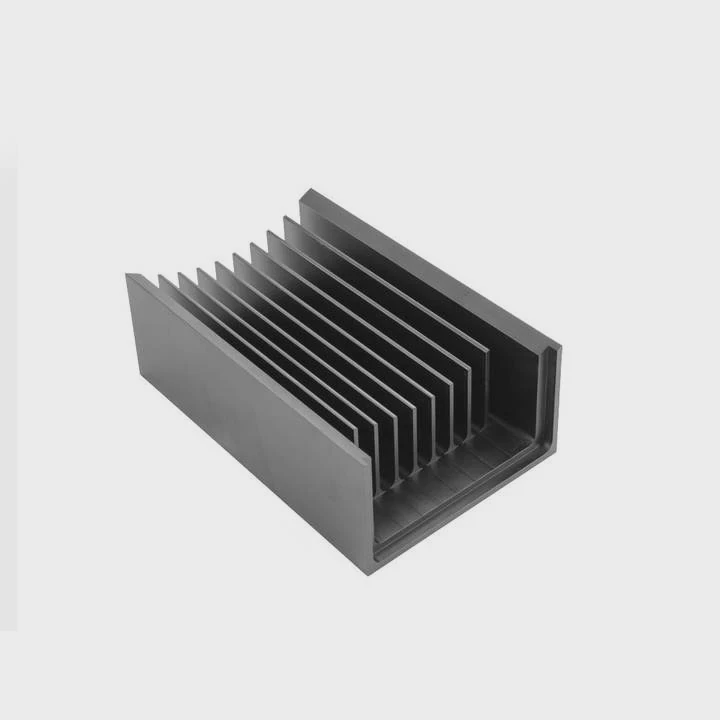
How ducting helps airflow
Ducting acts like a funnel. It forces air from fans into defined paths. That helps in several ways:
- Prevents bypass: Without a duct, air may flow around fins instead of through them. Duct forces air through fins.
- Increases air velocity: Duct reduces the cross‑section area for flow. For same fan output, velocity rises in narrower path.
- Improves pressure distribution: Duct helps maintain pressure difference across fins. That pushes more air through dense or tall fin arrays.
- Reduces turbulence and recirculation: Smooth internal duct walls guide air, avoid chaotic flow that can cause dead zones or hot spots.
When ducting matters most
Ducting yields benefit when:
- Fin density is high or fins are tightly spaced.
- Air intake or exhaust paths are convoluted (e.g. inside casings, servers, enclosures).
- You want to minimize noise by using lower‑speed fans but still maintain high airflow.
- Ambient air paths are obstructed by other components or structural parts.
Duct design guidelines
- Use smooth internal surfaces, avoid sharp turns.
- Keep duct cross‑section just large enough to allow required airflow — too large invites bypass, too small chokes flow.
- Seal duct edges around fins, fan housing, and chassis to prevent leaks.
- Provide clear intake and exhaust paths, avoid mixing intake hot air with exhaust air.
Without ducting, you rely solely on fan pressure to drive flow. With ducting, you guide that pressure where it matters. That makes heat sinks work at full potential even in tight cases.
What tools measure airflow performance?
Good cooling design needs more than theory. You need to test and measure real air flow and heat removal — not guess.
Common tools include hot‑wire or vane anemometers, flow hoods, thermal sensors, and smoke or fog generators. They help check CFM, air velocity, temperature drop, and uniformity of flow.
How to measure airflow and cooling performance
Anemometers and air meters
- Hot‑wire anemometer: Measures air velocity by tracking heat loss from a heated wire. Works well for low speeds.
- Vane anemometer: Has small fan vane. Measures air volume or velocity at outlet or intake. Best for moderate speeds.
- Vortex / rotating vane: Good for central spot measurement, but needs calibration.
Mount these devices at fin entry, exit, and at key paths. Compare velocities. Uneven flow reveals blockages or bypass.
Flow hoods and “chamber boxes”
A flow hood can measure total volume of air passing through a heat sink or entire enclosure. This helps verify CFM vs design requirements.
Thermal sensors, thermocouples, and IR cameras
Measure temperatures at:
- Heat source (e.g. chip)
- Fin base and tips
- Intake and exhaust air
Use difference between intake and exhaust air temperature, together with airflow data, to compute heat removed (≈ airflow × temperature rise × air specific heat).
Smoke or fog tracing
Use harmless smoke or fog to visualize air paths in ducted or complex airflow setups. It shows leaks, recirculation, dead zones.
Tool comparison and use cases
| Tool | What it measures | Best use case |
|---|---|---|
| Hot‑wire anemometer | Local air velocity (m/s) | Check air speed across fin array |
| Vane / rotating vane meter | Airflow volume (CFM) | Estimate intake/exhaust flow |
| Flow hood / chamber | Total airflow through system | Validate overall ventilation performance |
| Thermocouple / IR sensor | Temperature at source, fins, air | Check heat dissipation and hotspot detection |
| Smoke/fog tracer | Air path visualization | Spot air leaks or recirculation zones |
Test procedure example
- Mount heat sink in intended case with fans and (if used) ducting.
- Place anemometer at fin intake. Measure velocity.
- Measure airflow with flow hood at exhaust. Compare with fan specs.
- Run working load on component. Record temperature at chip, fin base, fin tips, intake air, exhaust air.
- Use temperature rise and airflow data to compute actual heat removal.
- Use smoke testing to confirm air moves through fins and not bypassing.
This process shows if design meets cooling needs. It also reveals weak spots like uneven flow zones or airflow bypass.
Conclusion
Effective heat sink design needs more than good metal and fin density. Air must flow properly through fins while matching heat load. Fan setup, ducting, and real airflow measurement matter. Good design ensures air moves where fins are, so heat moves out.
TAGS
Latest Articles

Volume discount levels for heat sink orders?
Buyers often ask when heat sink prices start to drop with volume. Many worry they’re overpaying for small orders. This guide explains how B2B volume pricing works for thermal components. Heat sink
21 Dec,2025
Heat sink long-term supply contract options?
Many buyers want stable pricing and reliable delivery for heat sinks. But without a clear contract, risks grow over time. This article explores how to secure better long-term supply deals. Long-term
21 Dec,2025
Tooling cost for new heat sink profiles?
Many engineers struggle to understand why tooling for custom heat sinks costs so much. They worry about budgeting and production timelines. This article breaks down the cost drivers behind tooling.
21 Dec,2025
Heat sink custom sample process steps?
Sometimes, starting a custom heat sink project feels overwhelming—too many steps, too many unknowns, and too many risks. You want a sample, but not endless delays. The process for requesting and
20 Dec,2025
Standard B2B terms for heat sink payments?
When buyers and sellers in B2B heat sink markets talk about payment, many don’t fully understand what’s standard. This can lead to delayed orders, miscommunication, and even lost business
20 Dec,2025
Heat sink pricing factors for large orders?
Heat sinks are vital for many systems. When prices rise, projects stall and budgets break. This problem can hit teams hard without warning. Large order heat sink pricing depends on many factors. You
20 Dec,2025Related Articles
- Strongest material option for heat sink design?
- Can heat sink support heavy thermal loads?
- Minimum flatness needed for heat sink bases?
- Required tolerance for machined heat sink?
- What alloy is best for heat sink extrusion?
- Heat sink maximum operating temperature rating?
- Best geometry for compact heat sink?
- Heat sink options for automotive electronics?
- Heat sink solutions for telecom base stations?
- Suitable heat sink for EV battery packs?
- Industrial automation devices needing heat sink?
- Renewable energy inverters requiring heat sink?
Author
Dr. Emily Chen
Chief AI Researcher
Leading expert in thermal dynamics and AI optimization with over 15 years of experience in data center efficiency research.
Categories
Latest Products






Recommend Categories
- Liquid cooling plate Manufacturer
- Industrial Heat Sink Manufacturer
- Standard Heat Sink Manufacturer
- Aluminum Heat Sink Manufacturer
- Copper Heat Sink Manufacturer
- Anodized Heatsink Manufacturer
- Stamping heat sink Manufacturer
- Die Casting Heatsink Manufacturer
- Soldering heat sink Manufacturer
- CNC Parts Manufacturer
Latest Products
- Wholesale Aluminum Radiator
- Water Cooling Plate Kit
- Water Cooling Heat Sink
- Water Cooling Heat Sink Kit
- Stainless Steel Water Distributor
- Server Water Cooling Plate Kit
- Server Liquid Cooling System
- Server Aluminum Cooling Kit
- S19 Full Cover Cooling Plate
- S19 Cooling Plate Kit
- S19 Aluminum Cooling Plate
Contact Expert
Have questions about this article? Reach out to our experts directly.