Standard inspection report for Vapor Chamber?
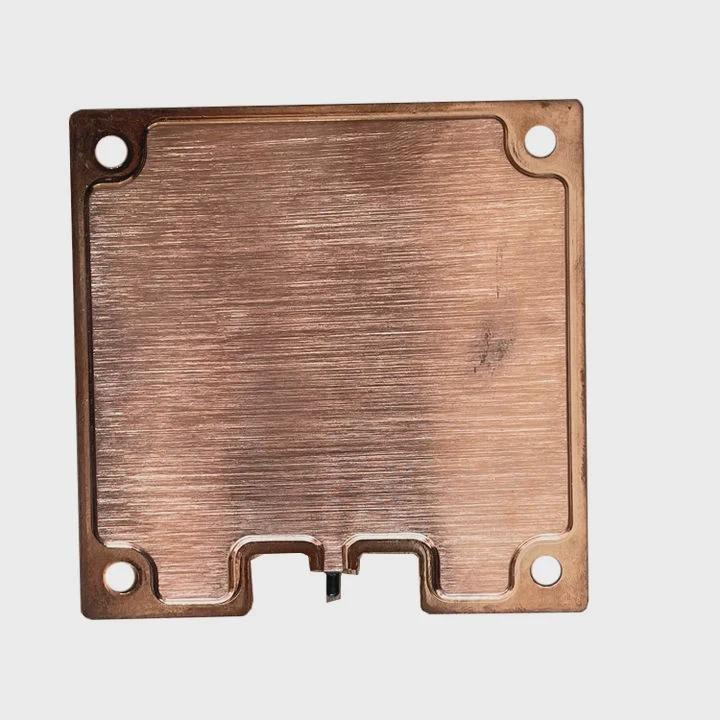
No vapor chamber leaves the factory unchecked. But without a clear inspection report, customers can’t verify what was tested—or what passed. That’s where documentation plays a vital role.
A standard vapor chamber inspection report includes dimensional checks, flatness records, leak test results, thermal validation, and traceability identifiers, all linked to batch or serial numbers.
Let’s break down what’s inside a proper inspection report, what tests must be documented, and how results are stored and shared.
What should a standard Vapor Chamber inspection report include?
Each vapor chamber batch—or unit, if serialized—must be verified against design and performance standards. The report must prove what was tested, how, and whether it passed.
A standard inspection report for vapor chambers includes item ID, test methods, measured values, pass/fail status, and reviewer sign-off.
Core Report Sections
Identification Information
- Product name / drawing number
- Batch or serial number
- Part number and version
- Manufacturing date and site
Inspection Items
- Visual inspection (scratches, dents, discoloration)
- Flatness and thickness
- Dimensional check (length × width × thickness)
- Leak test results
- Thermal performance (if included)
Test Details
- Test method (e.g., helium leak test, feeler gauge)
- Equipment used (ID, calibration date)
- Result values
- Acceptance criteria
- Pass/fail judgment
Reviewer and Sign-off
- QA technician name
- Supervisor approval
- Date of inspection
- Notes or remarks if any deviations found
| Section | Description |
|---|---|
| Identification | Product info, serial/batch data |
| Visual & Dimensional | Measurements and visible surface check |
| Leak Test | Result, method, and limits |
| Flatness Test | Gauge used, test points, tolerance |
| Optional Thermal Test | ΔT or Rth under defined load |
| Sign-off | QA reviewer and manager approval |
Reports may be in PDF, Excel, or integrated into ERP/PLM systems depending on company scale.
Are leak and flatness tests always documented?
Yes. These two tests are essential for vapor chamber performance and integration into customer assemblies. Even if thermal test is optional, leak and flatness cannot be skipped.
Leak and flatness tests are always documented in vapor chamber inspection reports to confirm mechanical fit and hermetic seal.
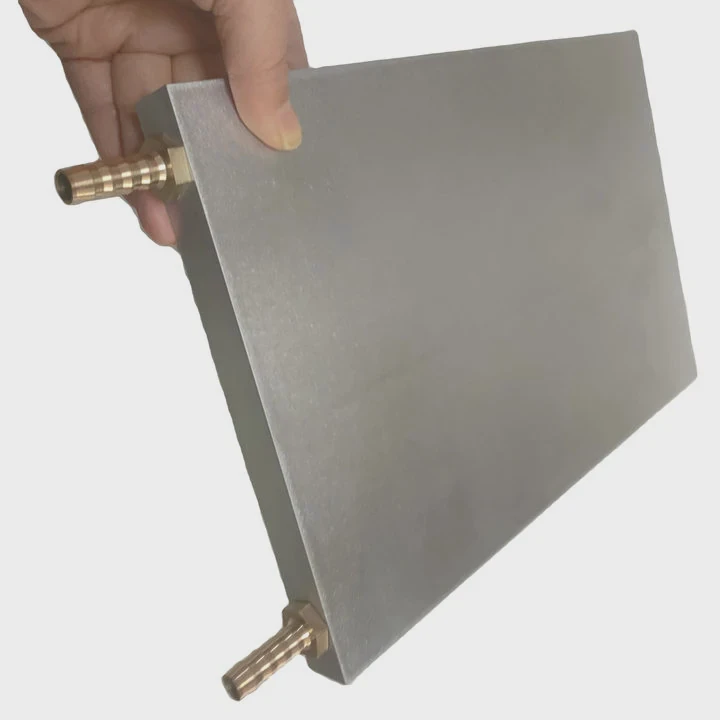
Why Leak Test Matters
- Vapor loss or pressure change degrades performance
- Even micro-leaks may take weeks to show effects
- Mass spectrometer or pressure-hold results are needed
Flatness Importance
- Poor flatness increases contact resistance
- Causes thermal hotspots in real use
- Measured in mm deviation from reference plate
Reported Parameters
| Test Type | Parameter | Typical Spec |
|---|---|---|
| Leak Test | Leak rate | ≤1×10⁻⁷ atm·cc/sec |
| Flatness | Max deviation | ≤0.05 mm for ≤100 mm |
Sample Entries
- Leak Test Result: 4.5×10⁻⁸ atm·cc/sec — PASS
- Flatness @ 3 pts: 0.03 mm max deviation — PASS
Some reports include a scan map or diagram showing test points.
How are test results recorded and reported?
Recording test results isn’t just about checking a box. The data must be traceable, formatted clearly, and accessible when needed for audit or re-order.
Test results are recorded digitally and manually, formatted into structured reports (PDF or Excel), and stored under product batch numbers or serial IDs.
Recording Methods
Manual Entry (Smaller Batches)
- Technicians fill forms on paper or tablets
- Supervisor verifies and signs off
Digital Entry (Mass Production)
- Results entered into MES or QA software
- Linked with barcode or QR code
Data Types Captured
- Numerical values (e.g., 0.22 °C/W, 0.04 mm flatness)
- Binary result (PASS/FAIL)
- Notes for deviations or special cases
- Attachments (photos, graphs)
Format Examples
- PDF reports with company logo and batch summary
- Excel spreadsheets with timestamped rows
- Cloud storage linked to ERP or product traceability system
| Storage Item | Format | Retention Time |
|---|---|---|
| Leak/flatness reports | PDF or Excel | ≥5 years |
| Calibration logs | Linked PDF | ≥2 years |
| Thermal test results | Graph/CSV | Optional |
Export customers often request full QA report bundles at shipment. OEMs may use it for internal incoming inspection validation.
Is a certificate of conformance part of inspection?
Yes—especially for international shipments, OEMs, or projects requiring traceability. A certificate of conformance (CoC) gives a summary declaration that all specs were met.
A certificate of conformance is typically included with the vapor chamber inspection report, confirming that all QA items passed and that the unit meets drawing and spec standards.
What’s in a CoC?
- Part name and number
- Drawing or spec revision
- Batch/serial number
- QA reference or report ID
- Signed declaration that product meets all listed criteria
Signature and Approval
- Signed by authorized QA representative
- Date and contact details included
- Sometimes countersigned by production manager
| CoC Field | Example Entry |
|---|---|
| Product Name | Vapor Chamber VC-120x80-3mm |
| Drawing Revision | VC-DW-2024 Rev B |
| Batch Number | VC1125A-1011 |
| QA Report ID | QC-VC-2401-BATCH01 |
| Statement | “Conforms to all specified standards” |
| QA Sign-off | [Digital Signature] |
CoCs are often attached to shipping documents and packed with goods. Some customers require both printed and digital copies for compliance tracking.
Conclusion
A standard vapor chamber inspection report documents critical checks like dimensions, flatness, leak rate, and optional thermal performance. Each result is tied to batch or serial data, stored digitally or in print. Flatness and leak tests are always included. A certificate of conformance provides an official sign-off that the product meets specs. These records support quality, traceability, and customer trust.
TAGS
Latest Articles

Volume discount levels for heat sink orders?
Buyers often ask when heat sink prices start to drop with volume. Many worry they’re overpaying for small orders. This guide explains how B2B volume pricing works for thermal components. Heat sink
21 Dec,2025
Heat sink long-term supply contract options?
Many buyers want stable pricing and reliable delivery for heat sinks. But without a clear contract, risks grow over time. This article explores how to secure better long-term supply deals. Long-term
21 Dec,2025
Tooling cost for new heat sink profiles?
Many engineers struggle to understand why tooling for custom heat sinks costs so much. They worry about budgeting and production timelines. This article breaks down the cost drivers behind tooling.
21 Dec,2025
Heat sink custom sample process steps?
Sometimes, starting a custom heat sink project feels overwhelming—too many steps, too many unknowns, and too many risks. You want a sample, but not endless delays. The process for requesting and
20 Dec,2025
Standard B2B terms for heat sink payments?
When buyers and sellers in B2B heat sink markets talk about payment, many don’t fully understand what’s standard. This can lead to delayed orders, miscommunication, and even lost business
20 Dec,2025
Heat sink pricing factors for large orders?
Heat sinks are vital for many systems. When prices rise, projects stall and budgets break. This problem can hit teams hard without warning. Large order heat sink pricing depends on many factors. You
20 Dec,2025Related Articles
- Best alloy for Vapor Chamber enclosure?
- Vapor Chamber heat dispersion test results?
- Does Vapor Chamber need leak detection?
- Required tooling for Vapor Chamber manufacturing?
- How to estimate Vapor Chamber delivery time?
- Vapor Chamber machining cost breakdown?
- Typical power rating for Vapor Chamber?
- Vapor Chamber process flow chart?
- Does Vapor Chamber require vacuum forming?
- Vapor Chamber compatibility with graphite sheet?
- Can Vapor Chamber withstand shock testing?
- Vapor Chamber for inverter heat management?
Author
Dr. Emily Chen
Chief AI Researcher
Leading expert in thermal dynamics and AI optimization with over 15 years of experience in data center efficiency research.
Categories
Latest Products






Recommend Categories
- Liquid cooling plate Manufacturer
- Industrial Heat Sink Manufacturer
- Standard Heat Sink Manufacturer
- Aluminum Heat Sink Manufacturer
- Copper Heat Sink Manufacturer
- Anodized Heatsink Manufacturer
- Stamping heat sink Manufacturer
- Die Casting Heatsink Manufacturer
- Soldering heat sink Manufacturer
- CNC Parts Manufacturer
Latest Products
- Wholesale Aluminum Radiator
- Water Cooling Plate Kit
- Water Cooling Heat Sink
- Water Cooling Heat Sink Kit
- Stainless Steel Water Distributor
- Server Water Cooling Plate Kit
- Server Liquid Cooling System
- Server Aluminum Cooling Kit
- S19 Full Cover Cooling Plate
- S19 Cooling Plate Kit
- S19 Aluminum Cooling Plate
Contact Expert
Have questions about this article? Reach out to our experts directly.