Vapor Chamber machining cost breakdown?
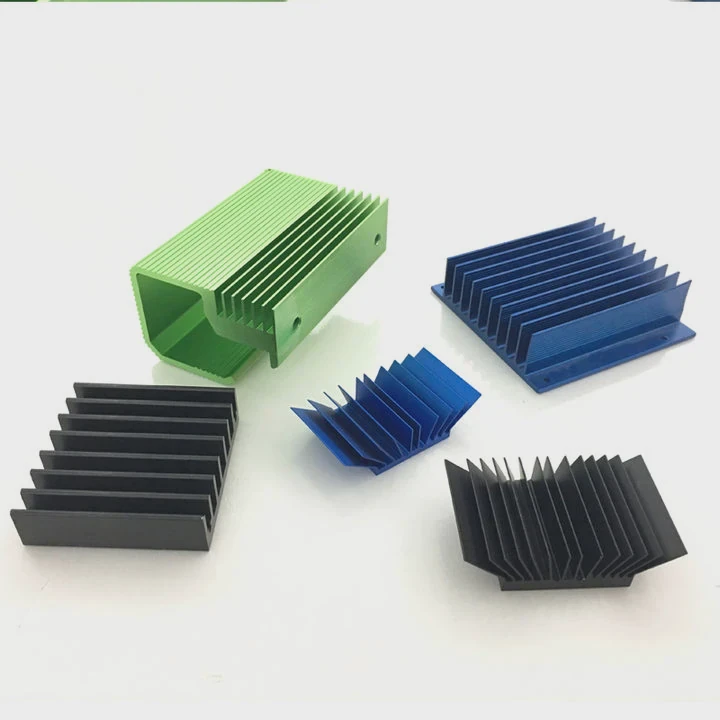
Machining a vapor chamber involves more than just simple cuts. Several factors drive cost, including part complexity, machining time, finish requirements, and batch size. Understanding these cost drivers helps control budget and manufacturing feasibility.
We’ll examine what drives machining cost, whether CNC is the primary cost in complex designs, how surface‑finish specs affect expense, and how batch quantity influences per‑unit cost.
What factors drive machining cost for Vapor Chambers?
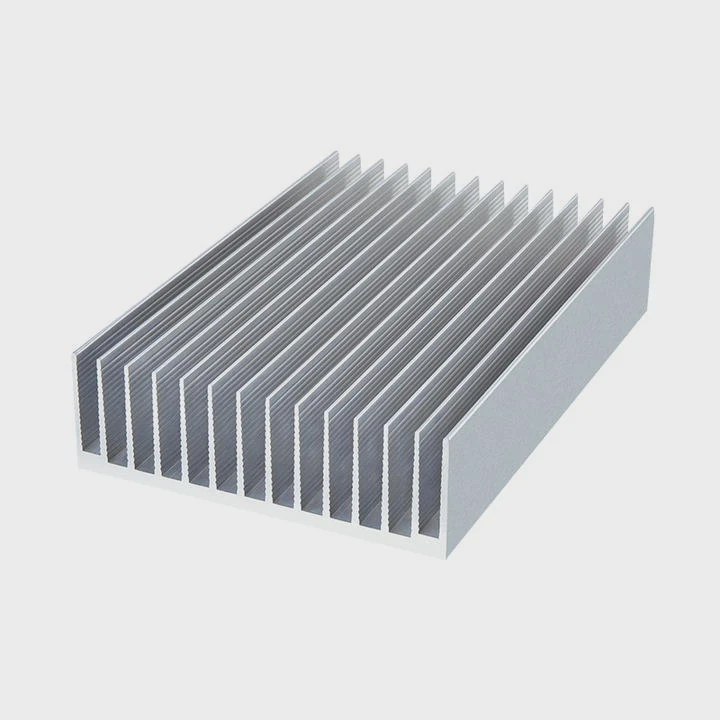
Machining cost for vapor chambers is the sum of several components. Key cost‑drivers include: material cost, machining setup and tooling, machining time (CNC operations), complexity of geometry (thin walls, features, internal cavities), tolerances, surface finish, inspection and waste or scrap rates.
Breakdown of major cost factors
| Cost element | Description | Impact on vapor chamber machining |
|---|---|---|
| Material cost | Copper shell, high‑grade alloys, internal supports | High‑purity copper and large plates raise cost |
| Setup & tooling | Fixtures, CAM programme, jigs, tool changes | Custom tooling adds up especially for complex geometry |
| Machining time & operations | CNC machine time for milling, drilling, pocketing | More operations and slower feeds = higher cost |
| Geometry & features | Internal cavities, fill ports, thin walls, support pillars | Complex feature count increases cost substantially |
| Tolerances & surface finish | Flatness, micro‑features, tight specs | Tighter specs mean slower machining and higher rework |
| Waste/scrap & yield | Warpage, distortion, rejected parts | Thin walls or large plates increase risk of yield loss |
| Inspection & qualification | Measuring flatness, verifying internal cavities, leak‑test readiness | Adds cost for high‑reliability parts |
In simpler terms: for a vapor chamber, expect cost to rise when the plate is large or thin, internal features are many, tolerances are tight, and the machining process has many steps.
Is CNC the primary cost in complex designs?
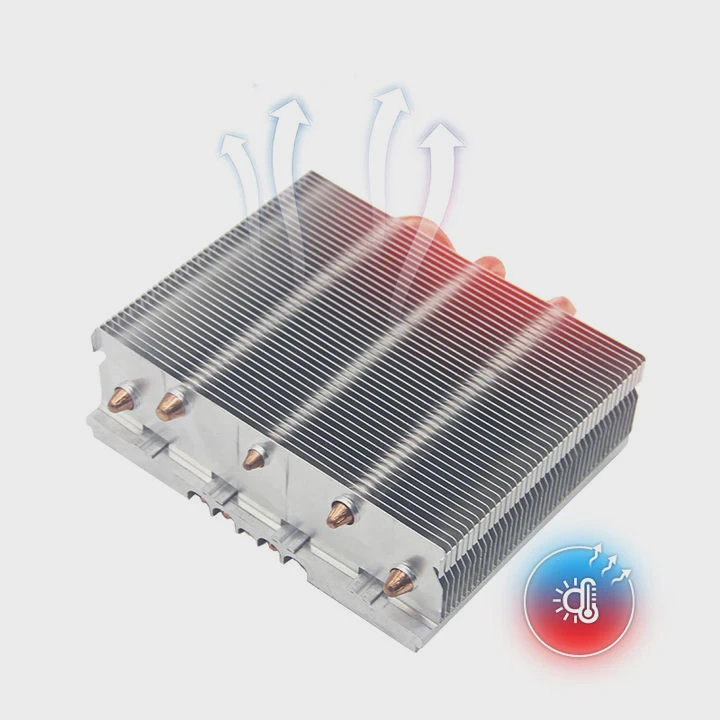
Yes—CNC machining often constitutes a large portion of the cost in complex vapor chamber designs, but it is not the only cost. It is a major cost component.
Why CNC is a major cost driver
- Complex geometry (e.g., multiple cavities, thin wall sections, many tool paths) leads to long machine time and many tool changes.
- Setups and changeovers: Each new feature or side may require repositioning, clamping, fixture changes—each adds cost.
- Thin plates or large areas: Thin walls require slower feed rates, careful cut strategy, and risk of vibration or deformation that slows down machining.
But other costs also matter
- Material cost: For vapor chambers, the raw copper plate cost can be significant.
- Finishing, brazing, vacuum sealing, fill operations may add equal or even more cost than machining in some cases.
- Yield issues: If numerous parts warp or are scrapped due to machining or assembly issues, the effective cost per usable unit rises.
Practical view for vapor chambers
In designs with many internal features (wick wiring, pillars, fill ports, multi‑surface finishing), expect CNC machining cost to be one of the highest individual cost buckets. In more straightforward designs (simple plate, few features), machining cost may be less dominant.
In short: CNC machining cost is typically the primary cost in complex vapor chamber designs—but material, finishing and downstream process costs must not be ignored.
Do surface finish specs increase machining expense?
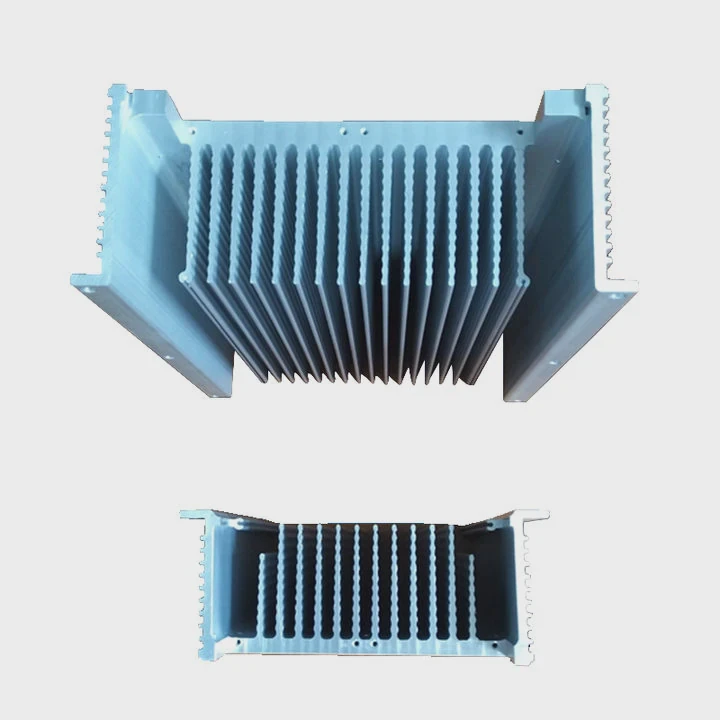
Absolutely—surface finish and tolerance specifications significantly increase machining expense for vapor chambers.
How surface finish affects cost
- Achieving very flat surfaces (for example ≤ 10 µm flatness across a large plate) may require multiple passes, grinding or lapping, increasing time.
- Fine surface roughness (e.g., Ra ≤ 0.8 µm) means slower feeds, more tool changes, possible polishing or special operations.
- Internal surfaces such as cavity walls, fill‑ports, collets may need special chamfers, burr removal or finishing—each adds cost.
- Tight perpendicularity or positional tolerances add inspection cost and may increase scrap.
Manufacturing cost studies show that tighter tolerances and smoother finishes raise cost because of increased machine hours and tooling wear.
Practical impact for vapor chambers
- If the vapor chamber base plate is machined only to standard finish and tolerance, cost is lower.
- If the customer demands ultra‑flat, ultra‑smooth surface finish (to reduce interface thermal resistance), cost may rise 20‑50% or more depending on size and material.
- For thin plates, maintaining finish without warpage requires extra steps (stress relief, secondary finishing) which again increase cost.
In summary: yes—surface finish specs significantly increase machining expense and should be considered early in the design phase when specifying vapor chambers.
Can batch quantity reduce per‑unit machining cost?
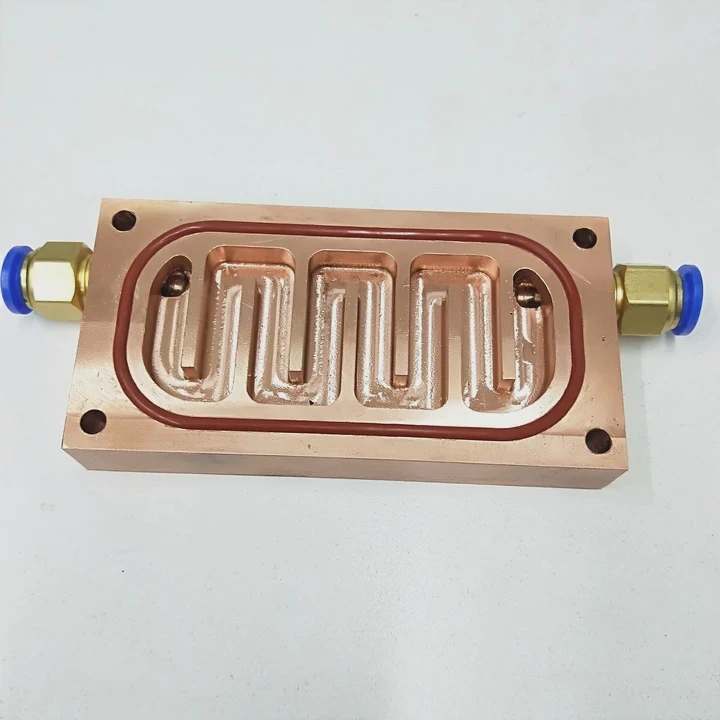
Yes—batch quantity has a strong influence on per‑unit machining cost. The more units you produce, the lower the per‑unit fixed costs become (setup, tooling amortisation, programming) and the higher the likelihood of improving yield and reducing scrap.
Ways batch quantity reduces cost
- Setup costs (fixture design, CAM programming) are spread over many units, reducing per‑unit impact.
- Tooling cost amortisation: When tools and fixtures are reused many times, cost per unit drops.
- Process optimisation: With larger volume runs, machining operations can be optimised, operator learning improves yield, cycle time reduces.
- Material purchasing: Ordering larger quantities allows better pricing on raw plates and may reduce waste.
- Manufacturing flow: Larger batch runs often justify dedicated fixtures or jigs which speed production.
Practical considerations
- For small volume (prototypes or low‑volume custom vapor chambers), the per‑unit cost will be much higher because setup and programming dominate.
- For higher volume production (hundreds or thousands of units) the cost per unit falls significantly.
- If the design changes frequently (many variants), the benefit of batch size is reduced because each variant may need its own setup and tooling.
Summary
Batch quantity is a powerful lever to reduce per‑unit machining cost for vapor chambers. When planning production, designing for volume and repeatability helps cost control.
Conclusion
Machining cost for vapor chambers is driven by multiple factors: material cost, part complexity, machining time (CNC operations), tolerances and surface finish, yield and scrap risk, and batch volume. CNC machining is typically the dominant cost in complex designs, though material and finishing costs also matter significantly. Tighter surface finish and tolerance requirements raise machining expense. On the other hand, higher batch quantities help reduce per‑unit cost by distributing fixed costs and improving yield.
When planning a vapor chamber manufacturing project, review and optimise the cost drivers early—especially geometry complexity, tolerance/finish needs, material choice and batch run size—to ensure the design remains manufacturable and cost‑effective.
TAGS
Latest Articles

Volume discount levels for heat sink orders?
Buyers often ask when heat sink prices start to drop with volume. Many worry they’re overpaying for small orders. This guide explains how B2B volume pricing works for thermal components. Heat sink
21 Dec,2025
Heat sink long-term supply contract options?
Many buyers want stable pricing and reliable delivery for heat sinks. But without a clear contract, risks grow over time. This article explores how to secure better long-term supply deals. Long-term
21 Dec,2025
Tooling cost for new heat sink profiles?
Many engineers struggle to understand why tooling for custom heat sinks costs so much. They worry about budgeting and production timelines. This article breaks down the cost drivers behind tooling.
21 Dec,2025
Heat sink custom sample process steps?
Sometimes, starting a custom heat sink project feels overwhelming—too many steps, too many unknowns, and too many risks. You want a sample, but not endless delays. The process for requesting and
20 Dec,2025
Standard B2B terms for heat sink payments?
When buyers and sellers in B2B heat sink markets talk about payment, many don’t fully understand what’s standard. This can lead to delayed orders, miscommunication, and even lost business
20 Dec,2025
Heat sink pricing factors for large orders?
Heat sinks are vital for many systems. When prices rise, projects stall and budgets break. This problem can hit teams hard without warning. Large order heat sink pricing depends on many factors. You
20 Dec,2025Related Articles
- Noise impact of Vapor Chamber operation?
- Does Vapor Chamber need thermal insulation?
- Can Vapor Chamber be powder coated?
- How to bond Vapor Chamber to heatsink?
- Vapor Chamber sealing method recommendations?
- Vapor Chamber best filling liquids?
- How to estimate Vapor Chamber delivery time?
- Required tooling for Vapor Chamber manufacturing?
- Does Vapor Chamber need leak detection?
- Vapor Chamber heat dispersion test results?
- Best alloy for Vapor Chamber enclosure?
- Standard inspection report for Vapor Chamber?
Author
Dr. Emily Chen
Chief AI Researcher
Leading expert in thermal dynamics and AI optimization with over 15 years of experience in data center efficiency research.
Categories
Latest Products






Recommend Categories
- Liquid cooling plate Manufacturer
- Industrial Heat Sink Manufacturer
- Standard Heat Sink Manufacturer
- Aluminum Heat Sink Manufacturer
- Copper Heat Sink Manufacturer
- Anodized Heatsink Manufacturer
- Stamping heat sink Manufacturer
- Die Casting Heatsink Manufacturer
- Soldering heat sink Manufacturer
- CNC Parts Manufacturer
Latest Products
- Wholesale Aluminum Radiator
- Water Cooling Plate Kit
- Water Cooling Heat Sink
- Water Cooling Heat Sink Kit
- Stainless Steel Water Distributor
- Server Water Cooling Plate Kit
- Server Liquid Cooling System
- Server Aluminum Cooling Kit
- S19 Full Cover Cooling Plate
- S19 Cooling Plate Kit
- S19 Aluminum Cooling Plate
Contact Expert
Have questions about this article? Reach out to our experts directly.