How to estimate Vapor Chamber delivery time?
Facing uncertainty in your thermal component procurement schedule? Delays in manufacturing or shipping a vapor chamber can derail your project timeline.
Estimating delivery time for a vapor chamber requires understanding design data, tooling lead‑time, parallel prototyping options, and shipping logistics.
Keep reading to break down each factor so you can build a realistic forecast and avoid surprises.
What data is needed to estimate delivery time?
Needless delays often stem from missing or vague design data. Without clear specs you can’t plan tooling, processing or testing.
Essential data includes chamber dimensions, material/spec, surface finish, internal wick configuration, mounting features, quantity, and operating conditions.
What exactly needs to be specified
Design and material
You must know the envelope size (length, width, thickness), plate material (copper, aluminum, alloy), and finish (e.g., nickel‑plating). These affect manufacturing complexity and therefore lead time.
Internal structure
The device’s internal wick structure, any posts or internal supports, fill port location, vacuum level, and working fluid details are needed. If you change wick design late, manufacturing time increases.
Surface interface and mounting
You’ll need detailed mounting features: pedestals, bosses, holes, interface flatness and tolerance. If drawings lack mounting details you face rework.
Quantity and testing requirements
The quantity (engineering prototype, pilot run, volume production) changes the schedule. Also specify required reliability tests or certification (thermal cycling, vibration) as they add time.
Use‑case conditions
Operating temperature range, orientation, shock/vibration levels, ambient environment. These determine process steps or special treatments (e.g., corrosion resistance) which can extend lead time.
Data summary in table
| Specification Area | Importance for Schedule |
|---|---|
| Envelope size & material | Defines tooling type and cycle time |
| Internal wick & fluid | Affects bake/evacuation process length |
| Mounting features | Determines milling, finishing steps |
| Quantity & test plan | Determines batch size and test duration |
| Environmental/operating | Triggers special treatments if needed |
When you provide all this data up front, the supplier can estimate process steps, identify bottlenecks and give a credible timeline. Without it, they must quote conservatively or add buffer time.
Does tooling lead time affect delivery forecast?
Yes—tooling is often the longest lead item in custom vapor chamber manufacture and can dominate your delivery time if not managed.
Tooling lead time for stamping, welding fixtures, internal post molds or diffusion bonding setups must be included in the schedule and often adds weeks or even months.
Why tooling matters
If your chamber is custom, supplier will likely need to build or modify tooling: stamping dies, press tooling, welding jigs, vacuum fill and seal fixtures. That introduces a distinct phase in the schedule. Often the manufacturing process summary mentions that stamped two‑piece vapor chambers have “longer lead times due to complexity of the manufacturing process”.
How to account for tooling in your timeline
Define milestones:
Tool design approval
Tool fabrication
Tool try‑out / first‑off parts
Tool qualification (flatness, vacuum test)
Add buffer for unforeseen delays (e.g., tool break‑in, modifications).Tooling and non‑tooling paths
If you use standard dimension chambers or small volume samples, tooling may be minimal and lead time shorter (some sources quote prototypes in 1–2 weeks). For volume or custom shapes, expect tooling as major contributor.
Table of typical tooling impact
Scenario Tooling Time Estimate Prototype using standard design 1‑2 weeks Custom stamping/diffusion bonding 3‑6 weeks tooling + setup Volume production with new tool 4‑8 weeks tooling + testing
In short: always ask the supplier for tooling status and include it explicitly in your delivery estimate, not just production lead time.
Can prototyping run in parallel with tooling?
When schedule is tight, running prototyping while tooling is under development can save time—but it must be managed carefully.
Yes—you can run prototyping in parallel with tooling when you define a pilot process early; this helps you shorten time to first article and overlap phases, provided tooling changes are accounted for.
How parallel prototyping works
While tools are being finalized, you can manufacture a small number of units using less optimized or manual methods (e.g., using a “soft” tool or manual fixtures) to validate design, performance and interface. Simultaneously the full production tool is developed.
This gives you:
Early thermal or mechanical verification
Shortens time to first article approval
Allows design tweaks before full production tool is locked
Risks and considerations
If the prototype uses a different process than volume production, changes made post‑prototype may trigger re‐qualification, delaying production. Ensure documentation of differences and track deviations.
Clamping forces, flatness, material and finish should match volume intent where possible so prototype data is meaningful.When this strategy applies
High‑volume programs where time to market is critical
When minor design tweaks are still expected
When supplier is capable of parallel processing and has capacity
Best practice steps
- Agree on prototype specification and number of units
- Define which tools/processes used for prototype vs volume
- Set clear gate: acceptance of prototype triggers tool finalization
- Monitor cost impact: prototypes often cost more per piece
- Update project schedule to reflect overlapping tasks
When done well, parallel prototyping can reduce calendar weeks from the schedule and provide confidence ahead of production.
How are shipping times factored into lead time?
Manufacturing finish is not the end of the story—shipping and logistics add real days (or weeks) to your delivery estimate.
Shipping, customs clearance, packaging and inland transport all must be included in the lead‑time estimate so you don’t plan arrival on the day production ends.
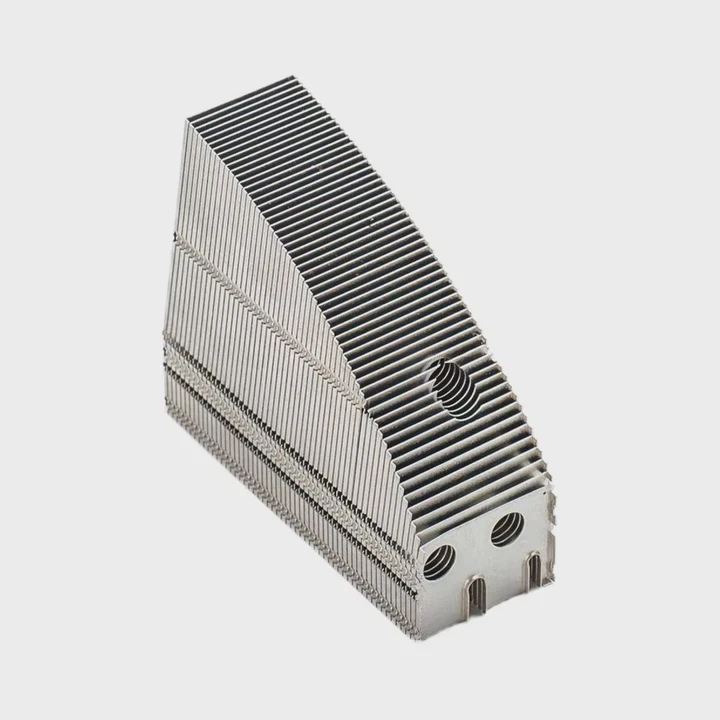
Key shipping lead‑time elements
- Packing and handling: Delicate vapor chambers require protective packaging, which may take additional days.
- Export logistics: If production is overseas, customs, export documentation, and freight scheduling add time.
- Transit mode: Air freight is faster but more costly; ocean freight is slower (often 2‑6 weeks depending on origin/destination).
- Inbound logistics: After arrival you may need local trucking, inspection, and handling before parts are available.
- Buffer for delays: Weather, port congestion, or customs holdups can add unplanned time.
How to build shipping into the schedule
Identify origin and destination and choose transit mode.
Assign typical transit time + handling + customs clearance days (e.g., 3–7 days for air, 15–30 days for sea)
Add inland transport (truck or rail) from port to your facility.
Include buffer days for contingencies.
Shipping‑time summary table
Transit mode Typical time (origin Asia → USA) Notes Air freight 3‑7 working days Higher cost Express courier 1‑3 working days Small shipments Sea freight 15‑30 days Most cost‑effective for large volume Inland transport 1‑5 days depending on route Depends on destination
Example end‑to‑end lead time
Tooling (4 weeks) + production run (1 week) + packaging & export (3 days) + sea transit (20 days) + inland delivery (2 days) = ~7 weeks total
If you switch to air freight (5 days), total drops to ~5 weeks.
If you ignore shipping time, you might assume delivery in 4 weeks while actual arrival takes 6‑8 weeks.
Conclusion
Estimating delivery time for vapor chambers requires a full supply‑chain view: complete design data, tooling lead time, parallel prototyping where possible, and shipping logistics. By defining each phase, tracking timeline milestones and building in buffers, you can arrive at a credible delivery forecast and avoid surprises.
TAGS
Latest Articles

Volume discount levels for heat sink orders?
Buyers often ask when heat sink prices start to drop with volume. Many worry they’re overpaying for small orders. This guide explains how B2B volume pricing works for thermal components. Heat sink
21 Dec,2025
Heat sink long-term supply contract options?
Many buyers want stable pricing and reliable delivery for heat sinks. But without a clear contract, risks grow over time. This article explores how to secure better long-term supply deals. Long-term
21 Dec,2025
Tooling cost for new heat sink profiles?
Many engineers struggle to understand why tooling for custom heat sinks costs so much. They worry about budgeting and production timelines. This article breaks down the cost drivers behind tooling.
21 Dec,2025
Heat sink custom sample process steps?
Sometimes, starting a custom heat sink project feels overwhelming—too many steps, too many unknowns, and too many risks. You want a sample, but not endless delays. The process for requesting and
20 Dec,2025
Standard B2B terms for heat sink payments?
When buyers and sellers in B2B heat sink markets talk about payment, many don’t fully understand what’s standard. This can lead to delayed orders, miscommunication, and even lost business
20 Dec,2025
Heat sink pricing factors for large orders?
Heat sinks are vital for many systems. When prices rise, projects stall and budgets break. This problem can hit teams hard without warning. Large order heat sink pricing depends on many factors. You
20 Dec,2025Related Articles
- Vapor Chamber machining cost breakdown?
- Noise impact of Vapor Chamber operation?
- Does Vapor Chamber need thermal insulation?
- Can Vapor Chamber be powder coated?
- How to bond Vapor Chamber to heatsink?
- Vapor Chamber sealing method recommendations?
- Required tooling for Vapor Chamber manufacturing?
- Does Vapor Chamber need leak detection?
- Vapor Chamber heat dispersion test results?
- Best alloy for Vapor Chamber enclosure?
- Standard inspection report for Vapor Chamber?
- Typical power rating for Vapor Chamber?
Author
Dr. Emily Chen
Chief AI Researcher
Leading expert in thermal dynamics and AI optimization with over 15 years of experience in data center efficiency research.
Categories
Latest Products






Recommend Categories
- Liquid cooling plate Manufacturer
- Industrial Heat Sink Manufacturer
- Standard Heat Sink Manufacturer
- Aluminum Heat Sink Manufacturer
- Copper Heat Sink Manufacturer
- Anodized Heatsink Manufacturer
- Stamping heat sink Manufacturer
- Die Casting Heatsink Manufacturer
- Soldering heat sink Manufacturer
- CNC Parts Manufacturer
Latest Products
- Wholesale Aluminum Radiator
- Water Cooling Plate Kit
- Water Cooling Heat Sink
- Water Cooling Heat Sink Kit
- Stainless Steel Water Distributor
- Server Water Cooling Plate Kit
- Server Liquid Cooling System
- Server Aluminum Cooling Kit
- S19 Full Cover Cooling Plate
- S19 Cooling Plate Kit
- S19 Aluminum Cooling Plate
Contact Expert
Have questions about this article? Reach out to our experts directly.