Vapor Chamber for inverter heat management?
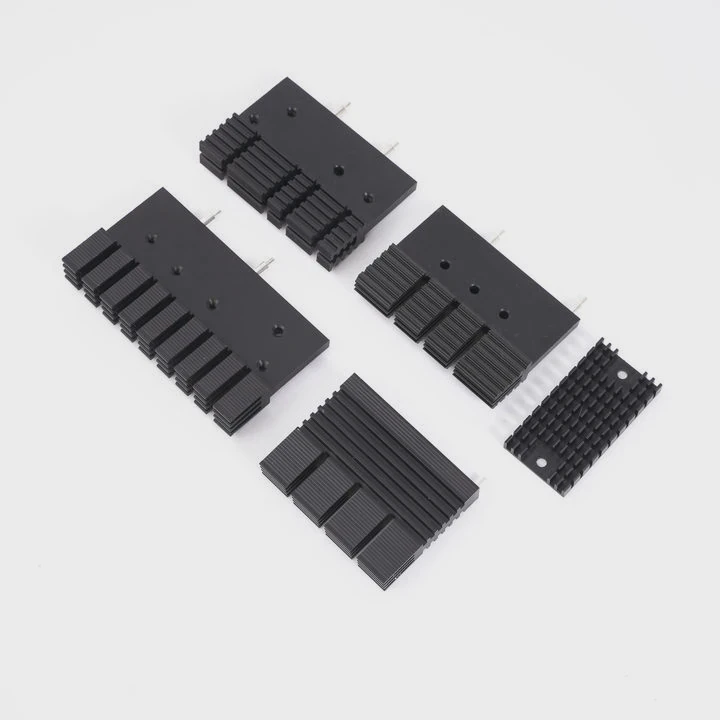
In modern power electronics systems, thermal bottlenecks often limit inverter performance, reliability, and size. Integrating a vapor chamber into the inverter’s thermal path can help spread heat more evenly, lower junction temperatures, and enable more compact or higher‑power inverter modules.
How is a vapor chamber used in inverter thermal control?
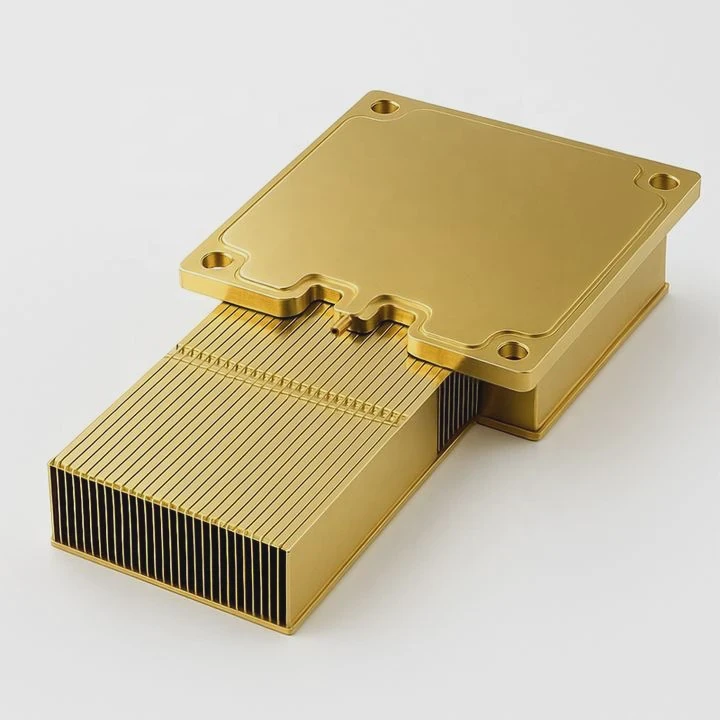
In an inverter module (such as those using IGBTs, MOSFETs, or other power switching devices), the main heat sources are the semiconductor junctions, busbars, and driver circuits. Here’s how a vapor chamber can be integrated:
- The vapor chamber is placed directly underneath or on top of the heat‑source block inside the inverter, serving as a high‑performance heat spreader that moves heat laterally across its surface.
- It spreads the local heat flux over a larger area so the downstream cold‑plate, fin array or heatsink sees a more uniform load, which improves thermal margin, lowers peak device temperature and mitigates hot‑spots.
- Especially where footprints are constrained (e.g., compact inverter housing), or airflow/cooling area is limited, the vapor chamber helps optimise the thermal path and reduces temperature rise across the base plate.
- In design practice, the vapor chamber becomes part of the base of the heatsink or cold‑plate assembly rather than replacing the cooler entirely — one might mount the vapor chamber, then bond or assemble the heatsink or liquid cold plate on top of it with a thermal interface material.
- By ensuring the semiconductor heat source is well coupled to the vapor chamber, and by designing the downstream cooling to match, you can reduce thermal resistance of the system and often enable smaller size or higher power density for the inverter.
Are inverters with high power ratings using vapor chambers?
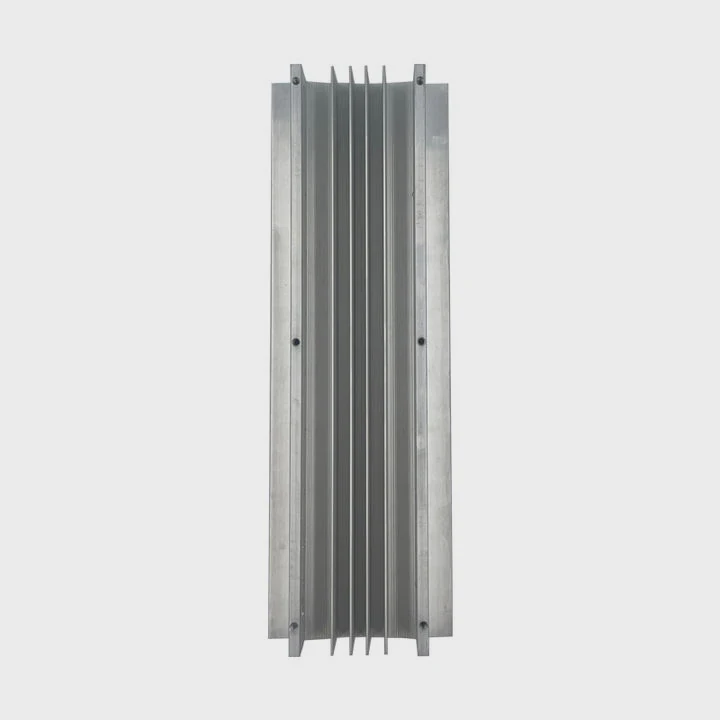
Yes — vapor chamber technology is increasingly applied in high‑power rating inverters and power conversion modules, though adoption depends on cost, manufacturing, volume and the thermal challenge.
- In high‑power inverters (for automotive traction, grid‑tie, energy storage systems), the heat fluxes are high and the device density is increasing. Traditional spreaders sometimes hit their limits in footprint or thermal gradient.
- Thermal‑management providers list vapor chambers as a solution for high‑power electronics: they describe vapor chambers as effective for “two‑dimensional heat spreading to manage high heat fluxes in power conversion systems” (inverters, converters, BESS).
- Academic and industrial articles show vapor chambers embedded in heatsink bases for power electronics reduced maximum junction temperature of devices like IGBTs by spreading heat more effectively.
- However, not all inverters use vapor chambers; many still use conventional copper base plates + fins or cold plates when cost or size constraints permit. The decision to use a vapor chamber often comes when the thermal load per unit area is high, the form‑factor is tight or cooling margin is limited.
In summary: for high‑power, high‑density inverter modules, vapor chambers are a viable and increasingly used cooling component, but they are not universal yet.
Do vapor chambers replace traditional heat sinks in inverters?
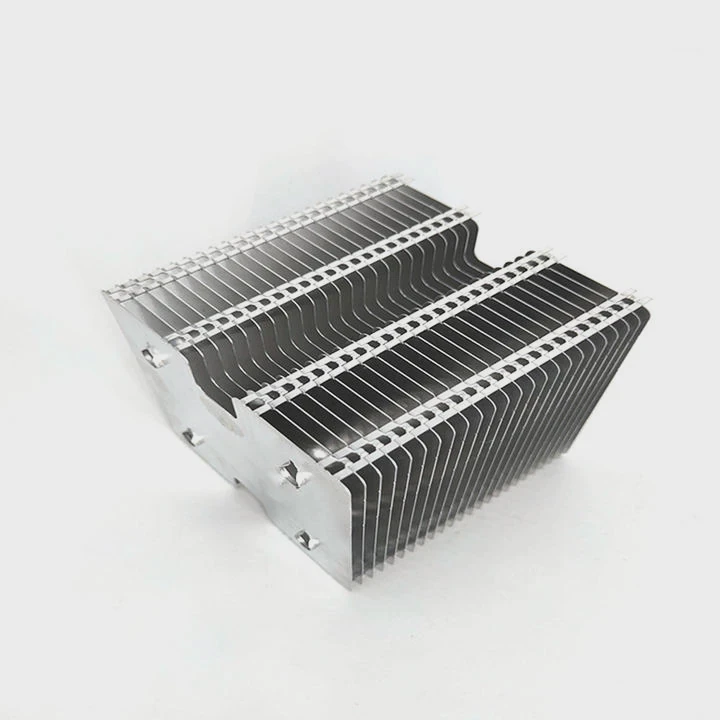
No — vapor chambers usually do not replace the cooling sink (heatsink or cold plate) entirely. They augment or improve the thermal path by serving as a high‑performance spreader.
- The vapor chamber spreads heat, but it still relies on a downstream cooling stage (heatsink fins, liquid cold plate, air or coolant flow) to carry the heat away to ambient or coolant supply. Without that downstream sink, the chamber alone cannot reject the heat.
- In many inverter designs, the heatsink or cold plate remains; the vapor chamber is bonded to its base to reduce thermal spreading resistance and improve uniformity.
- If the design allows a simpler heatsink with sufficient size and airflow, the vapor chamber may not add enough benefit to justify extra cost. In that case, a conventional heatsink remains appropriate.
- In compact or high‑flux modules, using the vapor chamber may allow a smaller heatsink, lighter weight or thinner profile of the cooling assembly — thus the vapor chamber enables improvement to the sink rather than replacing it.
So: the vapor chamber often replaces or upgrades the “spreader” part of the cooling system, not the sink itself.
Is reliability proven in long‑term inverter use?
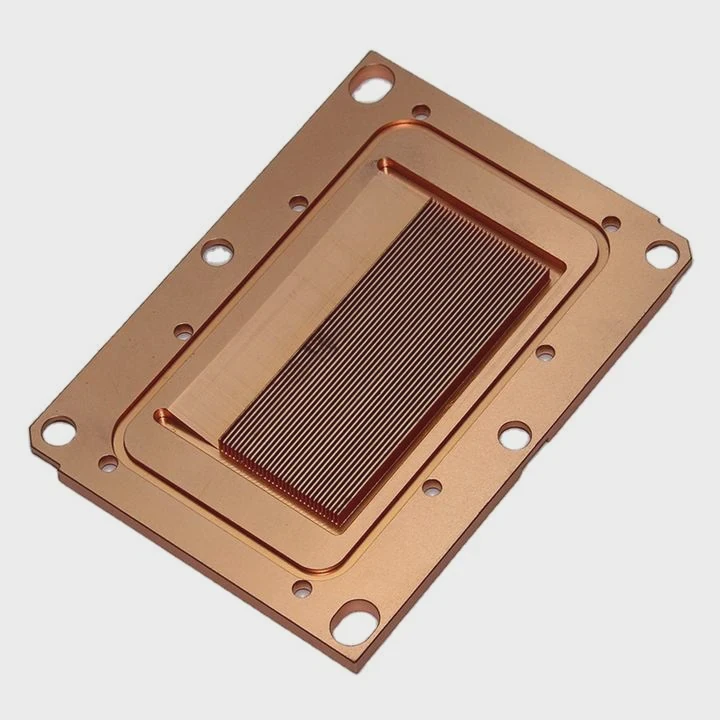
Reliability is critical for inverter modules, which often must run for tens of thousands of hours, under cyclic loads, vibration, temperature extremes and sometimes harsh environments. Here’s a reliability assessment of vapor chambers in that context:
- Vapor chambers have a proven track record in electronics cooling (CPUs, GPUs, server modules) for spreading heat, with passive operation, no moving parts, and long life when properly manufactured.
- For power‑electronics/inverter applications, thermal‑management vendors list them explicitly as viable solutions, meaning they are being used in industry for real-world modules.
- That said, long‑term field‑data publicly available for inverter‑specific vapor chambers is less widespread. Key reliability issues include: leak integrity, wick performance over time (capillary return under cyclic flux), deformation under thermal cycling, fouling of interface surfaces, and maintenance of vacuum/charge state.
- Good design and manufacturing practice mitigate risks: using quality brazing/seaming for the chamber, ensuring good interface bonding, avoiding flux or contaminants, selecting robust wick and working fluid, managing mechanical stresses (vibration, shock), and ensuring downstream cooling margin so the vapor chamber is not driven to its limit (dry‑out or hot‑spot).
- When integrated carefully and with appropriate margin, the reliability of vapor chamber in inverter use can approach or match that of traditional spreaders. But designing with margin and validating for the application environment is crucial.
In short: yes, the reliability of vapor chambers in inverter modules is quite good when done correctly, but you should treat them like any precision thermal component — verify qualification, check lifetime test data and ensure the integration is sound.
Conclusion
In high‑power inverter heat management, a vapor chamber is a strong solution when you face high heat flux, limited footprint or tight cooling margins. It improves heat spreading, helps lower junction temperatures and enables better thermal performance or compact design. It is increasingly used in high‑rating inverter modules. While it enhances the cooling chain, it does not fully replace the downstream heatsink or cold plate — it works alongside them. Reliability is proven in many electronics applications and increasingly in inverter modules, but you should ensure proper material selection, manufacturing quality, integration design and qualification for long‑term use.
TAGS
Latest Articles

Volume discount levels for heat sink orders?
Buyers often ask when heat sink prices start to drop with volume. Many worry they’re overpaying for small orders. This guide explains how B2B volume pricing works for thermal components. Heat sink
21 Dec,2025
Heat sink long-term supply contract options?
Many buyers want stable pricing and reliable delivery for heat sinks. But without a clear contract, risks grow over time. This article explores how to secure better long-term supply deals. Long-term
21 Dec,2025
Tooling cost for new heat sink profiles?
Many engineers struggle to understand why tooling for custom heat sinks costs so much. They worry about budgeting and production timelines. This article breaks down the cost drivers behind tooling.
21 Dec,2025
Heat sink custom sample process steps?
Sometimes, starting a custom heat sink project feels overwhelming—too many steps, too many unknowns, and too many risks. You want a sample, but not endless delays. The process for requesting and
20 Dec,2025
Standard B2B terms for heat sink payments?
When buyers and sellers in B2B heat sink markets talk about payment, many don’t fully understand what’s standard. This can lead to delayed orders, miscommunication, and even lost business
20 Dec,2025
Heat sink pricing factors for large orders?
Heat sinks are vital for many systems. When prices rise, projects stall and budgets break. This problem can hit teams hard without warning. Large order heat sink pricing depends on many factors. You
20 Dec,2025Related Articles
- Can Vapor Chamber withstand shock testing?
- Vapor Chamber compatibility with graphite sheet?
- Does Vapor Chamber require vacuum forming?
- Vapor Chamber process flow chart?
- Typical power rating for Vapor Chamber?
- Standard inspection report for Vapor Chamber?
- Vapor Chamber tolerance for thickness variation?
- Vapor Chamber unit weight calculation method?
- Vapor Chamber optimization for CPU cooling?
- Does Vapor Chamber work with water cooling?
- Vapor Chamber for solar energy systems?
- Can Vapor Chamber operate in high humidity?
Author
Dr. Emily Chen
Chief AI Researcher
Leading expert in thermal dynamics and AI optimization with over 15 years of experience in data center efficiency research.
Categories
Latest Products






Recommend Categories
- Liquid cooling plate Manufacturer
- Industrial Heat Sink Manufacturer
- Standard Heat Sink Manufacturer
- Aluminum Heat Sink Manufacturer
- Copper Heat Sink Manufacturer
- Anodized Heatsink Manufacturer
- Stamping heat sink Manufacturer
- Die Casting Heatsink Manufacturer
- Soldering heat sink Manufacturer
- CNC Parts Manufacturer
Latest Products
- Wholesale Aluminum Radiator
- Water Cooling Plate Kit
- Water Cooling Heat Sink
- Water Cooling Heat Sink Kit
- Stainless Steel Water Distributor
- Server Water Cooling Plate Kit
- Server Liquid Cooling System
- Server Aluminum Cooling Kit
- S19 Full Cover Cooling Plate
- S19 Cooling Plate Kit
- S19 Aluminum Cooling Plate
Contact Expert
Have questions about this article? Reach out to our experts directly.