Vapor Chamber process flow chart?
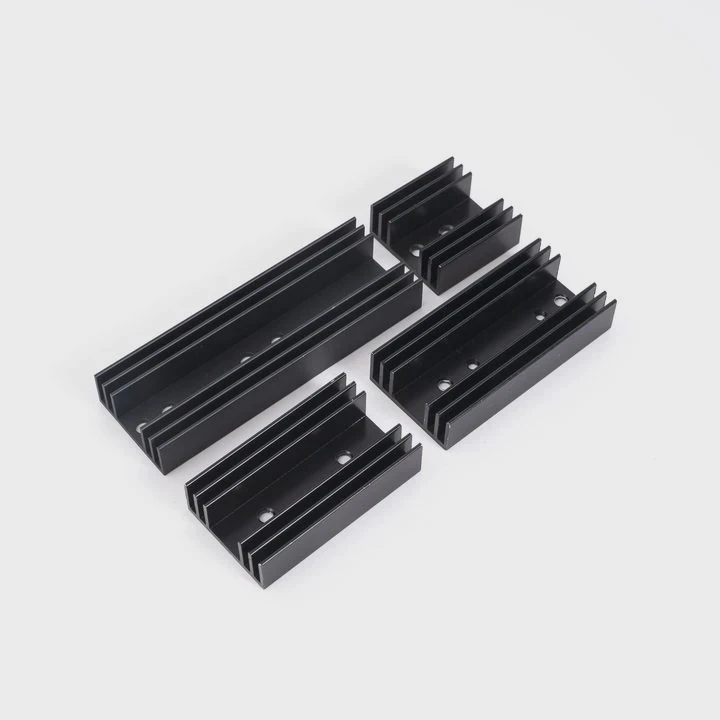
The manufacturing process for a vapor chamber involves many steps—from design and tooling through to final inspection and packaging. The flow chart typically includes CAD/tooling, material preparation, wick and support formation, welding/sealing, vacuum fill, and QA checkpoints.
Let’s walk through the typical flow, discuss when welding happens relative to vacuum filling, how QA is integrated, and where CAD and tooling fit in.
What are the main steps in the Vapor Chamber process flow?
The production of a vapor chamber generally follows a sequence of design, tooling, fabrication, assembly, and inspection. The main steps include: design & tooling, raw material preparation, wick/support insertion, assembly, welding/sealing, vacuum evacuation & fluid charge, leak test and QA, surface finishing and shipment.
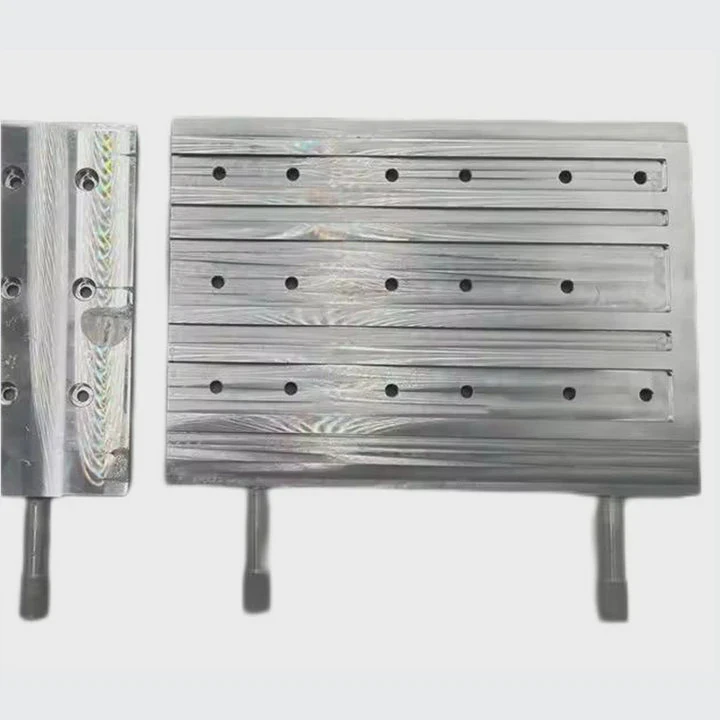
Typical flow might include:
- CAD modelling and tooling development — define dimensions, cut sheets, stamps, or tube blanks.
- Material preparation — cut copper or aluminum plates/tubes, clean surfaces.
- Wick structure application — e.g., powder fill, sintering, mesh insertion.
- Support structure placement — internal posts, spacers to prevent collapse.
- Assembly of the chamber halves or tube bending and flattening.
- Welding or brazing/sealing of the chamber perimeter, leaving a fill port.
- Vacuum evacuation and working fluid injection — often done in one step or two steps.
- Final sealing of the fill port after fluid fill.
- Leak test and pressure/detection test.
- Thermal performance test, flatness check, thickness measurement.
- Surface treatment, plating, mounting features added.
- Packaging and shipment.
By tracking this process clearly in your module supply chain, your customers (OEMs) will better understand production lead‑time, quality checkpoints and risk points.
Is welding done before or after vacuum filling?
In the manufacturing sequence, welding (or brazing/sealing) is typically done before vacuum evacuation and fluid filling of the vapor chamber. That means the chamber is sealed (welded) except for a fill port, then vacuumed and injected with working fluid, then the fill port is sealed.
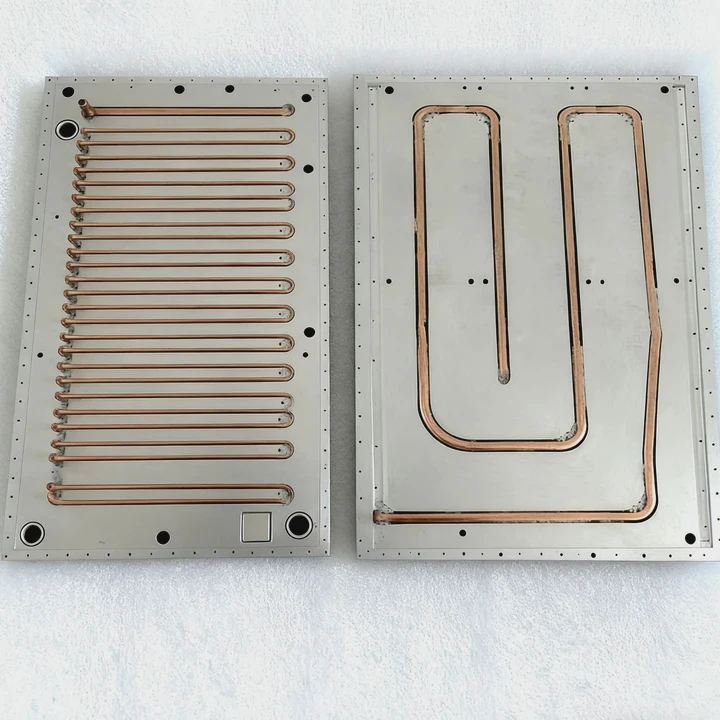
Typical order
- After assembly (wick + support inserted + chamber halves aligned) the main seam is welded/brazed.
- A fill tube or port remains open for fluid injection and vacuum.
- In a vacuum‑chamber station the device is placed, vacuum is drawn, fluid is charged, then the fill port is sealed (spot‑welded or brazed).
- Final sealing completes the hermetic enclosure.
This ordering ensures the internal vapor space and wick structure are set before final closure. If welding were done after fill, one risks contaminating the interior or damaging the working fluid by high heat after charging.
For your manufacturing plan at Sinothermic (where you have laser welding, agitation welding, etc) you’ll want to specify tooling and control steps for welding and fill port timing, as well as temperature control so the wick or internal structure is not harmed.
How is quality assurance integrated in the process?
Quality assurance (QA) is built into multiple points of the process, not merely at the end. QA steps include inspections at material receipt, dimensional checks after tooling, leak testing after sealing, vacuum performance checks, thermal resistance testing, and reliability aging/ cycling.
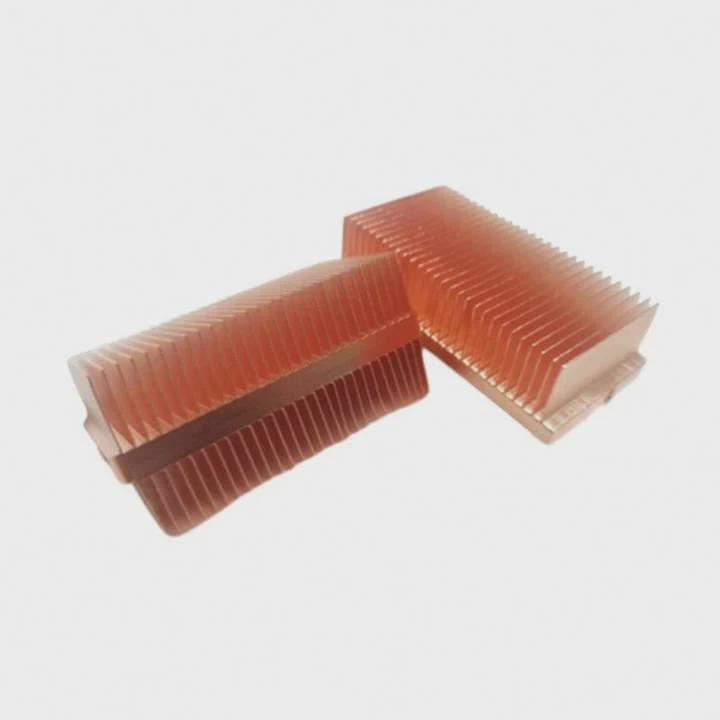
QA integration points
- Material inspection: verify metal grades, thickness, surface cleanliness.
- Tooling validation: ensure die/tube forming yields correct dimensions and flatness.
- Wick/support inspection: porosity, sinter quality, post spacing checks.
- Weld/seal inspection: X‑ray or visual of weld seams, check for voids or cracks.
- Vacuum/charge verification: measure internal pressure, check working fluid quantity.
- Leak test: helium leak detection or pressure‑decay test to ensure hermeticity.
- Thermal performance test: measure thermal resistance, temperature uniformity under specified power.
- Reliability tests: thermal cycling, mechanical shock/vibration if required for certain customers.
- Final inspection/packaging: dimension, flatness, plating quality, documentation.
If you map these into your process flow chart, you might show QA loops after each major stage (tooling → fabrication, welding → sealing, final → shipment) so that your OEM clients view your supply chain as stable and controlled. Your many years of production (30000 m² base, laser welding, vacuum brazing, etc) help support this.
Are CAD and tooling included in the flow chart?
Yes — CAD and tooling are foundational steps and should be included at the very start of your flow chart. The design and tooling phase covers CAD modelling, simulation (CFD/thermal), fixture design, die stamping or tube forming tooling, welding jig design, and this phase must be reflected in the process flow.

Including CAD/tooling in your flow chart ensures the customer understands that before production there is a “design for manufacture” stage. For example:
- CAD geometry and layout for chamber, wick structure, support posts.
- Finite element analysis (FEA) for mechanical rigidity, vacuum deformation.
- Tooling design for stamping or extrusion, laser welding jig, fill station layout.
- Prototyping and pilot run – validate tooling before full production.
From your OEM/ODM perspective, documenting this phase indicates lead‑time, cost base (tooling amortisation), and change control (design freeze vs revision). For complex modules like those you supply to aerospace, rail or EV markets, including CAD & tooling in the flow chart gives transparency to procurement and project planning.
Conclusion
A clear process flow chart for vapor chamber manufacturing starts with CAD & tooling, moves through material prep, wick/support insertion, assembly, welding/sealing, vacuum‑fill, QA checkpoints, surface finishing and shipment. Welding is done before the vacuum/working fluid fill, and QA is integrated continuously across stages. Including CAD and tooling phases ensures that your customers see your module production as end‑to‑end controlled—from design to delivery.
TAGS
Latest Articles

Volume discount levels for heat sink orders?
Buyers often ask when heat sink prices start to drop with volume. Many worry they’re overpaying for small orders. This guide explains how B2B volume pricing works for thermal components. Heat sink
21 Dec,2025
Heat sink long-term supply contract options?
Many buyers want stable pricing and reliable delivery for heat sinks. But without a clear contract, risks grow over time. This article explores how to secure better long-term supply deals. Long-term
21 Dec,2025
Tooling cost for new heat sink profiles?
Many engineers struggle to understand why tooling for custom heat sinks costs so much. They worry about budgeting and production timelines. This article breaks down the cost drivers behind tooling.
21 Dec,2025
Heat sink custom sample process steps?
Sometimes, starting a custom heat sink project feels overwhelming—too many steps, too many unknowns, and too many risks. You want a sample, but not endless delays. The process for requesting and
20 Dec,2025
Standard B2B terms for heat sink payments?
When buyers and sellers in B2B heat sink markets talk about payment, many don’t fully understand what’s standard. This can lead to delayed orders, miscommunication, and even lost business
20 Dec,2025
Heat sink pricing factors for large orders?
Heat sinks are vital for many systems. When prices rise, projects stall and budgets break. This problem can hit teams hard without warning. Large order heat sink pricing depends on many factors. You
20 Dec,2025Related Articles
- Typical power rating for Vapor Chamber?
- Standard inspection report for Vapor Chamber?
- Best alloy for Vapor Chamber enclosure?
- Vapor Chamber heat dispersion test results?
- Does Vapor Chamber need leak detection?
- Required tooling for Vapor Chamber manufacturing?
- Does Vapor Chamber require vacuum forming?
- Vapor Chamber compatibility with graphite sheet?
- Can Vapor Chamber withstand shock testing?
- Vapor Chamber for inverter heat management?
- Vapor Chamber tolerance for thickness variation?
- Vapor Chamber unit weight calculation method?
Author
Dr. Emily Chen
Chief AI Researcher
Leading expert in thermal dynamics and AI optimization with over 15 years of experience in data center efficiency research.
Categories
Latest Products
Recommend Categories
- Liquid cooling plate Manufacturer
- Industrial Heat Sink Manufacturer
- Standard Heat Sink Manufacturer
- Aluminum Heat Sink Manufacturer
- Copper Heat Sink Manufacturer
- Anodized Heatsink Manufacturer
- Stamping heat sink Manufacturer
- Die Casting Heatsink Manufacturer
- Soldering heat sink Manufacturer
- CNC Parts Manufacturer
Latest Products
- Wholesale Aluminum Radiator
- Water Cooling Plate Kit
- Water Cooling Heat Sink
- Water Cooling Heat Sink Kit
- Stainless Steel Water Distributor
- Server Water Cooling Plate Kit
- Server Liquid Cooling System
- Server Aluminum Cooling Kit
- S19 Full Cover Cooling Plate
- S19 Cooling Plate Kit
- S19 Aluminum Cooling Plate
Contact Expert
Have questions about this article? Reach out to our experts directly.