Required tooling for Vapor Chamber manufacturing?
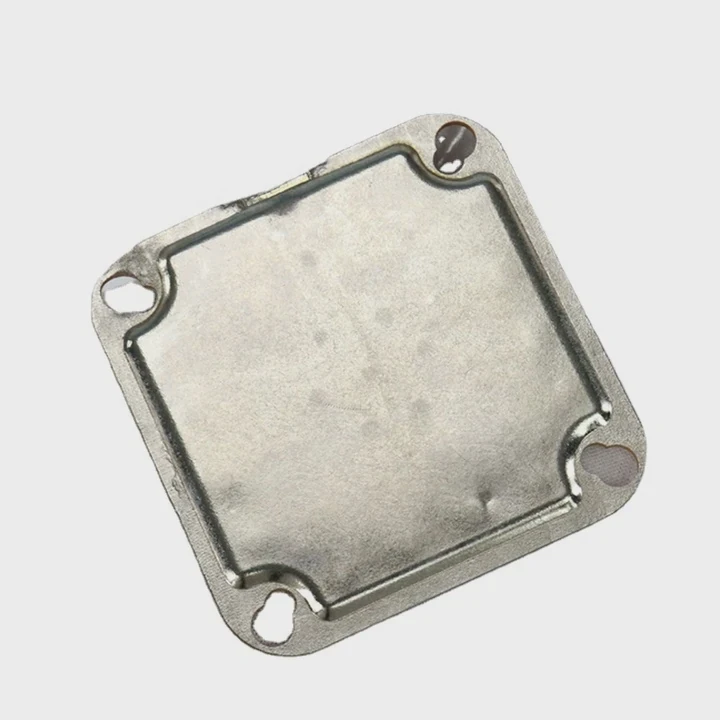
In vapor chamber manufacturing, poor tooling means low yields, inconsistent quality, and costly delays.
To build reliable vapor chambers, you need precise tooling across forming, sealing, vacuuming, testing, and finishing stages.
Let’s look at what tooling is required and why it matters.
What tooling is essential for Vapor Chamber production?
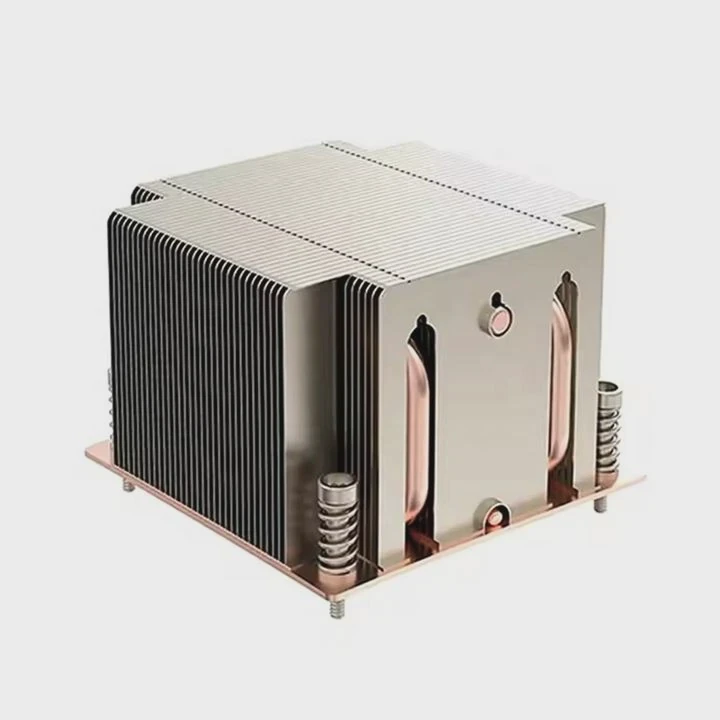
You need forming dies, wick tools, welding fixtures, vacuum fill tools, leak testers, and CNC setups to manufacture vapor chambers.
Manufacturing a vapor chamber is a complex process that involves several distinct steps. Each step demands specialized tooling to ensure accuracy, performance, and repeatability. The key tooling categories include:
Plate Forming Tools
- Stamping dies for shaping top and bottom copper plates.
- Punch and emboss tools for pedestals, cutouts, and mounting features.
- Tube forming dies, in case of one-piece vapor chambers made from flattened tubes.
Wick Preparation and Insertion
- Sintering molds or fixtures for creating sintered powder wicks.
- Mesh insertion jigs for placing woven or foam wicks inside the chamber.
- Support post alignment tools, to position and fix internal support columns.
Sealing and Bonding Fixtures
- Diffusion bonding fixtures for joining copper plates under heat and pressure.
- Laser or brazing jigs, used to weld the chamber shut.
- Alignment tools, to keep everything flat and square during bonding.
Vacuum and Fill Equipment
- Vacuum chambers, for evacuating air from inside the chamber.
- Filling fixtures, to inject working fluid like deionized water.
- Seal-off tools, to permanently close the chamber once it’s charged.
Testing and Inspection Fixtures
- Helium leak testers, or pressure decay test rigs for sealing validation.
- Flatness gauges and thickness measurement tools.
- Thermal test setups, to check heat spreading performance.
Finishing and CNC Tooling
- CNC milling tools, to add mounting holes, cutouts, or machine pedestals.
- Surface finishing racks, for plating, cleaning, or passivation.
Tooling Summary Table
| Tooling Category | Purpose |
|---|---|
| Stamping/Forming Dies | Shape copper plates or tubes |
| Wick Fixtures | Insert or form the internal wick |
| Sealing Fixtures | Bond or weld the vapor chamber enclosure |
| Vacuum/Fill Equipment | Evacuate chamber and add working fluid |
| Test Fixtures | Verify sealing, flatness, and performance |
| Finishing Tools | Trim, drill, machine, and surface treat |
Without these tools, consistent production of vapor chambers is nearly impossible. Each tool must be tuned to the chamber’s design and material properties.
Are stamping dies needed for copper plate forming?
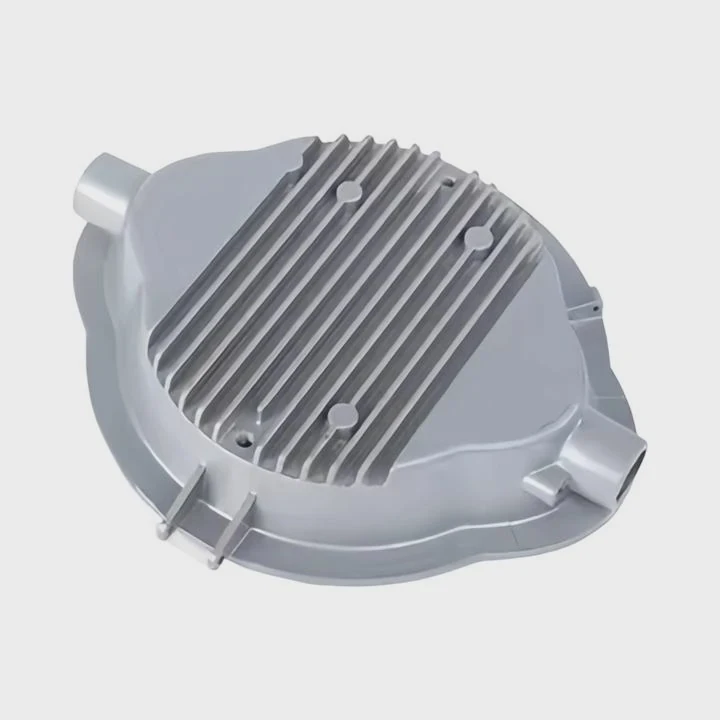
Yes, stamping dies are essential for copper plate forming in two-piece vapor chamber designs.
In vapor chamber production, there are two major design types: the two-piece plate method and the one-piece tube method.
Two-Piece Plate Method
This method uses two stamped copper plates — one for the top and one for the bottom. These plates are shaped using high-precision stamping dies. The dies control:
- The outer contour or outline of the chamber.
- The depth and shape of internal pedestals or embossments.
- Locations for fill tubes, mounting holes, or ports.
Stamping dies are usually made from hardened tool steel. They are costly to produce but support high-volume manufacturing. Once built, a die can last through thousands of stamping cycles if maintained properly.
One-Piece Tube Method
Some vapor chambers are made by flattening a cylindrical copper tube. This method requires:
- Tube forming fixtures.
- Flattening dies.
- End-sealing and trimming tools.
While stamping dies aren’t needed here, specialized forming jigs still play a key role.
Comparison Table
| Method | Requires Stamping Dies? | Common Use Case |
|---|---|---|
| Two-piece copper plates | Yes | Large-area, high-precision VC |
| One-piece tube | No | Small, simple vapor chambers |
If your design has complex shapes, embosses, or needs high flatness, stamping dies are not just useful — they are critical.
How many tools are used for one chamber model?
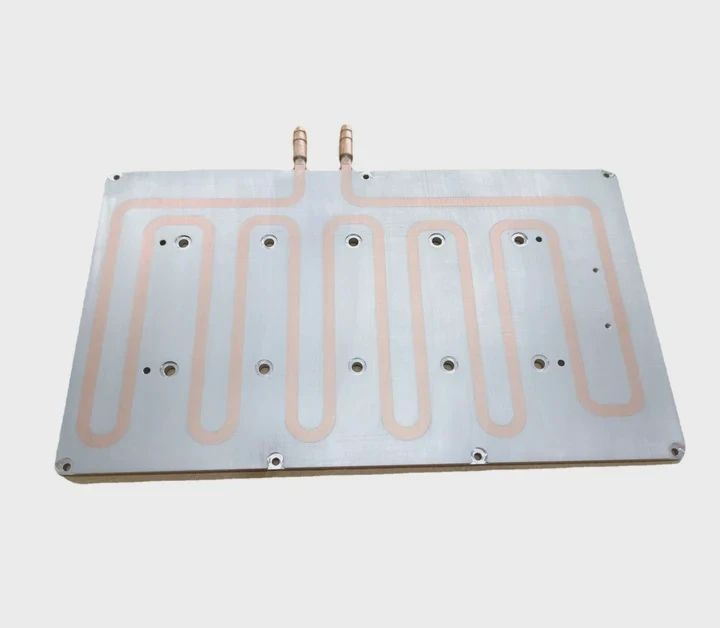
Typically, 10 to 15 different tool sets are used for manufacturing one vapor chamber model.
Each vapor chamber model requires a sequence of production steps, each supported by specific tooling. Even small design changes can require separate tools.
Typical Tooling List
- Blanking die for cutting copper sheet.
- Stamping die for top plate forming.
- Stamping die for bottom plate forming.
- Pedestal embossing tool.
- Wick mold or insertion jig.
- Internal post fixture.
- Bonding or welding fixture.
- Vacuum chamber fixture.
- Filling tool or nozzle jig.
- Seal-off fixture.
- Leak tester setup.
- Thermal test fixture.
- CNC fixture for post-machining.
- Surface treatment holder.
- Final inspection gauge.
Not all tools are needed at once, but in a typical production line, these are essential to ensure quality and repeatability.
Factors Influencing Tool Count
- Complexity: More features mean more tooling.
- Volume: High volume justifies dedicated tools.
- Automation: Automated lines need more fixtures.
- Standardization: Reusable tools reduce total count.
If you run prototypes or low volumes, you may use multi-purpose tools. But for series production, expect a full set of model-specific tooling.
Is custom tooling required for each new design?
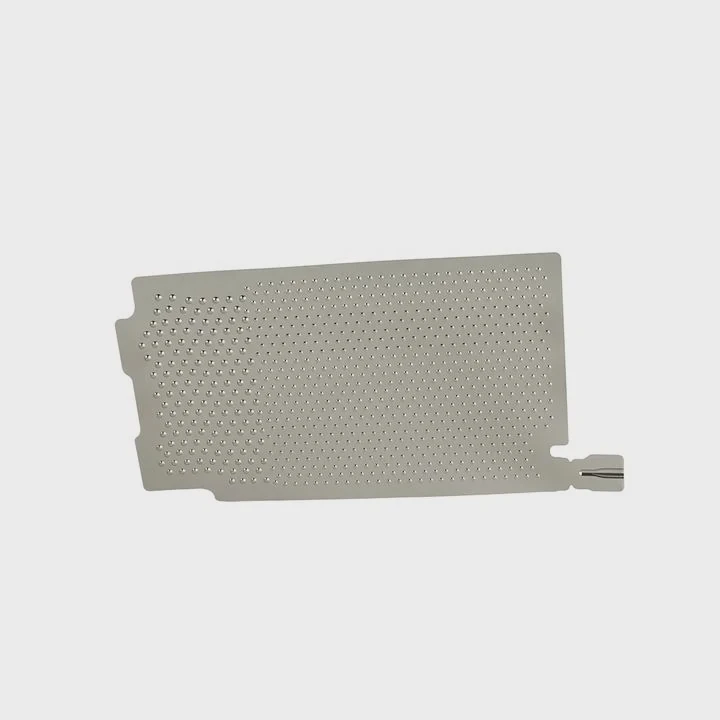
Yes, custom tooling is required for each new vapor chamber design due to differences in shape, size, and internal features.
Every vapor chamber is built to fit a specific thermal application. That means new designs often differ in:
- Outer dimensions and contours.
- Pedestal or emboss layouts.
- Internal post positions.
- Wick type and shape.
- Mounting holes or cutouts.
These variations require updates or entirely new tool sets.
Tooling Reuse
Tool reuse is possible if:
- The chamber’s outline stays the same.
- Only thickness or wick structure changes.
- CNC finishing replaces complex stamping.
In practice, most new designs need at least some custom tooling — especially the stamping dies and bonding jigs. These tools are not flexible enough to adapt to multiple sizes or geometries.
Cost Strategy
To manage costs:
- Use modular die designs where possible.
- Group new products into families with similar outlines.
- Start with CNC-machined prototypes before investing in hard tools.
Custom tooling increases up-front cost but ensures the finished product meets all functional and reliability requirements.
Conclusion
Vapor chamber production demands a complete suite of specialized tooling. From stamping dies and wick jigs to leak testers and CNC fixtures, every step relies on precision tools. A single vapor chamber model may require over ten tool sets. And yes — each new design needs custom tooling to ensure it performs and fits correctly. Planning your tooling strategy early is key to cost-effective and scalable vapor chamber manufacturing.
TAGS
Latest Articles

Volume discount levels for heat sink orders?
Buyers often ask when heat sink prices start to drop with volume. Many worry they’re overpaying for small orders. This guide explains how B2B volume pricing works for thermal components. Heat sink
21 Dec,2025
Heat sink long-term supply contract options?
Many buyers want stable pricing and reliable delivery for heat sinks. But without a clear contract, risks grow over time. This article explores how to secure better long-term supply deals. Long-term
21 Dec,2025
Tooling cost for new heat sink profiles?
Many engineers struggle to understand why tooling for custom heat sinks costs so much. They worry about budgeting and production timelines. This article breaks down the cost drivers behind tooling.
21 Dec,2025
Heat sink custom sample process steps?
Sometimes, starting a custom heat sink project feels overwhelming—too many steps, too many unknowns, and too many risks. You want a sample, but not endless delays. The process for requesting and
20 Dec,2025
Standard B2B terms for heat sink payments?
When buyers and sellers in B2B heat sink markets talk about payment, many don’t fully understand what’s standard. This can lead to delayed orders, miscommunication, and even lost business
20 Dec,2025
Heat sink pricing factors for large orders?
Heat sinks are vital for many systems. When prices rise, projects stall and budgets break. This problem can hit teams hard without warning. Large order heat sink pricing depends on many factors. You
20 Dec,2025Related Articles
- How to estimate Vapor Chamber delivery time?
- Vapor Chamber machining cost breakdown?
- Noise impact of Vapor Chamber operation?
- Does Vapor Chamber need thermal insulation?
- Can Vapor Chamber be powder coated?
- How to bond Vapor Chamber to heatsink?
- Does Vapor Chamber need leak detection?
- Vapor Chamber heat dispersion test results?
- Best alloy for Vapor Chamber enclosure?
- Standard inspection report for Vapor Chamber?
- Typical power rating for Vapor Chamber?
- Vapor Chamber process flow chart?
Author
Dr. Emily Chen
Chief AI Researcher
Leading expert in thermal dynamics and AI optimization with over 15 years of experience in data center efficiency research.
Categories
Latest Products






Recommend Categories
- Liquid cooling plate Manufacturer
- Industrial Heat Sink Manufacturer
- Standard Heat Sink Manufacturer
- Aluminum Heat Sink Manufacturer
- Copper Heat Sink Manufacturer
- Anodized Heatsink Manufacturer
- Stamping heat sink Manufacturer
- Die Casting Heatsink Manufacturer
- Soldering heat sink Manufacturer
- CNC Parts Manufacturer
Latest Products
- Wholesale Aluminum Radiator
- Water Cooling Plate Kit
- Water Cooling Heat Sink
- Water Cooling Heat Sink Kit
- Stainless Steel Water Distributor
- Server Water Cooling Plate Kit
- Server Liquid Cooling System
- Server Aluminum Cooling Kit
- S19 Full Cover Cooling Plate
- S19 Cooling Plate Kit
- S19 Aluminum Cooling Plate
Contact Expert
Have questions about this article? Reach out to our experts directly.