Vapor Chamber heat dispersion test results?
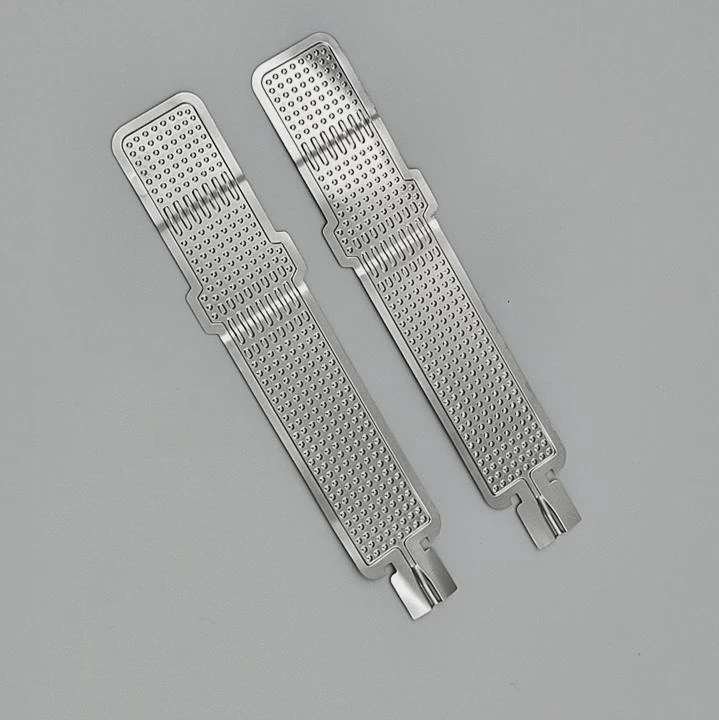
Heat dispersion tests help reveal hot spots, temperature gradients, and real-world effectiveness of the vapor chamber in spreading heat.
Test data show that a well-designed vapor chamber can dramatically lower peak temperatures, improve uniformity across the surface, and reduce thermal resistance compared to solid metal spreaders.
Now I will walk through what heat dispersion tests show, how uniformity is evaluated, how orientation affects results, and which metrics are used to quantify spreading.
What do heat dispersion tests show for Vapor Chambers?
Heat dispersion tests measure how effectively a vapor chamber moves heat laterally from the heat source area (evaporator) across its surface to other regions (condenser or spreader zone). These tests highlight key performance characteristics such as:
- Surface temperature distribution under controlled heat input.
- Thermal resistance of the vapor chamber, showing how much temperature rise occurs per watt of heat.
- Influence of design elements like wick structure, vapor space, and fill ratio on performance.
- Spatial temperature uniformity, showing whether hot spots are minimized and heat is evenly distributed.
- Differences in performance based on chamber orientation or mounting direction.
These results help determine how much a vapor chamber lowers hot spot temperatures, how well it spreads heat to the condenser side, and whether the surface stays within a safe temperature range. In advanced thermal systems, uniform dispersion prevents mechanical stress and improves component reliability.
Well-designed vapor chambers show flatter temperature profiles across the spreader surface. In contrast, poor designs show steep gradients or uneven spreading, especially if wick design or fluid fill are inadequate. Engineers use these tests to confirm design validity and optimize performance for real applications.
How is temperature uniformity evaluated?
Uniformity evaluation involves collecting temperature data across the vapor chamber surface using a range of techniques. Common methods include:
Evaluation Methods
- Infrared thermal imaging: Captures a visual heat map of the vapor chamber during steady-state heating.
- Multi-point sensors: Thermocouples or RTDs placed at strategic points to measure temperature differences.
- Time-based tracking: Records how the temperature distribution changes over time from cold start to steady state.
- Comparison testing: Vapor chamber tested alongside a solid metal block to show improvement in uniformity.
Key Metrics
| Metric | Description |
|---|---|
| ΔT_max | Maximum temperature difference across the surface. Smaller values mean better uniformity. |
| Standard Deviation (σ) | Statistical spread of temperature readings. Lower σ means more consistent temperatures. |
| Uniformity Ratio | Ratio comparing hot spot to average surface temperature. Lower is better. |
| Effective Conductivity | Used to model the chamber as a conduction path. Higher values mean better heat spreading. |
| Thermal Resistance (θ) | Total resistance to heat flow across the vapor chamber. Lower θ indicates better performance. |
To ensure accurate comparisons, all tests must use the same power input, source location, and cooling conditions. Small heat sources and poor wick contact increase ΔT_max. A good design maintains a low ΔT even when source location changes.
Uniformity is not just about comfort or efficiency—it also affects mechanical reliability. Uneven temperatures cause stress and warping. For high-reliability industries, maintaining tight uniformity is essential for performance and durability.
Manufacturers often define their own uniformity benchmarks. For example, a spreader surface should not vary more than 5°C across its footprint under typical power loads. This helps customers verify thermal designs without relying on guesswork.
Are test results different for horizontal and vertical use?
Yes—orientation impacts vapor chamber performance. Although vapor chambers are designed to be less sensitive to gravity, results still vary between horizontal and vertical setups.
How Orientation Affects Results
- In a vertical upright position, with the evaporator at the bottom, gravity assists fluid return. This typically gives the best performance.
- In a horizontal position, capillary action alone must return fluid to the heat source. Performance remains good, but slightly less consistent.
- In an inverted position, with the evaporator above the condenser, gravity works against capillary flow. This is the most challenging case, and poor wick design can cause dry-out or thermal spikes.
Performance Differences by Orientation
| Orientation | Typical Performance |
|---|---|
| Upright (evaporator below) | Best performance, aided by gravity. |
| Horizontal | Moderate, depends on wick strength. |
| Inverted (evaporator above) | Most difficult, wick must overcome gravity. |
A well-designed wick structure can reduce these differences. For example, gradient or multi-layer wicks improve capillary return even in tough orientations. Manufacturers should test vapor chambers in multiple positions to ensure reliable operation in all real-world scenarios.
For applications like laptops, tablets, or aerospace equipment, devices may operate at various angles. It’s critical to test vapor chamber behavior in all intended orientations. If the design only performs well when upright, customers may face overheating when the device is rotated or tilted.
To ensure orientation stability, vapor chambers should be tested at the worst-case tilt angle expected in operation. Engineers should confirm that ΔT_max and thermal resistance remain within safe limits regardless of mounting position.
What metrics are used to quantify heat spread?
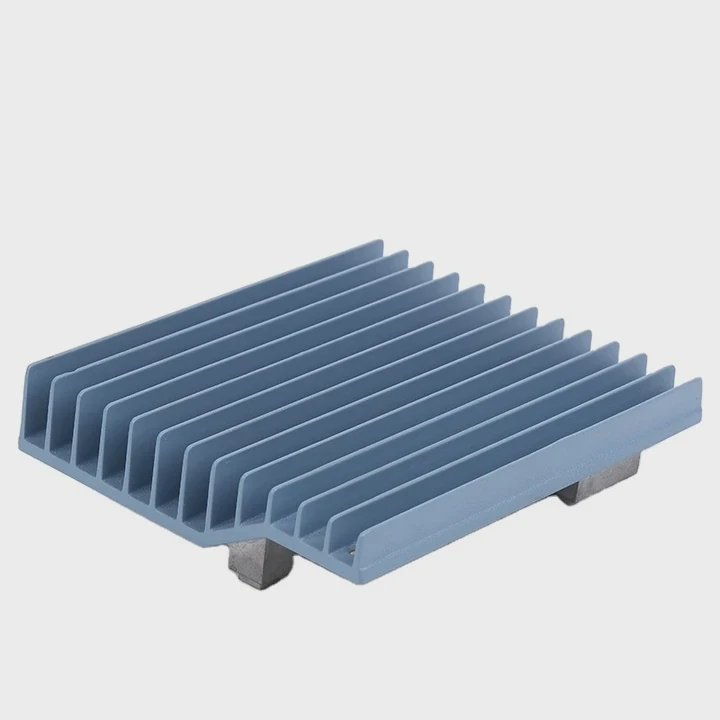
Measuring heat spread requires clear, repeatable metrics. These help engineers compare performance across different vapor chamber designs or to other heat spreaders.
Commonly Used Metrics
| Metric | Description | Typical Target |
|---|---|---|
| Thermal Resistance (θ) | Difference in temperature per watt (°C/W). Lower is better. | < 0.2 °C/W for high-performance designs |
| ΔT_max | Maximum temperature difference across the spreader surface. | ≤ 5°C for good uniformity |
| Temperature Standard Deviation (σ) | Variation of measured temperatures across points. | Low σ = consistent heat spread |
| Effective Thermal Conductivity (k_eff) | Modeled as a block’s lateral conductivity. High k_eff = better spreading. | > 5000 W/m·K in best designs |
| Thermal Spreading Resistance (θ_spread) | Part of θ due to lateral spreading inefficiency. Lower is better. | < 0.1 °C/W preferred |
| Response Time | Time to reach steady-state from cold start. | Faster is better, often seconds |
Each of these metrics gives insight into different aspects of performance. For instance, thermal resistance tells how efficiently heat moves from source to surface. ΔT_max and σ show how evenly the heat is spread. Effective conductivity is often used in simulations to model real-world performance.
Designers need to select the right mix of metrics for their application. A fast response time might matter in a pulsed laser system, while low spreading resistance might be more critical in a thin-profile mobile device.
Clear metrics also help communicate with customers. When a vapor chamber is rated with specific performance values, system designers can integrate it confidently into their designs. Your team can benefit by standardizing these measures across all product lines.
Conclusion
Heat-dispersion test results for vapor chambers are critical to evaluating thermal performance. These tests show how heat spreads, how uniform the surface remains, and how performance varies with orientation. Key metrics like thermal resistance, ΔT_max, and effective conductivity give a clear picture of how the vapor chamber performs under load. With these measurements, manufacturers and system integrators can ensure the chamber meets application demands in reliability, performance, and long-term stability.
TAGS
Latest Articles

Volume discount levels for heat sink orders?
Buyers often ask when heat sink prices start to drop with volume. Many worry they’re overpaying for small orders. This guide explains how B2B volume pricing works for thermal components. Heat sink
21 Dec,2025
Heat sink long-term supply contract options?
Many buyers want stable pricing and reliable delivery for heat sinks. But without a clear contract, risks grow over time. This article explores how to secure better long-term supply deals. Long-term
21 Dec,2025
Tooling cost for new heat sink profiles?
Many engineers struggle to understand why tooling for custom heat sinks costs so much. They worry about budgeting and production timelines. This article breaks down the cost drivers behind tooling.
21 Dec,2025
Heat sink custom sample process steps?
Sometimes, starting a custom heat sink project feels overwhelming—too many steps, too many unknowns, and too many risks. You want a sample, but not endless delays. The process for requesting and
20 Dec,2025
Standard B2B terms for heat sink payments?
When buyers and sellers in B2B heat sink markets talk about payment, many don’t fully understand what’s standard. This can lead to delayed orders, miscommunication, and even lost business
20 Dec,2025
Heat sink pricing factors for large orders?
Heat sinks are vital for many systems. When prices rise, projects stall and budgets break. This problem can hit teams hard without warning. Large order heat sink pricing depends on many factors. You
20 Dec,2025Related Articles
- Does Vapor Chamber need leak detection?
- Required tooling for Vapor Chamber manufacturing?
- How to estimate Vapor Chamber delivery time?
- Vapor Chamber machining cost breakdown?
- Noise impact of Vapor Chamber operation?
- Does Vapor Chamber need thermal insulation?
- Best alloy for Vapor Chamber enclosure?
- Standard inspection report for Vapor Chamber?
- Typical power rating for Vapor Chamber?
- Vapor Chamber process flow chart?
- Does Vapor Chamber require vacuum forming?
- Vapor Chamber compatibility with graphite sheet?
Author
Dr. Emily Chen
Chief AI Researcher
Leading expert in thermal dynamics and AI optimization with over 15 years of experience in data center efficiency research.
Categories
Latest Products






Recommend Categories
- Liquid cooling plate Manufacturer
- Industrial Heat Sink Manufacturer
- Standard Heat Sink Manufacturer
- Aluminum Heat Sink Manufacturer
- Copper Heat Sink Manufacturer
- Anodized Heatsink Manufacturer
- Stamping heat sink Manufacturer
- Die Casting Heatsink Manufacturer
- Soldering heat sink Manufacturer
- CNC Parts Manufacturer
Latest Products
- Wholesale Aluminum Radiator
- Water Cooling Plate Kit
- Water Cooling Heat Sink
- Water Cooling Heat Sink Kit
- Stainless Steel Water Distributor
- Server Water Cooling Plate Kit
- Server Liquid Cooling System
- Server Aluminum Cooling Kit
- S19 Full Cover Cooling Plate
- S19 Cooling Plate Kit
- S19 Aluminum Cooling Plate
Contact Expert
Have questions about this article? Reach out to our experts directly.