Vapor Chamber design for rugged environment?
Designing vapor chambers for harsh settings can feel impossible. Temperatures swing. Shocks hit. Moisture sneaks in. Electronics risk failure. A robust design saves devices from disaster.
A rugged vapor chamber must resist extreme heat, cold, shock, and moisture while moving heat reliably under tough conditions. It needs strong seams, durable materials, and careful assembly for long life in real use.
Continue reading to explore design steps, specs, testing, and material tricks for rugged vapor chambers.
How are Vapor Chambers designed for harsh environments?
Vapor chamber design for rough use must begin with strong structure. Weak build fails early under strain.
Design starts with a sealed, reinforced chamber that holds vacuum and resists deformation under stress. Engineers choose thick plates, secure welds, and redundancy in sealing to meet harsh requirements.
When designing a vapor chamber for harsh environments, the first concern is structural strength. A standard vapor chamber often uses thin plates and simple sealing because it works in controlled conditions. That fails in rugged use. For tough environments — say outdoor defense electronics, automotive under-hood modules, or aerospace equipment — the design must handle shock, vibration, pressure changes, and thermal cycles.
One key strategy is to use thicker metal plates, often aluminum or copper alloys, instead of thin foils. Thicker plates resist bending, denting or collapsing when the device around the chamber flexes or is jostled. The internal cavity must remain intact even under external pressure or vibration. Engineers calculate expected mechanical stress from real-world scenarios. They use safety margins (e.g., design for 2× or 3× the expected load) to ensure reliability.
Welds or brazed seams are critical. Simple soldered seams may crack under stress. Instead, robust welding such as laser welding, TIG welding, or brazing with high‑strength filler ensures the chamber stays sealed. Some designs also add reinforcement ribs or corrugations on outer plates. These act like architectural beams — they stiffen the plate and distribute stress across the surface rather than focusing it. That reduces risk of deformation or leaks.
Inside, the wick structure (the porous interior that moves liquid refrigerant) must stay firmly attached to the chamber walls. If the wick shifts or detaches under vibration, performance drops quickly. So the design often includes mechanical anchoring of wick, or strong bonding, rather than relying only on capillary adhesion. That ensures wick stays in place even under jarring motion.
Finally, sealing processes matter. Vacuum sealing in a clean, controlled environment removes contaminants and moisture. After sealing, some designs perform a flood test or helium leak test to verify integrity. For rugged use, these tests are mandatory. They catch micro‑leaks that could expand under pressure cycles or temperature swings.
Thus, design for harsh environments means thick materials + strong welds + mechanical wick anchoring + strict sealing and testing. That makes a vapor chamber ready for real world, not just lab conditions.
What specs are needed for ruggedized Vapor Chambers?
Rugged vapor chambers need more than heat removal metrics. The build must meet harsh environment specs.
Important specs include: wall thickness, pressure tolerance, thermal performance under extremes, sealing quality, and material durability under cycles. These specs guide quality control and design verification early on.
When engineers specify a rugged vapor chamber, they set thresholds for mechanical, thermal, and environmental performance. These specs become standards for design, testing, and production quality. Key spec categories:
Thermal performance
- Thermal resistance (°C/W) under load and ambient extremes
- Maximum heat flux (W/cm²) under continuous load
- Thermal cycling capability (how many cycles between low and high temp before failure)
Mechanical strength
- Wall thickness (mm) or plate gauge
- Maximum internal/external pressure difference (kPa or bar) that chamber can withstand
- Maximum bending or flex under given external load
Environmental durability
- Sealing tightness (leak rate, e.g. helium leak test < 1×10⁻⁶ Torr·L/s)
- Moisture ingress tolerance (humidity cycles, salt fog exposure if needed)
- Corrosion resistance if required (for metal surfaces, coatings, or plating)
Lifespan and reliability
- Expected lifetime under load (hours of continuous operation)
- Mean time between failure (MTBF) under shock/vibration cycles
- Thermal performance stability over time and cycles
Below is a table summarizing typical spec ranges for rugged vapor chambers:
| Spec Category | Typical Rugged Spec Range |
|---|---|
| Wall thickness | 1.5 mm – 3.0 mm (aluminum or copper alloy) |
| Pressure tolerance | ±100 kPa (or higher depending on use) |
| Leak rate (helium test) | < 1×10⁻⁶ Torr·L/s |
| Heat flux capacity | 20 – 60 W/cm² (depends on design) |
| Thermal cycling | ≥ 500 cycles between –40 °C and +85 °C |
| Moisture/humidity resistance | Salt spray or humidity cycles as needed |
Designers must adapt specs to actual application. For military gear, salt spray and shock might be required. For telecom base stations, long life and thermal cycling matter more. For industrial machines, pressure and dust sealing might matter more. The spec sheet becomes a contract between designer, buyer, and tester.
Rigorous specifications help ensure consistency across batches. Without those specs, vapor chamber performance may vary widely. Errors in wall thickness, weld quality, or sealing can lead to leaks, reduced thermal performance, or complete failure. That makes the device unreliable and unsafe. Good specs give confidence in long‑term stability.
Are shock and vibration tests done for such designs?
Many rugged designs include shock and vibration tests. Without them, chamber may fail early under real conditions.
Yes. Shock, vibration, and environmental stress tests are common to certify rugged vapor chambers. These tests mimic real world shocks, drops, drops from height, road vibration, and extreme temperature cycles to ensure reliability.
When designing a vapor chamber for a harsh environment, passing shock and vibration testing is as important as thermal performance. The tests ensure that the chamber stays sealed, the internal wick stays intact, and the thermal conduction path remains functional even after repeated stress.
Typical tests include:
- Drop tests — chamber (or full device) is dropped from certain heights onto hard surfaces. This tests weld integrity, wall strength, and weld seams.
- Vibration tests — during vibration, internal components shake. This tests if wick bonding fails or if internal structure loosens. Vibrations may simulate transportation, machine operation, or vehicle motion.
- Thermal shock cycles — rapid switching from low to high temperature to test expansion/contraction stresses on welds and seals.
- Humidity cycling or salt spray tests — to test corrosion or seal degradation under moisture.
During such tests, designers monitor for leaks (via pressure decay or helium leak detection), changes in thermal resistance, or structural damage.
If chamber fails leak or performance thresholds, they redesign welds, choose different materials, or add reinforcements. That process repeats until chamber passes all tests reliably.
Here is a simplified sample test schedule often used:
| Test Type | Conditions | Pass Criteria |
|---|---|---|
| Drop test | 1.5 m drop onto steel plate | No cracks, no leaks, chamber holds vacuum |
| Vibration test | 5–500 Hz sweep, 3 hours per axis | No loosening, wick intact, thermal performance ok |
| Thermal shock | –40 °C ↔ +85 °C, 100 cycles | No leaks, stable thermal resistance |
| Humidity/salt spray | 85% RH, 35 °C, 48–96 hours | No corrosion, no degradation of sealing |
These tests help reveal hidden flaws early. They help ensure the vapor chamber works not only in lab but also in real life — under motion, stress, and environmental strain. Without those tests, a seemingly robust chamber might still fail when deployed.
Can materials be reinforced for extreme conditions?
Material choice and reinforcement matter a lot under extreme conditions. Stronger materials or added reinforcements can make a big difference.
Yes. Designers often reinforce materials using thicker metals, alloy selections, surface treatments, and added structural supports to endure extreme conditions. The choice depends on environment and expected risks.
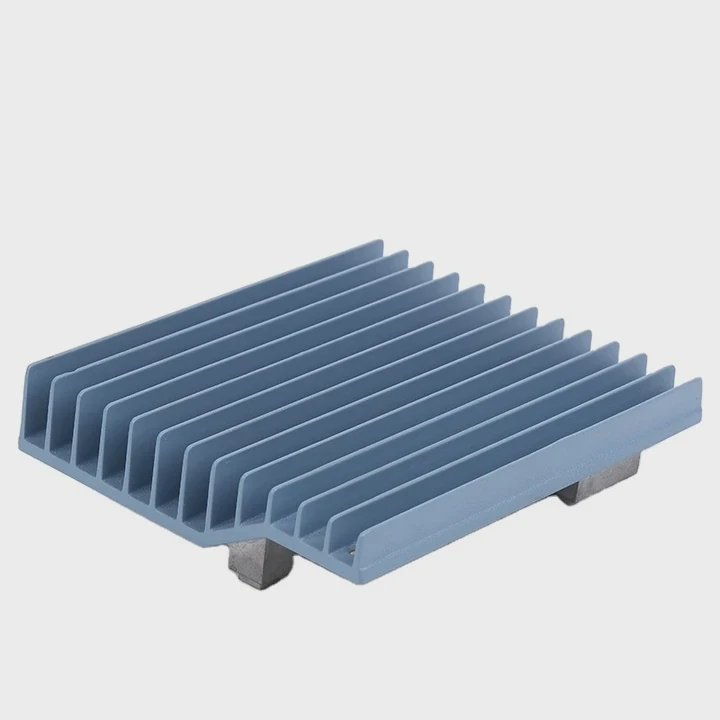
When using a vapor chamber in extreme conditions — such as high mechanical stress, corrosive environment, wide temperature swings, or pressurized surroundings — material and reinforcement strategies help make the design rugged.
Material selection
Designers often pick alloys with high strength, good thermal conductivity, and good corrosion resistance. Examples:
- Aluminum alloys (e.g. 6061‑T6 or 6063) — lighter weight, good conductivity, easier to machine and weld.
- Copper alloys (e.g. C11000, or copper‑nickel alloy) — very high thermal conductivity, but heavier and risk corrosion in some environments.
- Stainless steel (for outer shell) combined with aluminum or copper inner cavity — to resist corrosion and external damage.
Surface treatments and coatings
If environment involves moisture, salt spray, or corrosive chemicals, the outer shell can be anodized (for aluminum) or plated (for copper). Coating helps resist corrosion. It also helps maintain sealing surface over time.
Structural reinforcements
Designers often add ribs, corrugations, or flanges to outer plates. These serve like support beams. They give extra stiffness and prevent bending or warping under pressure or shock. They help the chamber keep shape even under external force.
Also designers sometimes embed the chamber in a support frame or bracket that limits deformation. This bracket may be part of the device housing. The bracket takes external mechanical load instead of letting the chamber absorb all stress. That separation improves both thermal and mechanical reliability.
Internal wick reinforcement
To avoid wick collapse or displacement under shock, the wick can be anchored or glued plus mechanically riveted. A composite wick (metal mesh plus sintered powder) can offer both capillary action and structural support. That improves durability and performance under vibration or acceleration.
Using reinforced materials and design features helps a vapor chamber survive extremes. But reinforcement can trade off with thermal performance (more metal mass slows thermal response) or weight. Designers must balance thermal needs with ruggedness. In most rugged applications, reliability wins.
Conclusion
Rugged vapor chamber design must combine strong materials, precise sealing, and real‑world testing. Layered reinforcements and robust specs make heat solutions survive tough conditions. Thoughtful design keeps devices cool and reliable when it matters most.
TAGS
Latest Articles

Volume discount levels for heat sink orders?
Buyers often ask when heat sink prices start to drop with volume. Many worry they’re overpaying for small orders. This guide explains how B2B volume pricing works for thermal components. Heat sink
21 Dec,2025
Heat sink long-term supply contract options?
Many buyers want stable pricing and reliable delivery for heat sinks. But without a clear contract, risks grow over time. This article explores how to secure better long-term supply deals. Long-term
21 Dec,2025
Tooling cost for new heat sink profiles?
Many engineers struggle to understand why tooling for custom heat sinks costs so much. They worry about budgeting and production timelines. This article breaks down the cost drivers behind tooling.
21 Dec,2025
Heat sink custom sample process steps?
Sometimes, starting a custom heat sink project feels overwhelming—too many steps, too many unknowns, and too many risks. You want a sample, but not endless delays. The process for requesting and
20 Dec,2025
Standard B2B terms for heat sink payments?
When buyers and sellers in B2B heat sink markets talk about payment, many don’t fully understand what’s standard. This can lead to delayed orders, miscommunication, and even lost business
20 Dec,2025
Heat sink pricing factors for large orders?
Heat sinks are vital for many systems. When prices rise, projects stall and budgets break. This problem can hit teams hard without warning. Large order heat sink pricing depends on many factors. You
20 Dec,2025Related Articles
- Vapor Chamber cooling for edge computing?
- Application of Vapor Chamber in servers?
- Vapor Chamber industry risk analysis?
- Can Vapor Chamber enhance renewable energy products?
- Vapor Chamber impact on energy efficiency?
- Sustainable materials for Vapor Chamber production?
- How to scale Vapor Chamber production?
- Vapor Chamber used in military-grade devices?
- New techniques for Vapor Chamber processing?
- Vapor Chamber ducting requirements?
- Vapor Chamber heat spreading efficiency?
- How to assemble Vapor Chamber prototypes?
Author
Dr. Emily Chen
Chief AI Researcher
Leading expert in thermal dynamics and AI optimization with over 15 years of experience in data center efficiency research.
Categories
Latest Products






Recommend Categories
- Liquid cooling plate Manufacturer
- Industrial Heat Sink Manufacturer
- Standard Heat Sink Manufacturer
- Aluminum Heat Sink Manufacturer
- Copper Heat Sink Manufacturer
- Anodized Heatsink Manufacturer
- Stamping heat sink Manufacturer
- Die Casting Heatsink Manufacturer
- Soldering heat sink Manufacturer
- CNC Parts Manufacturer
Latest Products
- Wholesale Aluminum Radiator
- Water Cooling Plate Kit
- Water Cooling Heat Sink
- Water Cooling Heat Sink Kit
- Stainless Steel Water Distributor
- Server Water Cooling Plate Kit
- Server Liquid Cooling System
- Server Aluminum Cooling Kit
- S19 Full Cover Cooling Plate
- S19 Cooling Plate Kit
- S19 Aluminum Cooling Plate
Contact Expert
Have questions about this article? Reach out to our experts directly.