Vapor Chamber heat spreading efficiency?
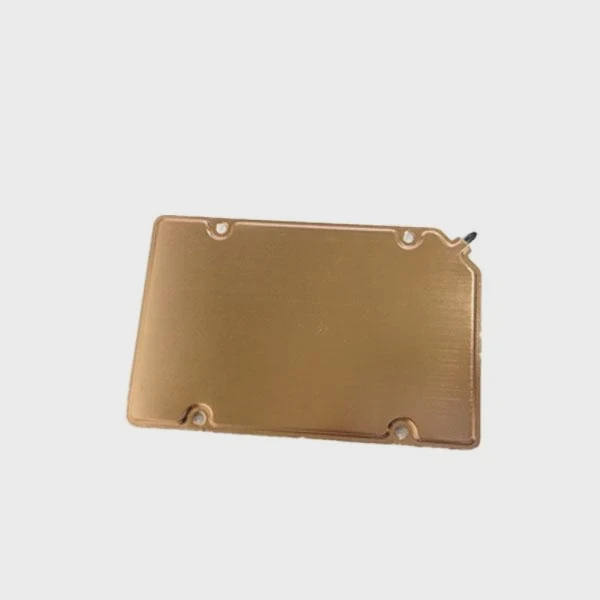
Heat buildup in compact electronics can kill performance fast. Without good spreaders, hotspots shorten life.
Vapor chambers deliver rapid, uniform heat spreading over a large area, often cutting thermal resistance and hot‑spot temperature by 30–60%. They boost reliability and cooling for high‑power devices.
Upgrade from metal plates to vapor chambers can transform thermal design. Below we explore how, why, and how to measure this gain.
How efficient are Vapor Chambers at spreading heat?
Heat concentration often damages chips or power components. Vapor chambers step in to solve that fast.
Vapor chambers spread heat so quickly and broadly that they outperform solid metal plates and often rival bulky heat‑pipe arrays with much lower thickness.
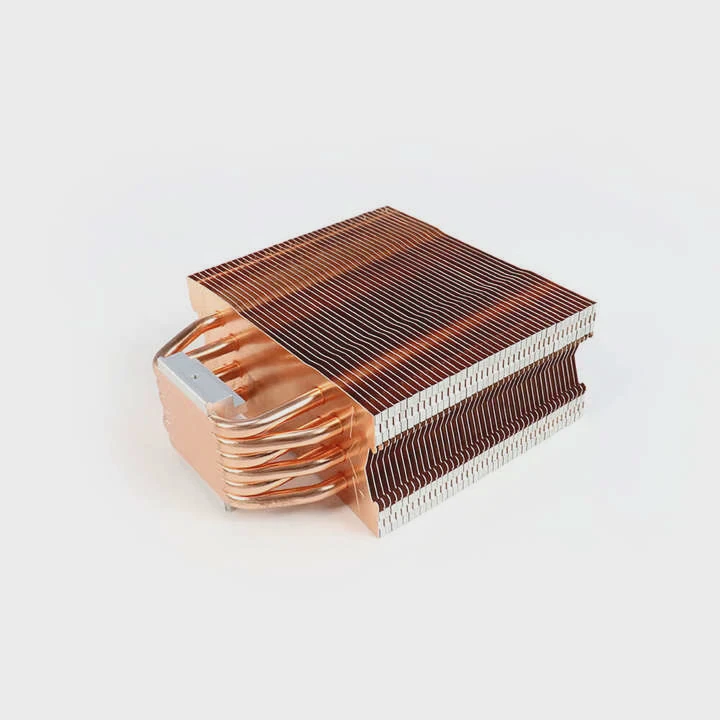
How vapor chambers achieve high spread efficiency
A vapor chamber is like a flat, sealed heat‑pipe. Inside, a working fluid evaporates at hot spots, travels as vapor, condenses on cooler walls, and returns via a wick or channel micro‑structure. This phase change and the internal vapor flow deliver heat over the whole chamber area nearly instantly. As a result, the baseplate temperature becomes uniform fast and heat moves laterally to fins or housings for dissipation.
Compared to a solid copper or aluminum plate, the vapor chamber’s internal mechanism bypasses slow conduction. The thermal resistance of a typical vapor chamber base can fall to 0.05–0.2 °C/W for a 50 mm × 50 mm footprint under high load. A similar solid metal plate might show 0.5–1.0 °C/W depending on thickness. This difference means hotspots stay cooler by 20–40 °C under same power in many applications.
Below is a simplified comparison of vapor chambers, solid plates, and heat‑pipe arrays:
| Cooling Solution | Typical Thickness | Thermal Resistance (50 W over 50 × 50 mm) | Lateral Heat Spread Radius* | Bulkiness / Volume |
|---|---|---|---|---|
| Vapor Chamber | 2–4 mm | 0.05–0.2 °C/W | ~25–35 mm from center | Very low profile |
| Solid Copper Plate | 3–6 mm | 0.5–1.0 °C/W | ~10–15 mm | Low profile, dense |
| Heat‑pipe + Plate Array | 6–15 mm overall | 0.1–0.3 °C/W (depends on design) | Varies with pipe layout | Higher thickness/volume |
* “Heat Spread Radius” described here as the radial distance from a central heat source over which temperature rise stays within 5 °C of center.
Many engineers find vapor chambers hit a sweet spot: very low thickness, low thermal resistance, and wide lateral spread. For slim devices or tightly packed power modules, that is hard to match.
Moreover, vapor chambers respond fast — heat pulses (e.g. start‑up surges) distribute quickly. That reduces thermal stress on components. In many tests, power transients up to several hundred watts cause only 10–15 °C temperature rise at hotspot when chamber is well designed.
In real systems — laptops, high‑power LEDs, telecom modules — this improved spread translates to lower junction temperatures, longer lifetime of electronics, and safer performance under sustained load. For renewable energy inverters or power electronics, this efficiency helps sustain continuous operation with minimal risk of localized overheating.
What metrics define heat spreading performance?
Understanding “efficient” needs numbers. Several metrics help engineers evaluate heat‑spread quality and performance.
Key metrics include thermal resistance, thermal conductivity, temperature uniformity, spreading radius, and transient response time. These capture how well and how fast a vapor chamber spreads heat.
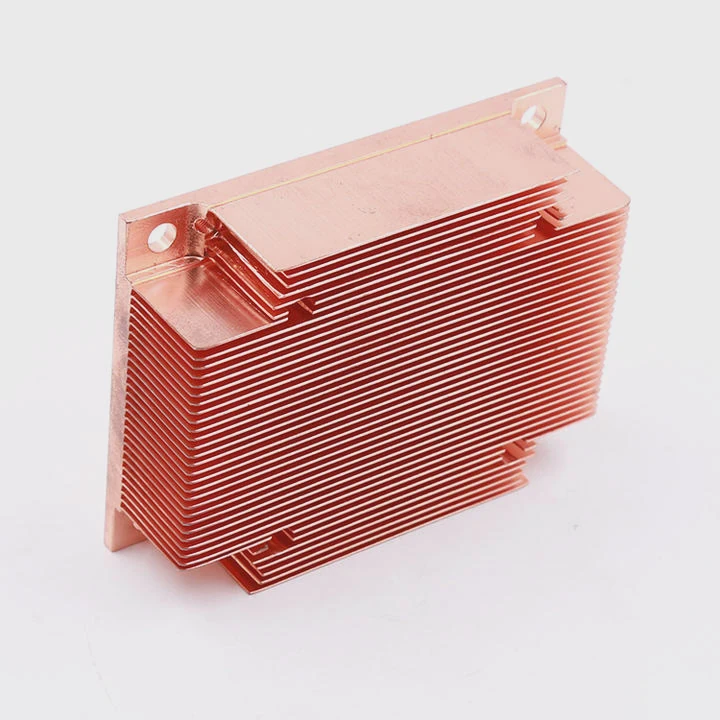
Important performance metrics for spreaders
Here is a table summarizing major metrics, their meaning, and typical values for vapor chambers:
| Metric / Term | Meaning | Typical Vapor Chamber Range |
|---|---|---|
| Thermal Resistance (R_th) | Temperature rise per watt — lower is better | 0.05–0.3 °C/W (for small bases) |
| Thermal Conductivity (k_eff) | Effective conductivity of whole spreader | 10,000 – 50,000 W/m·K (effective) |
| Spreading Radius / Area | Area over which heat spreads uniformly | 2–5 times hotspot area |
| Temperature Uniformity ΔT | Max temperature difference across surface | < 5–10 °C under load |
| Transient Response Time | Time to reach steady‑state or uniform temp | < 5–30 seconds (load dependent) |
| Mass / Thickness / Profile | Physical size affecting integration | 2–5 mm thickness typical |
What these metrics tell us
- Thermal Resistance (R_th): lower means better heat passage. A well‑designed vapor chamber can cut R_th by 5–10× compared to solid plates, meaning heat moves away much faster.
- Effective Conductivity (k_eff): this is not the copper conductivity alone — it reflects how efficiently the vapor chamber spreads heat over area. High k_eff means the chamber is acting like a super conductor for spreading heat.
- Spreading Radius & Uniformity: good spreaders move heat across a large area so that external fins or shells can dissipate it. Uniform surface temperature ensures no small hot zones that stress components.
- Transient Response: systems that turn power on/off or face variable load need quick heat spreading to avoid spikes. Fast response avoids thermal shock and improves reliability.
- Profile / Thickness: in many modern designs, low thickness and low mass are crucial. Vapor chambers offer high performance without bulky heat‑pipe arrays or thick metal blocks.
Engineers choose which metrics matter most by their application. High‑power, compact electronics favor low R_th and high uniformity. Systems with frequent power swings emphasize transient response. Large systems that dissipate heat via housings focus on spreading area and radius. Vapor chambers often meet or exceed all these metrics — making them a go‑to for high‑density, high‑power cooling tasks.
Does thickness affect thermal uniformity?
Slim designs often demand thin spreaders. But thin profile may bring trade‑offs.
Yes. Vapor chamber thickness influences how uniformly heat spreads. Too thin may constrain working fluid volume and vapor flow, reducing uniformity. Optimal thickness balances performance and integration needs.

How thickness impacts performance and uniformity
A vapor chamber must contain vapor space and a wick or micro‑structure for fluid return. If the chamber is too thin — say under 2 mm — internal void and wick volume shrink. That limits vapor flow and reduces effective spreading area. Heat may still spread a bit, but temperature gradients can appear.
In contrast, a very thick chamber (5–8 mm) has more vapor volume and better vapor circulation. That often improves uniformity and handling of high heat flux. But thick chambers add bulk, weight, and may complicate integration in thin devices.
Here are some practical effects of thickness:
- Thin chambers (1.5–2.5 mm): good for slim devices, but spread radius small. Under high power, hot spots may emerge at edges.
- Medium thickness (3–4 mm): good balance. Enough vapor space for effective spread, yet slim enough for many electronics.
- Thick chambers (5–8 mm): optimal thermal uniformity. Better transient handling. Better for power modules or industrial electronics where volume is allowed.
Some engineers use stepped or variable-thickness designs. They apply thicker vapor chamber near high‑power zones and thinner elsewhere. This customizes spread efficiency without waste.
Real‑world considerations
- Manufacturing constraints: thinner chambers demand precise brazing or welding to seal. Even small warping or uneven welding can cause poor contact or leak.
- Internal wick design: for thin chambers, wick porosity or channel design must optimize fluid return under gravity or capillary forces. That adds complexity, cost, and quality control demands.
- Integration and contact surface: thin chambers improve contact with chips or modules with minimal interface gap. That reduces thermal contact resistance. However, uneven surface or warpage in thin chambers can worsen contact resistance, defeating the benefit.
- Mechanical durability: thick chambers better resist bending, vibration, or pressure changes. Thin chambers may deform under clamping or thermal cycling, causing failure or leak.
In many cases, mid‑thickness vapor chambers (around 3–4 mm) deliver the best trade‑off. They spread heat widely and uniformly while remaining slim. For industrial systems where space allows, a thicker chamber ensures more robust, reliable heat spreading and uniform surface temperature even under heavy or sustained load.
Are tests available for spread rate comparison?
Good thermal design demands proof. Engineers run tests to show how fast and how well a spreader works under load.
Yes. Engineers use standardized and custom tests — thermal imaging, thermocouples, cycling, leak checks — to compare vapor chambers, metal plates, and heat‑pipe arrays under same load conditions. Results show real spread rate and uniformity.
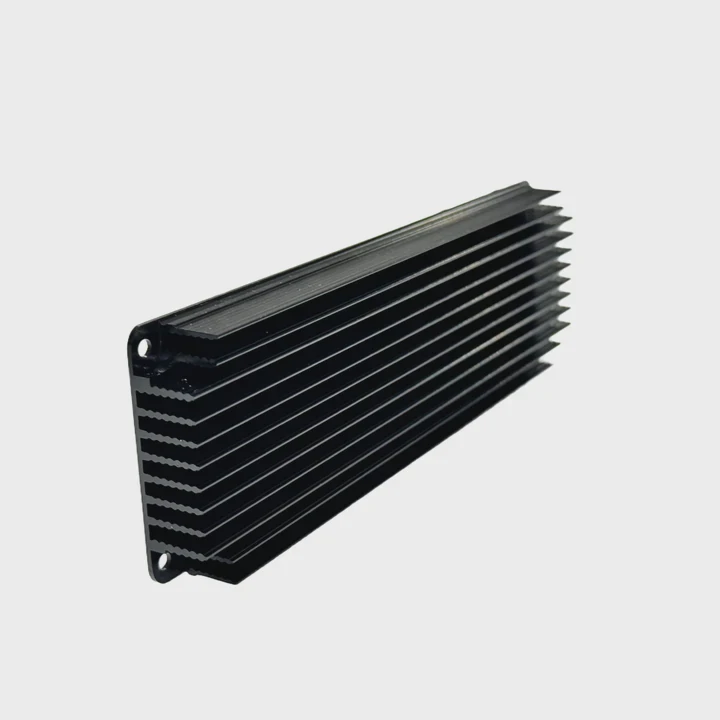
Common tests and how they show performance
Many labs or manufacturers run the following:
- Steady‑state heating test: apply fixed wattage via heater block to a small spot. Mount spreader. Use thermocouples or IR camera to map temperature across surface. Compare max temperature and temperature difference.
- Transient heating test: apply pulse loads (e.g. 10–100 W for 10–60 seconds). Record how quickly surface reaches uniform temperature. That shows dynamic spreading performance.
- Thermal cycling test: repeat heating and cooling cycles hundreds or thousands of times. Check whether spreading efficiency degrades — good for long‑term reliability.
- Leak and vacuum test: ensure internal pressure and fluid remain sealed. A leak destroys vapor‑phase path and kills spreading efficiency.
Here is a table of common test methods and what they measure:
| Test Method | What It Measures | Key Result to Check |
|---|---|---|
| Steady‑State IR Mapping | Surface temperature distribution under load | Peak temp, spread area, ΔT across surface |
| Transient Response Test | How fast heat spreads when power changes | Time to reach 90% of final uniform temp |
| Thermal Cycling | Long‑term performance under repeated load | Degradation of R_th or non-uniformity over cycles |
| Vacuum / Leak Test | Seal integrity and vapor‑phase maintenance | Leak rate, internal pressure drop |
Example: comparing spread rate
A test between two spreaders (a vapor chamber and a plain copper plate) used a 50 W heater over 10 × 10 mm area. After 30 s, surface temperature was:
- Copper plate: 85 °C at center, 70 °C at 20 mm away → ΔT = 15 °C
- Vapor chamber: 65 °C at center, 62 °C at 20 mm away → ΔT = 3 °C
This shows how vapor chamber spreads fast and keeps uniform temperature across a wider area.
Many public datasheets from vapor chamber manufacturers include such thermal maps. Engineers rely on them to select the right spreader for their cooling system.
Some organizations even use environmental tests: humidity, vibration, shock — to simulate real‑world conditions for laptops or outdoor power electronics. That ensures vapor chambers hold up under mechanical and thermal stress while preserving spread efficiency.
Quality labs often pair these tests with thermal resistance measurements (junction‑to‑ambient) to show end‑to‑end cooling benefit when vapor chamber integrates with heat sinks or housings.
Conclusion
Vapor chambers deliver high heat‑spreading efficiency. They outperform solid plates in resistance, uniformity, and speed. Key metrics and tests confirm their strength. Choosing appropriate thickness and validated design ensures reliable thermal performance. For compact, high‑power devices, vapor chambers are often the best heat spreaders today.
TAGS
Latest Articles

Volume discount levels for heat sink orders?
Buyers often ask when heat sink prices start to drop with volume. Many worry they’re overpaying for small orders. This guide explains how B2B volume pricing works for thermal components. Heat sink
21 Dec,2025
Heat sink long-term supply contract options?
Many buyers want stable pricing and reliable delivery for heat sinks. But without a clear contract, risks grow over time. This article explores how to secure better long-term supply deals. Long-term
21 Dec,2025
Tooling cost for new heat sink profiles?
Many engineers struggle to understand why tooling for custom heat sinks costs so much. They worry about budgeting and production timelines. This article breaks down the cost drivers behind tooling.
21 Dec,2025
Heat sink custom sample process steps?
Sometimes, starting a custom heat sink project feels overwhelming—too many steps, too many unknowns, and too many risks. You want a sample, but not endless delays. The process for requesting and
20 Dec,2025
Standard B2B terms for heat sink payments?
When buyers and sellers in B2B heat sink markets talk about payment, many don’t fully understand what’s standard. This can lead to delayed orders, miscommunication, and even lost business
20 Dec,2025
Heat sink pricing factors for large orders?
Heat sinks are vital for many systems. When prices rise, projects stall and budgets break. This problem can hit teams hard without warning. Large order heat sink pricing depends on many factors. You
20 Dec,2025Related Articles
- Vapor Chamber ducting requirements?
- New techniques for Vapor Chamber processing?
- Vapor Chamber used in military-grade devices?
- How to scale Vapor Chamber production?
- Vapor Chamber design for rugged environment?
- Vapor Chamber cooling for edge computing?
- How to assemble Vapor Chamber prototypes?
- How thin can Vapor Chamber be?
- Vapor Chamber support for AI chips?
- Vapor Chamber impact on GPU performance?
- Best joining method for Vapor Chamber?
- Vapor Chamber lifecycle assessment data?
Author
Dr. Emily Chen
Chief AI Researcher
Leading expert in thermal dynamics and AI optimization with over 15 years of experience in data center efficiency research.
Categories
Latest Products






Recommend Categories
- Liquid cooling plate Manufacturer
- Industrial Heat Sink Manufacturer
- Standard Heat Sink Manufacturer
- Aluminum Heat Sink Manufacturer
- Copper Heat Sink Manufacturer
- Anodized Heatsink Manufacturer
- Stamping heat sink Manufacturer
- Die Casting Heatsink Manufacturer
- Soldering heat sink Manufacturer
- CNC Parts Manufacturer
Latest Products
- Wholesale Aluminum Radiator
- Water Cooling Plate Kit
- Water Cooling Heat Sink
- Water Cooling Heat Sink Kit
- Stainless Steel Water Distributor
- Server Water Cooling Plate Kit
- Server Liquid Cooling System
- Server Aluminum Cooling Kit
- S19 Full Cover Cooling Plate
- S19 Cooling Plate Kit
- S19 Aluminum Cooling Plate
Contact Expert
Have questions about this article? Reach out to our experts directly.