How to assemble Vapor Chamber prototypes?
Engineers often struggle to turn vapor chamber concepts into real prototypes. This challenge can delay projects and waste resources when thermal demands are urgent.
A vapor chamber prototype can be built using a step‑by‑step process with common lab tools, careful assembly, and standardized methods instead of full automation.
Many teams assume that vapor chamber assembly requires advanced production lines, but the truth is different. With basic fabrication skills and precise handling, prototypes are achievable even in early-stage development. Let’s explore how.
What are the steps to build Vapor Chamber prototypes?
Prototype development usually fails because teams jump too fast into mass production. Every chamber needs structured steps that follow thermal engineering logic.
The prototype process includes material preparation, wick formation, support structure design, sealing, vacuuming, fluid filling, and performance testing.
To help engineers work clearly, I follow this simplified flow that works well during early testing and design validation.
Core Steps in Prototype Assembly
1. Material Selection and Preparation
Choose the base material based on heat conductivity, weight, and cost. Common choices are copper, copper alloy, and aluminum alloy. Sheets are cut to the required size and thickness.
2. Wick Fabrication
The wick structure supports capillary movement. Sintered metal powder, metal mesh, or foam can be used. For thin chambers, powder sintering or mesh lamination works well.
3. Internal Support Structure
To prevent deformation under vacuum, I design supporting pillars or ribs inside the chamber. These must allow vapor flow and liquid return.
4. Casing Assembly and Sealing
Upper and lower plates or stamped shells are aligned and bonded using brazing, diffusion bonding, laser welding, or FSW techniques. The seal must be airtight.
5. Vacuuming and Filling
The chamber is evacuated to remove gas and moisture. Working fluid—often deionized water—is filled with controlled quantity. The fill port is sealed.
6. Testing and Validation
Prototype performance is checked using thermocouples and heating modules. We observe temperature spread, dry-out behavior, pressure stability, and thermal resistance.
Summary Table: Prototype Build Flow
| Step | Main Task | Key Goal | Typical Tools |
|---|---|---|---|
| 1 | Cut chamber material | Form external shell | Metal cutter, press |
| 2 | Create wick layer | Capillary system | Sintering furnace |
| 3 | Add support | Prevent collapse | CNC, welding |
| 4 | Seal chamber | Gas-tight enclosure | Brazing/welding |
| 5 | Vacuum & fill | Remove air, add fluid | Pump + injector |
| 6 | Test prototype | Validate thermal spread | Heater + sensors |
Each step needs simple process control. There is no need for expensive production lines at the early stage. A structured prototype saves time and gives real thermal insight before finalizing design.
Are standard tools sufficient for prototype assembly?
Many teams fear that vapor chambers require advanced machinery. This belief often blocks innovation and slows development.
Yes. Most vapor chamber prototypes can be built using normal metal fabrication tools, welding equipment, a vacuum pump, and a basic test bench.
What matters most is precision and cleanliness, not automation. Standard machine tools, if operated carefully, can handle the tasks needed for a small batch of prototypes. It is important to track quality using simple checklists and repeatable settings.
Core Tools for Vapor Chamber Prototypes
Most functional prototypes can be built with the following setup:
| Tool / Equipment | Purpose | Required for Prototype? |
|---|---|---|
| Sheet metal cutter | Cutting external shell | Yes |
| Press or bending tool | Forming shell shape | Yes |
| Sintering furnace | Wick creation | Recommended |
| CNC / milling | Internal supports | Optional |
| Welding / brazing tool | Sealing chamber | Yes |
| Vacuum pump | Evacuation process | Yes |
| Fluid fill device | Adding working fluid | Yes |
| Test rig | Thermal validation | Yes |
This toolkit can be found in many fabrication workshops. By adding vacuum control and leak testing, a basic vapor chamber prototype becomes fully achievable. Even small engineering teams can perform it.
Prototype Without Automation
I have seen prototypes built using only manual CNC operations, low-cost welding, and hand-made wick structures. They were not perfect, but they proved thermal performance successfully. That proof opened the door to investment and large-scale design development later.
Can prototypes be made without full automation?
Many R&D teams assume vapor chamber assembly must be automated. That is not true at early stages.
Prototypes can be produced manually or semi-manually, allowing flexible revisions and fast thermal testing.
During early tests, I prefer manual control for several reasons:
Advantages of Non-Automated Prototypes
✔ Faster Design Iteration
Quick changes to wick geometry, fluid volume, or thickness help us learn more in less time.
✔ Lower Investment
There is no need to invest in mass-production tools until the design is validated.
✔ Hands-on Thermal Knowledge
Manual assembly builds deep understanding of heat behavior that cannot be learned through simulation only.
✔ Flexible Testing
We can isolate failures, change one parameter at a time, and study their effects without shutting down a production cell.
Considerations for Manual Assembly
Prototype accuracy depends on careful handling:
- Every weld must be clean.
- Wick must be fully saturated during filling.
- Fluid must match design pressure and operating temperature.
- Vacuum level must reach specified range.
- Internal supports must not block vapor flow.
Below is a comparison between prototype and automated production:
| Aspect | Manual Prototype | Full Automation |
|---|---|---|
| Speed | Slower | Fast |
| Cost | Low | High |
| Flexibility | High | Low |
| Stability | Medium | High |
| Learning depth | High | Low |
When engineers build prototypes by hand, they understand the vapor chamber behavior more deeply. That experience helps when finalizing design for mass production.
Is cleanroom assembly required for prototypes?
Clean assembly is important, but it does not need to follow semiconductor-level standards.
No. Most vapor chamber prototypes do not require high-grade cleanrooms, but they do require a clean and dry assembly environment.
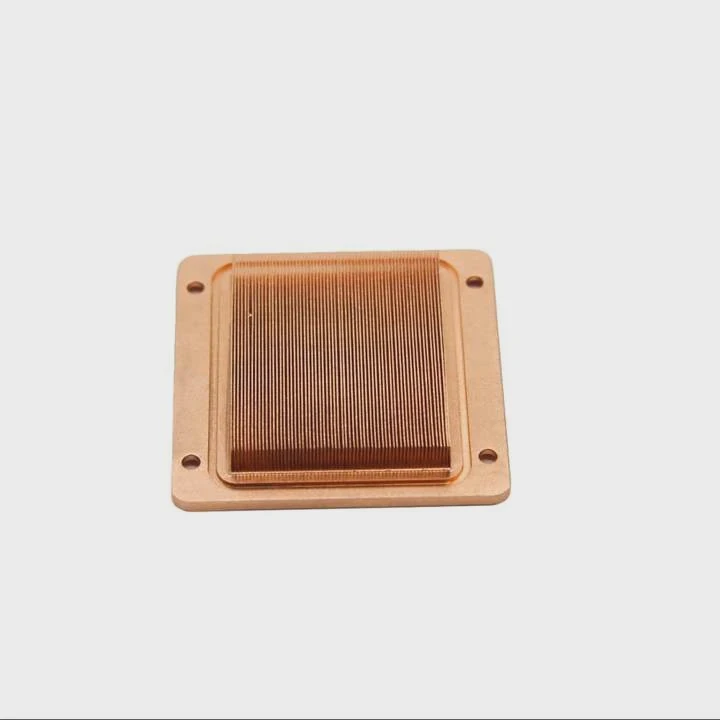
Humidity, dust, or oil contamination may ruin the wick structure and cause problems inside the chamber. If fluid quality is compromised, capillary action may become unstable. Therefore, basic cleanliness is essential.
Suitable Assembly Environment
Below are reasonable prototype-level requirements:
| Requirement Level | Suitable For Prototype? | Explanation |
|---|---|---|
| Normal workshop | Yes | If dust and oil are controlled |
| Clean workbench | Yes | Preferred for sealing and filling |
| Full cleanroom | Not required | Only needed for high-precision final products |
| Controlled humidity room | Optional | Useful for consistent results |
Critical Clean Steps
During specific stages, precision must be higher:
Wick Placement
Wick material must be free from oil or particles.
Sealing
Any micro-contaminant may weaken the weld or brazed joints.
Vacuum + Fluid Filling
Inside contamination affects capillary flow and can shorten prototype lifespan.
Storage After Assembly
Fluid evaporation and oxidation can occur if not sealed correctly.
Focus on Process Control
The real goal is not cleanliness alone but controlled assembly. If every step is tracked, documented, and repeatable, prototypes can succeed even without a sterile lab.
By following standard cleaning routine and handling materials properly, engineers can produce successful vapor chamber prototypes that work well in early-stage thermal testing.
Conclusion
Prototype vapor chambers do not need advanced factories. With structured steps, standard tools, careful sealing, and clean operation, functional prototypes are possible even at the R&D stage. This approach builds knowledge, enables fast iteration, and prepares teams for future mass production.
TAGS
Latest Articles

Volume discount levels for heat sink orders?
Buyers often ask when heat sink prices start to drop with volume. Many worry they’re overpaying for small orders. This guide explains how B2B volume pricing works for thermal components. Heat sink
21 Dec,2025
Heat sink long-term supply contract options?
Many buyers want stable pricing and reliable delivery for heat sinks. But without a clear contract, risks grow over time. This article explores how to secure better long-term supply deals. Long-term
21 Dec,2025
Tooling cost for new heat sink profiles?
Many engineers struggle to understand why tooling for custom heat sinks costs so much. They worry about budgeting and production timelines. This article breaks down the cost drivers behind tooling.
21 Dec,2025
Heat sink custom sample process steps?
Sometimes, starting a custom heat sink project feels overwhelming—too many steps, too many unknowns, and too many risks. You want a sample, but not endless delays. The process for requesting and
20 Dec,2025
Standard B2B terms for heat sink payments?
When buyers and sellers in B2B heat sink markets talk about payment, many don’t fully understand what’s standard. This can lead to delayed orders, miscommunication, and even lost business
20 Dec,2025
Heat sink pricing factors for large orders?
Heat sinks are vital for many systems. When prices rise, projects stall and budgets break. This problem can hit teams hard without warning. Large order heat sink pricing depends on many factors. You
20 Dec,2025Related Articles
- Vapor Chamber heat spreading efficiency?
- Vapor Chamber ducting requirements?
- New techniques for Vapor Chamber processing?
- Vapor Chamber used in military-grade devices?
- How to scale Vapor Chamber production?
- Vapor Chamber design for rugged environment?
- How thin can Vapor Chamber be?
- Vapor Chamber support for AI chips?
- Vapor Chamber impact on GPU performance?
- Best joining method for Vapor Chamber?
- Vapor Chamber lifecycle assessment data?
- Environmental impact of Vapor Chamber disposal?
Author
Dr. Emily Chen
Chief AI Researcher
Leading expert in thermal dynamics and AI optimization with over 15 years of experience in data center efficiency research.
Categories
Latest Products






Recommend Categories
- Liquid cooling plate Manufacturer
- Industrial Heat Sink Manufacturer
- Standard Heat Sink Manufacturer
- Aluminum Heat Sink Manufacturer
- Copper Heat Sink Manufacturer
- Anodized Heatsink Manufacturer
- Stamping heat sink Manufacturer
- Die Casting Heatsink Manufacturer
- Soldering heat sink Manufacturer
- CNC Parts Manufacturer
Latest Products
- Wholesale Aluminum Radiator
- Water Cooling Plate Kit
- Water Cooling Heat Sink
- Water Cooling Heat Sink Kit
- Stainless Steel Water Distributor
- Server Water Cooling Plate Kit
- Server Liquid Cooling System
- Server Aluminum Cooling Kit
- S19 Full Cover Cooling Plate
- S19 Cooling Plate Kit
- S19 Aluminum Cooling Plate
Contact Expert
Have questions about this article? Reach out to our experts directly.