Vapor Chamber unit weight calculation method?
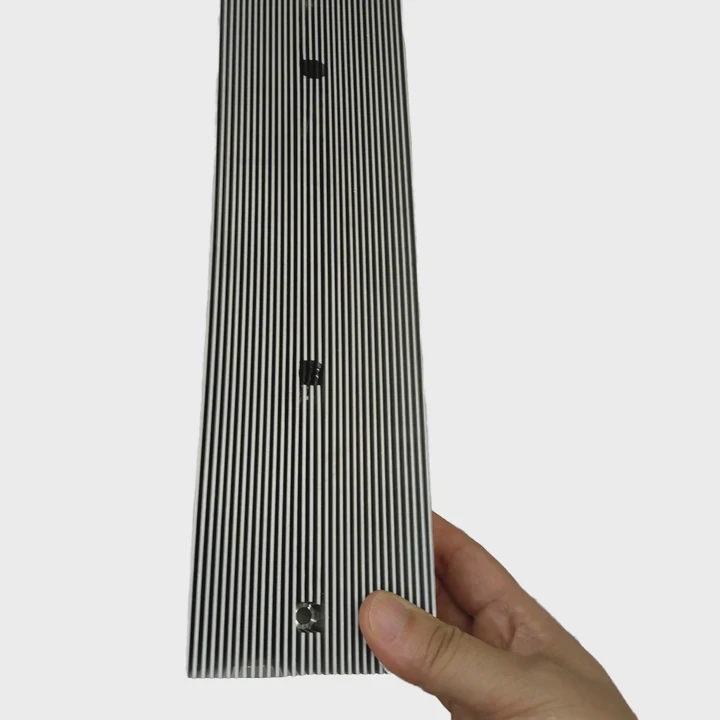
When a vapor chamber ends up heavier than expected, it creates problems—excess mass, structural stress, mounting challenges, and cost overruns.
A correct unit weight calculation of a vapor chamber ensures that size, material selection, fluid choice, and manufacturing process align with system-level weight budgets and mechanical requirements.
Let’s dive into how to calculate the weight, what affects it, how accurate 3D models are, and whether fluid weight is included.
How is the weight of a Vapor Chamber calculated?
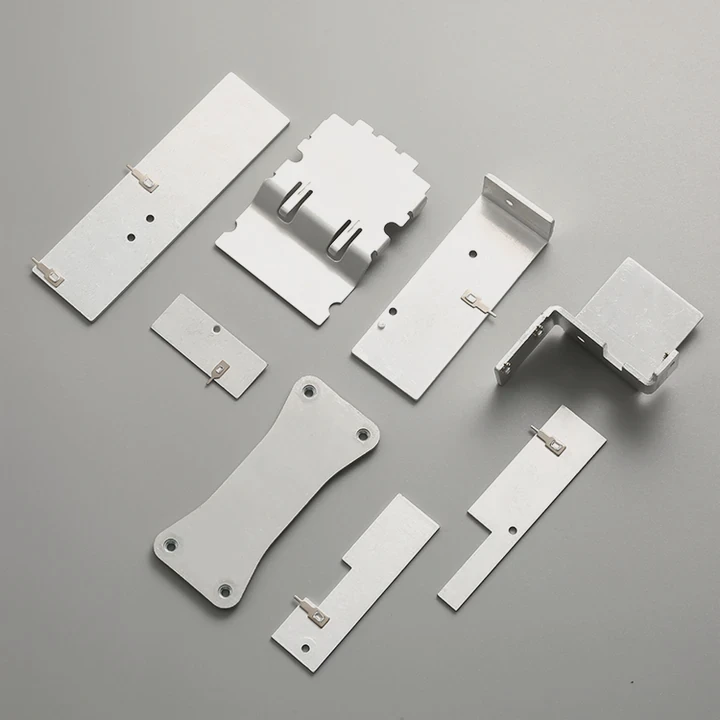
To calculate the weight of a vapor chamber, sum the weights of its key components: the enclosure walls, wick structure, internal fluid, spacers or columns, and any mounting hardware or ports. A simplified formula looks like this:
[ W{\text{VC}} = \rho{\text{wall}} \cdot V{\text{wall}} + \rho{\text{wick}} \cdot V{\text{wick}} + \rho{\text{fluid}} \cdot V{\text{fluid}} + \rho{\text{spacer}} \cdot V_{\text{spacer}} ]
Step-by-step breakdown
- Define external dimensions: Get the outer length, width, and thickness.
- Wall volume: Multiply wall area by wall thickness, then by the number of plates (usually two).
- Wick volume: Estimate wick thickness and coverage area.
- Fluid volume: Determine internal void volume and apply fill ratio.
- Spacers or columns: Calculate volume and add accordingly.
- Apply densities: Use actual material densities to convert volumes to mass.
- Sum all components: Total weight = sum of all parts.
Example
A 100 × 100 mm copper vapor chamber, 3 mm thick, with 0.6 mm thick plates and 0.8 mm wick, may yield:
- Wall mass ≈ 0.107 kg
- Wick mass ≈ 0.071 kg
- Fluid mass ≈ 0.016 kg
- Total ≈ 0.194 kg (or 194 g)
This example assumes deionized water as fluid and ignores small components like ports.
Notes
- Use actual densities: Copper (~8,900 kg/m³), Aluminum (~2,700 kg/m³), Water (~1,000 kg/m³).
- Adjust for porosity in wick and subtract overlapping volumes.
- Include fill ports, weld seams, and other small additions for high-accuracy requirements.
Which design factors affect final unit weight?
Several design choices directly influence the vapor chamber’s total weight.
Material selection
- Enclosure: Copper is dense, aluminum is light but may need thicker walls.
- Spacers: Add rigidity but increase weight.
- Wick material: Sintered copper is heavier than mesh or grooved options.
Geometry and size
- Surface area: Larger chambers use more material.
- Wall thickness: Thicker walls improve strength but add weight.
- Embossments: Add extra material volume.
- Overall thickness: Affects internal structure and fluid volume.
Wick structure
| Wick Type | Density Impact |
|---|---|
| Sintered copper | Heavy |
| Screen mesh | Moderate |
| Grooved surface | Light |
The thicker the wick, the more weight it adds. Full-area coverage increases mass more than localized wicks.
Fluid design
- Fluid type: Water is lighter than some dielectric coolants.
- Fill ratio: Higher fill = more mass.
- Void design: More vapor space can reduce fluid volume.
Structural features
- Reinforcements: Required for impact, vibration, or pressure—add mass.
- Mounting flanges or brackets: Must be included in total weight.
- Surface coatings: Plating layers (like nickel) add small but cumulative weight.
Use-case driven choices
- For aerospace or rail systems, extra safety margins increase weight.
- For portable or mobile systems, weight minimization is a top priority.
Balancing these factors helps meet both thermal and mechanical demands.
Can 3D models provide accurate weight estimates?
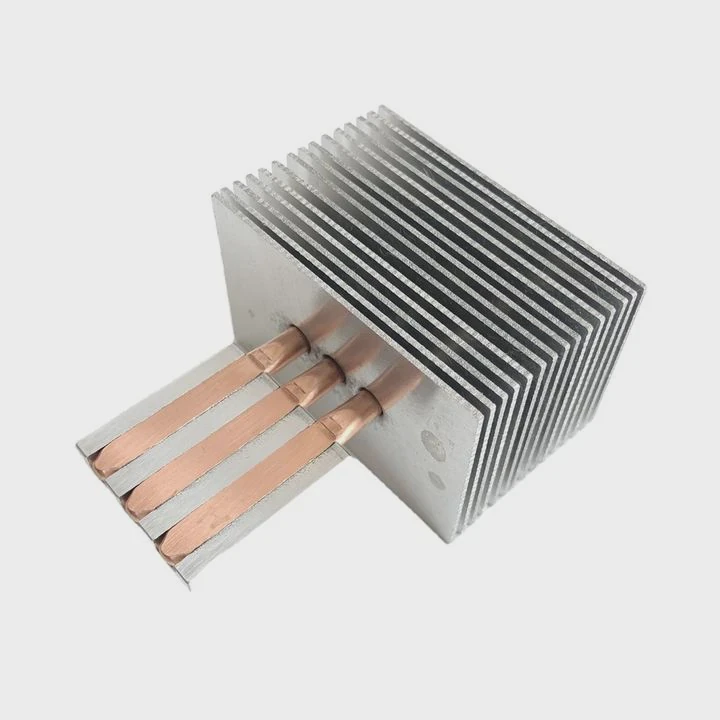
Yes—modern 3D CAD tools provide reliable weight estimates when models are built accurately and key assumptions are correctly handled.
Advantages of 3D modeling
- Precise volume calculation: CAD tools calculate volume to high accuracy.
- Material assignment: Apply real material properties, including density.
- Inclusion of small features: Embossments, weld beads, and ports can be modeled.
- Dynamic updates: Design changes auto-update the weight.
- Assembly integration: Enables system-level weight analysis.
Common limitations
- Wick modeling: Porous media are often simplified or ignored.
- Fluid exclusion: Some models skip internal fluid, underestimating total weight.
- Porosity correction: Wick porosity must be considered in mass estimates.
- Manufacturing allowances: Real-world welds, tolerances, and plating are often missing.
Best practices
- Model wick regions as solid with adjusted effective density (e.g., 60–80% of full copper).
- Include fluid region explicitly and assign correct density.
- Add fill tubes, weld seams, and any mounting parts.
- Use real material specs, not generic settings.
- Cross-check model weight with physical samples when available.
By following these steps, CAD-based weight estimates become highly dependable, especially for engineering reviews, proposals, or compliance audits.
Is fluid weight included in total calculation?
Yes—the weight of the internal working fluid must be included in the total unit weight if the vapor chamber is sealed and shipped as a complete module.
Why fluid mass matters
- Structural impact: Affects stress and load on mounts or brackets.
- Center of gravity: Alters balance in portable or mobile devices.
- Thermal performance correlation: Higher fill may improve performance but adds mass.
- Shipping and compliance: Regulations may require total weight declarations including fluids.
When it’s included
| Condition | Fluid Weight Included? |
|---|---|
| Sealed module ready for integration | Yes |
| Dry or unfilled sample | No |
| Shipping estimate | Often Yes |
| Internal design analysis | Optional (but recommended) |
Fluid contribution example
For a 300 × 300 mm vapor chamber:
- Internal fluid volume: ~144 cm³
- Fluid mass: ~144 g (if using water)
If using heavier fluids (like certain dielectric coolants), mass may increase by 20–50%.
Guidelines
- Always state whether weight includes fluid when providing specs.
- Use average operating fill ratio (e.g., 40–60%) for weight estimates.
- For products shipped with fluid, “wet weight” should be the default figure.
Including fluid ensures accuracy and avoids underestimation of system-level loading, especially for critical applications in aerospace or energy systems.
Conclusion
Calculating vapor chamber unit weight requires detailed consideration of wall material, wick design, fluid volume, internal supports, and any added features. Design factors like material choice, thickness, fill ratio, and mounting needs all influence the final weight. 3D CAD models offer reliable estimates when wick porosity and fluid content are properly accounted for. And yes, working fluid weight must be included in the total if the module is delivered filled and sealed. Accurate weight calculations are key to meeting performance targets, structural requirements, and system-level integration goals.
TAGS
Latest Articles

Volume discount levels for heat sink orders?
Buyers often ask when heat sink prices start to drop with volume. Many worry they’re overpaying for small orders. This guide explains how B2B volume pricing works for thermal components. Heat sink
21 Dec,2025
Heat sink long-term supply contract options?
Many buyers want stable pricing and reliable delivery for heat sinks. But without a clear contract, risks grow over time. This article explores how to secure better long-term supply deals. Long-term
21 Dec,2025
Tooling cost for new heat sink profiles?
Many engineers struggle to understand why tooling for custom heat sinks costs so much. They worry about budgeting and production timelines. This article breaks down the cost drivers behind tooling.
21 Dec,2025
Heat sink custom sample process steps?
Sometimes, starting a custom heat sink project feels overwhelming—too many steps, too many unknowns, and too many risks. You want a sample, but not endless delays. The process for requesting and
20 Dec,2025
Standard B2B terms for heat sink payments?
When buyers and sellers in B2B heat sink markets talk about payment, many don’t fully understand what’s standard. This can lead to delayed orders, miscommunication, and even lost business
20 Dec,2025
Heat sink pricing factors for large orders?
Heat sinks are vital for many systems. When prices rise, projects stall and budgets break. This problem can hit teams hard without warning. Large order heat sink pricing depends on many factors. You
20 Dec,2025Related Articles
- Vapor Chamber tolerance for thickness variation?
- Vapor Chamber for inverter heat management?
- Can Vapor Chamber withstand shock testing?
- Vapor Chamber compatibility with graphite sheet?
- Does Vapor Chamber require vacuum forming?
- Vapor Chamber process flow chart?
- Vapor Chamber optimization for CPU cooling?
- Does Vapor Chamber work with water cooling?
- Vapor Chamber for solar energy systems?
- Can Vapor Chamber operate in high humidity?
- Thermal expansion coefficient of Vapor Chamber?
- Vapor Chamber reliability in field usage?
Author
Dr. Emily Chen
Chief AI Researcher
Leading expert in thermal dynamics and AI optimization with over 15 years of experience in data center efficiency research.
Categories
Latest Products






Recommend Categories
- Liquid cooling plate Manufacturer
- Industrial Heat Sink Manufacturer
- Standard Heat Sink Manufacturer
- Aluminum Heat Sink Manufacturer
- Copper Heat Sink Manufacturer
- Anodized Heatsink Manufacturer
- Stamping heat sink Manufacturer
- Die Casting Heatsink Manufacturer
- Soldering heat sink Manufacturer
- CNC Parts Manufacturer
Latest Products
- Wholesale Aluminum Radiator
- Water Cooling Plate Kit
- Water Cooling Heat Sink
- Water Cooling Heat Sink Kit
- Stainless Steel Water Distributor
- Server Water Cooling Plate Kit
- Server Liquid Cooling System
- Server Aluminum Cooling Kit
- S19 Full Cover Cooling Plate
- S19 Cooling Plate Kit
- S19 Aluminum Cooling Plate
Contact Expert
Have questions about this article? Reach out to our experts directly.