Vapor Chamber tolerance for thickness variation?
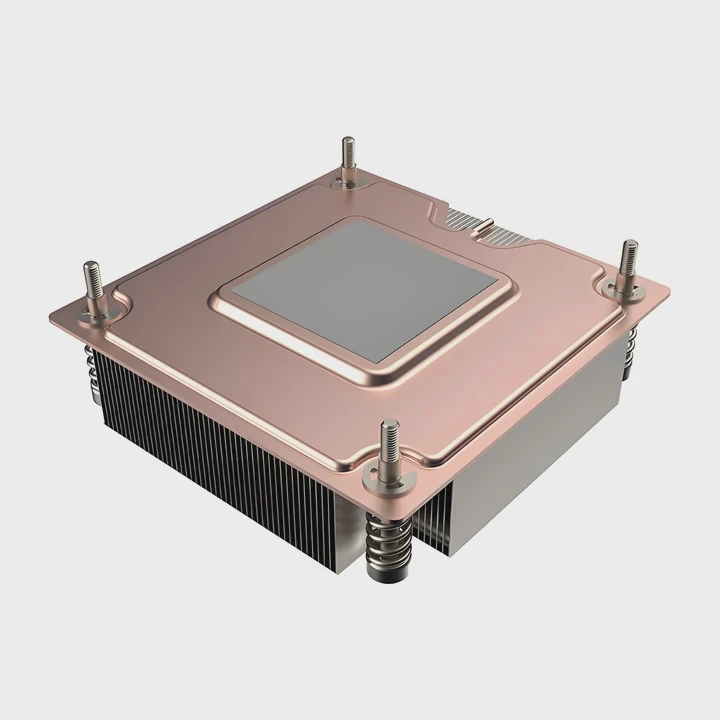
In vapor chamber production, even a small thickness deviation can cause poor contact, heat transfer loss, or structural failure.
Thickness tolerance is usually within ±0.1–0.2 mm depending on the design. Uniformity is tightly controlled to ensure thermal and mechanical stability.
Let’s explore how thickness is managed and measured.
What thickness variation is allowed in Vapor Chambers?
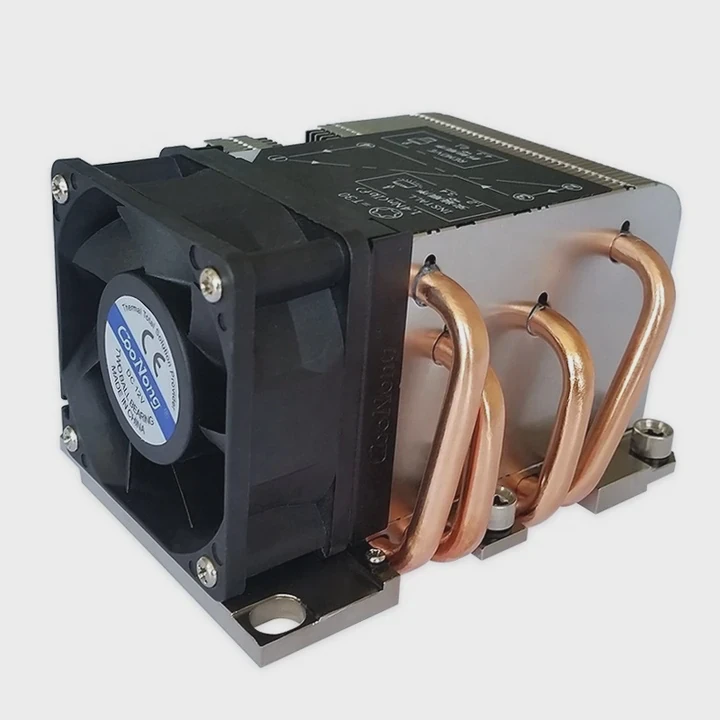
Most vapor chambers have a thickness variation tolerance between ±0.1 mm to ±0.3 mm depending on the design, size, and application.
Standard vapor chambers used in electronics typically range from 1 mm to 5 mm in thickness. Ultra-thin designs may be less than 1 mm thick. The tighter the space, the more critical the tolerance becomes.
Key Points:
- For 3 mm chambers, the tolerance is typically around ±0.15 mm.
- For ultra-thin chambers (<1.5 mm), allowable variation may be as low as ±0.05 mm.
- For larger or structural chambers (>4 mm), tolerances can be slightly looser, often ±0.2–0.3 mm.
If the thickness varies too much, vapor flow can be restricted, leading to hot spots or uneven spreading. Excessive variation can also cause problems during mounting or create gaps that reduce thermal contact efficiency.
Summary Table:
| Vapor Chamber Type | Nominal Thickness | Typical Tolerance |
|---|---|---|
| Standard type | 2.5 – 4 mm | ±0.1 – ±0.2 mm |
| Ultra-thin design | < 1.5 mm | ±0.05 – ±0.1 mm |
| Structural/heavy-duty | > 4 mm | ±0.2 – ±0.3 mm |
Manufacturers define these tolerances based on design limits, usage environment, and required thermal performance.
How is uniform thickness ensured during production?
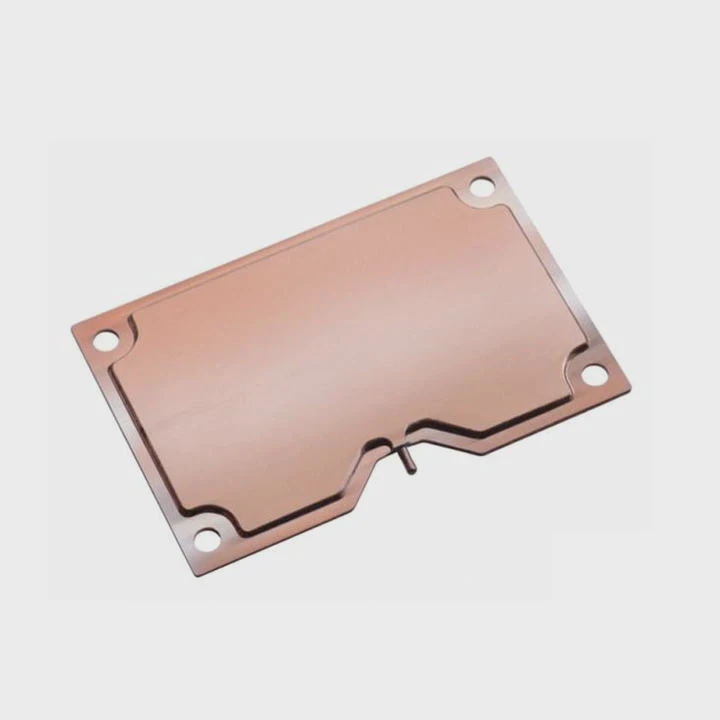
Uniform thickness is achieved through precise forming dies, internal supports, and controlled bonding processes.
Producing a vapor chamber involves multiple steps that directly affect thickness. Here’s how production ensures tight control:
Forming Stage:
- Stamping Dies: Used to shape copper sheets. Die quality directly affects thickness accuracy.
- Flattening Tools: In one-piece designs, tubes are flattened with guided tooling to control height.
Internal Structural Control:
- Support Posts: Inside the chamber, copper columns are added to maintain consistent spacing between top and bottom plates.
- Wick Consistency: Uniform wick structures ensure stable internal volume and prevent collapse or distortion.
Bonding Process:
- Laser Welding or Diffusion Bonding: Performed with high-precision fixtures to maintain planarity.
- Controlled Pressure: Bonding pressure is evenly applied to prevent plate warping or uneven gaps.
Post-Processing:
- Surface Grinding: Used if tight surface planarity is required.
- CNC Finishing: Adjusts surface features and thickness to meet specifications.
Quality Controls:
- Sample Inspections: Thickness is checked at several points using calibrated gauges.
- Statistical Monitoring: Process data is tracked over time to detect drift or tooling wear.
Maintaining consistent tooling, inspection routines, and internal support design helps ensure every chamber stays within thickness specs.
Do thin spots affect thermal performance?
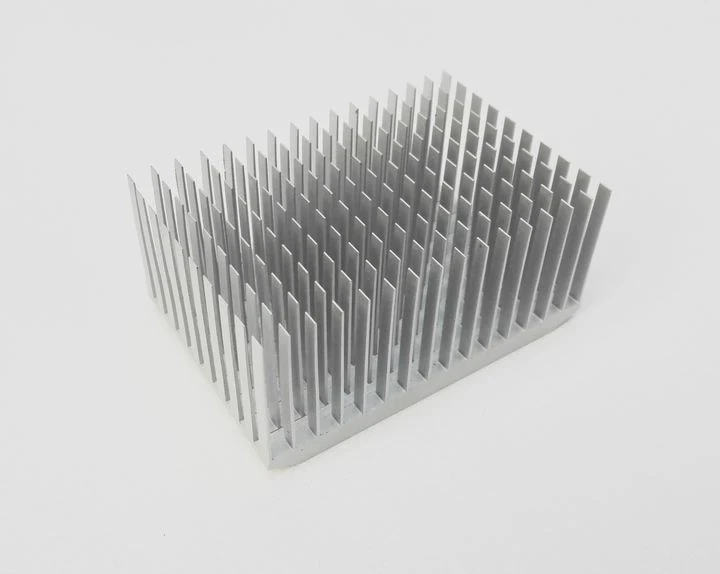
Yes, thin spots reduce vapor volume, increase resistance, and can create thermal bottlenecks that lead to higher hot spot temperatures.
A vapor chamber spreads heat using a sealed vapor-liquid cycle. Uniform internal height is crucial for vapor movement and liquid return. When thickness varies:
Problems Caused by Thin Spots:
- Reduced Vapor Space: Lowers vapor velocity and transport efficiency.
- Wick Compression: Damages the capillary structure, limiting liquid return.
- Structural Instability: Thin areas deform under pressure, causing contact issues.
- Localized Overheating: Heat builds up in thin areas, reducing performance.
Even a 0.2 mm reduction in thickness across a small section can significantly affect local heat spreading. In compact electronics or CPUs, this could mean a 5–10°C increase at hot spots.
Impacts by Function:
| Area Affected | Thin Spot Effect |
|---|---|
| Vapor Flow | Slower vapor movement, reduced efficiency |
| Wick Function | Capillary limit reduced, dry-out risk |
| Surface Contact | Warped surface, less heat transfer |
| Mechanical Integrity | Risk of deformation or long-term failure |
To prevent this, thickness must be tightly controlled both across the surface and within the internal layers.
What tools measure thickness tolerances?
Micrometers, CMM machines, optical scanners, and dial gauges are commonly used to measure vapor chamber thickness and flatness.
Measurement of vapor chamber thickness is critical during and after production. Multiple tools are used depending on accuracy, part size, and required data.
1. Micrometers and Calipers:
- Fast, simple, and low-cost.
- Measures envelope thickness at specific points.
- Good for in-line inspections or small batches.
2. Height Gauges with Surface Plates:
- Measures thickness across multiple points.
- Common in quality control labs.
- Detects local warpage or bending.
3. Coordinate Measuring Machine (CMM):
- Highly accurate 3D measurement.
- Maps thickness, flatness, and surface geometry.
- Used for first article and high-precision checks.
4. Optical Profilometers or 3D Scanners:
- Non-contact tools that map entire surface.
- Detect small dips or bulges not found by touch tools.
- Ideal for detecting local thin spots.
5. Ultrasonic Thickness Gauges:
- Used to measure individual copper wall thickness (not chamber height).
- Good for checking material consistency before forming.
Tool Use Summary:
| Tool Type | Main Use | Accuracy Level |
|---|---|---|
| Micrometer/Caliper | Spot checks | ±0.01 – 0.02 mm |
| Height Gauge | Flatness & thickness profile | ±0.01 – 0.05 mm |
| CMM | 3D surface mapping | ±0.005 mm |
| Optical Scanner | Full area inspection | ±0.01 mm |
| Ultrasonic Gauge | Material thickness (walls) | ±0.01 mm |
Using these tools, manufacturers can ensure each vapor chamber meets design specs and won’t cause thermal issues in real use.
Conclusion
Vapor chamber thickness must be tightly controlled to avoid thermal and mechanical failures. Most designs allow just ±0.1–0.2 mm variation, with thinner designs demanding even tighter control. Production uses precise tooling, internal supports, and bonding fixtures to ensure uniformity. Accurate inspection tools like micrometers, CMMs, and optical scanners verify thickness across all units. Even slight deviations can lead to performance loss, so thickness control is a top priority in vapor chamber manufacturing.
TAGS
Latest Articles

Volume discount levels for heat sink orders?
Buyers often ask when heat sink prices start to drop with volume. Many worry they’re overpaying for small orders. This guide explains how B2B volume pricing works for thermal components. Heat sink
21 Dec,2025
Heat sink long-term supply contract options?
Many buyers want stable pricing and reliable delivery for heat sinks. But without a clear contract, risks grow over time. This article explores how to secure better long-term supply deals. Long-term
21 Dec,2025
Tooling cost for new heat sink profiles?
Many engineers struggle to understand why tooling for custom heat sinks costs so much. They worry about budgeting and production timelines. This article breaks down the cost drivers behind tooling.
21 Dec,2025
Heat sink custom sample process steps?
Sometimes, starting a custom heat sink project feels overwhelming—too many steps, too many unknowns, and too many risks. You want a sample, but not endless delays. The process for requesting and
20 Dec,2025
Standard B2B terms for heat sink payments?
When buyers and sellers in B2B heat sink markets talk about payment, many don’t fully understand what’s standard. This can lead to delayed orders, miscommunication, and even lost business
20 Dec,2025
Heat sink pricing factors for large orders?
Heat sinks are vital for many systems. When prices rise, projects stall and budgets break. This problem can hit teams hard without warning. Large order heat sink pricing depends on many factors. You
20 Dec,2025Related Articles
- Vapor Chamber for inverter heat management?
- Can Vapor Chamber withstand shock testing?
- Vapor Chamber compatibility with graphite sheet?
- Does Vapor Chamber require vacuum forming?
- Vapor Chamber process flow chart?
- Typical power rating for Vapor Chamber?
- Vapor Chamber unit weight calculation method?
- Vapor Chamber optimization for CPU cooling?
- Does Vapor Chamber work with water cooling?
- Vapor Chamber for solar energy systems?
- Can Vapor Chamber operate in high humidity?
- Thermal expansion coefficient of Vapor Chamber?
Author
Dr. Emily Chen
Chief AI Researcher
Leading expert in thermal dynamics and AI optimization with over 15 years of experience in data center efficiency research.
Categories
Latest Products






Recommend Categories
- Liquid cooling plate Manufacturer
- Industrial Heat Sink Manufacturer
- Standard Heat Sink Manufacturer
- Aluminum Heat Sink Manufacturer
- Copper Heat Sink Manufacturer
- Anodized Heatsink Manufacturer
- Stamping heat sink Manufacturer
- Die Casting Heatsink Manufacturer
- Soldering heat sink Manufacturer
- CNC Parts Manufacturer
Latest Products
- Wholesale Aluminum Radiator
- Water Cooling Plate Kit
- Water Cooling Heat Sink
- Water Cooling Heat Sink Kit
- Stainless Steel Water Distributor
- Server Water Cooling Plate Kit
- Server Liquid Cooling System
- Server Aluminum Cooling Kit
- S19 Full Cover Cooling Plate
- S19 Cooling Plate Kit
- S19 Aluminum Cooling Plate
Contact Expert
Have questions about this article? Reach out to our experts directly.