Vapor Chamber for telecom cooling racks
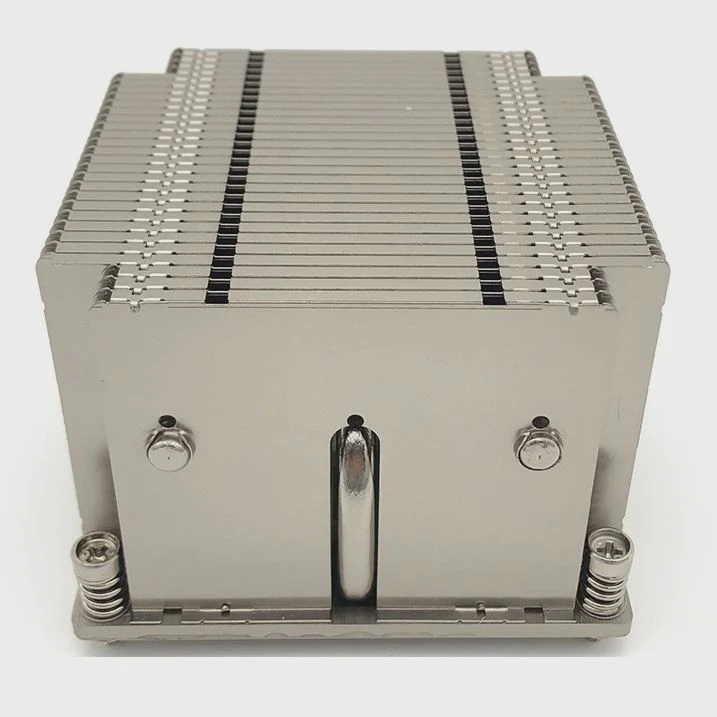
Telecom racks often run hot under heavy load. Hot spots and unreliable cooling can shorten equipment life. Vapor chambers (VCs) may offer a better way to spread and remove that heat — but how, and when, are they useful for telecom gear?
Vapor chambers can help telecom racks by spreading heat uniformly across large surfaces and enabling hybrid cooling solutions — making them a potentially good fit for high‑density telecom equipment.
Let’s explore their roles, thermal demands, and integration needs in telecom systems.
How are Vapor Chambers used in telecom equipment racks?
Telecom racks often host tightly packed, heat-intensive modules. Air cooling alone often fails to eliminate hot spots. Vapor chambers offer an effective way to distribute heat before it reaches the fans or external heat exchangers.
Vapor chambers are used in telecom equipment racks to spread heat from localized components across larger surfaces, improving airflow efficiency and reducing hot spots.
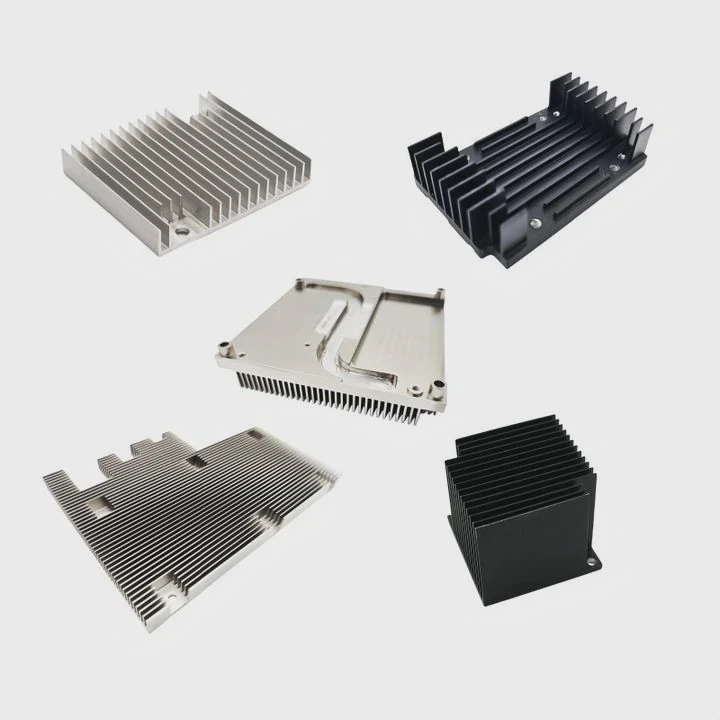
In practical applications, vapor chambers are attached to power electronics, amplifiers, or processing units. They act as passive heat spreaders — transferring heat rapidly from small footprints to larger surfaces.
These chambers may be connected to heatsinks, fins, or cold plates within the rack. Their slim form factor makes them ideal for confined enclosures, such as 1U or 2U modules in 19-inch telecom cabinets.
Some systems pair vapor chambers with liquid or air-based solutions to create hybrid thermal management. This approach increases heat dissipation performance while keeping the system compact and reliable.
Overall, vapor chambers improve heat distribution, enabling more efficient cooling and helping meet higher density and power design trends in telecom.
Do telecom base-stations benefit from chamber cooling?
Base-stations are mission-critical. They operate 24⁄7 in remote or outdoor environments. Cooling must be efficient, passive if possible, and maintenance-free.
Yes, telecom base-stations benefit from vapor chamber cooling by gaining more stable temperatures, reduced thermal stress, and lower fan power consumption.
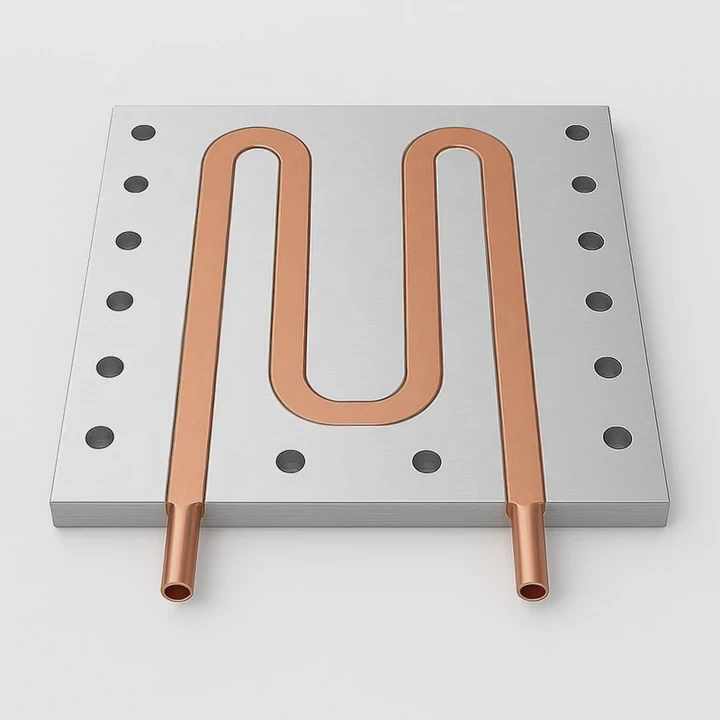
Key benefits of using vapor chambers in base-stations include:
- Better thermal distribution: Vapor chambers spread heat from hotspots, reducing thermal gradients and improving component lifespan.
- Space savings: VCs are thinner than large heatsinks and can be mounted directly to PCBs or module frames.
- Hybrid cooling potential: Vapor chambers can be used with natural or forced airflow systems to form mixed-mode thermal solutions.
- Lower energy usage: Passive operation reduces or eliminates reliance on fans or air conditioning in some environments.
- Improved system reliability: Reducing hot spots minimizes thermal cycling damage and supports long-term, stable operation.
These advantages are especially useful in outdoor cabinets, solar-powered installations, or areas with limited power budgets. For telecom OEMs aiming at long lifecycle designs (10–15 years), vapor chambers help ensure performance and reduce maintenance frequency.
What thermal loads do telecom racks place on Vapor Chambers?
Modern telecom racks integrate RF units, power supplies, digital processing boards, and control electronics. These systems generate concentrated and often high thermal loads.
Telecom racks can impose thermal loads ranging from 50 W to over 300 W per module, making vapor chambers ideal for spreading concentrated heat over wider surfaces.

Thermal load profiles vary, but here are common figures:
| Component Type | Typical Heat Load (W) | Notes |
|---|---|---|
| RF Amplifier Module | 80–150 | High power density; hotspot-prone |
| Baseband Processor | 50–100 | Sustained operation in tight enclosure |
| Power Supply Unit | 60–120 | Often near ambient airflow inlets |
| Signal Conditioning | 20–60 | Small boards, heat sensitive |
| Full Equipment Shelf | 500–1000+ | Depends on active load and usage rate |
These loads are often localized on small PCB sections or metallic enclosures. Vapor chambers help by transporting this energy across a large area, enabling more even dissipation through airflow or contact with cold plates.
Unlike basic aluminum plates, vapor chambers handle higher heat fluxes and react faster to load spikes. Their internal wick and vapor cycle efficiently manage heat loads in excess of 100 W/cm² when properly designed.
For telecom modules, a good vapor chamber reduces temperature peaks, equalizes module temperatures, and helps downstream cooling devices operate more effectively.
Are there special mounting or integration requirements in telecom?
Telecom systems demand high reliability, mechanical strength, and ease of maintenance. Vapor chambers must be integrated carefully into such constraints.
Yes, vapor chambers must be carefully mounted in telecom systems with attention to surface contact, airflow alignment, mechanical support, and vibration resistance.
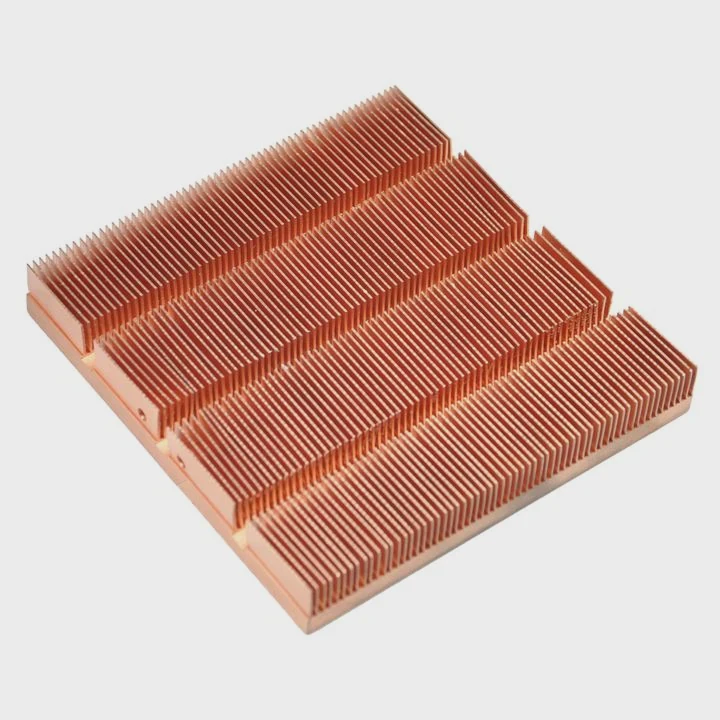
Key integration considerations include:
| Design Factor | Integration Detail |
|---|---|
| Mounting method | Bracket, spring clamp, adhesive, screw-in frame |
| Thermal interface | TIM pad, paste, or graphite sheet for low thermal resistance |
| Vibration handling | Compliant bracket or damping interface |
| Surface protection | Anodizing, nickel plating, or polymer coating |
| Airflow alignment | Match heat spread to fan or vent path |
| Maintenance access | Allow swap-out or detachment of modules with VC |
Vapor chambers should be installed with uniform pressure to ensure solid thermal contact. Thermal interface materials must be selected for long-term stability, especially in outdoor environments.
Their orientation matters — spreading heat perpendicular to airflow maximizes cooling. If installed improperly, vapor chambers can worsen airflow patterns or introduce pressure zones that reduce cooling efficiency.
Environmental durability is key. Outdoor telecom systems may expose VCs to moisture, dust, or corrosive air. Using corrosion-resistant alloys or coatings is necessary.
Lastly, integration should support serviceability. If a vapor chamber is bonded permanently to a board, that board becomes non-serviceable. Instead, attach the VC to module housings or structural frames to allow easy replacement.
Conclusion
Vapor chambers are a powerful tool for thermal management in telecom equipment racks. They spread heat efficiently, reduce hotspots, and fit well in dense, high-load systems. With proper mounting, airflow, and surface integration, they boost reliability and long-term performance in base-stations and cabinets alike.
TAGS
Latest Articles

Volume discount levels for heat sink orders?
Buyers often ask when heat sink prices start to drop with volume. Many worry they’re overpaying for small orders. This guide explains how B2B volume pricing works for thermal components. Heat sink
21 Dec,2025
Heat sink long-term supply contract options?
Many buyers want stable pricing and reliable delivery for heat sinks. But without a clear contract, risks grow over time. This article explores how to secure better long-term supply deals. Long-term
21 Dec,2025
Tooling cost for new heat sink profiles?
Many engineers struggle to understand why tooling for custom heat sinks costs so much. They worry about budgeting and production timelines. This article breaks down the cost drivers behind tooling.
21 Dec,2025
Heat sink custom sample process steps?
Sometimes, starting a custom heat sink project feels overwhelming—too many steps, too many unknowns, and too many risks. You want a sample, but not endless delays. The process for requesting and
20 Dec,2025
Standard B2B terms for heat sink payments?
When buyers and sellers in B2B heat sink markets talk about payment, many don’t fully understand what’s standard. This can lead to delayed orders, miscommunication, and even lost business
20 Dec,2025
Heat sink pricing factors for large orders?
Heat sinks are vital for many systems. When prices rise, projects stall and budgets break. This problem can hit teams hard without warning. Large order heat sink pricing depends on many factors. You
20 Dec,2025Related Articles
- Can Vapor Chamber function under vibration?
- How to avoid Vapor Chamber leakage?
- Does Vapor Chamber need corrosion protection?
- Vapor Chamber return policy examples?
- Why choose Vapor Chamber over heatsink?
- What is Vapor Chamber scrap rate?
- Which industries demand Vapor Chamber most?
- Vapor Chamber material selection guidelines
- Recommended inspection tools for Vapor Chamber?
- Vapor Chamber machining lubrication options?
- How to source high precision Vapor Chamber?
- Vapor Chamber quality requirements for export?
Author
Dr. Emily Chen
Chief AI Researcher
Leading expert in thermal dynamics and AI optimization with over 15 years of experience in data center efficiency research.
Categories
Latest Products






Recommend Categories
- Liquid cooling plate Manufacturer
- Industrial Heat Sink Manufacturer
- Standard Heat Sink Manufacturer
- Aluminum Heat Sink Manufacturer
- Copper Heat Sink Manufacturer
- Anodized Heatsink Manufacturer
- Stamping heat sink Manufacturer
- Die Casting Heatsink Manufacturer
- Soldering heat sink Manufacturer
- CNC Parts Manufacturer
Latest Products
- Wholesale Aluminum Radiator
- Water Cooling Plate Kit
- Water Cooling Heat Sink
- Water Cooling Heat Sink Kit
- Stainless Steel Water Distributor
- Server Water Cooling Plate Kit
- Server Liquid Cooling System
- Server Aluminum Cooling Kit
- S19 Full Cover Cooling Plate
- S19 Cooling Plate Kit
- S19 Aluminum Cooling Plate
Contact Expert
Have questions about this article? Reach out to our experts directly.