Why choose Vapor Chamber over heatsink?
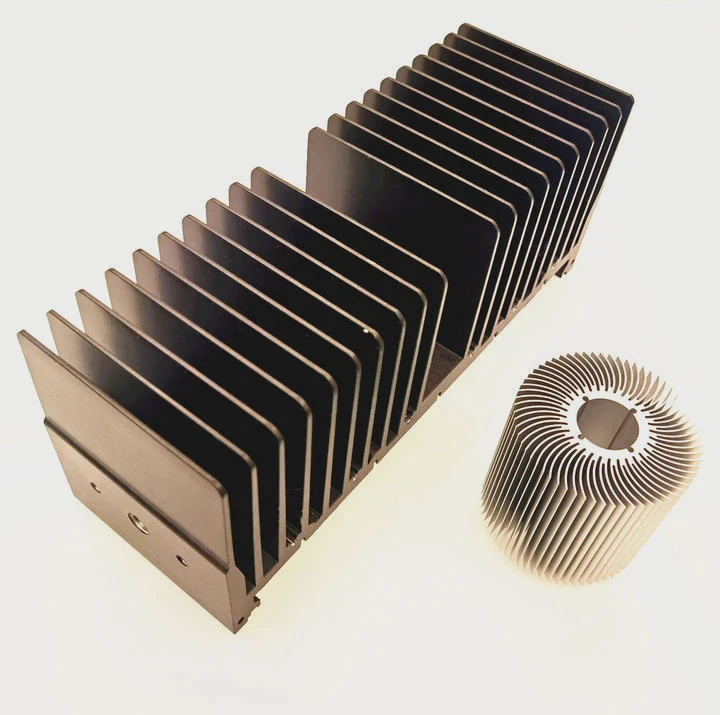
Finned heatsinks are everywhere — but for many modern designs, they’re not enough. Vapor chambers often outperform them in space-limited, high-power environments.
Vapor chambers offer faster heat spreading, better thermal uniformity, and thinner form factors compared to traditional heatsinks, especially when heat sources are compact and powerful.
Let’s compare these two approaches to thermal management — and see where vapor chambers bring a clear advantage.
What advantages do Vapor Chambers have over traditional heatsinks?
Traditional heatsinks rely on conduction through solid metal. Vapor chambers work differently — using phase change and vapor movement.
Vapor chambers reduce thermal resistance and eliminate hotspots by spreading heat much more evenly and quickly across their surface.
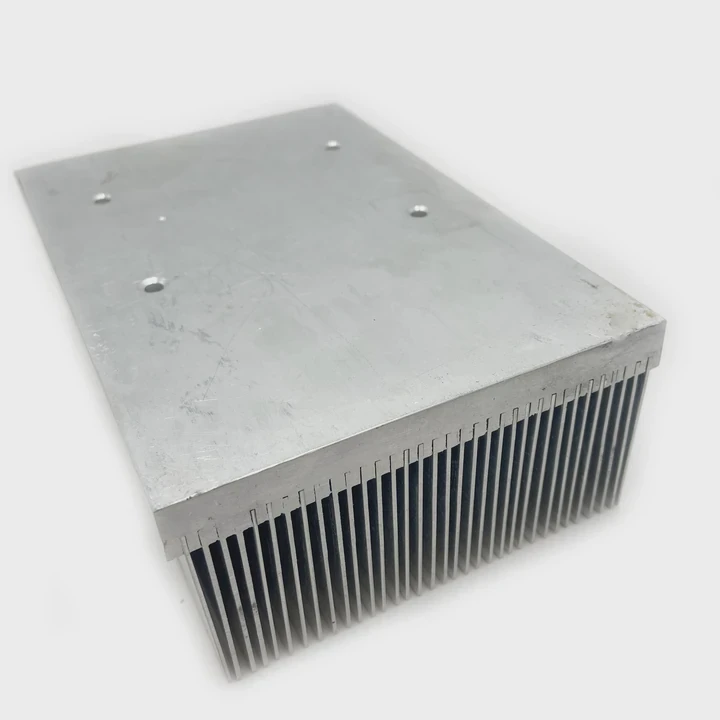
A typical heatsink pulls heat from a chip through a thick base, then dissipates it through fins into the surrounding air. But when heat is concentrated in one spot, that base can’t always spread it fast enough. The result? A thermal bottleneck and hot center.
Vapor chambers solve this. Inside the sealed metal plate is a small amount of liquid and a wick structure. Heat causes the fluid to evaporate at the hot zone. Vapor flows across the chamber and condenses at cooler zones. Capillary action in the wick returns the fluid to the heat source. This cycle moves heat with very low thermal resistance.
Key benefits of vapor chambers:
- Even temperature across the base
- Faster lateral heat spreading
- Better fin performance (more uniform heat input)
- Lower overall device temperatures
- Compact profile with high thermal efficiency
That’s why vapor chambers are commonly used in GPUs, high-end servers, compact industrial computers, and 5G base stations — places where traditional heatsinks fall short.
Is vapor-phase spread efficiency higher than fins?
Fins increase surface area — but they don’t fix poor heat spreading at the base. That’s where vapor-phase transport comes in.
Yes — vapor-phase spreading inside a vapor chamber is more efficient than passive fin conduction when heat is concentrated.
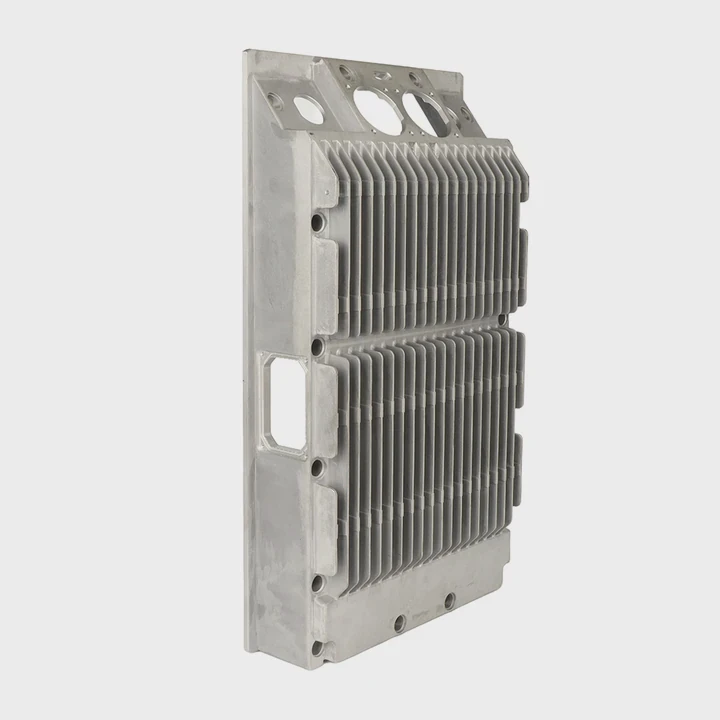
Vapor chambers carry heat laterally using the movement of vapor — not just solid-state conduction. This vapor movement quickly spreads heat from the source to the outer regions, allowing every part of the chamber (and the fins on top) to work together.
In contrast, when you place a heat source under a finned heatsink, only the area directly above the source gets hot quickly. Fins farther away stay cool. That limits how much cooling actually happens — even if the heatsink is large.
With a vapor chamber under those fins, the entire fin array heats up evenly. That means more surface area is actively cooling the system, not just the center.
The result:
- Higher effective thermal conductivity
- Lower junction-to-ambient temperature
- Better performance in systems with poor airflow or dense packaging
This efficiency lets designers shrink cooling solutions while handling more power.
Do Vapor Chambers offer better size/weight ratio?
Modern electronics need to shrink — without overheating. Vapor chambers help achieve that.
Yes — vapor chambers allow for thinner, lighter, and more compact thermal designs compared to bulky fin-based heatsinks.
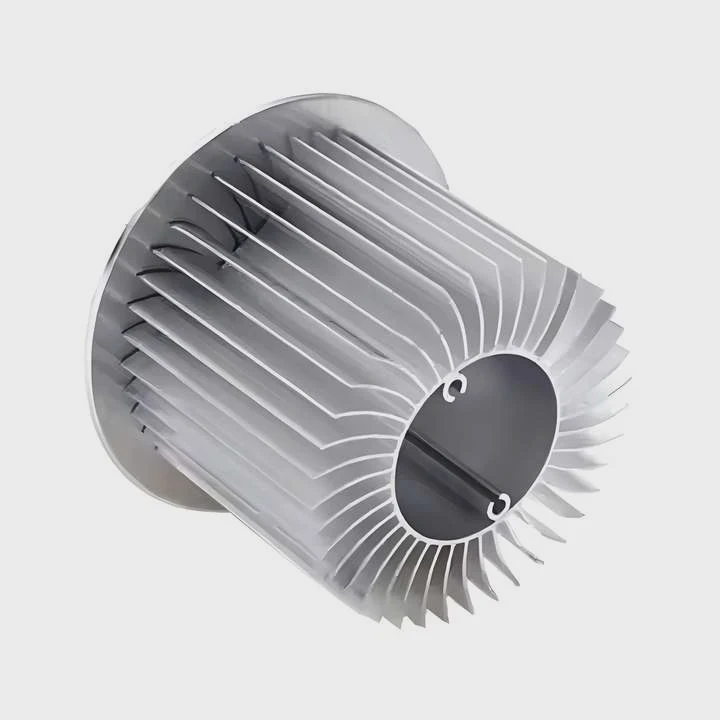
Traditional heatsinks get bigger as power goes up. Taller fins, thicker bases, more metal. That adds weight, height, and volume — which isn’t ideal in laptops, embedded modules, or fanless systems.
Vapor chambers spread heat efficiently across a wide area. This allows the use of low-profile cooling designs — often 2–3 mm thick — that still manage high thermal loads. With better heat spreading, you need fewer or smaller fins to achieve the same cooling effect.
Also, vapor chambers are often made with thin aluminum or copper shells, filled with just a bit of working fluid. The overall weight is usually less than a solid block of aluminum with the same footprint.
Applications where size/weight matters:
- Fanless embedded PCs
- Portable medical devices
- Industrial controllers
- Tablets or rugged notebooks
- Military and aerospace electronics
By replacing bulky heatsinks with thin vapor chambers, engineers can pack more power into the same space — or shrink the design while keeping performance.
Are there scenarios where heatsinks are still preferable?
Despite the advantages of vapor chambers, sometimes simpler is better.
Yes — traditional heatsinks remain a good choice in low-power, cost-sensitive, or rugged designs where extreme performance isn’t needed.
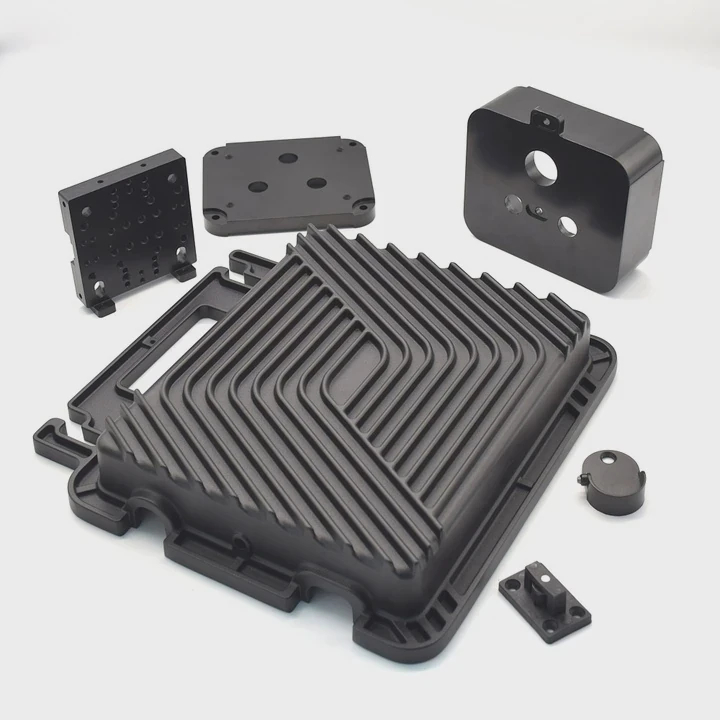
Heatsinks are cheap, reliable, and well understood. In many products, they’re more than enough. If your design only dissipates a few watts of heat, adding a vapor chamber offers little benefit and increases cost.
Advantages of traditional heatsinks:
- Lower cost per unit
- No internal fluid or wick structure
- High mechanical robustness
- Easier to machine and customize
- Simple sourcing and mass production
They’re especially useful when:
- Power densities are low (<0.5 W/cm²)
- Airflow is strong and consistent
- Space constraints are minimal
- Shock, vibration, or contamination are high
- Cost targets are strict
Also, vapor chambers can fail if punctured or if the wick breaks down. That risk is small but real — making traditional heatsinks safer in extreme environments like heavy machinery, outdoor installations, or mission-critical infrastructure.
Here’s a quick comparison:
| Feature | Vapor Chamber | Heatsink Only |
|---|---|---|
| Heat spreading efficiency | High | Low–Moderate |
| Vertical height required | Low (thin profile) | Medium–High |
| Cost | Higher | Lower |
| Weight | Lower (for same power) | Higher (if large) |
| Reliability in harsh use | Moderate | High |
| Ideal for | High power, compact | Low power, simple |
Conclusion
Vapor chambers beat traditional heatsinks when space is tight, power is high, and uniform heat spreading is critical. They allow thinner designs, reduce hotspots, and increase cooling efficiency — making them ideal for advanced electronics. But for low-power systems or rugged environments, traditional heatsinks still get the job done with lower cost and higher durability. The right choice depends on power load, space, budget, and reliability needs.
TAGS
Latest Articles

Volume discount levels for heat sink orders?
Buyers often ask when heat sink prices start to drop with volume. Many worry they’re overpaying for small orders. This guide explains how B2B volume pricing works for thermal components. Heat sink
21 Dec,2025
Heat sink long-term supply contract options?
Many buyers want stable pricing and reliable delivery for heat sinks. But without a clear contract, risks grow over time. This article explores how to secure better long-term supply deals. Long-term
21 Dec,2025
Tooling cost for new heat sink profiles?
Many engineers struggle to understand why tooling for custom heat sinks costs so much. They worry about budgeting and production timelines. This article breaks down the cost drivers behind tooling.
21 Dec,2025
Heat sink custom sample process steps?
Sometimes, starting a custom heat sink project feels overwhelming—too many steps, too many unknowns, and too many risks. You want a sample, but not endless delays. The process for requesting and
20 Dec,2025
Standard B2B terms for heat sink payments?
When buyers and sellers in B2B heat sink markets talk about payment, many don’t fully understand what’s standard. This can lead to delayed orders, miscommunication, and even lost business
20 Dec,2025
Heat sink pricing factors for large orders?
Heat sinks are vital for many systems. When prices rise, projects stall and budgets break. This problem can hit teams hard without warning. Large order heat sink pricing depends on many factors. You
20 Dec,2025Related Articles
- What is Vapor Chamber scrap rate?
- Heat transfer coefficient of Vapor Chamber?
- How to cut Vapor Chamber to custom shapes?
- Recommended thermal paste for Vapor Chamber?
- Recommended clamps for Vapor Chamber assembly?
- Vapor Chamber flatness measurement process
- Vapor Chamber return policy examples?
- Does Vapor Chamber need corrosion protection?
- How to avoid Vapor Chamber leakage?
- Can Vapor Chamber function under vibration?
- Vapor Chamber for telecom cooling racks
- Which industries demand Vapor Chamber most?
Author
Dr. Emily Chen
Chief AI Researcher
Leading expert in thermal dynamics and AI optimization with over 15 years of experience in data center efficiency research.
Categories
Latest Products






Recommend Categories
- Liquid cooling plate Manufacturer
- Industrial Heat Sink Manufacturer
- Standard Heat Sink Manufacturer
- Aluminum Heat Sink Manufacturer
- Copper Heat Sink Manufacturer
- Anodized Heatsink Manufacturer
- Stamping heat sink Manufacturer
- Die Casting Heatsink Manufacturer
- Soldering heat sink Manufacturer
- CNC Parts Manufacturer
Latest Products
- Wholesale Aluminum Radiator
- Water Cooling Plate Kit
- Water Cooling Heat Sink
- Water Cooling Heat Sink Kit
- Stainless Steel Water Distributor
- Server Water Cooling Plate Kit
- Server Liquid Cooling System
- Server Aluminum Cooling Kit
- S19 Full Cover Cooling Plate
- S19 Cooling Plate Kit
- S19 Aluminum Cooling Plate
Contact Expert
Have questions about this article? Reach out to our experts directly.