Vapor Chamber heat spreading comparison?
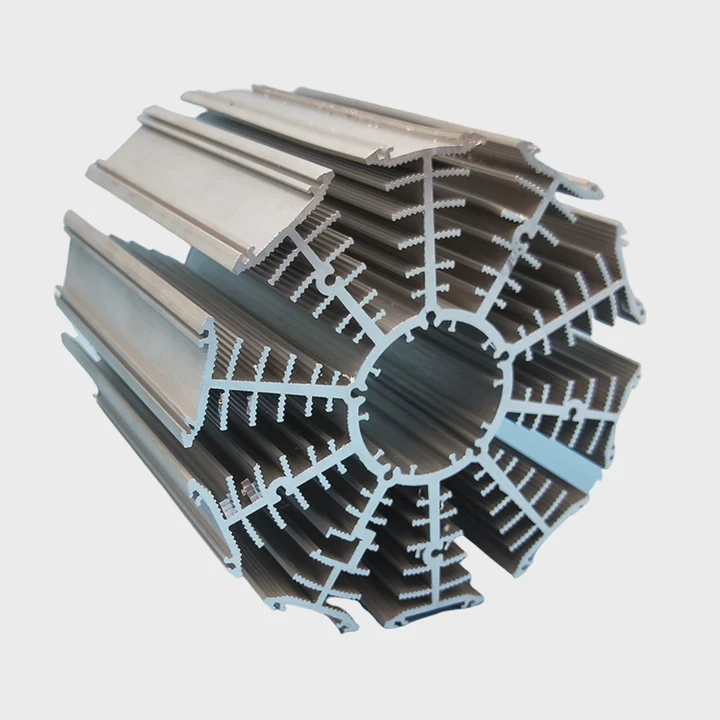
The challenge in electronics cooling is to spread heat fast without hot spots. A vapor chamber offers far more uniform spreading than simple heat pipes or flat spreaders.
A vapor chamber’s internal vapor-core spreads heat across a broad area quickly, often outperforming heat pipes in uniformity, thermal resistance, and contact surface conduction — yet heat pipes may still stay superior in flexible or long-distance transport of heat.
Understanding these trade‑offs helps designers pick the right solution for specific thermal loads and geometry needs.
How does a Vapor Chamber compare to heat pipes in heat spreading?
Smaller heat spreaders often fail to move heat fast enough. A vapor chamber helps flatten temperature peaks and smooth out hot zones.
Compared with a typical heat pipe array or single heat pipe, a vapor chamber offers much more uniform temperature across its surface and lower junction-to-surface thermal resistance, especially when the heat source is compact or irregular.
Basic difference in heat transport path
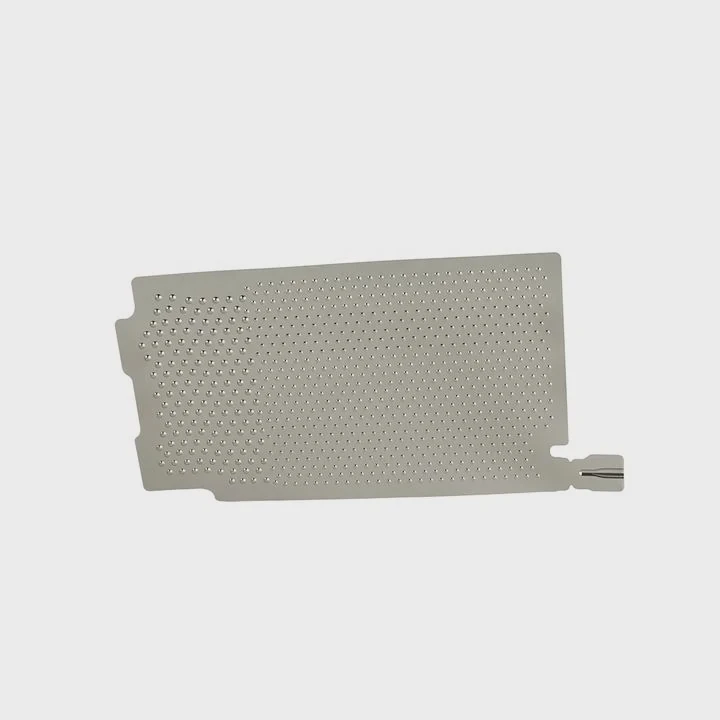
A vapor chamber contains a thin cavity filled with working fluid and wick structure. When the heat source touches the chamber base, fluid evaporates locally. The vapor spreads across the cavity, condenses on cooler areas, and returns as liquid through the wick. This two‑phase flow and capillary return enables extremely efficient lateral spreading.
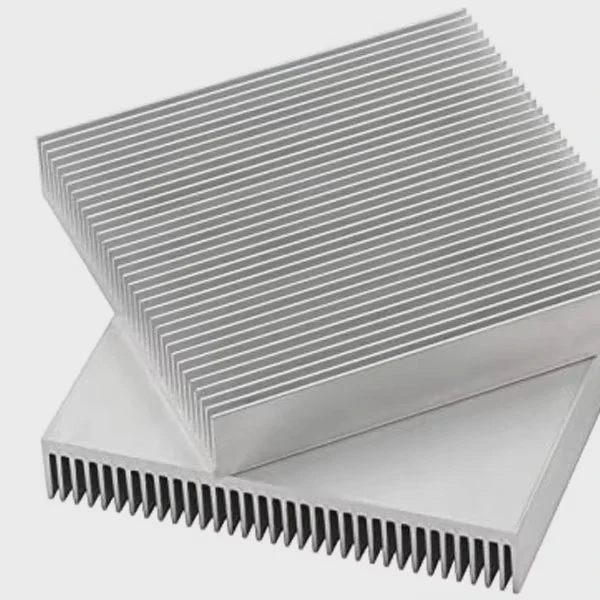
In contrast, a heat pipe is a long, narrow tube. It transports heat from one location to another along its length. If multiple heat pipes are placed under a plate or base, the plate must be thick or conductive enough to spread heat between pipes. That step often limits uniformity and can cause hot spots near the source or at pipe locations.
When vapor chambers excel over heat pipes
| Scenario | Heat Pipes Only | With Vapor Chamber |
|---|---|---|
| Single compact heat source (e.g. CPU, laser diode) | Heat pipes remove heat, but base plate may remain hot near source | Vapor chamber spreads heat across the whole base, reducing hotspot |
| Irregular or small footprint heat sources | Difficult to place enough pipes for uniform coverage | Vapor chamber covers entire footprint, uniform spread |
| Tight vertical space or thin chassis | Heat pipes need bending or length — may not fit | Vapor chamber is thin and flat, fits in thin enclosures |
In many real designs, using heat pipes alone can leave temperature gradients across the heat sink base. Vapor chambers smooth those gradients. That makes them especially useful in compact electronics or power-dense systems.
Limitation of heat pipes in spreading mode
Heat pipes move heat along their length. They are great when you need to transfer heat to a distant sink, like a fin array or radiator. But they do not handle lateral spreading well. Without a thick metal base, the pipe array does not guarantee a uniform temperature field under the source.
Because of that, heat pipes often need a bulky heat spreader plate. That adds weight and thickness — not ideal for slim or compact designs. Vapor chambers provide the spreading internally, saving space.
What advantages do Vapor Chambers offer over traditional spreaders?
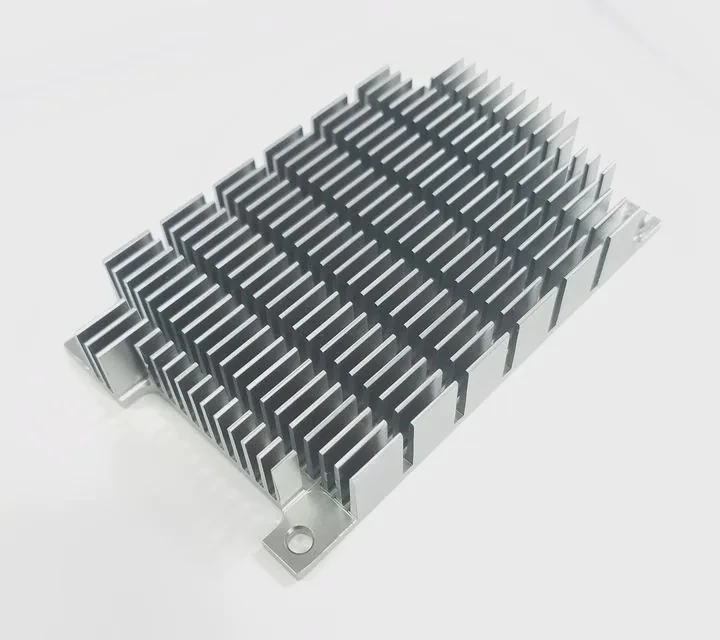
Traditional spreaders rely on solid metal conduction. They often struggle when the heat source is small or generates high heat flux. Vapor chambers overcome that with their internal vapor and condensation mechanism.
Vapor chambers give lower thermal resistance, better temperature uniformity, thinner profile options, and better performance under high heat flux — advantages that solid-metal or composite spreaders rarely match.
Key advantages
Lower thermal resistance and high spreading efficiency
Because the vapor spreads rapidly inside the cavity, the temperature difference inside the chamber becomes minimal. That reduces thermal resistance from heat source to chamber surface. Solid spreaders rely on high conductivity metals (like copper or aluminum), but even copper has limits when the heat flux is high or the spread distance is large. Vapor chambers effectively bypass those limits by using phase-change.
Uniform surface temperature and hotspot reduction
With vapor chambers, the entire surface where heat needs to dissipate becomes nearly isothermal. That minimizes hot spots. Uniform surface temperature helps in better contact with heat sinks or cooling fins. It also improves reliability of components that sit on the spreader surface, because they all see similar thermal conditions.
Thin, flat design ideal for compact spaces
Solid spreaders need thickness or wide base to spread heat well, which adds volume or weight. Vapor chambers can be made thin and planar. That fits well in laptops, compact servers, slim electronics, LED modules, or power converters where height is limited.
Better performance under high and localized heat flux
Traditional spreaders struggle when a small area generates a lot of heat. The conduction path becomes a bottleneck and surface temperature spikes. Vapor chambers excel here. Their phase-change mechanism quickly absorbs and redistributes heat across the cavity. That handles high-flux points without requiring bulky spreader mass.
When traditional spreaders might still be acceptable
Solid spreaders work well when heat load is low or when heat flux is moderate and spread distance is small. They also require no wick, no vacuum seal, so they are cheaper and simpler to produce. For low-cost or low-power designs, a flat aluminum plate or copper slug may be enough.
However, when power density rises — such as in high-performance computing, laser modules, power electronics — vapor chambers usually deliver far superior performance.
Are there scenarios where heat pipes still perform better?
Vapor chambers shine in spreading heat sideways, but heat pipes have their own strengths. In some cases, they remain the preferred choice.
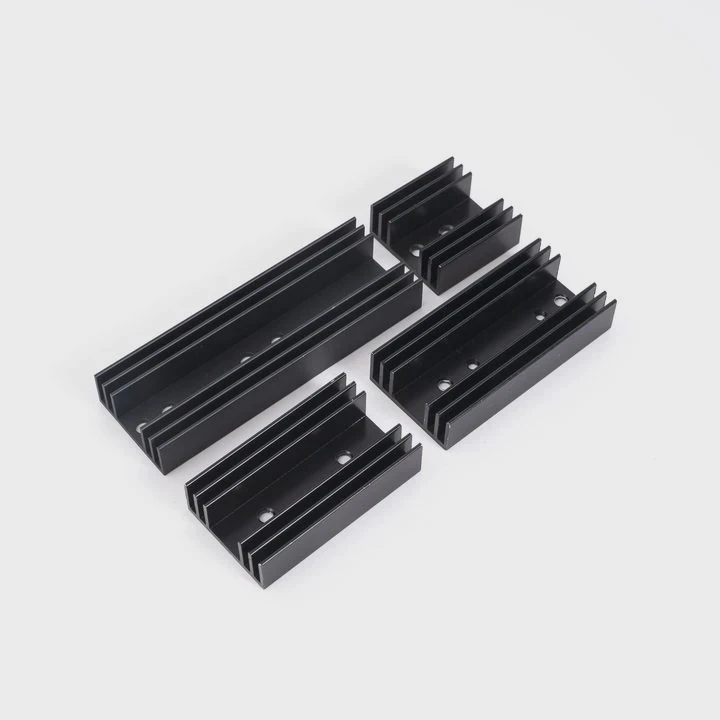
Yes. In scenarios requiring heat transport over a distance, flexible routing, or when spreading is less critical, heat pipes may outperform vapor chambers thanks to their simple structure, lower cost, and better heat transport per unit mass.
When heat pipes are more suitable
- Remote cooling: If heat sink or radiator must sit far from the heat source, heat pipes offer efficient “heat lines.” Vapor chambers alone cannot transport heat over distances — they only spread it laterally within their plane. In such cases, combining vapor chamber + heat pipes or fins makes sense.
- Complex or curved routing: Heat pipes can bend (with some constraints) and route through complex chassis shapes. Vapor chambers are rigid plates — they do not bend or follow curves. In systems with 3D routing, pipes add flexibility.
- Cost and manufacturing simplicity: Heat pipes are relatively simpler and cheaper — no need for large flat welding or vacuum brazing across a plate. For lower-cost applications or lower heat loads, heat pipes give acceptable performance with smaller cost.
- Weight-sensitive but low-height limitation not critical: If weight is critical but profile thickness is allowed, heat pipes can be lighter than a large vapor chamber + a thick plate. Also, combining multiple small heat pipes could be easier than manufacturing large vacuum‑sealed plates.
Example use‑cases preferring heat pipes
- Laptops where CPU is at one end and fan/heat sink at other. Pipes carry heat efficiently to fan.
- High-power systems where heat must go through a flexible or curved path inside chassis.
- Budget electronics where cost reduction outweighs slight temperature non-uniformity.
Thus, heat pipes remain valid solution in many designs. Vapor chambers are best when spreading and surface uniformity matters, or when height constraint exists.
How to quantify heat spreading improvement with Vapor Chambers?
Designers often need numbers, not just claims. Quantifying how much a vapor chamber improves spreading helps compare designs.
Heat spreading improvement can be measured by comparing junction-to-surface thermal resistance, temperature uniformity across the base, spreading length vs thickness, and thermal time‑constant — vapor chambers often show 20–60% lower thermal resistance and much flatter temperature distribution than metal plates or pipe‑based spreaders under the same conditions.
Key metrics for comparison
| Metric | What to measure | Why it matters |
|---|---|---|
| Junction‑to‑surface Rₜ (°C/W) | Temperature rise per watt from heat source to spreader surface | Lower Rₜ means better heat transfer and faster spreading |
| Surface temperature delta (ΔT across base, °C) | Max difference across spreader surface under load | Smaller ΔT means more uniform spread, fewer hotspots |
| Spreading distance / thickness ratio | Area covered vs spreader thickness | High ratio beneficial for thin designs |
| Thermal time‑constant (time to reach steady state, s) | Time required to spread heat across surface | Shorter time means faster response — good for pulsed loads |
| Peak surface temperature under worst load | Maximum temperature on spreader surface | Lower peaks enhance reliability and contact performance |
Example comparison table
Assume a compact high‑flux heat source (100 W over 2 cm²) mounted on three spreading solutions:
| Spreader Type | Rₜ (°C/W) | ΔT surface (°C) | Steady‑state time (s) |
|---|---|---|---|
| Solid copper plate (5 mm thick) | ~0.25 | ~15 | ~120 |
| Heat pipe array + thin plate | ~0.15 | ~8 | ~90 |
| Vapor chamber (flat, 1.8 mm) | ~0.10 | ~3 | ~45 |
In this hypothetical case, the vapor chamber reduces thermal resistance by ~40% compared with pipe‑based spreader, and surface temperature delta by ~60%. That results in more uniform thermal profile and lower peak temperature.
How to test and validate
- Use an array of thermocouples or an IR camera to record surface temperature distribution under steady power.
- Measure junction temperature and ambient conditions, then compute Rₜ.
- Run a pulse test to see how quickly surface temperature stabilizes.
- Compare against baseline designs (metal plate, pipe array).
These numbers help engineers choose the right spreader. If design constraints demand thin profile, high flux, uniform temperature, and fast response — vapor chambers often deliver best results.
Conclusion
Vapor chambers bring clear advantages in heat spreading, surface uniformity, thin profile, and rapid heat distribution, especially for compact or high flux sources. Heat pipes still matter for remote transport, flexible routing, and cost or complexity constraints. Quantitative metrics like Rₜ, surface ΔT and thermal time‑constant reveal when vapor chambers truly outperform. Choose the right tool for your thermal challenge.
TAGS
Latest Articles

Volume discount levels for heat sink orders?
Buyers often ask when heat sink prices start to drop with volume. Many worry they’re overpaying for small orders. This guide explains how B2B volume pricing works for thermal components. Heat sink
21 Dec,2025
Heat sink long-term supply contract options?
Many buyers want stable pricing and reliable delivery for heat sinks. But without a clear contract, risks grow over time. This article explores how to secure better long-term supply deals. Long-term
21 Dec,2025
Tooling cost for new heat sink profiles?
Many engineers struggle to understand why tooling for custom heat sinks costs so much. They worry about budgeting and production timelines. This article breaks down the cost drivers behind tooling.
21 Dec,2025
Heat sink custom sample process steps?
Sometimes, starting a custom heat sink project feels overwhelming—too many steps, too many unknowns, and too many risks. You want a sample, but not endless delays. The process for requesting and
20 Dec,2025
Standard B2B terms for heat sink payments?
When buyers and sellers in B2B heat sink markets talk about payment, many don’t fully understand what’s standard. This can lead to delayed orders, miscommunication, and even lost business
20 Dec,2025
Heat sink pricing factors for large orders?
Heat sinks are vital for many systems. When prices rise, projects stall and budgets break. This problem can hit teams hard without warning. Large order heat sink pricing depends on many factors. You
20 Dec,2025Related Articles
- Does Vapor Chamber need periodic cleaning?
- Vapor Chamber choice for embedded systems
- Vapor Chamber compliance with fire safety?
- Best simulation software for Vapor Chamber?
- Vapor Chamber requirements for CE marking?
- Can Vapor Chamber be welded?
- Can Vapor Chamber fail under stress?
- Vapor Chamber flatness measurement process
- Recommended clamps for Vapor Chamber assembly?
- Recommended thermal paste for Vapor Chamber?
- How to cut Vapor Chamber to custom shapes?
- Heat transfer coefficient of Vapor Chamber?
Author
Dr. Emily Chen
Chief AI Researcher
Leading expert in thermal dynamics and AI optimization with over 15 years of experience in data center efficiency research.
Categories
Latest Products






Recommend Categories
- Liquid cooling plate Manufacturer
- Industrial Heat Sink Manufacturer
- Standard Heat Sink Manufacturer
- Aluminum Heat Sink Manufacturer
- Copper Heat Sink Manufacturer
- Anodized Heatsink Manufacturer
- Stamping heat sink Manufacturer
- Die Casting Heatsink Manufacturer
- Soldering heat sink Manufacturer
- CNC Parts Manufacturer
Latest Products
- Wholesale Aluminum Radiator
- Water Cooling Plate Kit
- Water Cooling Heat Sink
- Water Cooling Heat Sink Kit
- Stainless Steel Water Distributor
- Server Water Cooling Plate Kit
- Server Liquid Cooling System
- Server Aluminum Cooling Kit
- S19 Full Cover Cooling Plate
- S19 Cooling Plate Kit
- S19 Aluminum Cooling Plate
Contact Expert
Have questions about this article? Reach out to our experts directly.