Vapor Chamber requirements for CE marking?
CE marking causes confusion — especially when it comes to thermal parts like vapor chambers. Do these components need CE? What rules apply?
CE marking is only required when a product is subject to specific EU directives. For passive parts like vapor chambers, CE is not always necessary unless integrated into regulated assemblies.
Understanding when and why CE applies helps avoid compliance risks and over-engineering. Let’s walk through what the law really says.
What requirements must Vapor Chambers meet for CE marking?
CE rules only apply to certain product categories. Passive thermal parts like vapor chambers may not be in scope.
If the vapor chamber is not part of a regulated category — like electrical, medical, or pressure systems — it typically doesn’t require CE marking on its own.
CE marking is a declaration. It means the product complies with EU health, safety, and environmental laws. But not every product category is covered.
Vapor chambers are usually aluminium or copper plates with wick structures inside. They move heat but have no electronics. That makes them passive. They are not directly subject to most CE directives — like those for low voltage equipment, electromagnetic compatibility, or radio systems.
Still, once the vapor chamber becomes part of a final system — like a 5G module, industrial power device, or a medical device — the whole system might need CE. That system-level CE includes all parts inside, even if they are passive.
So CE does not apply to a vapor chamber alone, but may affect it indirectly through the final system. If your part ends up in a regulated product, you may still need to supply material data, test results, or safety info.
Which EU directives apply to Vapor Chambers?
It depends on how and where the vapor chamber is used. No single CE rule covers all thermal components.
No EU directive applies specifically to vapor chambers, but integration into regulated devices may trigger compliance with EMC, LVD, RoHS, or WEEE directives.
Here are some of the most common EU directives that may become relevant:
CE-related EU Directives and Relevance to Vapor Chambers
| Directive / Regulation | Applies to Vapor Chambers? | Notes |
|---|---|---|
| Low Voltage Directive (2014/35/EU) | Indirect | If vapor chamber used in equipment with 50–1000V AC or 75–1500V DC |
| EMC Directive (2014/30/EU) | Indirect | If part of a system emitting or affected by EMI |
| RoHS (2011/65/EU) | Yes (if part of electronics) | Must avoid restricted substances |
| WEEE Directive | Yes (if part of electronics) | Relevant to end-of-life disposal |
| Machinery Directive (2006/42/EC) | Indirect | Applies only if vapor chamber is part of a machine |
| Medical Device Regulation (MDR) | Indirect | If used in a medical product |
These directives apply to finished products — not raw components. But if your vapor chamber becomes part of a finished assembly, it must not cause the whole system to fail compliance.
That means even if you don’t need a CE label, your materials, design, and data must still support CE at the system level.
Is the CE mark needed for the component or final assembly?
This is a common misunderstanding — many suppliers assume they must mark all parts.
CE marking is required only on final products within regulated categories — not on subcomponents like vapor chambers unless explicitly covered.
CE marking is the responsibility of whoever places the product on the EU market — usually the final product maker or importer.
If you manufacture vapor chambers that are sold to OEMs (like server makers or electronics integrators), then you don’t need to mark your parts CE unless:
- Your vapor chamber is sold as a complete product under a CE directive.
- It has a function that matches CE-regulated categories (electrical, pressure, safety-critical).
If your chamber is passive, it is treated like a mechanical part or raw material. CE does not apply directly. However, the final assembly that uses your chamber must be CE marked. So your part must not block that compliance.
You should still provide supporting documents like:
- Material declarations (e.g. RoHS compliance)
- Safety datasheets
- Coating or plating content info
- Drawings and tolerances
- Process certifications (e.g. ISO)
Here’s a quick summary:
Who needs to CE mark?
| Product Type | CE Mark Needed? | Notes |
|---|---|---|
| Standalone vapor chamber | Usually No | Not a regulated category |
| Vapor chamber in electronics | No (but support needed) | Final assembly needs CE |
| Integrated cooling module | Sometimes Yes | If sold as functional device |
| Whole electronics device | Yes | Must meet all relevant CE directives |
The focus should be on enabling your customer to CE mark their system.
Do test reports support CE certification for Vapor Chambers?
Test data builds confidence — but doesn’t replace legal obligations. So what helps?
Yes — material tests, RoHS compliance data, and safety reports can support CE marking, especially if the vapor chamber is part of a certified system.
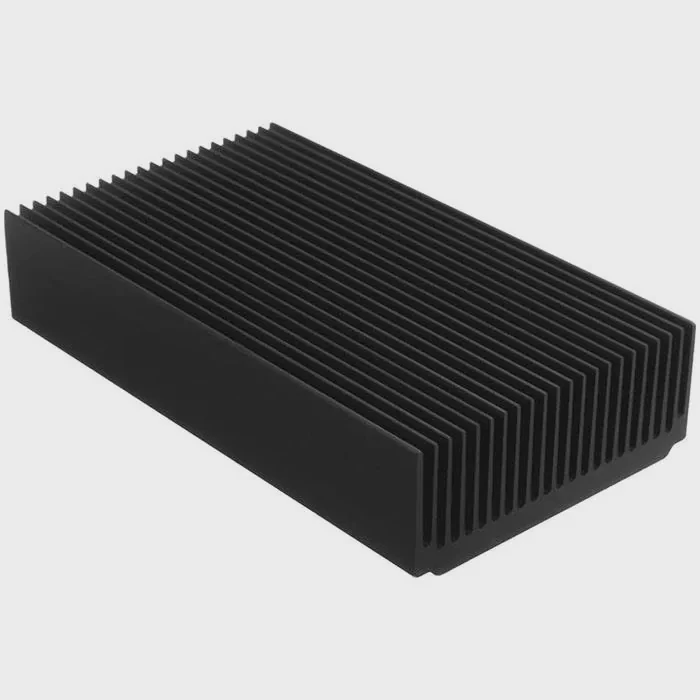
CE marking doesn’t mean “pass a single test.” It means you comply with all applicable EU rules for a given product category. That involves:
- Declaring conformity
- Holding a technical file
- Applying a CE mark
For vapor chambers used in electronics, relevant test data includes:
- RoHS test results (no lead, mercury, cadmium, etc.)
- Thermal performance tests (helps verify thermal safety in devices)
- Mechanical strength and burst data (relevant if chamber is pressurized)
- Material safety datasheets (for plating or core materials)
- Flammability (if part of devices requiring fire-safe components)
You don’t need EMC or LVD tests unless your chamber includes electronics (which is rare). But the final system must meet these. Your documentation helps the OEM build their CE file.
Here’s a simple breakdown of what helps:
Supporting Documents for CE
| Document Type | Applies to Vapor Chambers | Purpose |
|---|---|---|
| RoHS declaration | Yes | Confirms hazardous substance control |
| Material Safety Datasheet | Yes | Describes content and hazards |
| Thermal / mechanical tests | Optional | Validates design integration |
| EMC / LVD test reports | No (unless active part) | Not needed for passive parts |
| CE DoC | Only for full assemblies | Not needed for standalone components |
These reports build trust. They help your buyers pass audits and market products faster.
Conclusion
Vapor chambers, as passive components, usually don’t require CE marking — but must support compliance when integrated into final EU-regulated products. Focus on clear material documentation, RoHS compliance, and system-level support. CE marking responsibility lies with the final device maker — not the chamber supplier.
TAGS
Latest Articles

Volume discount levels for heat sink orders?
Buyers often ask when heat sink prices start to drop with volume. Many worry they’re overpaying for small orders. This guide explains how B2B volume pricing works for thermal components. Heat sink
21 Dec,2025
Heat sink long-term supply contract options?
Many buyers want stable pricing and reliable delivery for heat sinks. But without a clear contract, risks grow over time. This article explores how to secure better long-term supply deals. Long-term
21 Dec,2025
Tooling cost for new heat sink profiles?
Many engineers struggle to understand why tooling for custom heat sinks costs so much. They worry about budgeting and production timelines. This article breaks down the cost drivers behind tooling.
21 Dec,2025
Heat sink custom sample process steps?
Sometimes, starting a custom heat sink project feels overwhelming—too many steps, too many unknowns, and too many risks. You want a sample, but not endless delays. The process for requesting and
20 Dec,2025
Standard B2B terms for heat sink payments?
When buyers and sellers in B2B heat sink markets talk about payment, many don’t fully understand what’s standard. This can lead to delayed orders, miscommunication, and even lost business
20 Dec,2025
Heat sink pricing factors for large orders?
Heat sinks are vital for many systems. When prices rise, projects stall and budgets break. This problem can hit teams hard without warning. Large order heat sink pricing depends on many factors. You
20 Dec,2025Related Articles
- Can Vapor Chamber be welded?
- Standard cost of Vapor Chamber tooling?
- How to optimize Vapor Chamber mass production?
- Are there patented Vapor Chamber designs?
- Vapor Chamber 3D modeling guidelines?
- How to calculate Vapor Chamber efficiency?
- Best simulation software for Vapor Chamber?
- Vapor Chamber compliance with fire safety?
- Vapor Chamber choice for embedded systems
- Does Vapor Chamber need periodic cleaning?
- Vapor Chamber heat spreading comparison?
- Can Vapor Chamber fail under stress?
Author
Dr. Emily Chen
Chief AI Researcher
Leading expert in thermal dynamics and AI optimization with over 15 years of experience in data center efficiency research.
Categories
Latest Products






Recommend Categories
- Liquid cooling plate Manufacturer
- Industrial Heat Sink Manufacturer
- Standard Heat Sink Manufacturer
- Aluminum Heat Sink Manufacturer
- Copper Heat Sink Manufacturer
- Anodized Heatsink Manufacturer
- Stamping heat sink Manufacturer
- Die Casting Heatsink Manufacturer
- Soldering heat sink Manufacturer
- CNC Parts Manufacturer
Latest Products
- Wholesale Aluminum Radiator
- Water Cooling Plate Kit
- Water Cooling Heat Sink
- Water Cooling Heat Sink Kit
- Stainless Steel Water Distributor
- Server Water Cooling Plate Kit
- Server Liquid Cooling System
- Server Aluminum Cooling Kit
- S19 Full Cover Cooling Plate
- S19 Cooling Plate Kit
- S19 Aluminum Cooling Plate
Contact Expert
Have questions about this article? Reach out to our experts directly.