Vapor Chamber Performance in Aerospace Systems?
Leading paragraph
Spacecraft demand strong heat control. Overheating or cold failure can end missions. Vapor chambers offer a precise method to move heat fast in tight spaces.
Vapor chambers can meet many aerospace heat‑management needs. They distribute heat quickly and evenly in a compact form, often outperforming solid metal plates in thermal spread and stability.
In the rest of this article, we explore how vapor chambers perform under aerospace demands. We look at requirements, real‑world conditions, standards, and actual uses.
What performance requirements exist for Vapor Chambers in aerospace systems?
Leading paragraph
Space systems face serious heat‑management needs. Thermal peaks and weight limits make design hard.
Aerospace vapor chambers must handle wide temperature swings, share heat fast, stay lightweight, and survive long missions with no maintenance.
To work in aerospace, a vapor chamber must meet several core requirements. The main ones are:
- High thermal conductivity and spreading: The chamber must take concentrated heat and spread it over a larger area fast.
- Low mass and compact volume: Every gram and cubic centimeter counts on a satellite or aircraft. The solution must be lighter than heavy copper or other bulky heat sinks.
- Reliable operation over temperature extremes: Aerospace systems face large swings — from very cold in orbit to hot during re-entry or operation. Vapor chambers must function across these.
- Long-term reliability under vacuum or low pressure: In orbit or high altitude, air pressure is near vacuum. The design must keep working without air or with very thin air.
- Resistance to thermal cycling fatigue: Over missions lasting months or years, the chamber may see many cycles of heating and cooling. It must not degrade or leak.
- Mechanical robustness: Launch and operation cause vibrations and shocks. The chamber and its connections must stay intact.
Key performance specs
| Requirement | Typical Target Range |
|---|---|
| Thermal conductivity equivalent | 300 – 1000 W/m·K (effective spread) |
| Thickness / volume | As thin as 3–10 mm; slim form factor |
| Mass saving vs copper baseplate | 30% – 60% less mass |
| Operating temperature range | –60 °C to +125 °C (or more depending on mission) |
| Lifetime / reliability | 10⁴ – 10⁶ thermal cycles or mission lifetime (years) |
The table above shows rough targets that aerospace designers often aim for when selecting a vapor chamber solution.
Designers often combine the vapor chamber with heat spreaders or radiators. The chamber moves heat from a hot component to a radiator surface, which then emits heat to space or air. The chamber must handle the heat flux density from sources like electronics, lasers, or power converters. In many cases, the required heat flux is higher than what a solid metal plate can spread without hot spots. A vapor chamber offers a way to flatten temperature differences quickly.
Also, the chamber material and internal wick or structure must be compatible with vacuum or low pressure. The working fluid inside must not boil off or freeze under expected temperatures. Some designs use water, ammonia, or special refrigerants — chosen based on mission temperature range. The internal wick geometry controls how well the chamber moves fluid under different gravity or zero‑g conditions.
Finally, weight and form factor matter a lot. A thick copper block may spread heat but adds fatal mass. A vapor chamber with thin profile offers a big advantage, especially in compact, weight‑limited satellite electronics or avionics modules.
In short, aerospace vapor chamber performance requirements are strict. They demand a blend of thermal efficiency, mechanical strength, mass savings, and long-term reliability under extreme conditions.
Can Vapor Chambers meet altitude, vibration and thermal extreme conditions?
Leading paragraph
Aerospace environments are harsh. High altitude, vacuum, vibration — many factors can break thermal parts.
Well‑designed vapor chambers can survive altitude, vibration and wide thermal swings — if they use proper materials, seals and internal structures.
Deep dive: real conditions vs. chamber design
Altitude and vacuum conditions
In space or high‑altitude flight, ambient pressure is near vacuum. Air‑cooled radiators fail. A vapor chamber, sealed and internally charged with a working fluid and wick, works well. The sealed design keeps fluid inside. If design is good, the chamber keeps capillary action strong. The wick brings condensed fluid back to heat source even in zero‑g or low‑pressure. That means the chamber can move heat even where convection fails.
Some fluids risk boiling off permanently under vacuum if pressure inside is not properly controlled. Engineers use fill procedures and internal pressure control so fluid stays stable. They also choose wicks and fluid that match mission temperature and pressure. With correct design, vapor chambers keep working without leakage or loss of fluid.
Thermal extremes and cycling
Space systems face wide swings — from deep cold when unlit to high heat when electronics run. A vapor chamber must work across full range. Good chambers use materials like copper or aluminum shells with internal wick and fluid that tolerate both cold and heat.
Also the chamber sees repeated cycles — startup, shutdown, orbit sun/shadow cycles. That produces many thermal cycles. Each cycle can stress seals or internal structure. A good chamber design uses brazed or welded joints, strong materials, and matching thermal expansion rates. That reduces stress and fat‑groove or cracking risks.
Over many cycles, some vapor chambers lose performance. Vapour pressure changes, wick damage or tiny leaks may appear. For aerospace, designers test chambers with many cycles in a vacuum chamber, with temperature extremes, to simulate life span. Only chambers that keep thermal performance after many cycles are used.
Vibration and mechanical stress
Launch causes high vibration, shock and acceleration. A vapor chamber must keep internal fluid, wick, welds intact under those. Good design uses strong shell walls, welded/brazed seams, secure attachments, and robust mounting. Some designs include reinforcement ribs or frames to protect the thin chamber from bending or buckling.
If design is weak, vibration can crack the shell or break welds. Or internal wick may shift, reducing capillary flow. That can kill the chamber function. That is why aerospace‑grade chambers often exceed standard commercial ones.
In summary, yes — well-made vapor chambers can survive altitude, vacuum, vibration and thermal extremes. But only if their materials, design, and manufacture meet strict standards. Engineers must test them under real or simulated conditions before approving them for flight.
What certifications or standards apply for aerospace Vapor Chambers?
Leading paragraph
Aerospace parts need proof they meet strict quality and safety rules. Vapor chambers are no exception.
Vapor chambers for aerospace must be designed and built to aerospace certifications like welding standards, quality control protocols, and sometimes environmental qualification standards.
Dive deeper into certifications and standards
Many standards govern aerospace components. For vapor chambers, key areas are: welding or joining quality, material traceability, quality management, environmental and reliability testing, and design documentation.
Common relevant standards and practices
| Standard / Certification Type | Purpose / Relevance |
|---|---|
| Welding and joining standards (e.g. brazing, diffusion welding) | Ensure welds and seams hold under vibration, pressure, thermal cycles |
| Quality management systems (e.g. ISO 9001, aerospace equivalents) | Control manufacturing, traceability, consistency of parts |
| Environmental testing and qualification (e.g. thermal cycling, vacuum bake‑out, vibration tests) | Demonstrate chamber works under real mission stress |
| Material traceability and non‑contamination rules | Ensure materials meet aerospace purity and safety needs |
| Documentation and certification for flight hardware | Provide records for certification authorities or customers |
In many aerospace supply chains, a vendor must meet certain quality system standards and show test data. A vapor chamber maker must document all welds, materials, fluid used, internal structure, and production steps.
Welding and joining specifics
Because vapor chambers rely on sealed shells, the seams are critical. Brazed or diffusion‑welded seams must meet aerospace criteria. The welds must not leak or crack under stress. That often means using qualified weld procedures, welder certification, and non‑destructive testing like X‑ray or dye‑penetrant inspection.
Environmental and reliability tests
Aerospace vapor chambers often undergo:
- Vacuum bake‑out to remove residual moisture or gases.
- Thermal cycling test: many cycles from low to high temperature.
- Vibration and shock test: simulate launch loads.
- Performance test before and after cycles: check thermal conductivity, temperature spread, no leaks or deformation.
Engineers keep data showing chamber before and after remain within performance margins.
Quality management and traceability
Manufacturers keep records of material batches, weld procedures, inspection results, and fluid fill data. Quality system audits ensure each batch meets standards.
In some projects, customers or authorities ask for approval under overall project quality plan or aerospace standard (for example, a company-specific flight‑hardware QA spec). That means the vapor chamber vendor must adapt to that spec and allow audits.
Because vapor chambers carry fluid, contamination risk matters. Materials must be compatible and must not outgas or release contaminants under vacuum. The fluid must be pure and stable. That is why material traceability and cleanliness procedures matter as much as weld quality.
Overall, vapor chambers for aerospace must meet multiple layers of standards — from manufacturing quality to environmental and reliability qualification. Without that, even a well‑performing chamber may fail in real mission use.
Which aerospace components currently use Vapor Chambers?
Leading paragraph
Vapor chambers are not just theory. Real spacecraft and aircraft use them. They already cool real components in space or flight gear.
Vapor chambers serve in satellite electronics, avionics modules, power converters, laser hardware and even thermal control panels on spacecraft worldwide.
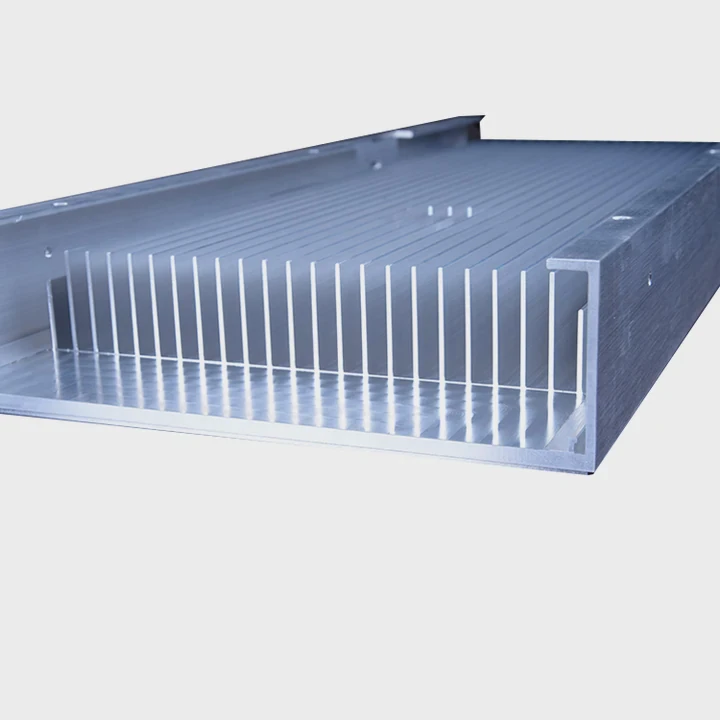
Dive deeper into actual uses
Vapor chambers have found real use in a variety of aerospace components. Below are common application areas and examples of where they show value.
Typical applications
Satellite electronics bus and processing units
Modern satellites carry powerful processors, digital electronics, RF modules. These generate heat. Vapor chambers spread heat away from hot chips to radiators. Their low mass is a major benefit.Power converters and control units
Many systems — propulsion control, attitude control, power regulation — require efficient heat removal. Vapor chambers help keep temperatures stable and avoid hot spots.Laser systems and optical instruments
Some spacecraft and aircraft carry laser communication units, lidar, or sensors that generate local heat. Vapor chambers help manage thermal load and maintain stable temperatures for sensitive optics.Avionics and radar modules in aircraft or UAVs
In airplanes or drones, radar, communication, and control electronics run under vibration and thermal swings. Vapor chambers add reliable heat spread and removal without heavy heatsinks that affect performance.Thermal control panels and radiator interface units
In some spacecraft, vapor chambers form part of thermal control systems. They connect heat sources to thermal straps or radiators. They ensure even heat spread and efficient transfer.
Example usage table
| Component Type | Heat Source | Benefit of Vapor Chamber |
|---|---|---|
| Satellite CPU module | High‑power processors | Even temperature, avoid hotspot, reduce mass |
| Satellite power subsystem | DC/DC converters, regulators | Stable temperature, reliable long life, space-suitable |
| Lidar / laser instrument | Laser diode arrays | Precise thermal control, avoid thermal drift |
| Aircraft avionics box | Radar / communication chips | Heat spread without bulky heat sinks, survive vibration |
| Thermal radiator panel | Heat strap interface | Even heat spread, efficient radiator coupling |
In several recent satellite and UAV programs, vapor chambers replaced bulky copper blocks. Engineers reduced mass by 40–60%. That allowed more payload or lower launch cost. Some laser systems used vapor‑chamber based cold plates to keep laser diodes stable under varying loads.
Engineers like vapor chambers because they allow thin, flat heat‑spreader shapes. That matters in tight mechanical designs. Also, they often enable tighter thermal control — chips run at stable temperature even when ambient changes. This improves reliability and performance.
That said, not all systems use vapor chambers yet. Some avoid them because of qualification cost, need for strict testing, or supply chain maturity. Traditional solid metal heat sinks or fluid loops remain common. Over time, as vapor chamber technology proves reliable, more aerospace systems adopt them.
Conclusion
Vapor chambers can meet the tough demands of aerospace systems. They offer high thermal performance, low mass and compactness. With proper design, they survive altitude, vibration and temperature extremes. Their adoption in satellites, avionics, lasers and power units shows their value. Vapor chambers are a viable and often superior heat‑management choice for aerospace.
TAGS
Latest Articles

Volume discount levels for heat sink orders?
Buyers often ask when heat sink prices start to drop with volume. Many worry they’re overpaying for small orders. This guide explains how B2B volume pricing works for thermal components. Heat sink
21 Dec,2025
Heat sink long-term supply contract options?
Many buyers want stable pricing and reliable delivery for heat sinks. But without a clear contract, risks grow over time. This article explores how to secure better long-term supply deals. Long-term
21 Dec,2025
Tooling cost for new heat sink profiles?
Many engineers struggle to understand why tooling for custom heat sinks costs so much. They worry about budgeting and production timelines. This article breaks down the cost drivers behind tooling.
21 Dec,2025
Heat sink custom sample process steps?
Sometimes, starting a custom heat sink project feels overwhelming—too many steps, too many unknowns, and too many risks. You want a sample, but not endless delays. The process for requesting and
20 Dec,2025
Standard B2B terms for heat sink payments?
When buyers and sellers in B2B heat sink markets talk about payment, many don’t fully understand what’s standard. This can lead to delayed orders, miscommunication, and even lost business
20 Dec,2025
Heat sink pricing factors for large orders?
Heat sinks are vital for many systems. When prices rise, projects stall and budgets break. This problem can hit teams hard without warning. Large order heat sink pricing depends on many factors. You
20 Dec,2025Related Articles
- Can Vapor Chamber be used in construction machines?
- Best Vapor Chamber solution for medical devices?
- Vapor Chamber application in LED lighting?
- Lead time for custom Vapor Chamber parts?
- Does Vapor Chamber suit gaming laptops cooling?
- Vapor Chamber usage in automotive industry?
- Vapor Chamber use in 5G communication equipment?
- Vapor Chamber for data center cooling needs?
- Vapor Chamber heat resistance test report?
- Minimum order quantity for Vapor Chamber?
- How to verify Vapor Chamber quality certifications?
- Heat sink maximum operating temperature rating?
Author
Dr. Emily Chen
Chief AI Researcher
Leading expert in thermal dynamics and AI optimization with over 15 years of experience in data center efficiency research.
Categories
Latest Products






Recommend Categories
- Liquid cooling plate Manufacturer
- Industrial Heat Sink Manufacturer
- Standard Heat Sink Manufacturer
- Aluminum Heat Sink Manufacturer
- Copper Heat Sink Manufacturer
- Anodized Heatsink Manufacturer
- Stamping heat sink Manufacturer
- Die Casting Heatsink Manufacturer
- Soldering heat sink Manufacturer
- CNC Parts Manufacturer
Latest Products
- Wholesale Aluminum Radiator
- Water Cooling Plate Kit
- Water Cooling Heat Sink
- Water Cooling Heat Sink Kit
- Stainless Steel Water Distributor
- Server Water Cooling Plate Kit
- Server Liquid Cooling System
- Server Aluminum Cooling Kit
- S19 Full Cover Cooling Plate
- S19 Cooling Plate Kit
- S19 Aluminum Cooling Plate
Contact Expert
Have questions about this article? Reach out to our experts directly.