Vapor Chamber application in LED lighting?
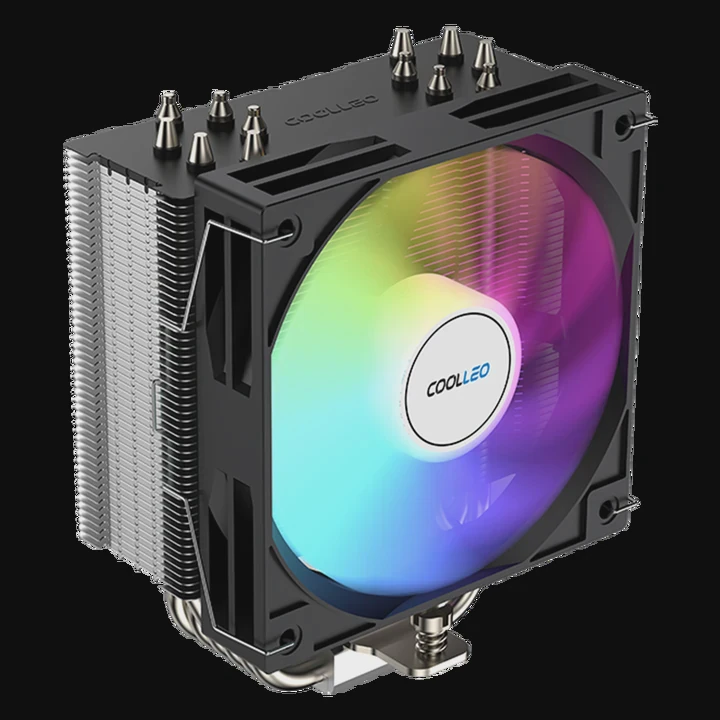
LED lighting often struggles with heat. Vapor chambers offer a promising fix, fighting overheating quickly and quietly.
Yes. Vapor chambers can play a key role in cooling high‑power LED lighting systems by spreading and dissipating heat effectively. They act as high‑performance heat spreaders to manage the thermal load from LED modules and improve reliability.
To understand this fully, let’s explore how vapor chambers interact with LED modules. We will look at thermal loads, lifespan impact, and design constraints. This helps to see when and how vapor chambers make sense in LED systems.
Are Vapor Chambers used in high-power LED lighting systems?
Worried about LED overheating? Vapor chambers might already be in use where heat is heavy.
Vapor chambers are indeed used in many high‑power LED lighting systems today. They help manage heat from dense LED arrays and keep the temperature within safe limits.
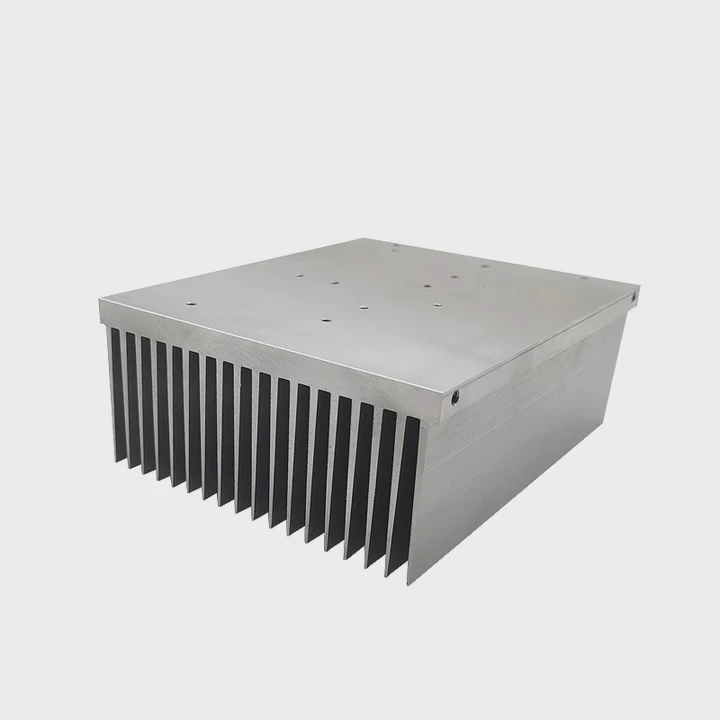
Vapor chambers are a type of heat spreader similar to heat pipes, but with a planar design suitable for flat surfaces. In high‑power LED systems, LEDs are often packed densely to achieve high light output. This density raises thermal load per area. A vapor chamber offers a flat, efficient thermal spread area right under the LED array. It collects heat from hot spots and spreads it across a larger area or to a connected heat sink.
Many LED lighting applications benefit from this design. Street lights, stadium lights, high‑bay lights in factories, and large‑area panel lights are common examples. In these applications, heat must be removed quietly and reliably. Vapor chambers offer a low‑profile solution compared to bulky fans or large heatsinks.
Manufacturers choose vapor chambers when the LED module cannot tolerate high surface temperatures. The flat geometry allows LED boards and optical elements to stay close, keeping the fixture slim. In practice, vapor chambers also help maintain uniform temperature under the LED array. Uniform temperature keeps light output consistent and reduces thermal stresses that could harm solder joints, phosphor layers or lens materials.
In some designs, the vapor chamber is bonded directly under the LED module then connected to fins or an aluminum housing. This approach reduces overall fixture size without sacrificing cooling. Other designs use a vapor chamber plus a small fan. This hybrid design leverages the vapor chamber’s spread and the fan’s airflow. The result is compact, efficient, and quiet cooling.
On the other hand, not every LED fixture uses a vapor chamber. Low‑power LED lamps or cheap fixtures often rely on simple extruded aluminum heat sinks. Vapor chambers are more common in high-power, high-density, or premium lighting systems. They appear more when space is limited, or when high thermal performance is needed without visible fans.
In short, vapor chambers already have a solid place in the world of high‑power LED lighting. Their use continues to grow as LED power and density climbs.
What thermal loads do LED modules impose on Vapor Chambers?
LEDs throw a lot of heat when they push for brightness. Vapor chambers must handle that heat well.
High-power LED modules often generate thermal loads between 5 to 15 W per LED die, leading to total heat flux of 5–20 W/cm². Vapor chambers must spread this heat to avoid hot spots and maintain junction temperature safely.
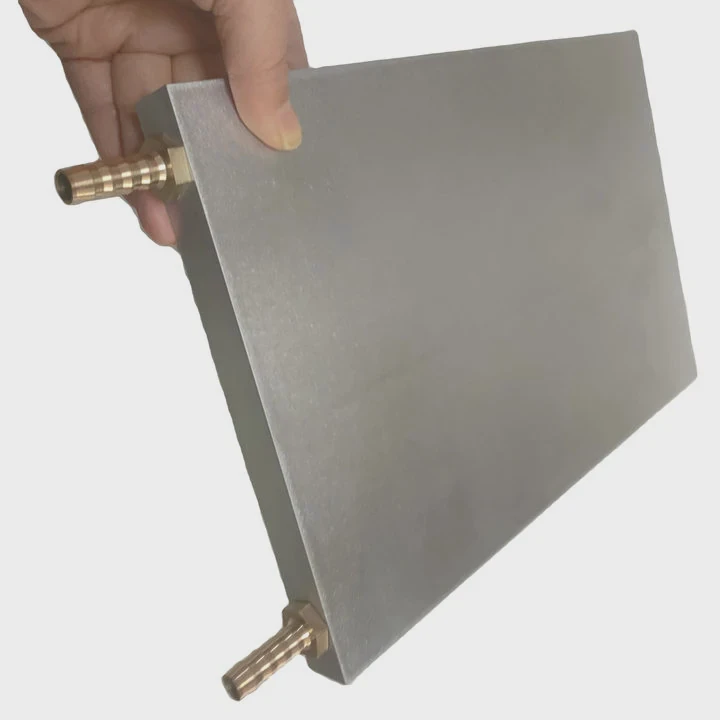
Understanding thermal loads in LED modules begins with how LEDs convert electricity to light. In high‑power LEDs, much of the input energy becomes heat rather than light. For example, a single LED die rated at 3 W may waste 60–70% of its power as heat under full load. In an array of many dies, this heat quickly adds up.
Consider a module with 30 high‑power LEDs each drawing 3 W. That gives about 90 W total input. If 60% becomes heat, that is 54 W of heat needing removal. If the LED die area sums to, say, 6 cm², that means a heat flux of 9 W/cm². Many modern high‑power arrays push even harder: total module power may exceed 150 W or more, and heat flux may reach 10–20 W/cm² locally.
This high heat flux challenges both the LED junction and the optical materials. If heat is not removed fast, junction temperature rises. High junction temperature reduces LED efficiency, accelerates lumen depreciation, and shortens lifespan. Phosphor coatings may degrade faster. Lens materials may suffer discoloration or warping.
A vapor chamber helps by quickly pulling heat from the LED base and spreading it over large area or dumping into a bigger heat sink or housing. The chamber’s internal liquid evaporates near hot areas and condenses elsewhere, moving heat efficiently with low thermal resistance. Typical thermal resistance of a good vapor chamber might be 0.1–0.5 °C/W over its active area, much better than solid metal plates.
The effectiveness depends on several factors:
Heat input distribution
If LEDs cluster tightly, heat flux peaks at LED die locations. Vapor chamber must have good wick structure under those spots. If heat is uneven, poor wick or thin section may cause dry‑out or local overheating.
Spread area and interface contact
The chamber must have good contact with LED base and with heat sink or housing. Poor contact or thermal interface materials (TIM) with high resistance can kill benefits. The vapor chamber usually covers the full LED board area. Then heat spreads out sideways.
Ambient temperature, flow, and external cooling
If ambient air is hot or airflow little, even a vapor chamber cannot dump heat fast enough. In those cases designers often add fins or fans. Vapor chamber alone shifts heat; it does not remove it to ambient by itself.
Table 1 below shows typical thermal loads and corresponding heat flux for LED modules:
| Example LED Module | Module Power | Estimated Heat (60%) | Board Area | Heat Flux (W/cm²) |
|---|---|---|---|---|
| Small 30‑LED Array | 90 W | 54 W | 6 cm² | ~9 W/cm² |
| Medium 60‑LED Array | 180 W | 108 W | 8 cm² | ~13.5 W/cm² |
| High-Power Panel (>200 W) | 240 W | 144 W | 10 cm² | ~14.4 W/cm² |
These flux values push beyond what normal solid metal spreaders can safely handle. Vapor chambers shine here. They lower thermal gradients, reduce hot spots, and keep LED junction temperature more even. They also reduce thermal stress on solder joints and board materials. In LED module design, this translates to more stable output, better reliability, and safer thermal margins.
Can Vapor Chambers extend LED module lifespan by better cooling?
LEDs die slowly from heat stress. Better cooling may slow that decay. Vapor chambers could help.
Yes. Vapor chambers can extend LED module lifespan by keeping junction temperatures lower and reducing thermal stress. Lower temperature and smaller temperature swings slow degradation of LED chips, phosphors, and solder joints.
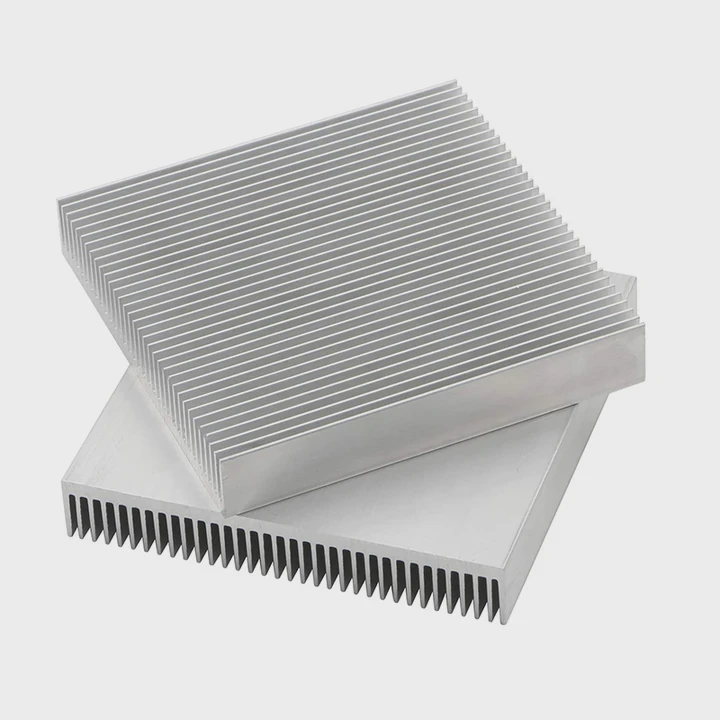
The lifespan of an LED module depends heavily on how well it is cooled. Every 10–15 °C increase in junction temperature can double the rate of lumen depreciation. Over time, high temperatures damage semiconductor junctions, alter phosphor efficiency, and stress solder joints and board materials.
When a vapor chamber is used, heat spreads quickly away from the hotspot under each LED. This leads to a lower peak temperature and more uniform board temperature. Uniform temperature means fewer hot spots. That reduces thermal stress on solder joints. Solder joints often fail due to repeated thermal cycling. If LED modules turn on and off frequently, solder may crack or delaminate. Vapor chambers help limit temperature swings and gradients. That reduces mechanical stress.
Phosphor coatings that convert LED blue light to white can also degrade faster under high heat. Phosphor life depends on how hot and how uneven temperature is across the material. By flattening the temperature profile, vapor chambers reduce local overheating under phosphor layers or lenses. That slows phosphor degradation and prevents color shift or dimming over time.
Lens or diffuser materials may deform if near a hot spot repeatedly or for long durations. With vapor chamber cooling, lens temperature stays lower, which reduces risk of warping or yellowing. That helps maintain consistent light quality over time.
Furthermore, many LED modules are sealed or enclosed, limiting airflow. In those cases, internal cooling becomes critical. Vapor chambers help inside sealed housings by distributing heat without needing direct airflow at the diode. That is useful for waterproof street lights or fixtures inside fixtures. This internal thermal management reduces reliance on external fans or large fin structures. That lowers maintenance needs and potential failure points.
Real world data from LED lighting manufacturers show that proper thermal design can extend lifetime from typical 30,000–50,000 hours to 60,000–100,000 hours before lumen output drops below 70%. Vapor chambers cannot guarantee such lifetime alone. But as part of a well‑designed thermal system, they help reach the lower end of that longer lifetime range.
Also, thermal response during on/off cycles matters. Vapor chamber reduces temperature overshoot quickly when LEDs turn on. That reduces thermal shock on materials. Repeated cycles stress solder and joints less harshly. As a result, reliability improves especially in lighting that frequently switches on and off.
In summary, vapor chambers support longer LED lifespan by reducing peak temperature, evening out heat distribution, lowering thermal stress, and protecting phosphor and optical materials.
What packaging constraints apply for Vapor Chambers in LED lighting?
Vapor chambers cool well. But their shape and size bring design limits too.
Packaging constraints include size limits, thickness, weight, interface flatness, seal integrity, and manufacturing cost. Designers must balance these when embedding vapor chambers in LED fixtures.
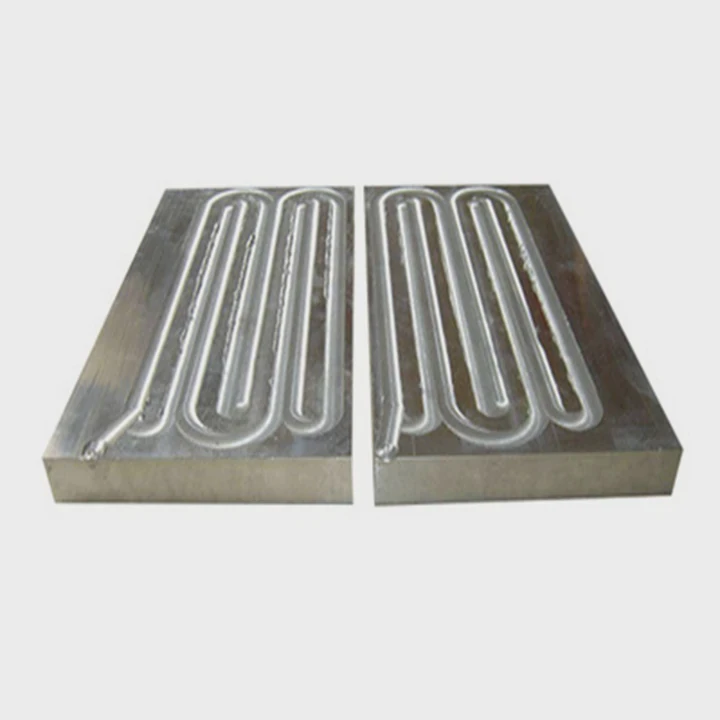
While vapor chambers bring strong thermal benefits, they also impose constraints on fixture design. First, size and thickness matter. Vapor chambers are relatively thin, but their flatness must be controlled precisely. If the chamber warps or bends, contact with LED base or housing fins will suffer. Poor contact leads to thermal resistance increase, reducing cooling effectiveness.
In slim LED fixtures, the total height from LED board to outer housing may be only a few millimeters. A vapor chamber adds extra thickness. Designers must ensure the chamber fits without pushing the lens or diffuser further away. That is especially critical in flat‑panel ceiling lights or retro‑fit bulbs where size constraints are tight.
Material weight is another factor. Vapor chambers are often aluminum or copper. Copper offers better thermal performance but is heavier and costlier. Aluminum is lighter and cheaper but may have lower thermal conductivity. The choice affects fixture weight and balance, especially for ceiling‑mounted lights.
Flatness and surface finish affect thermal interface quality. The LED board base and the bottom of the vapor chamber must mate tightly. Often a thin thermal interface material (TIM) is used. But TIM adds thickness and thermal resistance. If the TIM layer is too thick, the advantage of the vapor chamber reduces significantly. Designers must choose high‑quality, thin TIM or use soldered/bonded joints. Bonded joints improve thermal conduction but increase manufacturing complexity and cost.
Seal integrity matters too. Vapor chambers rely on internal vacuum and working fluid. During assembly or shipping, accidental deformation may break the seal. That would disable the chamber completely. Therefore, manufacturing must ensure robust welding or sealing. For high‑volume LED production, this adds process steps and quality control.
Cost is another important constraint. Vapor chambers are more costly than simple aluminum heat sinks. In low‑cost LED bulbs or fixtures, this cost may be unacceptable. Manufacturers must balance between improved thermal performance and product price. For premium or industrial LED lighting, the cost may be justified. For consumer‑grade bulbs, it often is not.
Finally, regulatory and safety requirements may affect design. For example, in outdoor lighting, fixture housing must meet IP ratings (dust and water ingress). The vapor chamber and its bonds must withstand environmental stress, humidity, thermal cycles, and vibration. That can restrict the chamber shape, welding method, and housing attachment.
Table 2 below summarizes key packaging constraints, their impact, and design considerations:
| Constraint | Impact on Design | Design Considerations |
|---|---|---|
| Thickness / Flatness | Poor contact → reduced cooling | Use precision machining; maintain flatness tolerance |
| Weight | May affect fixture balance or mounting | Use lighter metal (aluminum); check mounting specs |
| Surface finish / TIM | Extra thermal resistance if rough or thick interface | Use thin, high‑conductivity TIM or direct bonding |
| Seal integrity | Risk of failure if chamber is damaged | Use reliable welding, vacuum testing after assembly |
| Cost | Higher BOM cost vs simple heatsink | Justify with longer lifespan or high performance |
| Environmental durability | Degradation over time if exposed | Use corrosion‑resistant materials; ensure IP rating |
These constraints force trade‑offs. Designers need to decide whether the thermal performance gains justify cost and complexity. In some cases a simple aluminum heat sink with good airflow may suffice. In other cases—dense LED arrays, sealed housings, high ambient temperature—vapor chambers pay off.
In addition, integration into LED modules is not just about physical fit. The internal structure of a vapor chamber must match the thermal pattern of the LED board. Wick structure under each LED cluster must be designed. Extra care is needed for LED clusters spread across long boards (like linear street lights). The chamber wick and vapor path must provide uniform coverage over entire board. If wick design is poor, parts may dry out under heavy load, causing thermal failure.
Manufacturers must optimize wick pore size, chamber thickness, and fluid charge. This adds complexity to design and production. Custom vapor chamber shapes are sometimes needed, which further increases cost and lead time. These factors limit mass‑market adoption.
Beyond production, maintenance can be an issue. If a fixture is damaged, replacing a vapor chamber is harder than replacing a simple finned heat sink. For outdoor retrofits, the replacement supply chain may not support specialized vapor chambers.
Thus packaging constraints, cost, and production complexity all influence whether vapor chambers are used. When designers account for these carefully, vapor chambers deliver high thermal performance. When they ignore constraints, the result may be poor cooling or high cost without benefit.
Conclusion
Vapor chambers offer powerful cooling benefits for high‑power LED lighting. They manage heavy heat, lower junction temperature, and help extend module lifespan. Yet their use depends on careful design — size, cost, interface, and manufacturing all matter. When chosen wisely, they deliver strong, lasting thermal performance.
TAGS
Latest Articles

Volume discount levels for heat sink orders?
Buyers often ask when heat sink prices start to drop with volume. Many worry they’re overpaying for small orders. This guide explains how B2B volume pricing works for thermal components. Heat sink
21 Dec,2025
Heat sink long-term supply contract options?
Many buyers want stable pricing and reliable delivery for heat sinks. But without a clear contract, risks grow over time. This article explores how to secure better long-term supply deals. Long-term
21 Dec,2025
Tooling cost for new heat sink profiles?
Many engineers struggle to understand why tooling for custom heat sinks costs so much. They worry about budgeting and production timelines. This article breaks down the cost drivers behind tooling.
21 Dec,2025
Heat sink custom sample process steps?
Sometimes, starting a custom heat sink project feels overwhelming—too many steps, too many unknowns, and too many risks. You want a sample, but not endless delays. The process for requesting and
20 Dec,2025
Standard B2B terms for heat sink payments?
When buyers and sellers in B2B heat sink markets talk about payment, many don’t fully understand what’s standard. This can lead to delayed orders, miscommunication, and even lost business
20 Dec,2025
Heat sink pricing factors for large orders?
Heat sinks are vital for many systems. When prices rise, projects stall and budgets break. This problem can hit teams hard without warning. Large order heat sink pricing depends on many factors. You
20 Dec,2025Related Articles
- Lead time for custom Vapor Chamber parts?
- Does Vapor Chamber suit gaming laptops cooling?
- Vapor Chamber usage in automotive industry?
- Vapor Chamber sample production process?
- Vapor Chamber design guidelines for heat transfer?
- Vapor Chamber pressure resistance rating?
- Best Vapor Chamber solution for medical devices?
- Can Vapor Chamber be used in construction machines?
- Vapor Chamber Performance in Aerospace Systems?
- Vapor Chamber use in 5G communication equipment?
- Vapor Chamber for data center cooling needs?
- Vapor Chamber heat resistance test report?
Author
Dr. Emily Chen
Chief AI Researcher
Leading expert in thermal dynamics and AI optimization with over 15 years of experience in data center efficiency research.
Categories
Latest Products






Recommend Categories
- Liquid cooling plate Manufacturer
- Industrial Heat Sink Manufacturer
- Standard Heat Sink Manufacturer
- Aluminum Heat Sink Manufacturer
- Copper Heat Sink Manufacturer
- Anodized Heatsink Manufacturer
- Stamping heat sink Manufacturer
- Die Casting Heatsink Manufacturer
- Soldering heat sink Manufacturer
- CNC Parts Manufacturer
Latest Products
- Wholesale Aluminum Radiator
- Water Cooling Plate Kit
- Water Cooling Heat Sink
- Water Cooling Heat Sink Kit
- Stainless Steel Water Distributor
- Server Water Cooling Plate Kit
- Server Liquid Cooling System
- Server Aluminum Cooling Kit
- S19 Full Cover Cooling Plate
- S19 Cooling Plate Kit
- S19 Aluminum Cooling Plate
Contact Expert
Have questions about this article? Reach out to our experts directly.