How to calculate Vapor Chamber efficiency?
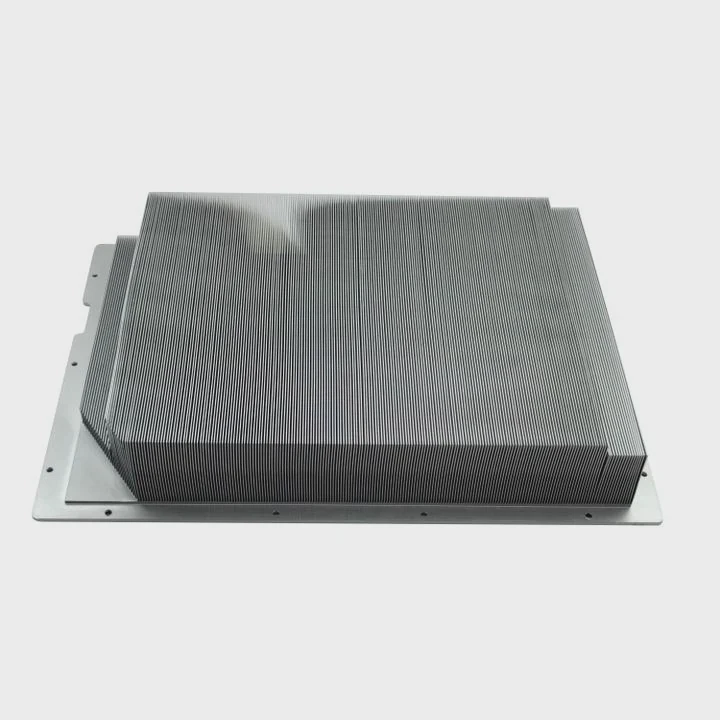
A vapor chamber might look perfect on the surface, but if the efficiency isn’t right, performance suffers fast. Numbers don’t lie, but what numbers really matter?
Vapor chamber efficiency is calculated by comparing effective thermal conductance to geometric dimensions and input power.
This guide breaks down how engineers define, measure, and simulate vapor chamber performance so buyers can make informed decisions.
How is the efficiency of a Vapor Chamber calculated?
It’s easy to misunderstand what “efficiency” really means for thermal products. Not all heat spreaders are equal.
Vapor chamber efficiency is typically calculated as the thermal conductance (W/K) divided by the distance heat travels.
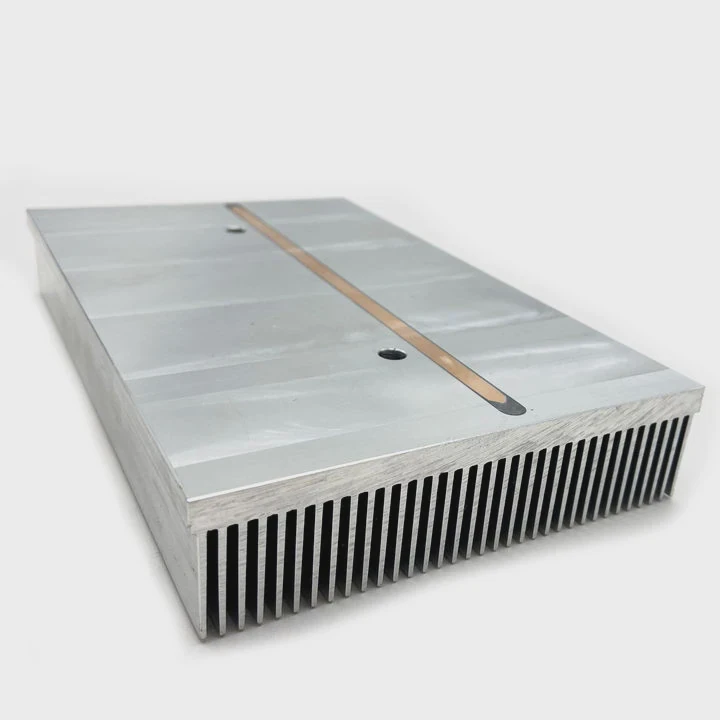
Unlike electrical efficiency, thermal systems don’t use input/output ratios. Instead, engineers use the formula:
[ \text{Thermal Conductance (G)} = \frac{Q}{\Delta T} ]
Where:
- ( Q ) is input power in watts
- ( \Delta T ) is the temperature difference between heat source and sink
To get a better view of the chamber’s behavior, efficiency is often normalized by thickness or length, like this:
[ \text{Apparent Thermal Conductivity (k)} = \frac{G \cdot L}{A} ]
Where:
- ( L ) is the distance heat travels
- ( A ) is cross-sectional area
This gives insight into how much heat spreads and how evenly it flows.
Efficiency Estimation Steps
- Apply known heat load (e.g. 50W)
- Measure surface temperature at input and output
- Calculate ΔT between the hot and cold sides
- Divide power by ΔT to get conductance
- Normalize if needed by geometry
What metrics define Vapor Chamber thermal efficiency?
Different people use different metrics. It can get confusing fast.
The key thermal metrics for vapor chamber efficiency include conductance, resistance, and apparent thermal conductivity.
Let’s break it down into the three most common ones:
Key Efficiency Metrics for Vapor Chambers
| Metric | Formula | Unit | Purpose |
|---|---|---|---|
| Thermal Conductance (G) | Q / ΔT | W/K | Shows how well heat moves through |
| Thermal Resistance ® | ΔT / Q | K/W | Lower means better efficiency |
| Apparent Conductivity (k) | G · L / A | W/m·K | Used for comparing to bulk materials |
In real applications, “resistance” and “conductance” describe the same behavior in opposite ways. A lower resistance means better thermal movement. A higher conductance means the same.
Thermal engineers often compare vapor chambers to solid copper or aluminum. A high-performance vapor chamber may reach equivalent thermal conductivities of 3000–5000 W/m·K.
These metrics help engineers know if the chamber fits their device specs.
Do you need to measure temperature drop across the chamber?
Testing is key. Without a proper ΔT reading, all other numbers are just guesses.
Yes — measuring the temperature drop from inlet to outlet is critical to calculate efficiency.
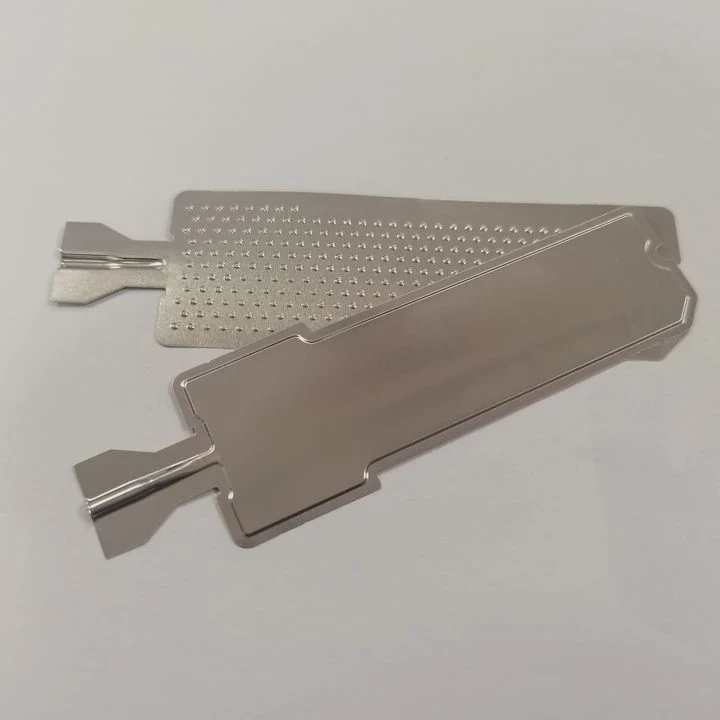
Without measuring ΔT, you can’t compute conductance or resistance. And without that, you can’t know if your chamber is working properly.
Best Practices for ΔT Measurement
Step 1: Place Thermocouples
Use high-accuracy thermocouples (e.g., Type K). Place one at the heat source (center of the evaporator zone), and one at the far edge (condenser zone).
Step 2: Apply Heat Load
Use a heater with controlled power. Set input wattage to known value (e.g., 30W, 50W).
Step 3: Wait for Thermal Steady-State
Let the system stabilize for several minutes before recording temperatures. This removes early spike errors.
Step 4: Record Data
Capture temperature values over a few minutes to average the readings. Calculate:
[ \Delta T = T{\text{evaporator}} - T{\text{condenser}} ]
Then apply the formula:
[ G = \frac{Q}{\Delta T} ]
You can use this to monitor every chamber from sample to mass production.
This is especially critical in industries like data centers, aerospace, and semiconductors, where every degree counts.
Is simulation required for efficiency estimation of Vapor Chambers?
Some engineers think only lab tests matter. Others depend heavily on simulation.
No — simulation is not required, but it helps predict efficiency before physical samples are available.
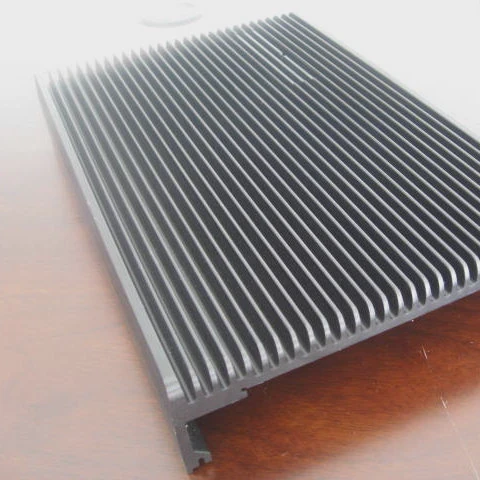
Simulation software can estimate how a vapor chamber performs under different loads. This helps designers test concepts without building physical prototypes.
Common Simulation Tools
| Software | Main Use |
|---|---|
| COMSOL Multiphysics | Detailed thermal-fluid modeling |
| ANSYS Icepak | 3D heat transfer simulation |
| FloTHERM | Electronics cooling modeling |
| SolidWorks Flow Simulation | Design-level fluid/thermal analysis |
When to Use Simulation
- Early design stage before sample production
- Optimizing wick structure or chamber thickness
- Comparing performance of vapor chamber vs heat pipe
- Evaluating integration with heatsink, TIMs, or enclosure
Simulation lets you explore more options faster. But it requires accurate material data and geometry. It also assumes steady conditions, which may differ from real world heat spikes or load shifts.
Limits of Simulation
- Cannot detect leaks, pressure issues, or weld flaws
- Ignores aging or material degradation over time
- May misjudge wick performance if real properties differ from input assumptions
So while simulation helps during design, actual testing remains the final step. Many companies use both — simulate first, then test physical samples to validate or adjust the model.
Conclusion
To calculate vapor chamber efficiency, you must measure heat transfer performance under real conditions. That means tracking temperature drop, input power, and physical dimensions. Conductance and resistance are the key metrics. Simulation helps during design, but testing ensures accuracy in the field.
TAGS
Latest Articles

Volume discount levels for heat sink orders?
Buyers often ask when heat sink prices start to drop with volume. Many worry they’re overpaying for small orders. This guide explains how B2B volume pricing works for thermal components. Heat sink
21 Dec,2025
Heat sink long-term supply contract options?
Many buyers want stable pricing and reliable delivery for heat sinks. But without a clear contract, risks grow over time. This article explores how to secure better long-term supply deals. Long-term
21 Dec,2025
Tooling cost for new heat sink profiles?
Many engineers struggle to understand why tooling for custom heat sinks costs so much. They worry about budgeting and production timelines. This article breaks down the cost drivers behind tooling.
21 Dec,2025
Heat sink custom sample process steps?
Sometimes, starting a custom heat sink project feels overwhelming—too many steps, too many unknowns, and too many risks. You want a sample, but not endless delays. The process for requesting and
20 Dec,2025
Standard B2B terms for heat sink payments?
When buyers and sellers in B2B heat sink markets talk about payment, many don’t fully understand what’s standard. This can lead to delayed orders, miscommunication, and even lost business
20 Dec,2025
Heat sink pricing factors for large orders?
Heat sinks are vital for many systems. When prices rise, projects stall and budgets break. This problem can hit teams hard without warning. Large order heat sink pricing depends on many factors. You
20 Dec,2025Related Articles
- Vapor Chamber REACH analysis documentation?
- Vapor Chamber import regulations in USA?
- Does Vapor Chamber meet aerospace standards?
- Vapor Chamber industry certification list?
- Vapor Chamber failure analysis methods?
- Does Vapor Chamber need nitrogen environment?
- Vapor Chamber 3D modeling guidelines?
- Are there patented Vapor Chamber designs?
- How to optimize Vapor Chamber mass production?
- Standard cost of Vapor Chamber tooling?
- Can Vapor Chamber be welded?
- Vapor Chamber requirements for CE marking?
Author
Dr. Emily Chen
Chief AI Researcher
Leading expert in thermal dynamics and AI optimization with over 15 years of experience in data center efficiency research.
Categories
Latest Products






Recommend Categories
- Liquid cooling plate Manufacturer
- Industrial Heat Sink Manufacturer
- Standard Heat Sink Manufacturer
- Aluminum Heat Sink Manufacturer
- Copper Heat Sink Manufacturer
- Anodized Heatsink Manufacturer
- Stamping heat sink Manufacturer
- Die Casting Heatsink Manufacturer
- Soldering heat sink Manufacturer
- CNC Parts Manufacturer
Latest Products
- Wholesale Aluminum Radiator
- Water Cooling Plate Kit
- Water Cooling Heat Sink
- Water Cooling Heat Sink Kit
- Stainless Steel Water Distributor
- Server Water Cooling Plate Kit
- Server Liquid Cooling System
- Server Aluminum Cooling Kit
- S19 Full Cover Cooling Plate
- S19 Cooling Plate Kit
- S19 Aluminum Cooling Plate
Contact Expert
Have questions about this article? Reach out to our experts directly.