What is in liquid cooling?
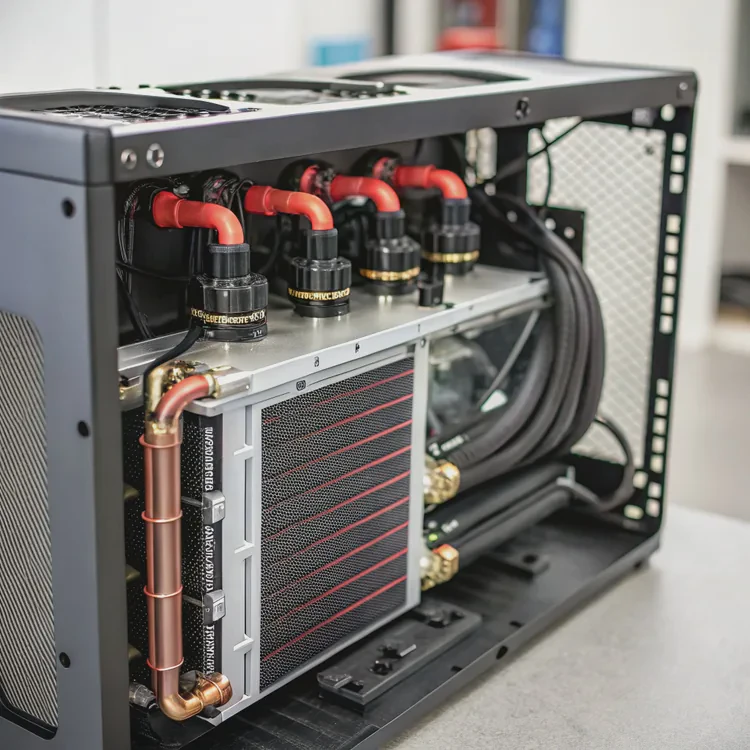
Heat is the biggest enemy of performance. When components get hot, they slow down, wear out, or even fail. That’s why liquid cooling exists — it’s a precise way to control temperature in high-performance systems.
A liquid cooling system contains a pump, cold plate, radiator, tubing, reservoir, fans, and coolant — all working together to remove heat efficiently from electronic components.
Liquid cooling is not just about using a liquid instead of air. It’s about creating a closed loop that transfers heat quickly and evenly. Every element in this loop has a purpose, and if one fails, the whole system’s efficiency drops.
What elements make up a full cooling loop?
A cooling loop is like a living system. Each part plays a unique role in moving and releasing heat.
A complete cooling loop includes the cold plate, pump, tubing, radiator, reservoir, fans, and coolant, forming a closed circuit that continuously cycles heat away from components.
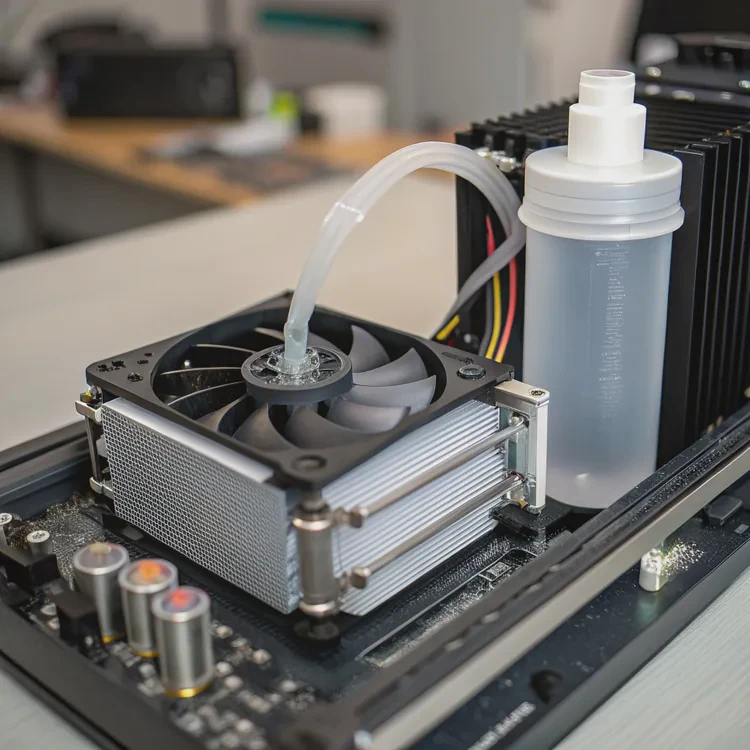
Each of these parts interacts closely. The pump moves coolant through the system. The cold plate absorbs heat from the CPU or GPU. The radiator releases it into the air. The reservoir stores and filters the coolant, and the fans increase air movement over the radiator.
Components of a Liquid Cooling Loop
| Component | Function | Material | Typical Location |
|---|---|---|---|
| Cold Plate | Absorbs heat from source | Copper or aluminum | Mounted on CPU/GPU |
| Pump | Moves coolant through loop | Ceramic or polymer | Base of reservoir or separate |
| Radiator | Releases heat into air | Aluminum or copper | Case top or side panel |
| Reservoir | Stores coolant, removes air | Acrylic or glass | Near pump |
| Tubing | Connects all components | Rubber or PVC | Throughout system |
| Fan | Enhances air flow | Plastic with PWM motor | Attached to radiator |
| Coolant | Transfers heat efficiently | Water-glycol mix | Inside loop |
Together, they form a cycle: heat absorption → transport → dissipation → return. When balanced correctly, this loop keeps temperatures low even under heavy loads.
Why do these parts matter for performance?
Each part of a liquid cooling loop affects how efficiently heat moves and how stable the system stays under stress.
Performance depends on the design, material quality, and connection of each part — any weakness can reduce flow, block heat transfer, or create air pockets.
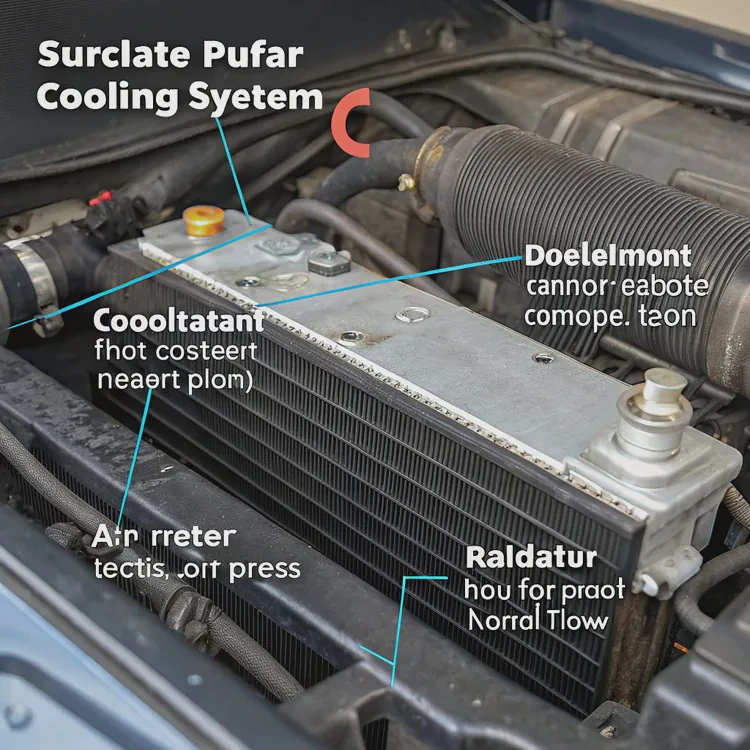
The cold plate’s material and surface finish control how fast heat enters the liquid. Pumps regulate flow speed — too fast, and heat doesn’t transfer properly; too slow, and the system overheats. Radiators depend on size and fin density. More surface area means better cooling but also higher resistance.
How Each Component Influences Performance
| Component | Impact on Performance | Common Issue |
|---|---|---|
| Cold Plate | Controls heat input efficiency | Uneven surface contact |
| Pump | Determines coolant flow rate | Air lock or weak pressure |
| Radiator | Controls total heat output | Clogged fins or poor airflow |
| Reservoir | Maintains stability of loop | Trapped air bubbles |
| Tubing | Affects flow restriction | Kinked or twisted hoses |
| Coolant | Transfers heat energy | Contamination or degradation |
When I first built a cooling system, I learned that even small mistakes — like a loose fitting or poor pump choice — could increase temperatures by 10–15°C. The balance between flow, heat transfer, and air removal defines how well the system performs.
How to assemble each part correctly?
Assembly is where most cooling problems begin or end. Doing it right ensures safe operation and efficient cooling.
To assemble a liquid cooling system correctly, install the cold plate firmly, connect leak-free tubing, place the radiator for optimal airflow, and fill with the correct coolant while removing air bubbles.
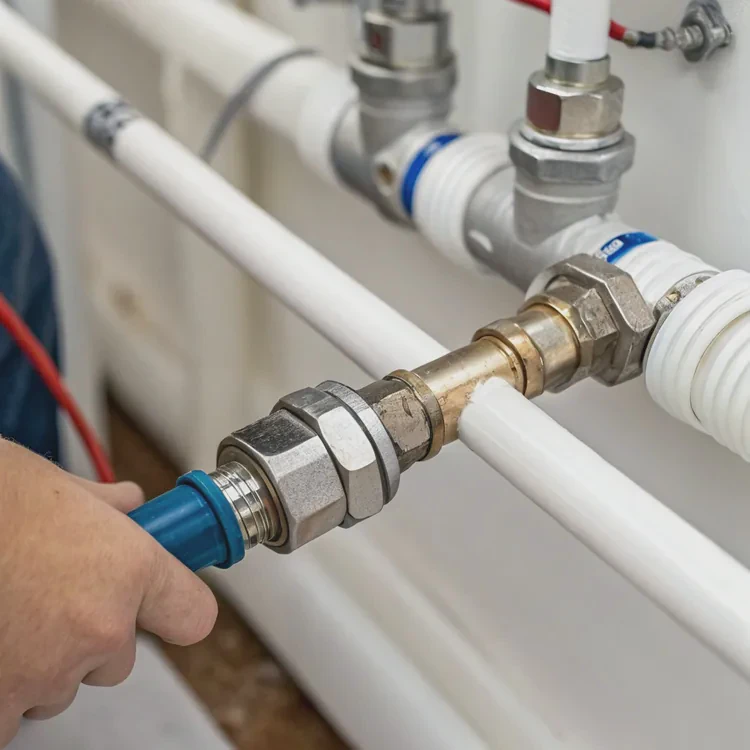
Building a cooling loop is like assembling plumbing on a small scale. The order and tightness of connections are crucial. Follow this simple process:
Step-by-Step Assembly Guide
- Plan your layout — identify where each part will sit in the case or enclosure.
- Mount the radiator — fix it securely, ensuring fans have clear airflow.
- Install the cold plate — use thermal paste between the chip and plate for good contact.
- Attach the pump and reservoir — place them below the radiator level to prevent air locks.
- Connect tubing — cut it cleanly and fit tightly onto barbs or compression fittings.
- Secure fittings — double-check for tightness but avoid overtightening.
- Fill the loop — pour coolant slowly while running the pump at low speed.
- Bleed air — tilt and tap the system to release trapped bubbles.
- Test for leaks — power the pump with no electronics connected for several hours.
- Monitor and adjust — once stable, power the full system and track temperature changes.
Common Assembly Mistakes to Avoid
- Mixing incompatible metals like copper and aluminum (causes galvanic corrosion).
- Using tap water instead of distilled water (leaves mineral deposits).
- Ignoring air bubbles that reduce pump efficiency.
- Mounting the radiator where airflow is blocked by cables or panels.
Taking the time to assemble correctly saves hours of troubleshooting later and ensures smooth, silent performance.
What future components improve efficiency?
The world of cooling technology is changing fast. New materials and intelligent systems are redefining how heat is managed.
Future liquid cooling systems will use smart sensors, nano-enhanced fluids, 3D-printed channels, and adaptive pumps to improve energy efficiency and thermal performance.
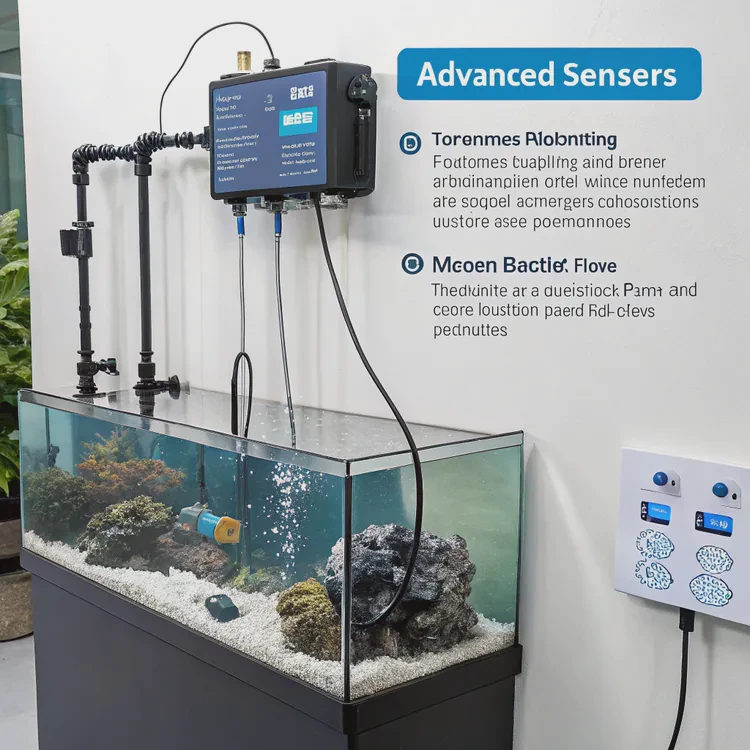
Next-generation components are becoming more integrated and intelligent. Instead of just reacting to temperature, systems now predict it. Built-in sensors monitor flow rate, coolant quality, and even micro-bubble formation. These sensors connect to AI-based control units that adjust pump speed and fan power in real-time.
Innovations in Modern Cooling Technology
| Technology | Description | Benefit |
|---|---|---|
| Smart Sensors | Measure temperature, flow, and pressure | Predictive maintenance |
| Nano-Fluids | Liquids with suspended metal nanoparticles | Higher thermal conductivity |
| 3D-Printed Cold Plates | Custom microchannels for better flow | Increased surface contact |
| Variable-Speed Pumps | Adjust output automatically | Energy and noise reduction |
| Eco-Friendly Coolants | Non-toxic, biodegradable mixtures | Reduced environmental impact |
The Next Frontier: Integration and Sustainability
In the near future, cooling systems will merge with electronics as part of their design, not just an accessory. We already see it in electric vehicles and server farms. Components are now shaped to guide fluid paths internally, minimizing joints and losses. Recycled and renewable coolants are also becoming standard, making thermal management both smarter and greener.
As I look at upcoming prototypes, I see how close we are to self-optimizing thermal systems — units that maintain their own balance for years without manual maintenance.
Conclusion
A liquid cooling system is more than just pipes and fluid. It’s a precise, balanced network of parts that work together to protect performance. As materials and sensors evolve, tomorrow’s systems will be cleaner, smarter, and far more efficient than anything we use today.
TAGS
Latest Articles

Volume discount levels for heat sink orders?
Buyers often ask when heat sink prices start to drop with volume. Many worry they’re overpaying for small orders. This guide explains how B2B volume pricing works for thermal components. Heat sink
21 Dec,2025
Heat sink long-term supply contract options?
Many buyers want stable pricing and reliable delivery for heat sinks. But without a clear contract, risks grow over time. This article explores how to secure better long-term supply deals. Long-term
21 Dec,2025
Tooling cost for new heat sink profiles?
Many engineers struggle to understand why tooling for custom heat sinks costs so much. They worry about budgeting and production timelines. This article breaks down the cost drivers behind tooling.
21 Dec,2025
Heat sink custom sample process steps?
Sometimes, starting a custom heat sink project feels overwhelming—too many steps, too many unknowns, and too many risks. You want a sample, but not endless delays. The process for requesting and
20 Dec,2025
Standard B2B terms for heat sink payments?
When buyers and sellers in B2B heat sink markets talk about payment, many don’t fully understand what’s standard. This can lead to delayed orders, miscommunication, and even lost business
20 Dec,2025
Heat sink pricing factors for large orders?
Heat sinks are vital for many systems. When prices rise, projects stall and budgets break. This problem can hit teams hard without warning. Large order heat sink pricing depends on many factors. You
20 Dec,2025Related Articles
- What does a liquid cooler do?
- What liquid is used in liquid cooling?
- Does liquid cooling need maintenance?
- Which is better, air cooled or liquid cooled?
- What is the best liquid CPU cooler?
- How to mount a liquid CPU cooler?
- How much more is liquid cooling?
- How does liquid cooling work?
- Is liquid cooling better than air cooling?
- Is liquid cooling better?
- How to install a single liquid cooler CPU?
- How to install liquid CPU cooler?
Author
Dr. Emily Chen
Chief AI Researcher
Leading expert in thermal dynamics and AI optimization with over 15 years of experience in data center efficiency research.
Categories
Latest Products






Recommend Categories
- Liquid cooling plate Manufacturer
- Industrial Heat Sink Manufacturer
- Standard Heat Sink Manufacturer
- Aluminum Heat Sink Manufacturer
- Copper Heat Sink Manufacturer
- Anodized Heatsink Manufacturer
- Stamping heat sink Manufacturer
- Die Casting Heatsink Manufacturer
- Soldering heat sink Manufacturer
- CNC Parts Manufacturer
Latest Products
- Wholesale Aluminum Radiator
- Water Cooling Plate Kit
- Water Cooling Heat Sink
- Water Cooling Heat Sink Kit
- Stainless Steel Water Distributor
- Server Water Cooling Plate Kit
- Server Liquid Cooling System
- Server Aluminum Cooling Kit
- S19 Full Cover Cooling Plate
- S19 Cooling Plate Kit
- S19 Aluminum Cooling Plate
Contact Expert
Have questions about this article? Reach out to our experts directly.