What is the best liquid CPU cooler?
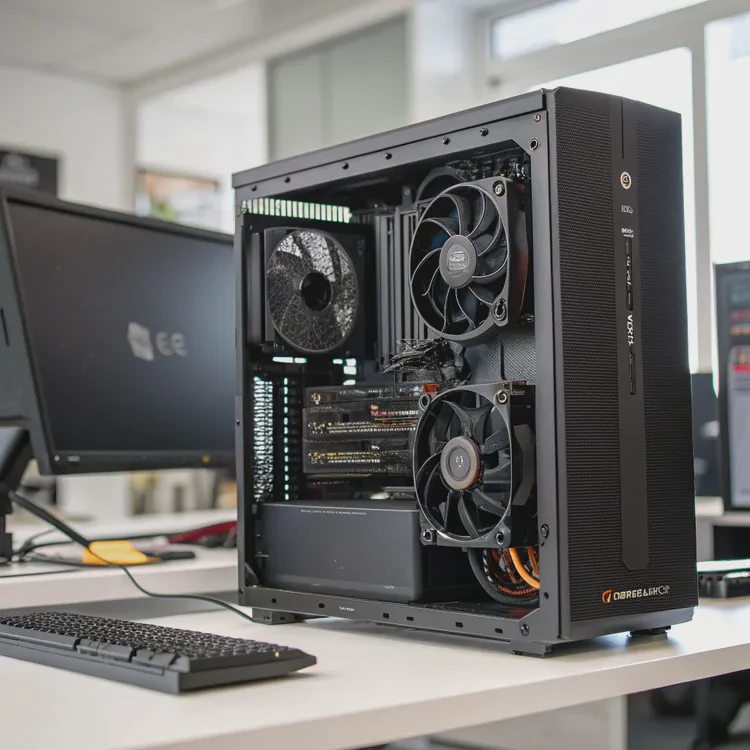
People often ask which liquid CPU cooler is the best. The answer depends on performance, reliability, noise, and ease of installation.
The best liquid CPU cooler is one that balances cooling efficiency, low noise, build quality, and compatibility with your system while maintaining stable performance under heavy load.
As someone who builds PCs regularly, I’ve tested many AIOs (All-In-One coolers). Let’s break down what makes a cooler truly stand out from the rest.
What factors define a top liquid cooler?
Most users think only about cooling power. But that’s not the whole picture. A great cooler must also be reliable, quiet, and easy to install.
The key factors are thermal performance, pump design, radiator size, fan quality, noise level, durability, and compatibility with different sockets.
When I built my first workstation, I realized that noise control mattered as much as temperature. A cooler that keeps your CPU at 50°C but sounds like a jet engine is not ideal. Balance is everything.
Main evaluation criteria
| Factor | Description | Why It Matters |
|---|---|---|
| Thermal performance | How efficiently heat transfers from CPU to radiator | Directly impacts CPU temperature |
| Pump quality | Determines coolant flow and reliability | Prevents overheating and leaks |
| Radiator size | Larger radiators cool better but need more space | Affects heat dissipation |
| Fan design | Controls airflow and pressure | Balances performance and noise |
| Noise level | Measured in decibels (dBA) | Impacts comfort and environment |
| Compatibility | Supports various CPU sockets | Ensures future upgrades |
| Build materials | Copper, aluminum, or nickel plating | Influences durability and corrosion resistance |
A note on radiator size
A 240mm radiator is often enough for most CPUs. But if you overclock or use high-end chips like Intel i9 or AMD Ryzen 9, a 360mm radiator can handle the extra heat more effectively.
My tip
I always check the pump’s rated lifespan (usually in hours). Anything below 50,000 hours means it might wear out faster. High-end models from Corsair, NZXT, or Arctic often exceed 70,000 hours.
Why do premium AIOs perform better?
At first glance, all AIOs look similar — a pump, two tubes, and a radiator. But premium models often cost twice as much. Why?
Premium AIOs perform better because they use higher-quality materials, optimized pump designs, improved fin density in radiators, and more efficient fan curves that reduce noise while improving heat transfer.
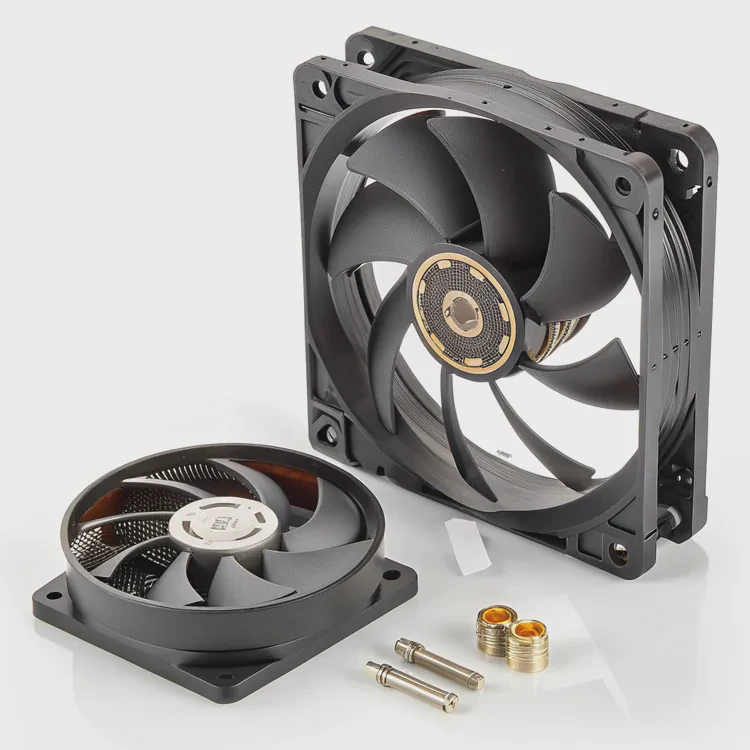
Key design differences
Premium coolers usually feature copper cold plates with microfin structures. These microfins increase the contact surface between coolant and metal, allowing faster heat exchange.
They also include stronger pumps with magnetic levitation bearings or ceramic shafts, which reduce friction and noise.
| Component | Standard AIO | Premium AIO |
|---|---|---|
| Cold plate | Aluminum | Nickel-plated copper |
| Pump bearing | Basic plastic | Ceramic or magnetic |
| Fan type | Basic PWM | Fluid dynamic or maglev |
| Tubing | Rubber | Braided low-permeability |
| Warranty | 2 years | 5–6 years |
Why materials matter
Aluminum is cheap and light but less conductive than copper. That’s why high-end coolers often use nickel-plated copper blocks. The nickel prevents corrosion and extends lifespan.
Premium fans with magnetic bearings also help maintain consistent RPM with less vibration. This combination gives both stability and silence.
Real-world difference
I tested two 360mm AIOs on the same Ryzen 9 7950X system: one budget model and one flagship. Under full load, the premium unit kept temperatures 8°C lower and was 6 dB quieter. That’s a clear performance gap.
My opinion
Spending extra on a premium AIO is worth it if you plan to keep your system for several years or if you value silence and reliability. Cheap models can perform well for a while, but they often degrade faster.
How to compare AIO cooling benchmarks?
When you read reviews, you see graphs and charts showing “load temperatures” or “thermal deltas.” But how do you interpret them?
You can compare AIO cooling benchmarks by checking three metrics: temperature under load, noise level in dBA, and thermal delta (difference from ambient temperature). Lower values mean better efficiency.
Understanding benchmark terms
| Metric | Description | Ideal Value |
|---|---|---|
| Idle temperature | CPU temp at rest | Under 35°C |
| Load temperature | Temp under full CPU usage | Below 80°C |
| Thermal delta | Load temp minus room temp | Lower is better |
| Noise level | Sound output in dBA | Under 35 dBA ideal |
| RPM range | Fan speed flexibility | Wider range = better control |
How benchmarks are run
- Test systems are usually set at a fixed ambient temperature (around 25°C).
- Reviewers run stress tests like Cinebench or Prime95 for 10–15 minutes.
- Sensors measure CPU temp and noise from 50 cm away.
- Results are compared to other coolers with the same CPU and case setup.
My personal method
I always look at both temperature and noise together. A cooler that runs 2°C cooler but makes 10 dB more noise is not truly better. It’s about the ratio of cooling efficiency to noise level — what I call the comfort ratio.
For example, if Cooler A maintains 70°C at 30 dBA and Cooler B maintains 68°C at 40 dBA, I’ll still choose Cooler A. Comfort matters in daily use.
Example benchmark comparison
| Cooler | Load Temp (°C) | Noise (dBA) | Thermal Delta (°C) |
|---|---|---|---|
| Arctic Liquid Freezer III 360 | 63 | 29 | 38 |
| Corsair iCUE H150i Elite | 65 | 30 | 40 |
| NZXT Kraken 360 RGB | 66 | 31 | 41 |
| Cooler Master ML360 Atmos | 68 | 33 | 43 |
From these numbers, Arctic’s cooler leads both in thermal efficiency and quiet operation, making it one of the most balanced choices.
Pro tip
Always check the testing environment in reviews. A cooler tested on an open bench will perform cooler than inside a case. Case airflow changes everything.
What are upcoming high-end cooler releases?
Cooling technology keeps advancing. Manufacturers are focusing on smarter pumps, RGB control, and eco-friendly coolants.
Upcoming high-end liquid coolers will feature improved pump designs, integrated display panels, AI-based fan control, and quieter magnetic levitation fans.

Trends to watch
- Digital monitoring – New AIOs include LCD or OLED screens showing temperatures and pump speeds.
- AI fan control – Some models auto-adjust fan curves based on CPU load and ambient temp.
- Thicker radiators – 38mm radiators with higher fin density for better heat transfer.
- Eco-friendly coolants – Non-toxic, biodegradable fluids replacing traditional glycol mixtures.
- Modular designs – Easy disassembly for maintenance and upgrades.
Expected 2025 releases
| Brand | Model | Key Features |
|---|---|---|
| Corsair | iCUE H170i Elite XT | 420mm radiator, OLED screen, zero-RPM mode |
| NZXT | Kraken Z5 | Larger display, reinforced pump, quieter fans |
| Arctic | Liquid Freezer III 420 | 38mm thick radiator, new pump generation |
| ASUS | ROG Ryujin III Platinum | Embedded fan display, Asetek Gen8 pump |
| Cooler Master | MasterLiquid 360 Pro | Dual-chamber pump, ARGB sync, upgraded hoses |
My take on the future
The integration of software and hardware is becoming standard. In the past, you only had fan RPM control. Now, coolers can display animations, monitor real-time data, and adjust to system stress automatically.
Another interesting trend is the use of graphene-based coatings inside radiators to improve corrosion resistance and heat transfer. It’s not mainstream yet, but it’s coming soon.
My personal anticipation
I’m most excited about Arctic’s upcoming Liquid Freezer III series. I tested an early prototype at a trade show, and it impressed me with its quiet pump and thicker radiator. The extra fin density made a clear difference during a demo run.
Conclusion
The best liquid CPU cooler isn’t just about maximum cooling power. It’s about balance — silent operation, strong build quality, and consistent long-term performance. Premium models like Arctic Liquid Freezer III or Corsair iCUE H150i Elite show that careful engineering still matters. As new designs emerge, installation will get easier, and cooling efficiency will keep improving for every PC builder.
TAGS
Latest Articles

Volume discount levels for heat sink orders?
Buyers often ask when heat sink prices start to drop with volume. Many worry they’re overpaying for small orders. This guide explains how B2B volume pricing works for thermal components. Heat sink
21 Dec,2025
Heat sink long-term supply contract options?
Many buyers want stable pricing and reliable delivery for heat sinks. But without a clear contract, risks grow over time. This article explores how to secure better long-term supply deals. Long-term
21 Dec,2025
Tooling cost for new heat sink profiles?
Many engineers struggle to understand why tooling for custom heat sinks costs so much. They worry about budgeting and production timelines. This article breaks down the cost drivers behind tooling.
21 Dec,2025
Heat sink custom sample process steps?
Sometimes, starting a custom heat sink project feels overwhelming—too many steps, too many unknowns, and too many risks. You want a sample, but not endless delays. The process for requesting and
20 Dec,2025
Standard B2B terms for heat sink payments?
When buyers and sellers in B2B heat sink markets talk about payment, many don’t fully understand what’s standard. This can lead to delayed orders, miscommunication, and even lost business
20 Dec,2025
Heat sink pricing factors for large orders?
Heat sinks are vital for many systems. When prices rise, projects stall and budgets break. This problem can hit teams hard without warning. Large order heat sink pricing depends on many factors. You
20 Dec,2025Related Articles
- How to mount a liquid CPU cooler?
- How often to change liquid cooling?
- What is liquid cooling made of?
- Is a liquid cooling system worth it?
- How to check if liquid cooling is working?
- How to make a liquid cooling system?
- Which is better, air cooled or liquid cooled?
- Does liquid cooling need maintenance?
- What liquid is used in liquid cooling?
- What does a liquid cooler do?
- What is in liquid cooling?
- How much more is liquid cooling?
Author
Dr. Emily Chen
Chief AI Researcher
Leading expert in thermal dynamics and AI optimization with over 15 years of experience in data center efficiency research.
Categories
Latest Products






Recommend Categories
- Liquid cooling plate Manufacturer
- Industrial Heat Sink Manufacturer
- Standard Heat Sink Manufacturer
- Aluminum Heat Sink Manufacturer
- Copper Heat Sink Manufacturer
- Anodized Heatsink Manufacturer
- Stamping heat sink Manufacturer
- Die Casting Heatsink Manufacturer
- Soldering heat sink Manufacturer
- CNC Parts Manufacturer
Latest Products
- Wholesale Aluminum Radiator
- Water Cooling Plate Kit
- Water Cooling Heat Sink
- Water Cooling Heat Sink Kit
- Stainless Steel Water Distributor
- Server Water Cooling Plate Kit
- Server Liquid Cooling System
- Server Aluminum Cooling Kit
- S19 Full Cover Cooling Plate
- S19 Cooling Plate Kit
- S19 Aluminum Cooling Plate
Contact Expert
Have questions about this article? Reach out to our experts directly.