Which is better, air cooled or liquid cooled?
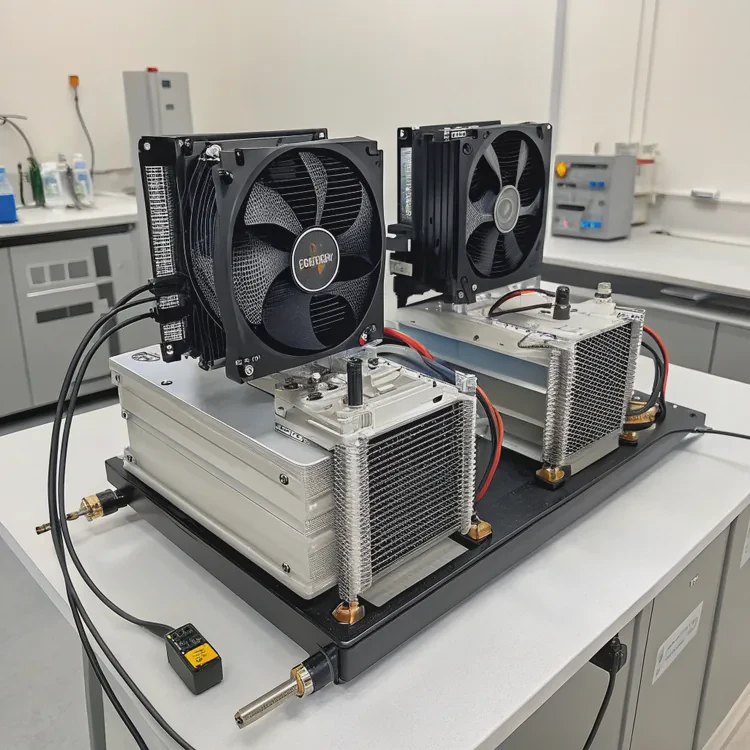
When building a PC, one of the most common questions I hear is: “Should I use air cooling or liquid cooling?” It sounds simple, but the choice can make a huge difference in performance and maintenance.
Air cooling is simpler and cheaper, while liquid cooling offers better heat dissipation and lower noise under heavy load. The best option depends on your system’s needs, space, and budget.
I’ve built systems using both methods — from small office PCs to high-performance workstations — and the answer often changes based on how you use your computer.
How do liquid and air cooling differ?
The main difference lies in how each system moves heat away from the CPU. Air coolers rely on fans and metal heatsinks. Liquid coolers use a pump, tubes, and a radiator filled with coolant.
Air cooling uses direct airflow over a heatsink, while liquid cooling transfers heat through a liquid to a radiator, allowing more efficient heat removal.
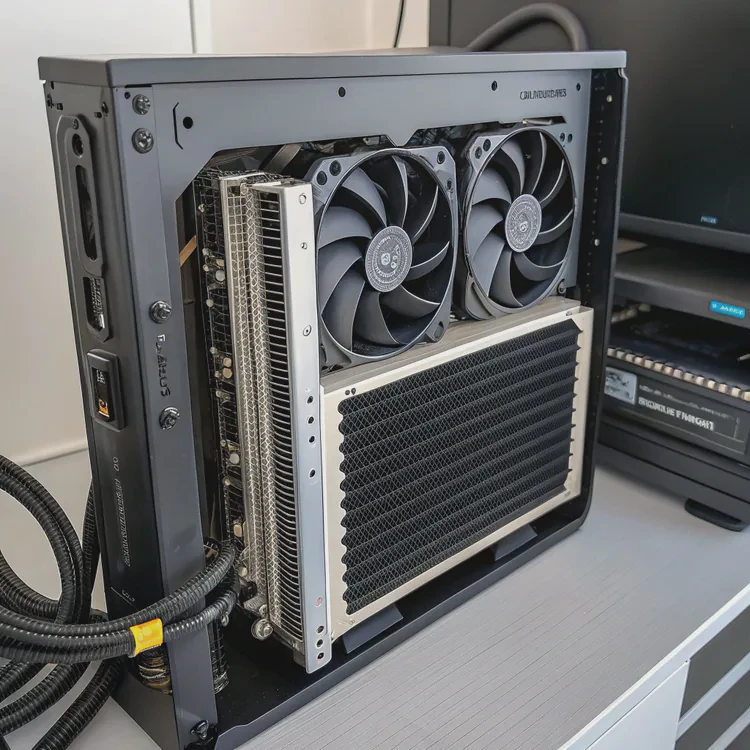
Cooling process overview
| Type | How It Works | Key Components |
|---|---|---|
| Air Cooling | Transfers heat from CPU to fins, then fans push air away | Heatsink, thermal paste, fan |
| Liquid Cooling | Moves heat through a liquid loop to a radiator for dissipation | Pump, tubes, radiator, fans |
The physics behind it
Air cooling relies on convection — the process of moving warm air away from the CPU area. The larger the heatsink surface area and airflow, the better it cools.
Liquid cooling relies on conduction and convection together. The liquid absorbs heat directly from the CPU, then carries it to the radiator where it releases heat through the fins and fans.
My observation
When I switched from a tower air cooler to a 240mm AIO, my CPU temperature dropped by almost 10°C under full load. However, I also noticed more cables, tubes, and a bit more installation time.
What are the pros and cons of each type?
Each cooling method has its strengths and weaknesses. The right choice depends on what you value more — simplicity or performance.
Air cooling is cheaper, easier to maintain, and very reliable. Liquid cooling is quieter, better for high-performance CPUs, and more visually appealing but requires careful setup.
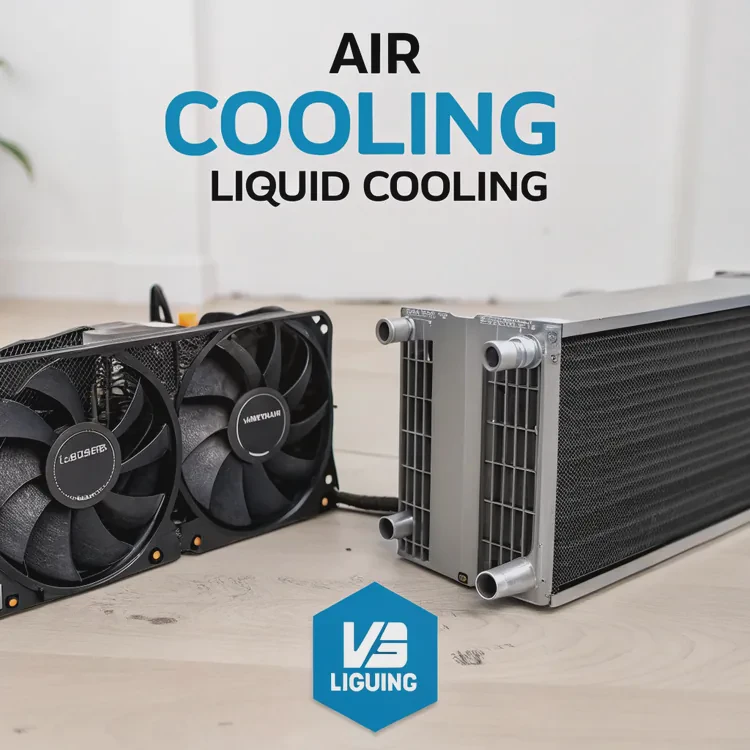
Air Cooling Advantages
- Simple installation – Usually one bracket and a few screws.
- Lower cost – High-end air coolers cost less than most AIOs.
- No pump failure risk – No liquid, no leaks.
- Low maintenance – Just clean the dust from fans occasionally.
Air Cooling Disadvantages
- Larger size – Can block RAM slots in compact cases.
- Louder fans – Need higher RPMs to cool under load.
- Limited performance – Not ideal for overclocked or high-TDP CPUs.
Liquid Cooling Advantages
- Superior heat dissipation – Can handle higher power CPUs easily.
- Quieter operation – Fans run slower while maintaining good temps.
- Better aesthetics – Sleek look with RGB and compact CPU blocks.
- Efficient space usage – Radiator can be mounted away from CPU area.
Liquid Cooling Disadvantages
- Higher cost – Quality AIOs or custom loops are expensive.
- Complex installation – More parts and potential mounting issues.
- Maintenance risk – Pumps can fail, or coolant may degrade over time.
Summary Table
| Feature | Air Cooling | Liquid Cooling |
|---|---|---|
| Cost | Lower | Higher |
| Installation | Easier | More complex |
| Maintenance | Minimal | Occasional |
| Noise | Moderate | Lower |
| Performance | Good | Excellent |
| Risk of failure | Very low | Possible leaks or pump wear |
| Appearance | Bulky | Sleek and modern |
My experience
For small form-factor builds, I often choose air cooling. It’s worry-free and compact. But for high-end systems like my video editing rig, liquid cooling provides much better stability and lower noise.
How to pick the right cooling solution?
Choosing the right cooler isn’t only about temperature numbers. It’s also about your case layout, noise preference, and maintenance tolerance.
You should choose air cooling for simple, budget, or small builds. Choose liquid cooling for high-end CPUs, overclocked systems, or if you want quiet operation and cleaner aesthetics.
Step 1: Check your CPU’s thermal design power (TDP)
Your cooler must handle at least the same wattage as your CPU’s TDP. For example, if your processor’s TDP is 125W, choose a cooler rated at or above that level.
Step 2: Consider your case size
Large tower coolers need enough vertical clearance. A 160mm cooler won’t fit in a slim case. Meanwhile, liquid coolers need radiator space — 240mm or 360mm mounts depending on size.
Step 3: Think about maintenance
If you don’t want to ever deal with refilling liquid or checking pumps, go for air cooling. If you don’t mind a little maintenance for better performance, AIO is great.
Step 4: Match your aesthetic preference
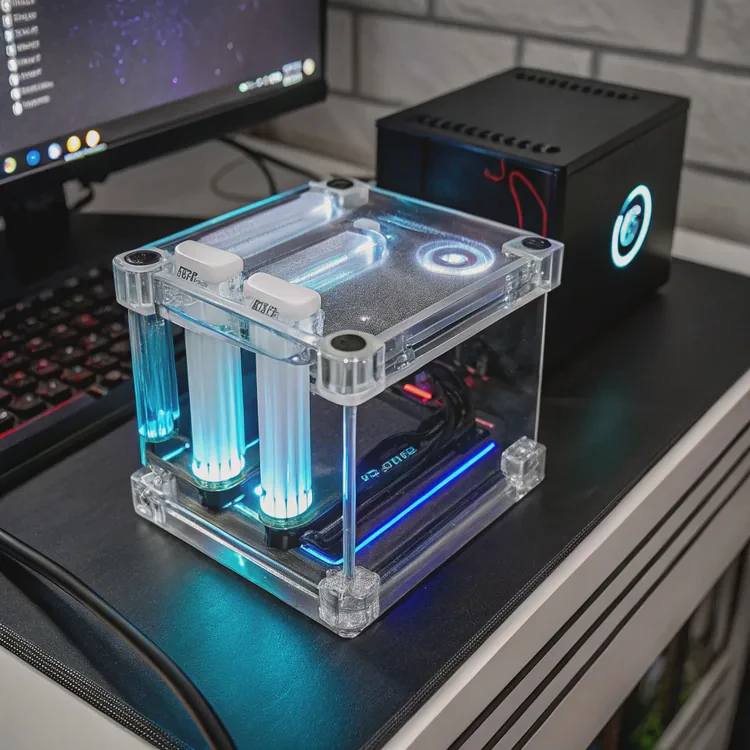
A clean, RGB-lit water block and hidden tubes look amazing in glass-sided builds. But if performance and simplicity are your top goals, a matte-black air cooler can be just as satisfying.
Quick decision table
| User Type | Recommended Cooling | Reason |
|---|---|---|
| Office or casual user | Air cooler | Simple, quiet, affordable |
| Gamer or overclocker | Liquid cooler | Better heat control |
| Compact PC builder | Air cooler or 120mm AIO | Space efficient |
| Silent PC enthusiast | 240mm or 360mm AIO | Low noise under load |
| Aesthetic builder | Liquid cooler with RGB | Visual appeal |
My recommendation
For most users, a good tower air cooler like the Noctua NH-D15 or DeepCool AK620 is more than enough. But for top-tier CPUs like Intel i9 or Ryzen 9, I always suggest a 240mm or larger AIO to keep noise and temperature balanced.
What hybrid cooling designs are emerging?
Technology never stops evolving. We’re now seeing systems that combine the best of both air and liquid cooling.
Hybrid cooling designs use liquid for major components like the CPU and air cooling for VRMs, GPUs, or memory, offering improved efficiency and reliability.
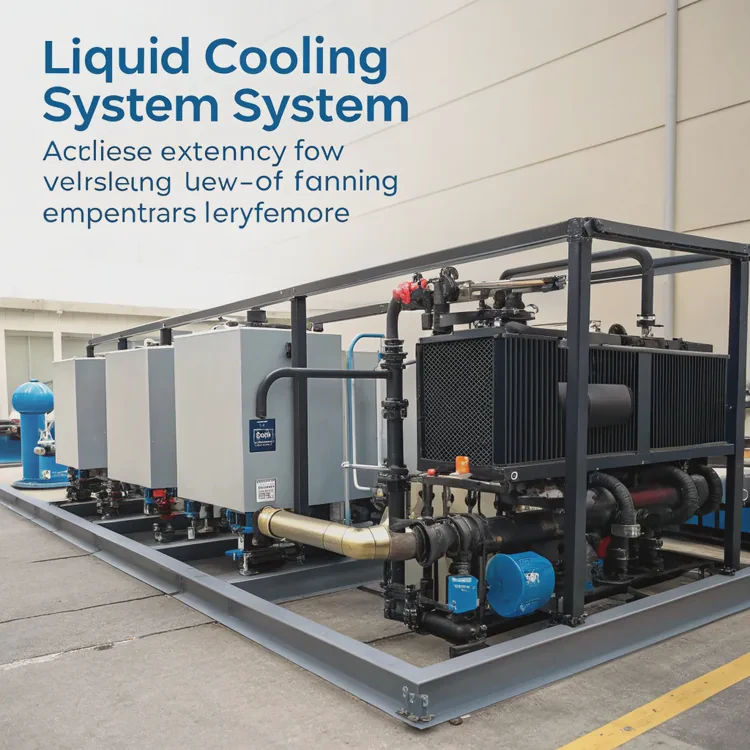
Emerging hybrid types
- Liquid-assisted air coolers – Use a small liquid loop inside the heatsink base to spread heat faster before air cooling removes it.
- Dual-chamber AIOs – Have separate compartments for pump and coolant to reduce heat buildup and extend lifespan.
- Combined GPU and CPU loops – A single liquid circuit cools both CPU and GPU, reducing total system heat.
- Phase-change hybrids – Use refrigerant-style vapor chambers with liquid cooling to reach even lower temperatures.
Comparison of cooling evolution
| Type | Example Design | Benefit |
|---|---|---|
| Air Cooling | Traditional tower with fans | Simplicity |
| Liquid Cooling | AIO or custom loop | High performance |
| Hybrid Cooling | Dual-mode liquid-air system | Efficiency and balance |
The future trend
Manufacturers like Cooler Master and ASUS are already experimenting with coolers that include mini fans on top of liquid pump housings. These small fans target motherboard components, combining air and liquid benefits in one.
Another innovation is liquid vapor chamber technology, where liquid coolant circulates in a sealed plate with vapor channels. It offers the spread efficiency of liquid and the reliability of air.
My impression
I tested a prototype hybrid cooler at an exhibition. It had a small fan built into the pump housing, blowing air on the motherboard’s VRMs while the liquid loop cooled the CPU. It was quieter than expected and kept the VRM temperature 8°C lower than traditional AIOs.
My outlook
Hybrid designs are still new, but they represent a smart middle ground. They’ll likely become mainstream soon as CPUs and GPUs continue to demand more cooling power. These systems can deliver high performance without sacrificing reliability or simplicity.
Conclusion
Air and liquid cooling each have their place. Air cooling wins for simplicity, cost, and reliability, while liquid cooling offers better heat performance and quieter operation for demanding systems. Hybrid designs are shaping the future, merging both strengths into one solution. No matter which you choose, matching the cooler to your needs is what really defines the “best” option.
TAGS
Latest Articles

Volume discount levels for heat sink orders?
Buyers often ask when heat sink prices start to drop with volume. Many worry they’re overpaying for small orders. This guide explains how B2B volume pricing works for thermal components. Heat sink
21 Dec,2025
Heat sink long-term supply contract options?
Many buyers want stable pricing and reliable delivery for heat sinks. But without a clear contract, risks grow over time. This article explores how to secure better long-term supply deals. Long-term
21 Dec,2025
Tooling cost for new heat sink profiles?
Many engineers struggle to understand why tooling for custom heat sinks costs so much. They worry about budgeting and production timelines. This article breaks down the cost drivers behind tooling.
21 Dec,2025
Heat sink custom sample process steps?
Sometimes, starting a custom heat sink project feels overwhelming—too many steps, too many unknowns, and too many risks. You want a sample, but not endless delays. The process for requesting and
20 Dec,2025
Standard B2B terms for heat sink payments?
When buyers and sellers in B2B heat sink markets talk about payment, many don’t fully understand what’s standard. This can lead to delayed orders, miscommunication, and even lost business
20 Dec,2025
Heat sink pricing factors for large orders?
Heat sinks are vital for many systems. When prices rise, projects stall and budgets break. This problem can hit teams hard without warning. Large order heat sink pricing depends on many factors. You
20 Dec,2025Related Articles
- What is the best liquid CPU cooler?
- How to mount a liquid CPU cooler?
- How often to change liquid cooling?
- What is liquid cooling made of?
- Is a liquid cooling system worth it?
- How to check if liquid cooling is working?
- Does liquid cooling need maintenance?
- What liquid is used in liquid cooling?
- What does a liquid cooler do?
- What is in liquid cooling?
- How much more is liquid cooling?
- How does liquid cooling work?
Author
Dr. Emily Chen
Chief AI Researcher
Leading expert in thermal dynamics and AI optimization with over 15 years of experience in data center efficiency research.
Categories
Latest Products






Recommend Categories
- Liquid cooling plate Manufacturer
- Industrial Heat Sink Manufacturer
- Standard Heat Sink Manufacturer
- Aluminum Heat Sink Manufacturer
- Copper Heat Sink Manufacturer
- Anodized Heatsink Manufacturer
- Stamping heat sink Manufacturer
- Die Casting Heatsink Manufacturer
- Soldering heat sink Manufacturer
- CNC Parts Manufacturer
Latest Products
- Wholesale Aluminum Radiator
- Water Cooling Plate Kit
- Water Cooling Heat Sink
- Water Cooling Heat Sink Kit
- Stainless Steel Water Distributor
- Server Water Cooling Plate Kit
- Server Liquid Cooling System
- Server Aluminum Cooling Kit
- S19 Full Cover Cooling Plate
- S19 Cooling Plate Kit
- S19 Aluminum Cooling Plate
Contact Expert
Have questions about this article? Reach out to our experts directly.