What does a liquid cooler do?
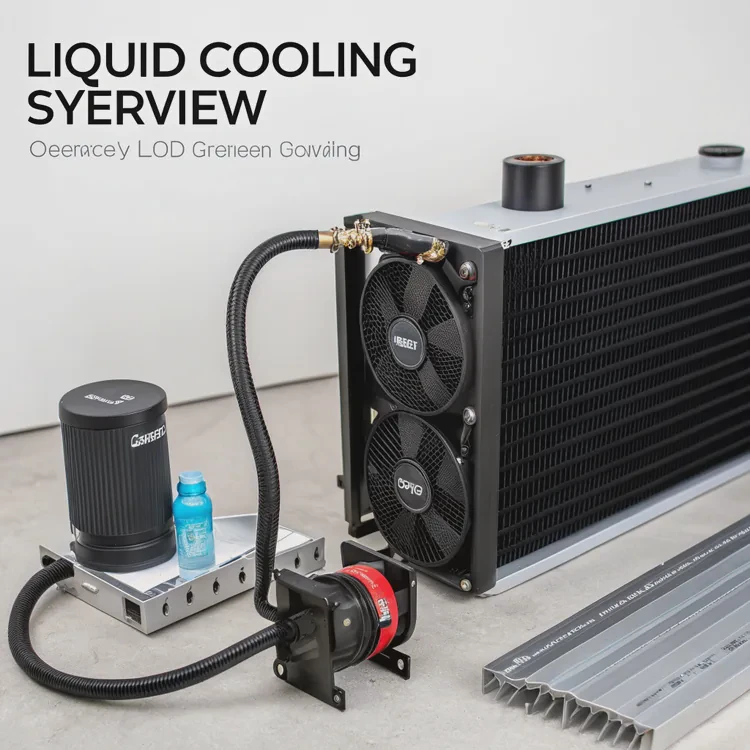
When electronics heat up, performance drops and components degrade faster. This heat problem demands an efficient solution that keeps systems cool and stable.
A liquid cooler removes heat from components such as CPUs, GPUs, or power modules by circulating a liquid through a closed loop that absorbs and transfers heat to a radiator for dissipation.
Liquid cooling has evolved from industrial machines to gaming PCs, servers, and electric vehicles. It provides consistent cooling even under high load conditions.
Liquid cooling systems are not only about keeping temperatures low. They also reduce noise, extend lifespan, and improve energy efficiency compared to traditional methods.
How does it transfer heat from components?
Electronic components can only perform well when their temperatures remain within a narrow range. Excess heat must move away fast.
Liquid coolers transfer heat through a process of conduction and convection: the liquid absorbs heat from components, moves it to a radiator, and releases it into the air.
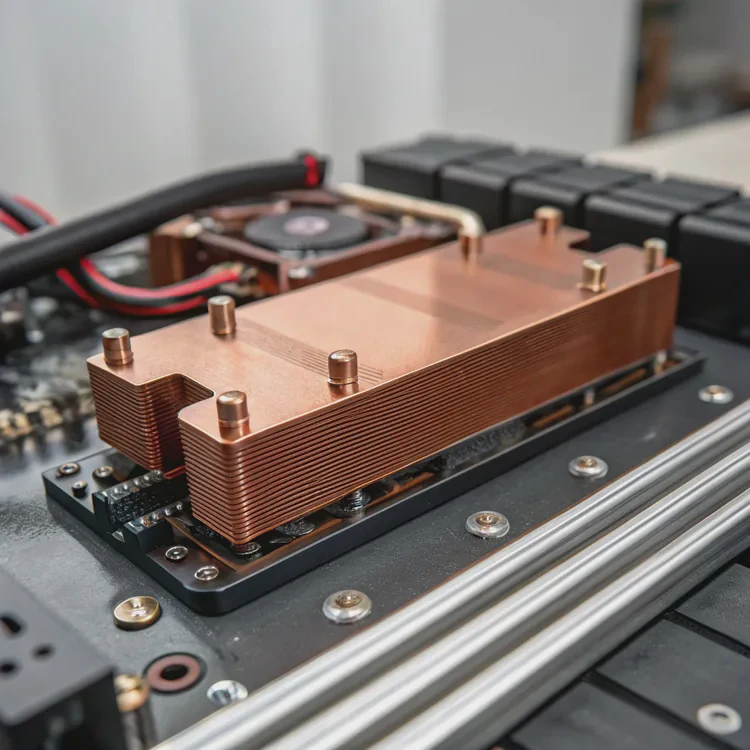
The process starts at the cold plate, which sits directly on the heat source. The plate, usually made of copper or aluminum, conducts heat into the liquid inside. The heated fluid then flows through tubes toward a radiator. Fans blow air across the radiator fins, cooling the liquid before it cycles back.
Key Parts of a Liquid Cooling System
| Component | Function | Material |
|---|---|---|
| Cold Plate | Transfers heat from component to liquid | Copper or aluminum |
| Pump | Circulates coolant through the loop | Polymer, ceramic |
| Radiator | Dissipates heat to the air | Aluminum or copper |
| Tubing | Connects components and guides liquid flow | Rubber or plastic |
| Fan | Moves air through the radiator | Plastic with PWM motor |
The Heat Transfer Steps
- Absorption: Liquid absorbs heat at the contact surface.
- Transport: Pump moves the hot liquid through the tubing.
- Dissipation: Radiator and fans cool down the liquid.
- Cycle: The cooled liquid returns to collect more heat.
This loop runs continuously, keeping components at a safe temperature even under demanding loads.
Why is it better than air cooling in some cases?
Many users wonder why liquid cooling is worth the extra cost or effort. The answer depends on the heat load and performance goals.
Liquid cooling is better than air cooling when components generate high heat that air alone cannot remove efficiently, or when quiet operation and compact design are required.
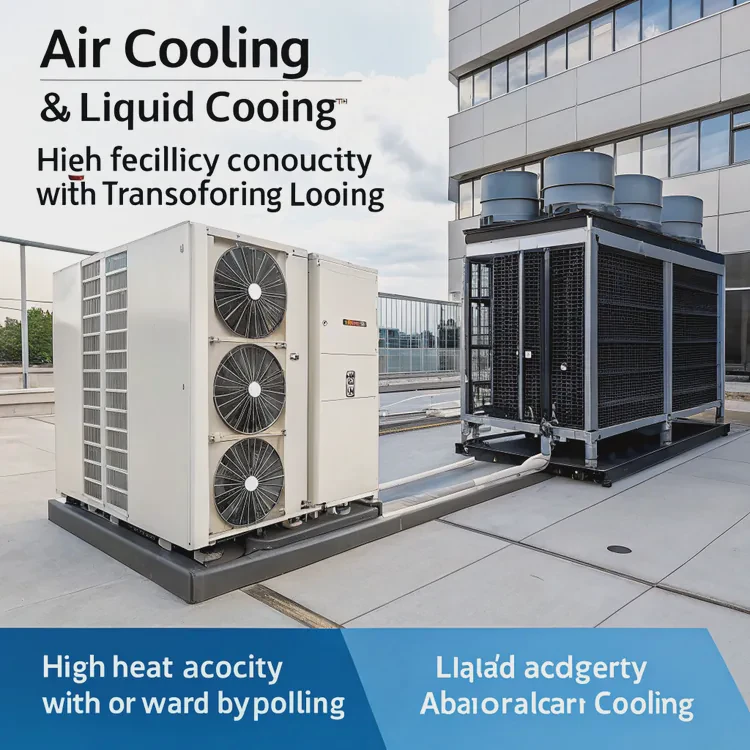
Air coolers rely on metal fins and fans. They are simple and affordable but have physical limits. Liquid coolers move heat faster and more evenly. The liquid has a much higher heat capacity than air, so it absorbs and transports energy more effectively.
Comparison Between Air and Liquid Cooling
| Feature | Air Cooling | Liquid Cooling |
|---|---|---|
| Heat Capacity | Low | High |
| Noise Level | Higher | Lower |
| Cooling Performance | Moderate | Excellent |
| Maintenance | Low | Moderate |
| Cost | Low | Medium to High |
| Suitable For | Basic systems | High-performance or compact systems |
Liquid systems are ideal for overclocked computers, electric vehicles, or dense data servers. In these cases, heat spreads quickly, and air cooling struggles to keep up. I once helped a client switch from air to liquid cooling in a power electronics system—the result was a 25% drop in peak temperatures and improved stability during long runs.
How to ensure efficient heat dissipation?
Even the best liquid cooling system can fail if it is not optimized. Efficiency depends on fluid quality, flow rate, and contact design.
Efficient heat dissipation requires clean coolant, smooth flow paths, tight thermal contact, and proper radiator airflow to maintain consistent performance.
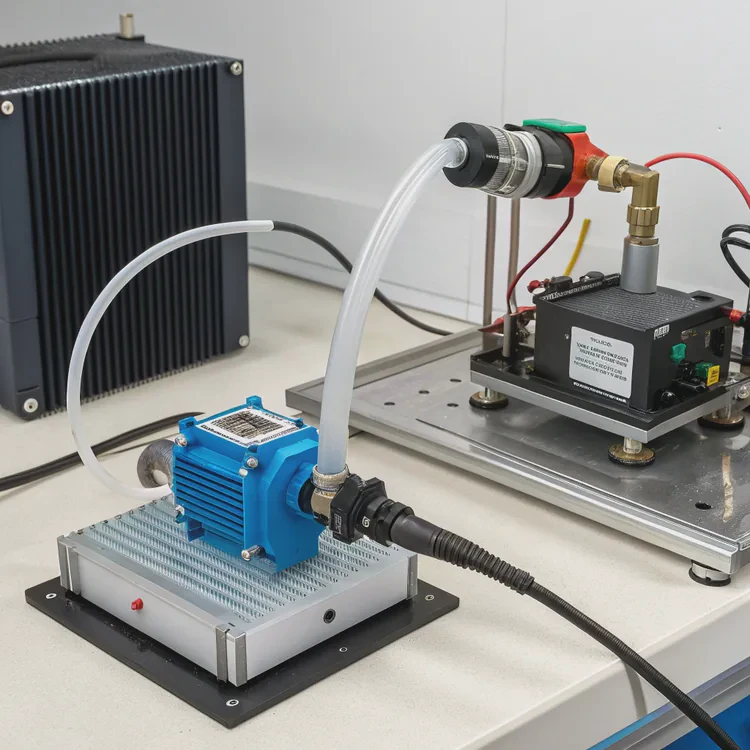
To maintain efficiency, I always check for blockages, air bubbles, and degraded coolant. Even small bubbles can interrupt the flow and reduce thermal transfer.
Key Factors That Affect Heat Dissipation
- Coolant Flow Rate: The pump must deliver steady and adequate flow.
- Contact Pressure: The cold plate should fit tightly on the chip surface.
- Radiator Placement: Radiators need open airflow and proper fan direction.
- Coolant Quality: Replace fluid regularly to avoid deposits and corrosion.
- Ambient Temperature: Higher room temperature reduces overall cooling capacity.
Tips for Better Efficiency
- Use distilled water or glycol mixtures to maintain low electrical conductivity.
- Ensure all tubes and fittings are properly sealed.
- Clean the radiator fins every few months.
- Position the pump below the highest point of the loop to avoid air locks.
- Monitor temperature sensors to detect abnormal spikes early.
By following these simple steps, the cooling system can run efficiently for years, protecting critical components from heat-related damage.
What are new functions added to liquid coolers?
Technology never stands still, and modern liquid coolers now do more than just manage heat.
New liquid coolers include smart sensors, software monitoring, RGB lighting, and adaptive pump control for better performance, safety, and aesthetics.
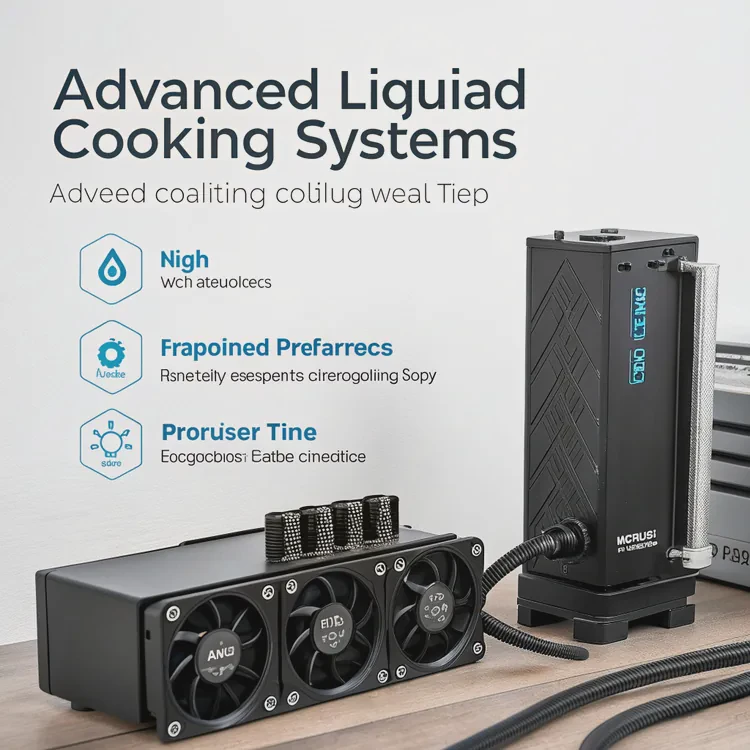
In the past, liquid cooling was purely mechanical. Today, digital features are becoming standard. Built-in sensors measure temperature, flow rate, and coolant level. These sensors connect to software dashboards that give real-time feedback and alerts.
Modern Features of Liquid Cooling Systems
| Feature | Description | Benefit |
|---|---|---|
| Smart Sensors | Monitor flow, temperature, and pressure | Early fault detection |
| RGB Lighting | Customizable visual effects | Aesthetic appeal |
| Adaptive Pump Speed | Adjusts based on system load | Noise and power efficiency |
| Leak Detection | Alerts when coolant escapes | Prevents hardware damage |
| Modular Design | Easier upgrades and maintenance | Long-term flexibility |
Some coolers also integrate with AI-based control systems. They can automatically adjust fan speed and pump power to match real-time thermal loads. In industrial settings, such smart cooling modules improve reliability and reduce downtime.
The Shift Toward Intelligent Thermal Management
I’ve noticed this trend growing fast in data centers and EV battery systems. Liquid cooling units now communicate with central controllers through digital interfaces. This allows for predictive maintenance and optimized energy use. As cooling becomes “smarter,” it moves closer to being an integrated part of total system design rather than just an accessory.
Conclusion
Liquid coolers are the backbone of modern heat management. They move heat away faster, operate quietly, and now include intelligent controls. As devices grow more powerful, efficient and smart liquid cooling systems will play an even greater role in the future of thermal design.
TAGS
Latest Articles

Volume discount levels for heat sink orders?
Buyers often ask when heat sink prices start to drop with volume. Many worry they’re overpaying for small orders. This guide explains how B2B volume pricing works for thermal components. Heat sink
21 Dec,2025
Heat sink long-term supply contract options?
Many buyers want stable pricing and reliable delivery for heat sinks. But without a clear contract, risks grow over time. This article explores how to secure better long-term supply deals. Long-term
21 Dec,2025
Tooling cost for new heat sink profiles?
Many engineers struggle to understand why tooling for custom heat sinks costs so much. They worry about budgeting and production timelines. This article breaks down the cost drivers behind tooling.
21 Dec,2025
Heat sink custom sample process steps?
Sometimes, starting a custom heat sink project feels overwhelming—too many steps, too many unknowns, and too many risks. You want a sample, but not endless delays. The process for requesting and
20 Dec,2025
Standard B2B terms for heat sink payments?
When buyers and sellers in B2B heat sink markets talk about payment, many don’t fully understand what’s standard. This can lead to delayed orders, miscommunication, and even lost business
20 Dec,2025
Heat sink pricing factors for large orders?
Heat sinks are vital for many systems. When prices rise, projects stall and budgets break. This problem can hit teams hard without warning. Large order heat sink pricing depends on many factors. You
20 Dec,2025Related Articles
- What liquid is used in liquid cooling?
- Does liquid cooling need maintenance?
- Which is better, air cooled or liquid cooled?
- What is the best liquid CPU cooler?
- How to mount a liquid CPU cooler?
- How often to change liquid cooling?
- What is in liquid cooling?
- How much more is liquid cooling?
- How does liquid cooling work?
- Is liquid cooling better than air cooling?
- Is liquid cooling better?
- How to install a single liquid cooler CPU?
Author
Dr. Emily Chen
Chief AI Researcher
Leading expert in thermal dynamics and AI optimization with over 15 years of experience in data center efficiency research.
Categories
Latest Products






Recommend Categories
- Liquid cooling plate Manufacturer
- Industrial Heat Sink Manufacturer
- Standard Heat Sink Manufacturer
- Aluminum Heat Sink Manufacturer
- Copper Heat Sink Manufacturer
- Anodized Heatsink Manufacturer
- Stamping heat sink Manufacturer
- Die Casting Heatsink Manufacturer
- Soldering heat sink Manufacturer
- CNC Parts Manufacturer
Latest Products
- Wholesale Aluminum Radiator
- Water Cooling Plate Kit
- Water Cooling Heat Sink
- Water Cooling Heat Sink Kit
- Stainless Steel Water Distributor
- Server Water Cooling Plate Kit
- Server Liquid Cooling System
- Server Aluminum Cooling Kit
- S19 Full Cover Cooling Plate
- S19 Cooling Plate Kit
- S19 Aluminum Cooling Plate
Contact Expert
Have questions about this article? Reach out to our experts directly.