What is the function of a heat sink?
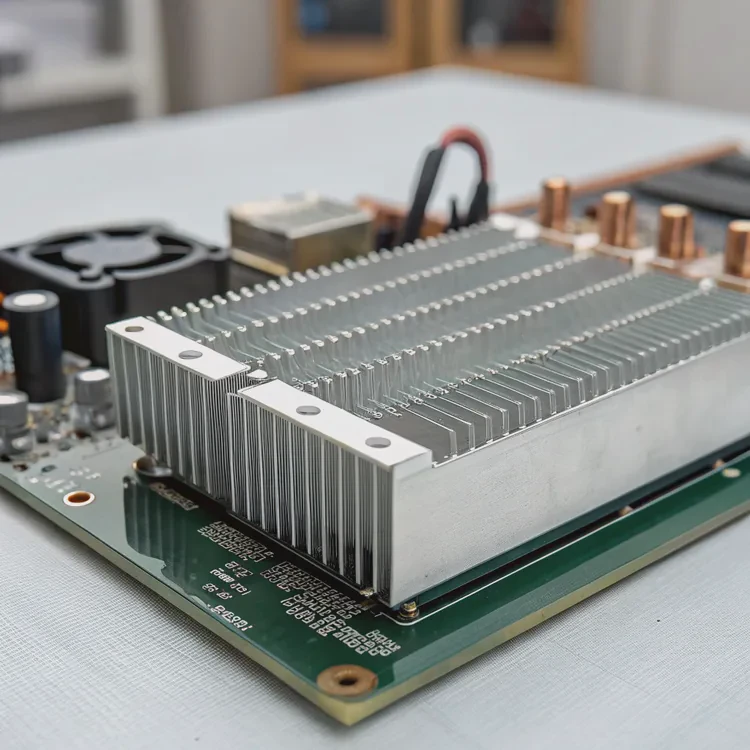
When electronic devices overheat, their performance drops or they fail completely. Heat sinks exist to stop that from happening.
A heat sink removes heat from electronic components and transfers it to the surrounding air, keeping devices within safe temperature limits.
Heat sinks are simple but vital. They stabilize performance, extend lifespan, and prevent thermal damage in critical components like CPUs, power modules, and LED drivers.
How does a heat sink improve device stability?
When a circuit runs hot, the resistance of its materials changes. That leads to instability and unpredictable behavior.
A heat sink improves device stability by maintaining consistent operating temperatures, preventing thermal drift, and ensuring reliable performance.
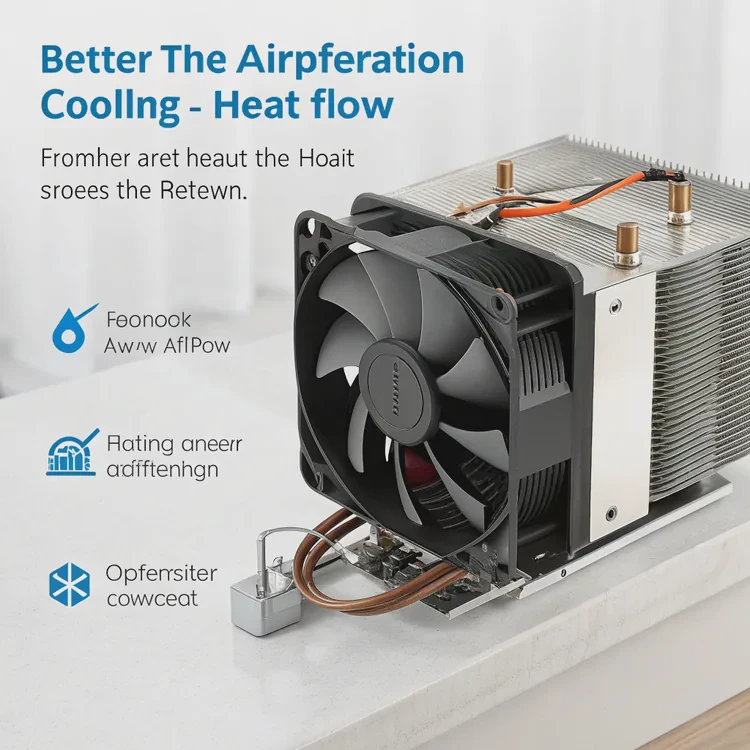
When temperature fluctuates, electronics behave unpredictably. A heat sink reduces that fluctuation. By spreading heat evenly and dissipating it efficiently, it allows each component to operate within its designed thermal envelope. That keeps resistance stable and current flow predictable.
Key factors that affect thermal stability
| Factor | Description | Impact on Stability |
|---|---|---|
| Material Conductivity | How fast the heat sink conducts heat | High conductivity keeps temperature uniform |
| Surface Area | Total exposed area for cooling | Larger area dissipates more heat |
| Airflow | The amount of air moving across the fins | Better airflow improves cooling efficiency |
| Mounting Contact | How well the sink touches the device | Poor contact reduces heat transfer |
In practical applications, I often see systems that fail early not because of design errors, but because their heat sinks were undersized or poorly mounted. For instance, in high-frequency power converters, even a 5°C rise can alter switching efficiency. Stability starts with temperature control, and a heat sink is the front line of that defense.
Why is a heat sink essential for electronics?
When I first started working with power electronics, I underestimated how fast heat could build up. Within minutes, even simple circuits reached unsafe levels.
A heat sink is essential for electronics because it prevents overheating, protects components from thermal stress, and ensures long-term reliability.

Without proper thermal management, components degrade rapidly. Semiconductors lose efficiency, solder joints crack, and insulation materials break down. In extreme cases, overheating can cause thermal runaway, leading to permanent failure or even fire.
Common issues caused by overheating
| Problem | Cause | Result |
|---|---|---|
| Reduced performance | Excessive junction temperature | Device throttling or shutdown |
| Short lifespan | Repeated thermal cycling | Fatigue and micro-cracks |
| Circuit drift | Temperature-dependent resistance | Unstable operation |
| Safety risk | Uncontrolled heat buildup | Potential fire hazard |
In high-performance computing, for example, CPUs and GPUs generate hundreds of watts of heat. A well-designed heat sink not only cools the chip but also stabilizes the entire system. The same logic applies to LED lighting, automotive power modules, and battery systems—each depends on stable thermal conditions to function reliably.
How to optimize heat sink performance?
Even the best heat sink fails if it’s not optimized for its application.
To optimize heat sink performance, focus on material selection, surface design, airflow management, and proper mounting techniques.
1. Material selection
Aluminum is the most common because it is light, cost-effective, and conducts heat well. Copper has better conductivity but is heavier and more expensive. For extreme conditions, composite or vapor chamber solutions can achieve superior results.
2. Surface design
Fins increase surface area and improve convection. The fin shape, spacing, and thickness determine how efficiently air moves through the sink. In passive systems, wider spacing supports natural convection. In active cooling systems, tighter fins maximize forced airflow.
3. Airflow optimization
Airflow can be natural or forced. Forced convection using fans or blowers dramatically enhances cooling. The goal is to maintain a smooth path for air to carry heat away. Avoid turbulence and dead zones that trap hot air.
4. Mounting and thermal interface
A heat sink performs best when its base contacts the component tightly. Thermal interface materials (TIMs), like grease or pads, fill microscopic gaps and improve heat transfer. Even a small void can raise junction temperature significantly.
Optimization checklist
| Step | Action | Purpose |
|---|---|---|
| Choose correct material | Aluminum or copper | Matches application needs |
| Adjust fin geometry | Optimize for airflow type | Improves cooling efficiency |
| Use high-quality TIM | Reduces thermal resistance | Ensures even contact |
| Test and validate | Simulate under load | Confirms design reliability |
In my experience, small adjustments make large differences. A redesigned fin angle or improved thermal interface can lower temperature by 10–15°C, extending lifespan and efficiency dramatically.
What are the latest heat management technologies?
In the past decade, the field of heat management has changed faster than ever.
The latest heat management technologies include vapor chambers, heat pipes, phase change materials, and liquid cooling systems.
Vapor chambers and heat pipes
Vapor chambers spread heat evenly across large surfaces. They work through phase change: liquid inside evaporates at the hot end, then condenses at the cool end, carrying heat efficiently. Heat pipes use the same principle in a smaller, tubular form.
Phase change materials (PCMs)
PCMs absorb and release large amounts of heat during melting and solidifying. They stabilize temperature spikes, especially in short-term, high-load situations. These materials are now used in power electronics, batteries, and aerospace systems.
Liquid cooling systems
When air cooling is not enough, liquid cooling provides superior thermal control. Coolant circulates through microchannels or plates, transferring heat to a radiator. This technology is essential for electric vehicles, data centers, and high-power inverters.
Emerging trends
The future lies in hybrid systems that combine multiple technologies. For instance, a vapor chamber integrated with a liquid loop can handle both transient and steady-state heat loads. Additive manufacturing also allows customized designs with complex internal channels, impossible with traditional machining.
As I see it, the challenge is not only removing heat but doing so efficiently, compactly, and sustainably. New alloys, recyclable materials, and smart temperature sensors are shaping the next generation of heat management systems.
Conclusion
A heat sink is more than just a piece of metal—it is the key to stability, safety, and performance in modern electronics. By understanding and optimizing its design, we can make every device last longer and run cooler.
TAGS
Latest Articles

Volume discount levels for heat sink orders?
Buyers often ask when heat sink prices start to drop with volume. Many worry they’re overpaying for small orders. This guide explains how B2B volume pricing works for thermal components. Heat sink
21 Dec,2025
Heat sink long-term supply contract options?
Many buyers want stable pricing and reliable delivery for heat sinks. But without a clear contract, risks grow over time. This article explores how to secure better long-term supply deals. Long-term
21 Dec,2025
Tooling cost for new heat sink profiles?
Many engineers struggle to understand why tooling for custom heat sinks costs so much. They worry about budgeting and production timelines. This article breaks down the cost drivers behind tooling.
21 Dec,2025
Heat sink custom sample process steps?
Sometimes, starting a custom heat sink project feels overwhelming—too many steps, too many unknowns, and too many risks. You want a sample, but not endless delays. The process for requesting and
20 Dec,2025
Standard B2B terms for heat sink payments?
When buyers and sellers in B2B heat sink markets talk about payment, many don’t fully understand what’s standard. This can lead to delayed orders, miscommunication, and even lost business
20 Dec,2025
Heat sink pricing factors for large orders?
Heat sinks are vital for many systems. When prices rise, projects stall and budgets break. This problem can hit teams hard without warning. Large order heat sink pricing depends on many factors. You
20 Dec,2025Related Articles
- What does a heat sink do?
- What is a heat sink on an SSD?
- What is a CPU heat sink?
- Does heat rise or sink?
- What is a heat sink on a computer?
- What Is a Heat Sink in Computer?
- Do you need a heat sink for an SSD?
- What are heat sinks made of?
- Do you need a heat sink for SSD?
- Do I need a heat sink for my SSD?
- What does a heat sink do for an SSD?
- How much does custom liquid cooling cost?
Author
Dr. Emily Chen
Chief AI Researcher
Leading expert in thermal dynamics and AI optimization with over 15 years of experience in data center efficiency research.
Categories
Latest Products






Recommend Categories
- Liquid cooling plate Manufacturer
- Industrial Heat Sink Manufacturer
- Standard Heat Sink Manufacturer
- Aluminum Heat Sink Manufacturer
- Copper Heat Sink Manufacturer
- Anodized Heatsink Manufacturer
- Stamping heat sink Manufacturer
- Die Casting Heatsink Manufacturer
- Soldering heat sink Manufacturer
- CNC Parts Manufacturer
Latest Products
- Wholesale Aluminum Radiator
- Water Cooling Plate Kit
- Water Cooling Heat Sink
- Water Cooling Heat Sink Kit
- Stainless Steel Water Distributor
- Server Water Cooling Plate Kit
- Server Liquid Cooling System
- Server Aluminum Cooling Kit
- S19 Full Cover Cooling Plate
- S19 Cooling Plate Kit
- S19 Aluminum Cooling Plate
Contact Expert
Have questions about this article? Reach out to our experts directly.