What is a CPU heat sink?
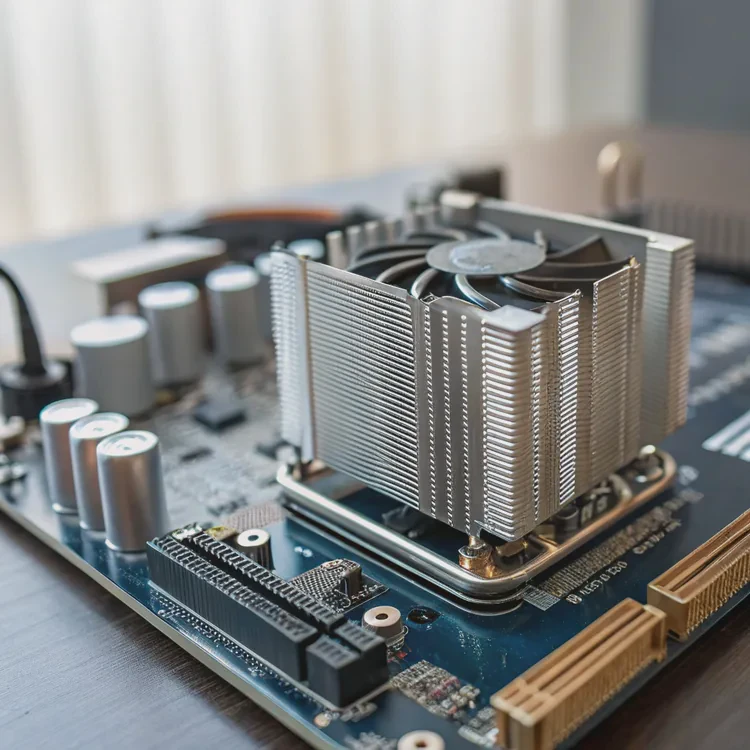
Every CPU generates heat when it works. Without something to remove that heat, the processor would overheat in seconds and shut down. That’s where the heat sink steps in.
A CPU heat sink is a metal device that absorbs and disperses heat from the processor to keep it cool and stable.
The heat sink sits directly on top of the CPU, pulling heat away and sending it into the air. It works quietly in the background, protecting the heart of your computer from thermal damage.
How does a CPU heat sink function?
When the CPU runs, it produces heat at microscopic contact points inside its silicon chip. That heat must move away fast to maintain safe operation. The heat sink’s job is to provide a large area for that heat to escape into the air.
A CPU heat sink functions by transferring heat from the CPU through a thermal interface, spreading it through metal fins, and releasing it into surrounding air or coolant.
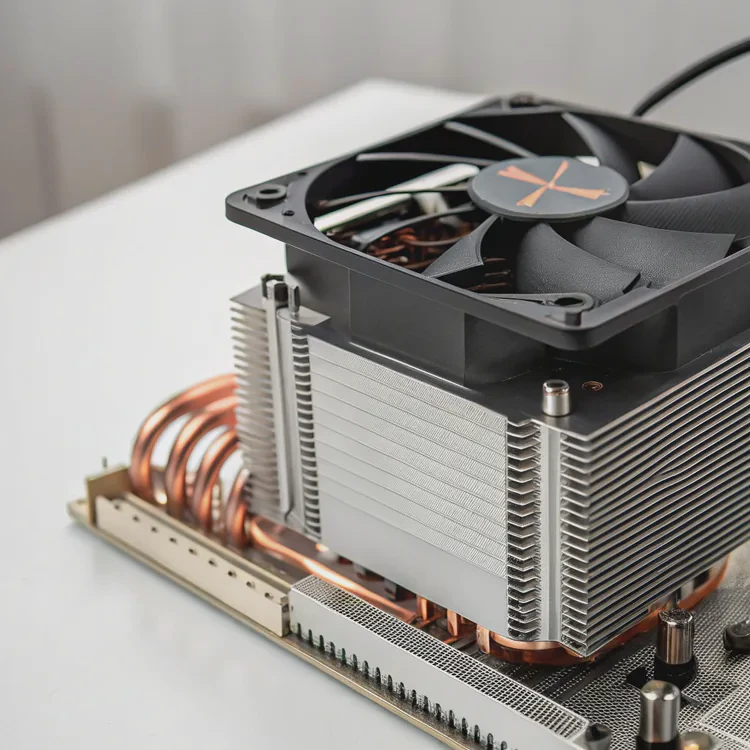
How the Heat Sink Works Step-by-Step
| Stage | Description |
|---|---|
| 1. Contact | A flat metal base touches the CPU surface through thermal paste. |
| 2. Conduction | Heat travels from the CPU into the heat sink base (usually copper). |
| 3. Spreading | Heat moves through fins or pipes to increase surface area. |
| 4. Convection | A fan or airflow removes the heat from the fins into the air. |
Inside the Design
Most modern heat sinks use heat pipes or vapor chambers. These contain a small amount of liquid sealed inside. When the CPU heats up, the liquid evaporates and moves the heat quickly to cooler areas, where it condenses and repeats the cycle.
This process is continuous, efficient, and silent. It allows modern CPUs to run at high speeds without throttling or burning out. Even under full load, a good heat sink can keep the CPU below 70°C.
Why is a CPU heat sink important?
A CPU without a heat sink will overheat almost instantly. It’s not optional — it’s a requirement for every computer.
A CPU heat sink is important because it prevents overheating, stabilizes performance, and protects the processor from permanent damage.
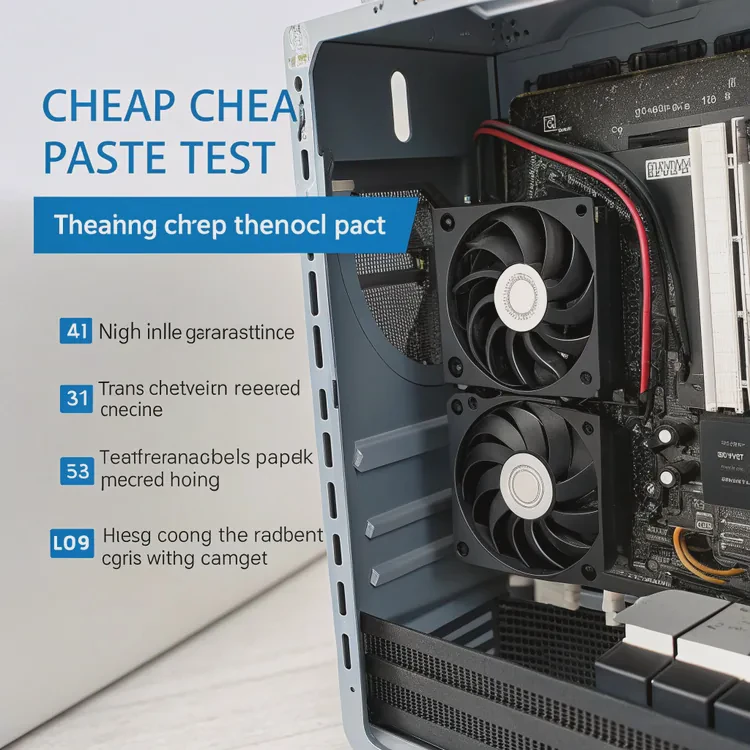
The Role of the Heat Sink in System Health
The CPU is one of the most heat-sensitive parts of a computer. Without proper cooling, high temperatures can cause:
- System instability or random restarts.
- Lower clock speeds (thermal throttling).
- Shorter component lifespan.
- Permanent damage to the CPU core.
| Problem | Result | Prevention |
|---|---|---|
| Overheating | Shutdown or data loss | Proper heat sink contact |
| Poor Airflow | High internal temps | Clean air path and good fans |
| Cheap Thermal Paste | Uneven cooling | Quality thermal compound |
When I once tested a computer without a heat sink for just a few seconds, the temperature jumped past 95°C. The system shut down instantly. With the heat sink reinstalled, it stabilized at 55°C under the same load. That moment showed me just how vital this small metal part truly is.
How to choose the best CPU heat sink?
Not all heat sinks are equal. Some are made for silent operation, others for extreme performance. The right choice depends on your CPU type, case size, and cooling goals.
Choose a CPU heat sink by matching its cooling capacity (TDP rating), size, noise level, and compatibility with your CPU socket and case.
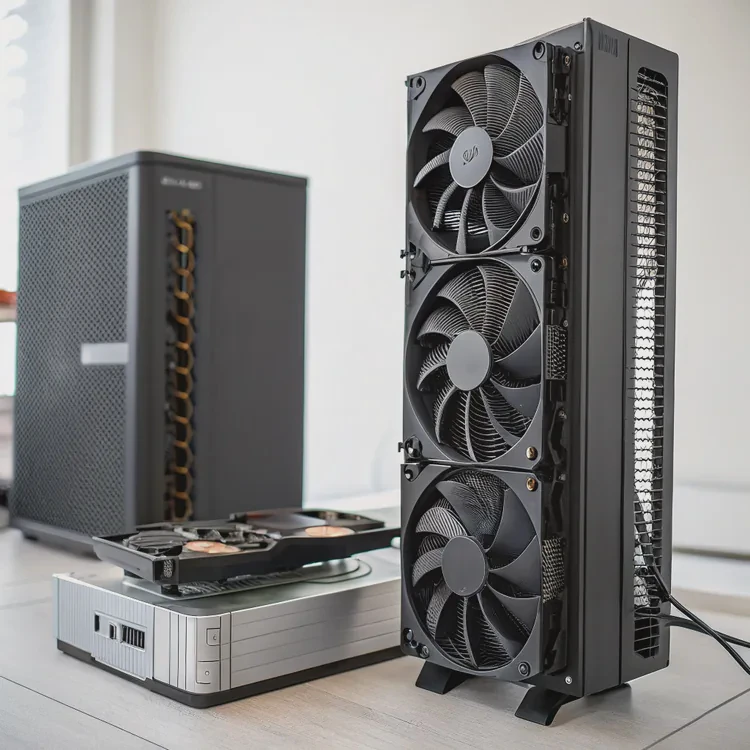
Factors to Consider
| Feature | What to Check | Why It Matters |
|---|---|---|
| TDP Rating | Must match or exceed CPU power | Prevents overheating under load |
| Size | Fit within your PC case | Avoids installation problems |
| Socket Compatibility | Match CPU socket (e.g., AM5, LGA1700) | Ensures proper mounting |
| Noise Level | Measured in dBA | Lower means quieter operation |
| Material | Copper base, aluminum fins | Better conduction and light weight |
Types of Heat Sinks
- Air Coolers: Most common and reliable. Use fans to move air through fins.
- Tower Coolers: Vertical design with multiple heat pipes. Ideal for gaming PCs.
- Low-Profile Coolers: Compact design for small cases.
- Liquid Coolers (AIO): Use liquid and a radiator for higher performance.
When I build systems, I usually match air coolers with CPUs under 125W TDP. For high-end chips or overclocking, I go with an AIO cooler. The noise level and aesthetics also matter if I’m building a showcase PC.
Installation Tip
Always use high-quality thermal paste and apply it evenly. A pea-sized dot in the center is enough. Too much or too little paste reduces efficiency and may cause temperature spikes.
What are the trends in CPU cooling design?
As processors become smaller but more powerful, cooling technology keeps evolving to handle higher heat density.
Modern CPU cooling trends focus on vapor chambers, AI-controlled fan curves, hybrid air-liquid systems, and eco-friendly materials.
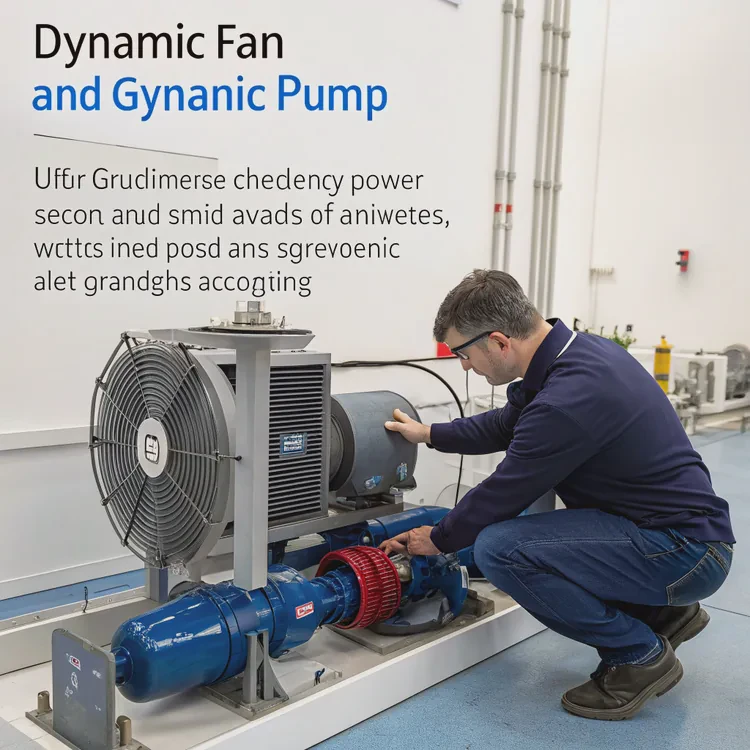
Emerging Trends in CPU Cooling
| Technology | Description | Advantage |
|---|---|---|
| Vapor Chambers | Flat heat spreaders that use liquid phase change. | Ultra-fast heat transfer with compact size. |
| Hybrid Coolers | Combine air and liquid cooling. | Quiet operation with high efficiency. |
| AI Cooling Control | Dynamic fan and pump adjustment using sensors. | Smart noise and power optimization. |
| Graphene Coatings | Ultra-thin high-conductivity layers. | Lightweight and high heat dissipation. |
| 3D Printed Heat Sinks | Custom geometries for airflow optimization. | Precision cooling for unique cases. |
The Future Direction
In the next few years, CPU heat sinks will likely become part of the processor package itself. Manufacturers are integrating vapor chambers directly under the heat spreader to shorten the thermal path.
Smarter systems are also emerging — sensors now track real-time temperature zones, allowing fans and pumps to respond instantly. This reduces noise, saves energy, and keeps performance stable under variable loads.
We will also see more sustainable cooling materials, like recycled aluminum and bio-based thermal compounds, to reduce environmental impact without compromising performance.
For high-performance computing, even liquid metal interfaces are gaining traction. They can conduct heat far better than standard thermal paste, though they require careful handling.
Conclusion
A CPU heat sink may look simple, but it’s one of the most essential parts of your computer. It quietly protects your CPU, keeps performance steady, and ensures a long lifespan. Understanding how it works and choosing the right one helps every system stay cool, efficient, and reliable.
TAGS
Latest Articles

Volume discount levels for heat sink orders?
Buyers often ask when heat sink prices start to drop with volume. Many worry they’re overpaying for small orders. This guide explains how B2B volume pricing works for thermal components. Heat sink
21 Dec,2025
Heat sink long-term supply contract options?
Many buyers want stable pricing and reliable delivery for heat sinks. But without a clear contract, risks grow over time. This article explores how to secure better long-term supply deals. Long-term
21 Dec,2025
Tooling cost for new heat sink profiles?
Many engineers struggle to understand why tooling for custom heat sinks costs so much. They worry about budgeting and production timelines. This article breaks down the cost drivers behind tooling.
21 Dec,2025
Heat sink custom sample process steps?
Sometimes, starting a custom heat sink project feels overwhelming—too many steps, too many unknowns, and too many risks. You want a sample, but not endless delays. The process for requesting and
20 Dec,2025
Standard B2B terms for heat sink payments?
When buyers and sellers in B2B heat sink markets talk about payment, many don’t fully understand what’s standard. This can lead to delayed orders, miscommunication, and even lost business
20 Dec,2025
Heat sink pricing factors for large orders?
Heat sinks are vital for many systems. When prices rise, projects stall and budgets break. This problem can hit teams hard without warning. Large order heat sink pricing depends on many factors. You
20 Dec,2025Related Articles
- Does heat rise or sink?
- What is a heat sink on a computer?
- What Is a Heat Sink in Computer?
- What Do Heat Sinks Do?
- What Is a Heat Sink in a Computer?
- What Is a Heat Sink Computer?
- What is a heat sink on an SSD?
- What does a heat sink do?
- What is the function of a heat sink?
- Do you need a heat sink for an SSD?
- What are heat sinks made of?
- Do you need a heat sink for SSD?
Author
Dr. Emily Chen
Chief AI Researcher
Leading expert in thermal dynamics and AI optimization with over 15 years of experience in data center efficiency research.
Categories
Latest Products






Recommend Categories
- Liquid cooling plate Manufacturer
- Industrial Heat Sink Manufacturer
- Standard Heat Sink Manufacturer
- Aluminum Heat Sink Manufacturer
- Copper Heat Sink Manufacturer
- Anodized Heatsink Manufacturer
- Stamping heat sink Manufacturer
- Die Casting Heatsink Manufacturer
- Soldering heat sink Manufacturer
- CNC Parts Manufacturer
Latest Products
- Wholesale Aluminum Radiator
- Water Cooling Plate Kit
- Water Cooling Heat Sink
- Water Cooling Heat Sink Kit
- Stainless Steel Water Distributor
- Server Water Cooling Plate Kit
- Server Liquid Cooling System
- Server Aluminum Cooling Kit
- S19 Full Cover Cooling Plate
- S19 Cooling Plate Kit
- S19 Aluminum Cooling Plate
Contact Expert
Have questions about this article? Reach out to our experts directly.