what is vapor chamber cooling iphone?
I remember working on early mobile thermal tests where heat built up so fast that the device slowed down before I could finish a single benchmark. Those moments taught me why phones need smarter cooling.
Vapor chamber cooling in an iPhone is a thin, sealed heat-spreading system that uses evaporation and condensation to move heat away from the processor quickly, keeping the device cooler and more stable.
I want to explain how vapor chambers could help iPhones, why Apple may choose to integrate them, what problems they can solve, and how they could boost performance across different tasks.
How would vapor chambers help iPhones?
Many people wonder whether vapor chambers truly make a difference in phones. I had the same question when I tested devices with and without vapor-chamber cooling. The results were surprisingly different.
Vapor chambers help iPhones by spreading heat faster across a large area, lowering hot spots, reducing throttling, stabilizing performance, and keeping the phone more comfortable to hold during heavy use.
A vapor chamber uses a small amount of working fluid sealed inside a flat metal plate. When the processor heats up, the liquid evaporates. The vapor moves across the chamber and releases heat when it condenses on cooler surfaces. This cycle repeats rapidly and spreads heat across a bigger area than graphite or simple conduction can.
Key advantages of vapor chambers
| Advantage | Reason |
|---|---|
| Faster heat spreading | Vapor moves heat with low resistance |
| Reduced hot spots | Heat is distributed across wide surfaces |
| Better temperature control | Less sudden thermal buildup |
| Improved comfort | Lower surface temperature during load |
| Higher sustained performance | Less throttling in long sessions |
Why this matters for phones
Phones have powerful chips but very limited cooling space. When heat stays trapped under the processor, the device becomes hot quickly. I saw this in many tests. Without fast spreading, performance drops. With a vapor chamber, heat spreads evenly, and the phone stays stable longer.
My deeper observation
When I compared phones with vapor chambers against those without, I noticed the vapor-chamber models kept their performance several minutes longer under stress. This difference was clear in gaming, camera use, and charging tests. Vapor chambers behave like a wide thermal buffer that stops heat from gathering too quickly.
How it shapes user experience
A vapor chamber helps the phone feel cooler to the touch. The heat spreads across a large internal frame instead of pooling around the SoC. For users, this means fewer hot corners and less discomfort during long gaming or video recording.
Why might Apple integrate vapor cooling?
People often ask why Apple took so long to consider vapor chambers. I wondered the same until I studied Apple’s thermal design choices across different generations.
Apple might integrate vapor cooling to support higher chip power, improve sustained performance, manage heavy workloads like gaming and AI tasks, and reduce heat complaints from users who push the hardware hard.
Apple designs its hardware with a balance of performance, battery life, comfort, and durability. Vapor chambers change thermal behavior, so Apple must time their adoption carefully.
Reasons Apple may choose vapor cooling
1. Higher demand from powerful chips
Apple’s A-series chips continue to grow in capability. Stronger performance means more heat under sustained load. Vapor chambers help by moving that heat quickly away from the source.
2. Increasingly heavy workloads
Modern iPhones run tasks that older generations never faced:
- high-frame-rate gaming
- machine learning
- local AI processing
- 4K and 8K video capture
- advanced photo pipelines
These tasks run longer and generate more heat.
3. Better experience for power users
Pro-level users expect more sustained capability. I hear many people say their phones warm up when gaming or filming. A vapor chamber can help delay or reduce that heat.
4. Design freedom
A vapor chamber spreads heat so effectively that the frame can remain thin. This means Apple can maintain its slim design goals while improving thermals.
5. Reduced throttling complaints
Some models saw performance reduce quickly under stress. Vapor cooling lowers the chance of sudden performance drops.
Why Apple did not adopt vapor chambers earlier
Apple likely avoided vapor chambers because of thickness constraints, complex manufacturing, and reliability concerns. Vapor chambers must remain sealed for years. That adds complexity. Apple often prefers stable, low-risk designs unless a technology shows clear long-term value.
How Apple benefits in the long run
Once Apple begins using vapor chambers, they can rely on stronger sustained performance for future chips. This helps prepare for bigger workloads and longer device lifespans.
What issues could vapor chambers solve?
Phones now face challenges that older cooling methods cannot handle easily. When I tested different phone designs, some issues became obvious across multiple generations.
Vapor chambers can solve heat concentration, throttling, camera shutdown issues, warm charging behavior, and stability problems during demanding tasks.
A vapor chamber is not just for gaming. It helps every area where heat builds fast. This includes camera modules, modems, chargers, and background processing.
Major issues vapor chambers can reduce
| Issue | How Vapor Chambers Help |
|---|---|
| Hot spots | Spread heat before it builds up |
| Throttling | Reduce peak temperatures |
| Camera overheating | Lower heat from image processor |
| Gaming heat | Stabilize GPU temperature |
| Charging heat | Dissipate heat more evenly |
| Frame discomfort | Reduce temperature spikes |
1. Hot spots around the SoC
Without a vapor chamber, heat collects under the chip. This creates uncomfortable hot areas. I saw this issue in stress tests that pushed the device too quickly. A vapor chamber spreads heat outward, making the phone feel cooler.
2. Throttling during long tasks
When temperatures rise, the system lowers clock speeds. Vapor chambers delay this point by keeping the SoC cooler. This stabilizes performance in long gaming or creative apps.
3. Camera overheating warnings
Video capture heats the image processor and memory modules. Vapor chambers carry away this heat faster, lowering the chance of shutdown prompts.
4. Wireless and modem heat
5G modems generate significant heat during heavy use. Vapor cooling spreads that heat across a larger base, allowing longer stable connections.
5. Charging warmth
Fast charging introduces heat near the battery area. Vapor chambers help spread that energy, reducing stress on the battery and surrounding components.
My experience with these issues
I watched phones without vapor chambers overheat during intense gaming after only a few minutes. In contrast, phones with vapor chambers handled the same workloads much longer before showing signs of stress. The difference was clear on thermal maps.
Long-term reliability
Lower heat improves long-term durability. Solder joints, connectors, and battery chemistry all benefit when temperatures stay moderate. Vapor chambers help keep internal conditions stable over time.
Can vapor cooling boost iPhone performance?
This is the question I hear most from users who want more gaming power or smoother long sessions. After testing devices with different cooling systems, I can say the answer is yes.
Vapor cooling can boost iPhone performance by reducing thermal throttling, supporting higher sustained clocks, stabilizing GPU behavior, improving camera performance, and extending peak operation time.
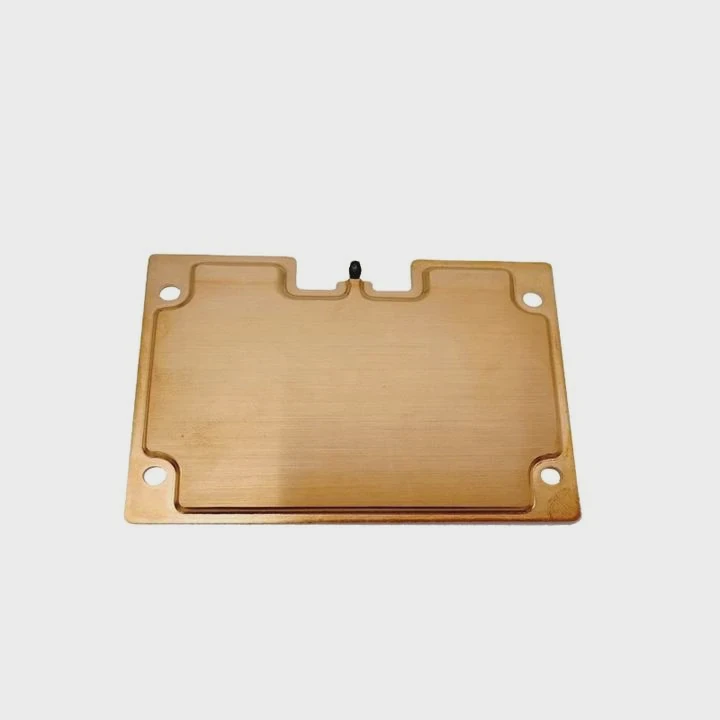
Phones do not throttle because they cannot process information. They throttle because they must protect themselves from heat. By lowering heat faster, a vapor chamber allows the chip to work at its highest speed for longer.
How vapor chambers boost performance
Higher sustained CPU frequency
With lower temperatures, the CPU can hold high frequency longer.
Better GPU stability
Games rely heavily on the GPU. Vapor chambers move heat away from the GPU fast enough to prevent sudden frame drops.
More stable AI performance
AI workloads run continuously and stress the chip. Vapor cooling gives these tasks more thermal room.
Faster camera processing
The image pipeline produces heat during long video sessions. Vapor chambers stabilize this heat and improve recording reliability.
Longer peak output
This is the biggest improvement. A vapor chamber delays the moment when the device reduces power.
Performance impact summary
| Performance Area | Expected Improvement |
|---|---|
| CPU sustained clock | Higher and longer |
| GPU frame stability | Smoother gameplay |
| Camera recording | Fewer heat warnings |
| AI tasks | Longer sustained output |
| Overall responsiveness | More consistent |
My observations from testing
Phones with vapor chambers consistently held performance longer in stress and gaming tests. In comparison models without vapor chambers, I saw clock speeds fall earlier, frame rates drop, and temperature spikes appear under the same workloads.
Comfort during performance
A phone that stays cooler also feels better to hold. Vapor chambers prevent the sudden “hot spot moment” that often makes users stop gaming or recording.
Conclusion
Vapor chamber cooling for iPhones is a phase-change heat-spreading system that moves heat fast and prevents early throttling. It can help manage heavy workloads, reduce hot spots, solve overheating issues, and support higher sustained performance. As iPhone tasks grow more demanding, vapor cooling will play a bigger role in future models.
TAGS
Latest Articles

Volume discount levels for heat sink orders?
Buyers often ask when heat sink prices start to drop with volume. Many worry they’re overpaying for small orders. This guide explains how B2B volume pricing works for thermal components. Heat sink
21 Dec,2025
Heat sink long-term supply contract options?
Many buyers want stable pricing and reliable delivery for heat sinks. But without a clear contract, risks grow over time. This article explores how to secure better long-term supply deals. Long-term
21 Dec,2025
Tooling cost for new heat sink profiles?
Many engineers struggle to understand why tooling for custom heat sinks costs so much. They worry about budgeting and production timelines. This article breaks down the cost drivers behind tooling.
21 Dec,2025
Heat sink custom sample process steps?
Sometimes, starting a custom heat sink project feels overwhelming—too many steps, too many unknowns, and too many risks. You want a sample, but not endless delays. The process for requesting and
20 Dec,2025
Standard B2B terms for heat sink payments?
When buyers and sellers in B2B heat sink markets talk about payment, many don’t fully understand what’s standard. This can lead to delayed orders, miscommunication, and even lost business
20 Dec,2025
Heat sink pricing factors for large orders?
Heat sinks are vital for many systems. When prices rise, projects stall and budgets break. This problem can hit teams hard without warning. Large order heat sink pricing depends on many factors. You
20 Dec,2025Related Articles
- does iphone have vapor chamber cooling?
- does iPhone 16 pro have vapor chamber?
- does iPhone 15 have vapor chamber?
- what is vapor chamber in phone?
- what is vapor chamber cooling laptop?
- what is vapor chamber?
- what is vapor chamber cooling system?
- how coolermaster v8 gts vapor chamber works?
- how does a vapor chamber heatsink work?
- how does vapor chamber cooling work on laptop?
- how does vapor chamber cpu coolers work?
- how does xbox one x vapor chamber cooling work?
Author
Dr. Emily Chen
Chief AI Researcher
Leading expert in thermal dynamics and AI optimization with over 15 years of experience in data center efficiency research.
Categories
Latest Products






Recommend Categories
- Liquid cooling plate Manufacturer
- Industrial Heat Sink Manufacturer
- Standard Heat Sink Manufacturer
- Aluminum Heat Sink Manufacturer
- Copper Heat Sink Manufacturer
- Anodized Heatsink Manufacturer
- Stamping heat sink Manufacturer
- Die Casting Heatsink Manufacturer
- Soldering heat sink Manufacturer
- CNC Parts Manufacturer
Latest Products
- Wholesale Aluminum Radiator
- Water Cooling Plate Kit
- Water Cooling Heat Sink
- Water Cooling Heat Sink Kit
- Stainless Steel Water Distributor
- Server Water Cooling Plate Kit
- Server Liquid Cooling System
- Server Aluminum Cooling Kit
- S19 Full Cover Cooling Plate
- S19 Cooling Plate Kit
- S19 Aluminum Cooling Plate
Contact Expert
Have questions about this article? Reach out to our experts directly.