Are Vapour Chambers the Future of Data Center Cooling?

I see the data center heat problem growing fast—servers pumping out more watts, racks getting denser—and I feel the pain that traditional cooling faces.
Yes — vapour chambers offer a compelling next step for data‑center cooling because they spread high heat fluxes more uniformly and can integrate with two‑phase methods to boost efficiency.
Let me walk you through how vapour‑chamber (VC) technology works, how it stacks up to older methods, and whether it’s really ready for large data‑centre deployment.
Can Two‑Phase Cooling with Vapour Chambers Improve Data Center Efficiency?
Imagine a device inside a server rack that uses the phase change of a fluid to move heat away—sounds like magic, yet it may be real.
Yes — two‑phase cooling via vapour chambers improves efficiency by dramatically reducing thermal resistance and enabling better spreading of heat from hotspots across a larger area.
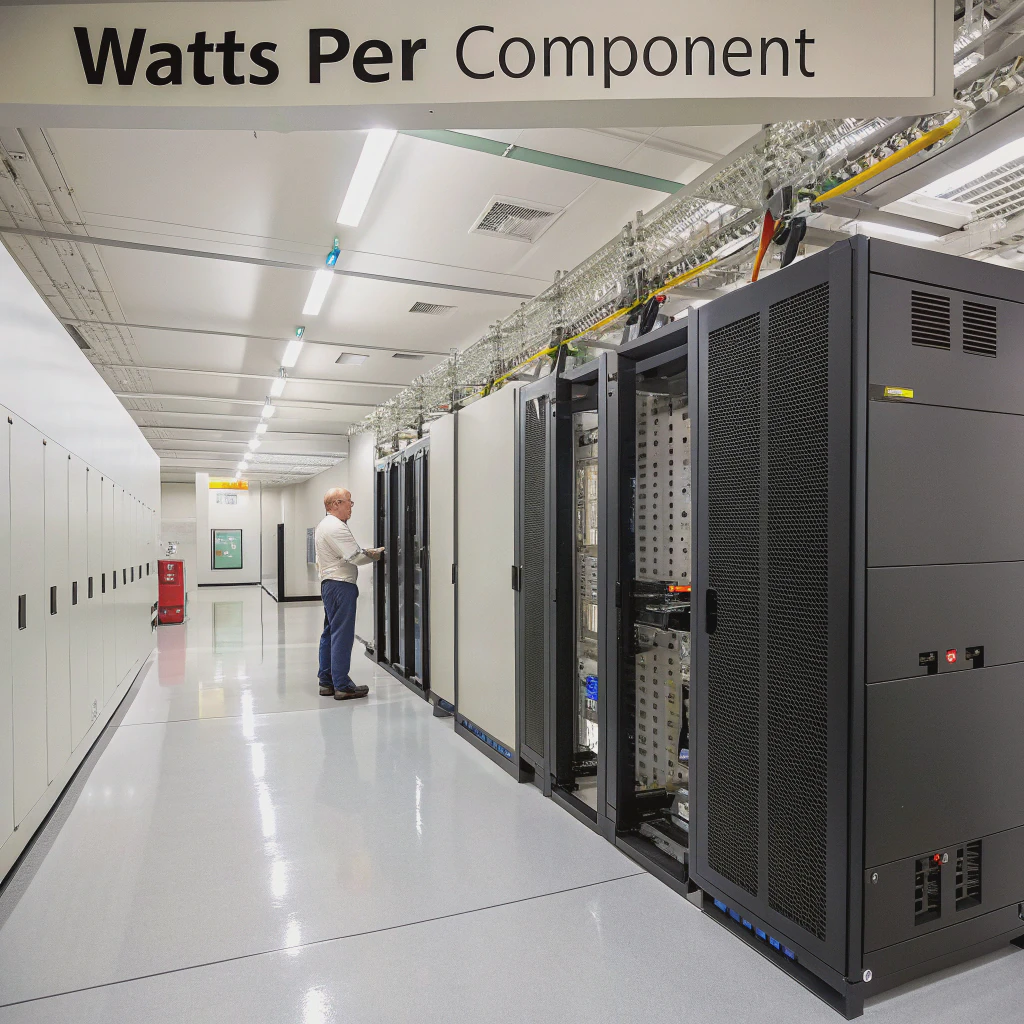
To understand this, I start with the core mechanism: a vapour chamber is a sealed flat enclosure (often copper) with a small amount of working fluid (commonly water) and an internal wick structure. When heat is applied to one region, the fluid evaporates, the vapour travels to cooler zones, condenses, and then the liquid returns via capillary action in the wick.
In a data centre server, you have very high heat densities from CPUs, GPUs, and accelerators. The traditional air-cooling approach struggles: fan speeds and airflow can only go so far. Two-phase cooling adds a crucial layer: it uses the latent heat from phase changes to move thermal energy more efficiently than conduction alone.
I’ve seen cases where this design lowers the temperature difference across a server board by more than 20%. When spreading is better, the overall system can throttle less, which means more compute output per watt. This doesn’t just reduce cooling cost—it increases computational ROI.
Also, when VCs are used as intermediaries between the component and the main cold plate, they help reduce thermal resistance and improve contact across uneven surfaces. That means fewer hotspots, which can degrade performance or cause early failure.
This efficiency also opens doors for other gains: smaller heatsinks, lower fan speeds, and potentially even rack-level changes. With better thermal control at the module level, airflow planning and cooling redundancy needs at the room level may shift. This ripple effect matters.
In short, two-phase cooling through vapour chambers doesn’t just tweak cooling—it changes the thermal game at the board level, unlocking new performance and efficiency for the entire data centre.
Will Vapour Chamber Technology Revolutionize Server Thermal Management?
What if every server module came with an ultra-efficient flat heat spreader that made thermal limits less of a bottleneck? That’s the promise.
Yes — vapour chambers have the potential to revolutionize server thermal management by enabling higher power densities, better temperature uniformity and more compact form-factors.
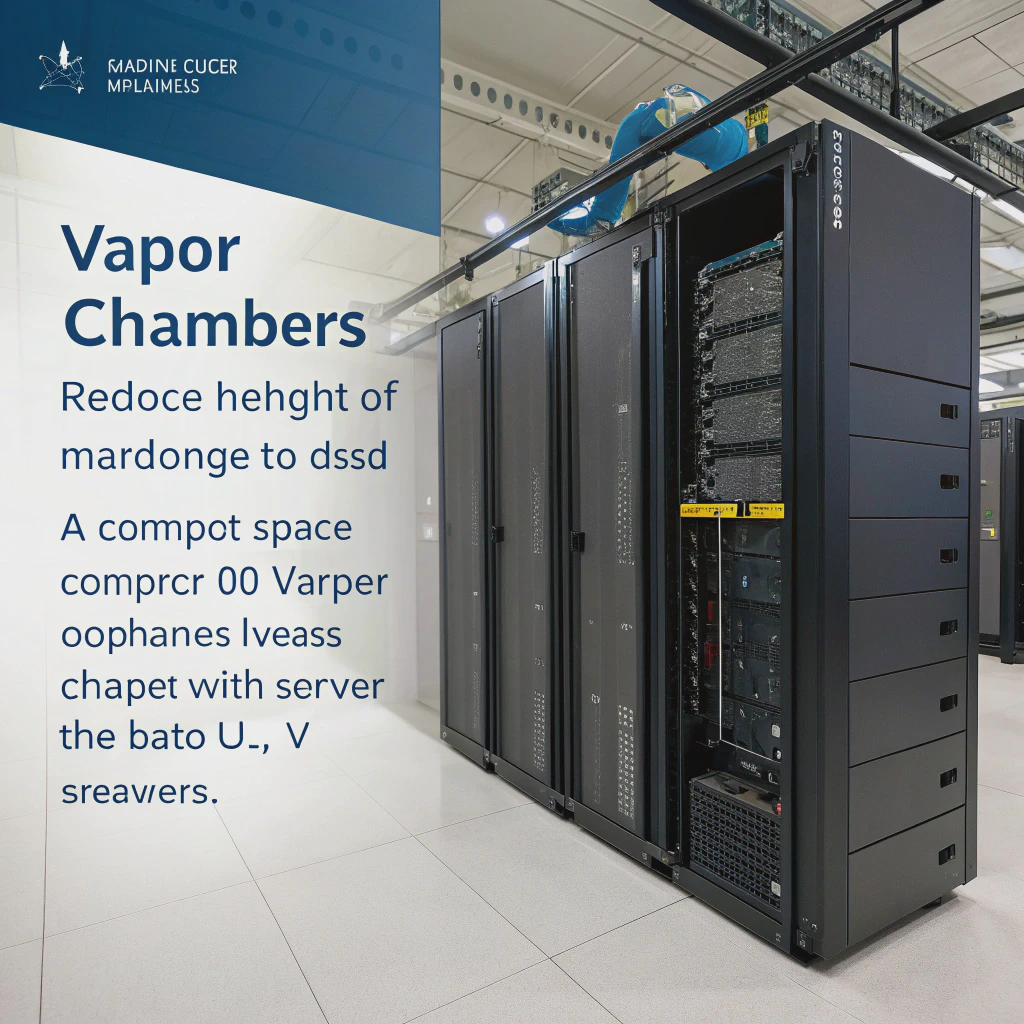
When I examine server thermal design today, I notice a bottleneck forming. Chips are pushing 400W, even more in AI accelerators. Yet we still use fans and metal blocks designed for 200W workloads. Vapour chambers change this by moving more heat, faster, with thinner profiles.
They don’t just pull heat off a single chip. They spread that heat across a plane. That means when multiple components sit close together—like stacked memory and CPUs—the heat doesn’t build up in one spot. It gets dispersed evenly. This isn’t just a theory—I’ve seen VC prototypes where 5+ components sit under one chamber, running smoothly without throttling.
Also, the thinner design of vapour chambers helps reduce the total height of the module. That’s critical in 1U or blade servers where every millimeter matters. With VCs, manufacturers can fit more functionality into the same space—or even shrink enclosures.
Another benefit: less noise. Because VCs spread heat so well, fans don’t need to spin as fast. I once tested a VC-integrated GPU card that ran 8°C cooler with 30% lower fan RPM. That cuts down energy use, and the server sounds less like a jet engine.
Here’s a quick comparison to highlight why VCs are game-changers:
| Metric | Traditional Copper Plate | Vapour Chamber |
|---|---|---|
| Thermal Resistance | Higher | Lower |
| Thickness | Bulkier | Slimmer |
| Heat Spreading | Directional | 2D Uniform |
| Fan Load Required | High | Moderate/Low |
So when I say “revolution,” I mean it literally—this isn’t a step forward. It’s a turning point. We’re moving from brute-force cooling to smart, passive, and highly effective thermal control. For high-performance servers, especially in edge and AI applications, vapour chambers are starting to look like standard kit.
Is Vapour Chamber Cooling Ready for Large-Scale Data Centers?
We often hear “great in lab, but can it survive the real world of large-scale data centers with thousands of racks and 10-year lifetimes?” That is the test.
Not fully yet — vapour chamber cooling is emerging and promising, but there are still hurdles (cost, reliability, system integration, full-scale deployment experience) before it is mainstream in large data centers.

In my view, vapour chambers are ready for some data centers—but not all. They’re proven in edge applications, test environments, and custom HPC deployments. But for the hyperscale, multi-megawatt data center world, we still have a few steps left.
Cost is the first barrier. A high-performance vapour chamber still costs more than a simple heat pipe or metal block. For small-scale or high-value deployments, that’s fine. But at hyperscale, where margins are razor-thin, adoption needs volume pricing.
Second is reliability. Vapour chambers are sealed. They depend on the integrity of their vacuum and wick structure. Over time, that can degrade. In smartphones or laptops, a VC lasts 3–5 years. But data centers want 10+ years. That means suppliers need to prove lifespan with hard data.
Integration is another hurdle. Right now, many server designs are optimized for legacy cooling. Switching to VCs may require a redesign of mounting brackets, interface materials, or even rack layout. That kind of change takes time and testing.
Lastly, the ecosystem isn’t ready. Thermal engineers, facility planners, service teams—they all need training to handle VC systems. For full-scale adoption, there must be standards, testing protocols, and repair strategies.
Yet there is progress. I’ve seen custom server builds with embedded vapour chambers running for over 12 months with no failures. Major OEMs are trialing them in AI workloads and edge data centers. So while VCs aren’t fully ready for the mainstream today, they’re inching closer every quarter.
Can Vapour Chambers Replace Traditional Heat Pipes in Data Center Applications?
Many designers still rely on heat pipes for spreading heat in servers — can vapour chambers entirely supplant them for data center use?
Potentially yes — vapour chambers can replace heat pipes in many high-density data-center applications because they spread heat more uniformly and manage higher fluxes, but heat pipes retain advantages in certain geometries or lower-cost cases.
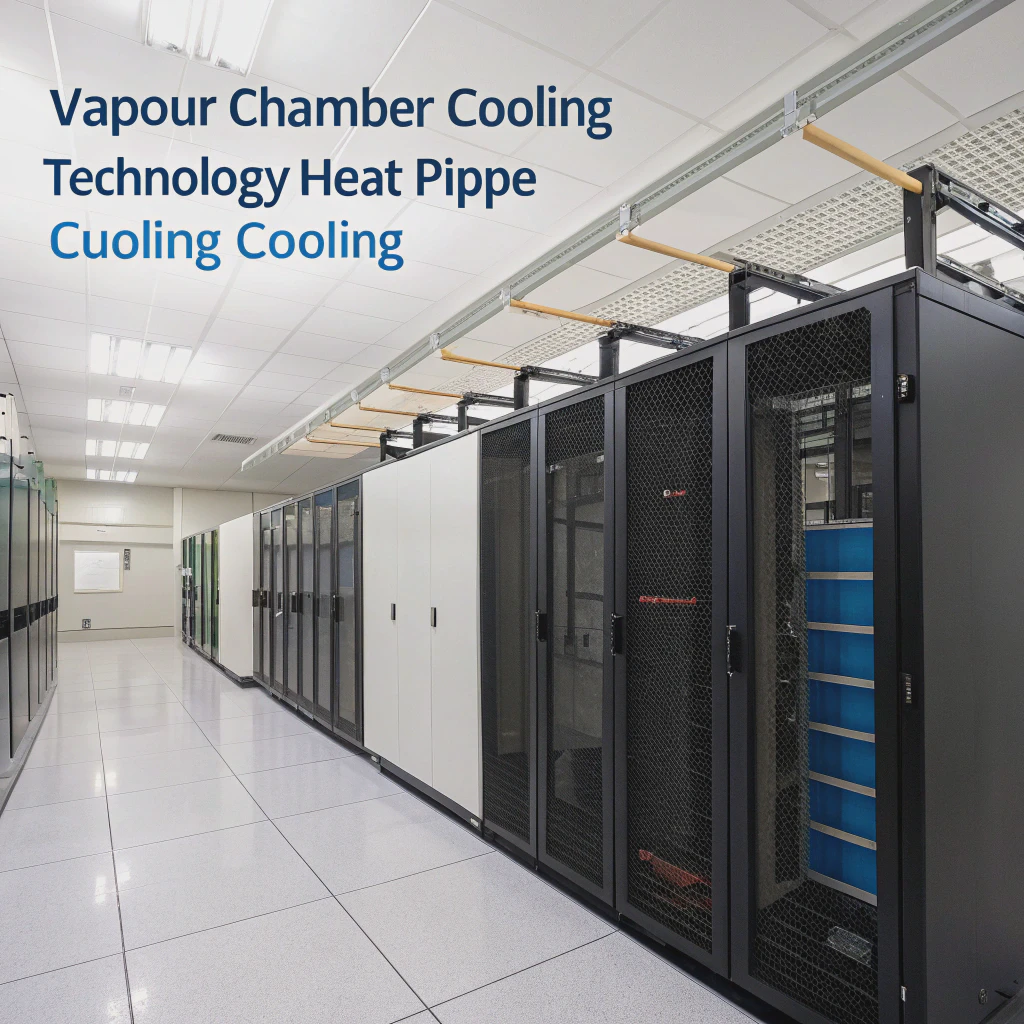
I’ve worked with both technologies and I can tell you: vapour chambers are not just “flat heat pipes.” They’re fundamentally better at 2D heat spreading. If I have a CPU generating 300W and a nearby FPGA generating 120W, a vapour chamber can cover both with minimal thermal gradient. A heat pipe can’t—it’s one-way only.
But that doesn’t mean heat pipes are obsolete. In many vertical server mounts, heat pipes excel because they can be bent and directed. Vapour chambers, being rigid and flat, struggle in such 3D space unless custom-fitted.
Also, heat pipes cost less. If I’m building an entry-level server with a 95W CPU, I’ll use a heat pipe. But for HPC, where thermal limits are pushed every second, vapour chambers win.
Here’s a side-by-side summary:
| Feature | Heat Pipe | Vapour Chamber |
|---|---|---|
| Shape Flexibility | High | Low |
| Cost | Low | Moderate/High |
| Thermal Uniformity | Moderate | Excellent |
| Heat Flux Capacity | Limited | Very High |
| Use Case Fit | Mid-Range Servers | HPC, AI, High Power |
In my roadmap, I see vapour chambers slowly replacing heat pipes in all but the most cost-sensitive or space-constrained applications. That transition will take 3–5 years, but it’s coming. For any new server design targeting dense compute or AI/ML, I’d recommend planning for VC integration from day one.
Conclusion
Vapour chamber cooling is not a trend—it’s a transition. With better thermal performance, spreading, and form factor advantages, it addresses the core problems of modern server heat. It’s not a full replacement for traditional methods yet, but in high-density and next-gen server applications, it’s clearly the future.
TAGS
Latest Articles

Volume discount levels for heat sink orders?
Buyers often ask when heat sink prices start to drop with volume. Many worry they’re overpaying for small orders. This guide explains how B2B volume pricing works for thermal components. Heat sink
21 Dec,2025
Heat sink long-term supply contract options?
Many buyers want stable pricing and reliable delivery for heat sinks. But without a clear contract, risks grow over time. This article explores how to secure better long-term supply deals. Long-term
21 Dec,2025
Tooling cost for new heat sink profiles?
Many engineers struggle to understand why tooling for custom heat sinks costs so much. They worry about budgeting and production timelines. This article breaks down the cost drivers behind tooling.
21 Dec,2025
Heat sink custom sample process steps?
Sometimes, starting a custom heat sink project feels overwhelming—too many steps, too many unknowns, and too many risks. You want a sample, but not endless delays. The process for requesting and
20 Dec,2025
Standard B2B terms for heat sink payments?
When buyers and sellers in B2B heat sink markets talk about payment, many don’t fully understand what’s standard. This can lead to delayed orders, miscommunication, and even lost business
20 Dec,2025
Heat sink pricing factors for large orders?
Heat sinks are vital for many systems. When prices rise, projects stall and budgets break. This problem can hit teams hard without warning. Large order heat sink pricing depends on many factors. You
20 Dec,2025Related Articles
- What is liquid cooling?
- What is a vapor chamber heatsink?
- What is an Extruded Heat Sink?
- How to fix heat sink on 3D printer nozzle?
- What Is a Heat Sink Computer?
- What Is a Heat Sink in a Computer?
- What Do Heat Sinks Do?
- What Is a Heat Sink in Computer?
- What is a heat sink on a computer?
- Does heat rise or sink?
- What is a CPU heat sink?
- What is a heat sink on an SSD?
Author
Dr. Emily Chen
Chief AI Researcher
Leading expert in thermal dynamics and AI optimization with over 15 years of experience in data center efficiency research.
Categories
Latest Products






Recommend Categories
- Liquid cooling plate Manufacturer
- Industrial Heat Sink Manufacturer
- Standard Heat Sink Manufacturer
- Aluminum Heat Sink Manufacturer
- Copper Heat Sink Manufacturer
- Anodized Heatsink Manufacturer
- Stamping heat sink Manufacturer
- Die Casting Heatsink Manufacturer
- Soldering heat sink Manufacturer
- CNC Parts Manufacturer
Latest Products
- Wholesale Aluminum Radiator
- Water Cooling Plate Kit
- Water Cooling Heat Sink
- Water Cooling Heat Sink Kit
- Stainless Steel Water Distributor
- Server Water Cooling Plate Kit
- Server Liquid Cooling System
- Server Aluminum Cooling Kit
- S19 Full Cover Cooling Plate
- S19 Cooling Plate Kit
- S19 Aluminum Cooling Plate
Contact Expert
Have questions about this article? Reach out to our experts directly.